Weaving together the wonders of biology, paleontology, space, microbiology, geology, and more. Exploring the fabric of the universe, one discovery at a time
The Night the Sun Almost Fried the Victorian World
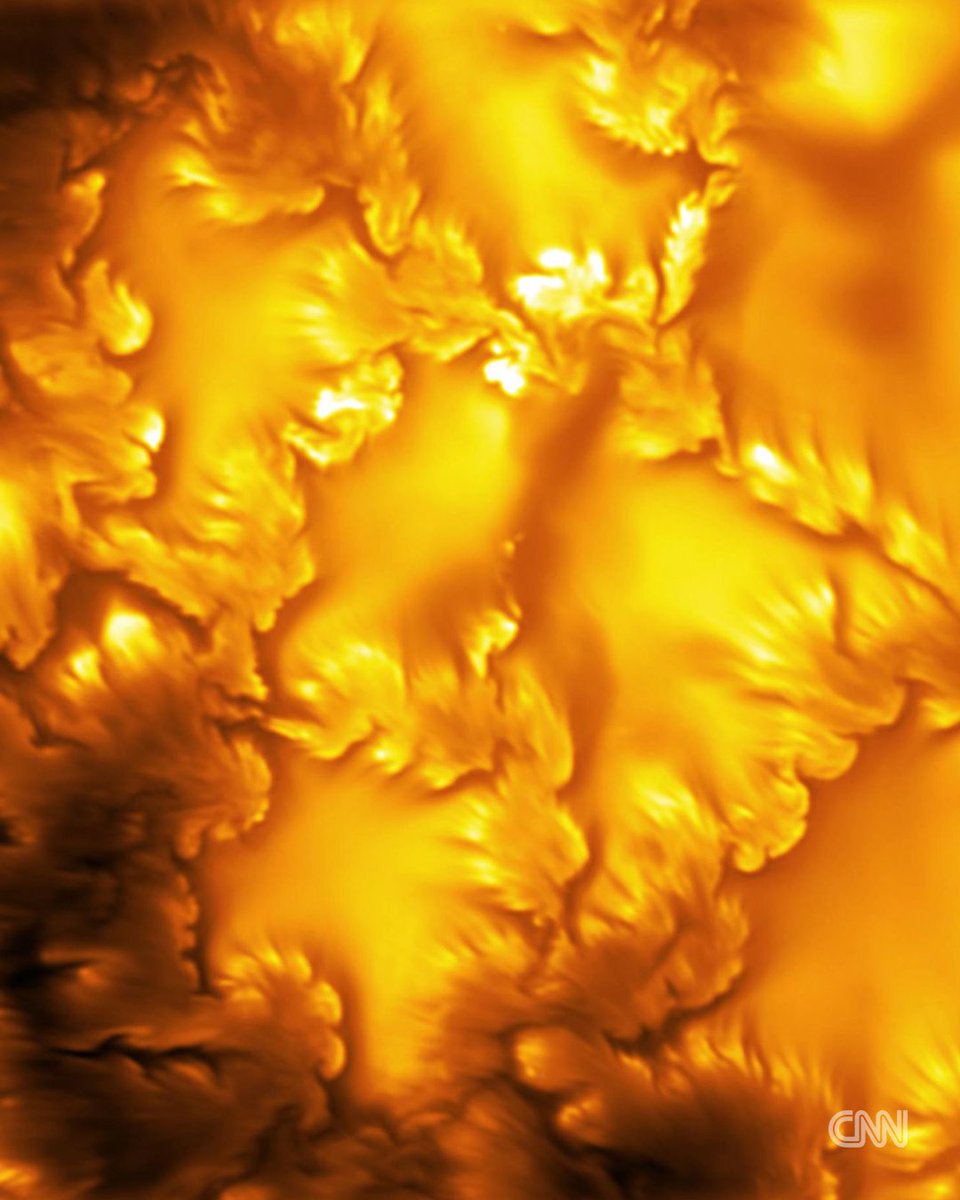
On 1–2 September 1859 the Sun threw a tantrum so violent that Earth has not seen its equal in the written record. We call it the Carrington Event, after the English astronomer Richard Carrington, who watched a patch of the Sun blaze white and then fade in a matter of minutes.
Seventeen hours later the shock arrived.
Compasses spun. Telegraph networks—the internet of the 1850s—went feral. Operators yanked wires from batteries and still watched sparks leap across the keys. Some stations kept sending messages on the residual current alone. Paper caught fire. Operators got shocks. In the dark, auroras painted the sky blood-red and green as far south as the Caribbean and Hawaii. Gold miners in the Rockies stood up at midnight thinking dawn had come.
What hit Earth was a fast, dense coronal mass ejection—a billion-ton cloud of magnetized plasma—slammed into the planet’s magnetic field and crumpled it. The resulting geomagnetic storm induced currents in long conductors: telegraph lines then, power grids and satellites now.
Carrington’s flare was not unique in kind. It was unique in how hard it hit a world that had just wired itself together and had no idea the Sun could answer back.
A repeat today would not stop at flickering lights. It would threaten transformers, GPS, radio, and the thin electronic nervous system of modern life. NASA and others simulate that scenario because September 1859 is the benchmark: the strongest geomagnetic storm we can point to and say, this actually happened.
Simulation credit: NASA. The Sun’s still out there. It has not promised to wait another 167 years.
This is a better way to visualize Columbus’ voyages than the traditional way (that shows him traveling through a modern map)..
It looks a lot crazier and more daring when you see it as a trip into the unknown.
WATCH: A humanoid robot training for the “Robot Olympics” in Beijing runs too fast, fails to stop, slams into a safety cushion, and breaks at the waist
ALERT🚨: For the first time in history, astronomers managed to observe directly something that existed only in theory for decades: the cosmic spiderweb, the invisible structure that holds and feeds galaxies.
We're literally looking at the veins of the universe.
Primeras 7 horas de hoy.
Esta es la prominencia del limbo sureste, que millones pudieron observar a simple vista en el momento de la totalidad.
No tuve esa suerte... ��🥺
Pero pude experimentar la totalidad en la naturaleza; el día, la noche y el día de nuevo en apenas 5 minutos.😃😮
NEWS 🚨: Astronomers have discovered an entirely new type of cosmic object called a "black hole star"
It's the size of our solar system, emits 100 billion times more energy than any star, and may finally explain JWST's mysterious "little red dots"
This is one of the wildest wildlife clips I’ve come across. Most people see a giant anteater and think “cute long-nosed ant eater.” Nah.
Watch this absolute unit go toe-to-toe with a jaguar in French Guiana. This footage was captured just a month ago.
Those claws aren’t just for digging termite mounds. They’re weapons like 4 inch machetes and anteaters have been known to fatally tear into a full sized jaguar. The jaguar is clearly thinking twice the whole time.
Camera trap footage, raw and real. Nature never fails to remind us not to underestimate the underdogs.
Some of the most terrifying and violent storm conditions that are possible on this planet are occurring right now on the Pacific island of Rota.
At 180 MPH (290 kph) and with eyewall mesovortex gusts potentially as high as ~220 MPH (355 kph), Category 5 Super Typhoon Bavi is moments away from making landfall.
Scientists say they have built a cell from scratch for the first time that can feed, grow and replicate like a natural cell. This breakthrough in synthetic biology could usher in an era of made-to-order organisms that function like living machines. https://t.co/weTPfCIQi8
TIL theres another type of spiders (ballista spiders) that choose to lure just one type of ant with tens of tensioned silk strands it would spend 4 hours building and wrapping, and the ant would bite it and get launched at 130g acceleration.
The Chinese Physicist Who Turned Force Into Geometry
In 1954, Chinese physicist Chen-Ning Yang, together with Robert Mills, introduced a new idea that changed modern physics:
Maybe a force is not just something that pushes or pulls. Maybe a force can come from geometry.
In Yang-Mills Theory, every point in space carries a hidden internal direction. As you move through space, that direction can twist. If you go around a closed loop and the direction does not return exactly the same, the field has curvature. That curvature is what we see as force.
In this animation, the glowing surface shows where the gauge field is strongest. The changing colours show how the hidden internal direction varies across space. The moving rectangular loops are Wilson loops. They travel through the field and measure how much the internal direction changes after completing a closed path.
The key equation behind the scene is
Fₓᵧ = ∂ₓAᵧ - ∂ᵧAₓ + Aₓ × Aᵧ.
The final term, Aₓ × Aᵧ, is the special part. It means the field can interact with itself. That self-interaction is one reason Yang-Mills theory became one of the foundations of particle physics.
#China #ChinesePhysics #YangMills #GaugeTheory #QuantumFieldTheory #NonAbelianGeometry #WilsonLoops #ModernPhysics #STEM