Flatiron Research Fellow at @FlatironCCA since April 2024. Trying to better understand the role of tiny dust grains and turbulence in planet formation.
New paper! In work led by Sabina Sagynbayeva @SabinaAstro and the planet formation group @FlatironCCA, we show that "classical" circumplanetary disk formation is hard at large orbital radii. This may be (in part) why to date observed CPDs are rare. (1/7)
https://t.co/BtZez8jzrm
New work from Thomas Pfeil @FlatironCCA, introducing an approximate scheme for dust coagulation / fragmentation physics in protoplanetary disks that is efficient enough to couple to multi-dimensional hydrodynamic simulations.
https://t.co/8zyayZngkf
Today on arXiv: substructure in a planet forming disk quickly forms giant planets which form another ring which forms more 🪐! result looks like the start of the Nice model / early instability model! Did the outer solar system form sequentially?
🐓🥚🐓🥚?
https://t.co/cNTPEawF5b
I am obviously biased but this may be one of the most important papers in the planet formation field in recent years 🪐 If you are at #exoplanetsv, you should talk to the first author, Tommy Lau 😉 Read the paper here https://t.co/ZOq8U5GRVK
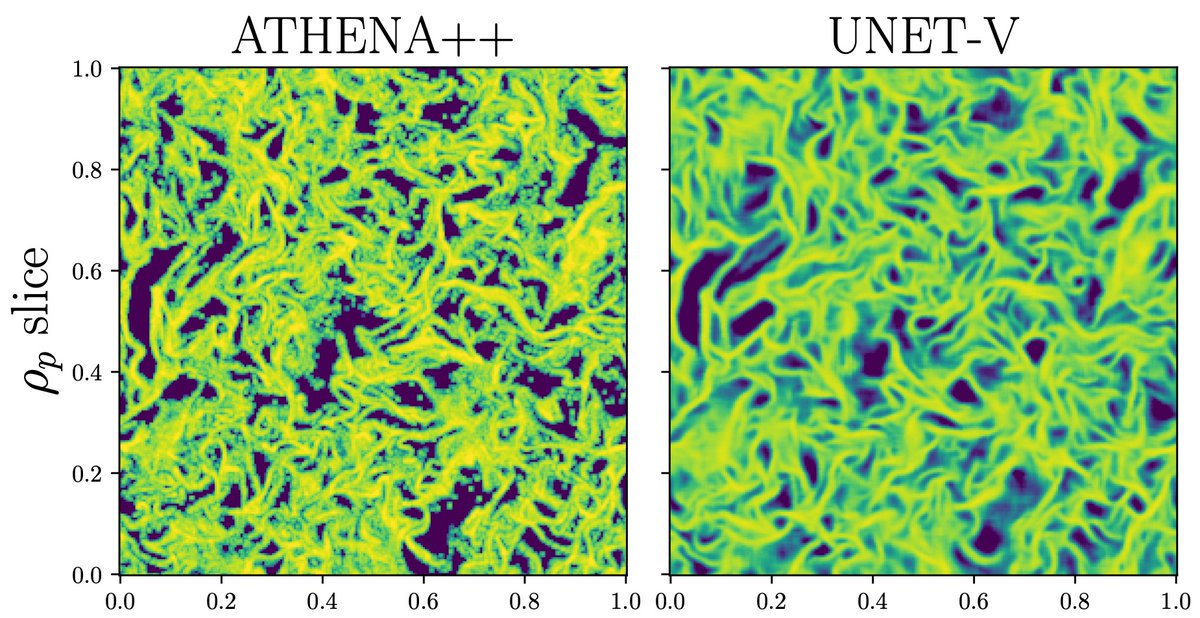
Published version of Timothy Chan's work on using deep learning to capture particle clustering in turbulence, in a regime relevant to planet formation. Fun project with @cosmo_shirley and @astroNatascha @FlatironCCA.
https://t.co/V6ylh1sqMq
@astrofloppity Pretty sure the police is there because of the fireworks ban on new years eve in some areas in Berlin. They inacted this ban because people attacked emergency workers and ambulances with fireworks there last year. Sonnenallee is simply one of these places. https://t.co/v55bJzwMy2
What is the impact of dust grain growth on the vertical shear instability (VSI)? @tbirnstiel, Hubert Klahr, and I found that the VSI is highly sensitive to the grain fragmentation velocity, which sets the max. particle size and thus the cooling times.
https://t.co/JigkiE04IH
Whoa, this new study by e.g. @denderendaver and @AstroAndersJ shows how you can rapidly form giant planets at wide orbits, avoiding immediate inward migration. This could potentially explain the large gaps in disks!
https://t.co/rrAflqlsbv
In today's #vatniksoup, I'll introduce a South African-American(!) businessman and social media figure, Elon Musk (@elonmusk). He's best-known for being the wealthiest man in the world, running Tesla Inc., SpaceX & Twitter, and for parroting Kremlin's propaganda narratives.
1/24
Join us as a Research Fellow at the Center for Computational Astrophysics in New York! The ad can be read broadly: theorists, observers with challenging data, ML experts... are all in scope with @FlatironCCA's mission. Deadline Nov 1. Some notes: (1/5)
https://t.co/Og0Tl0UkuC
I had a fantastic time attending the ML X science summer school at @FlatironInst last year. It was my very first time working on an ML project and I met so many great people.
Thanks to all organizers for making this possible!
Three years ago, I started working on an easy-to-use tool for interpretable machine learning in science. I wanted it to do for symbolic regression what Theano did for deep learning.
Today, I am beyond excited to share with you the paper describing it!
https://t.co/be2cVdukPy
1.
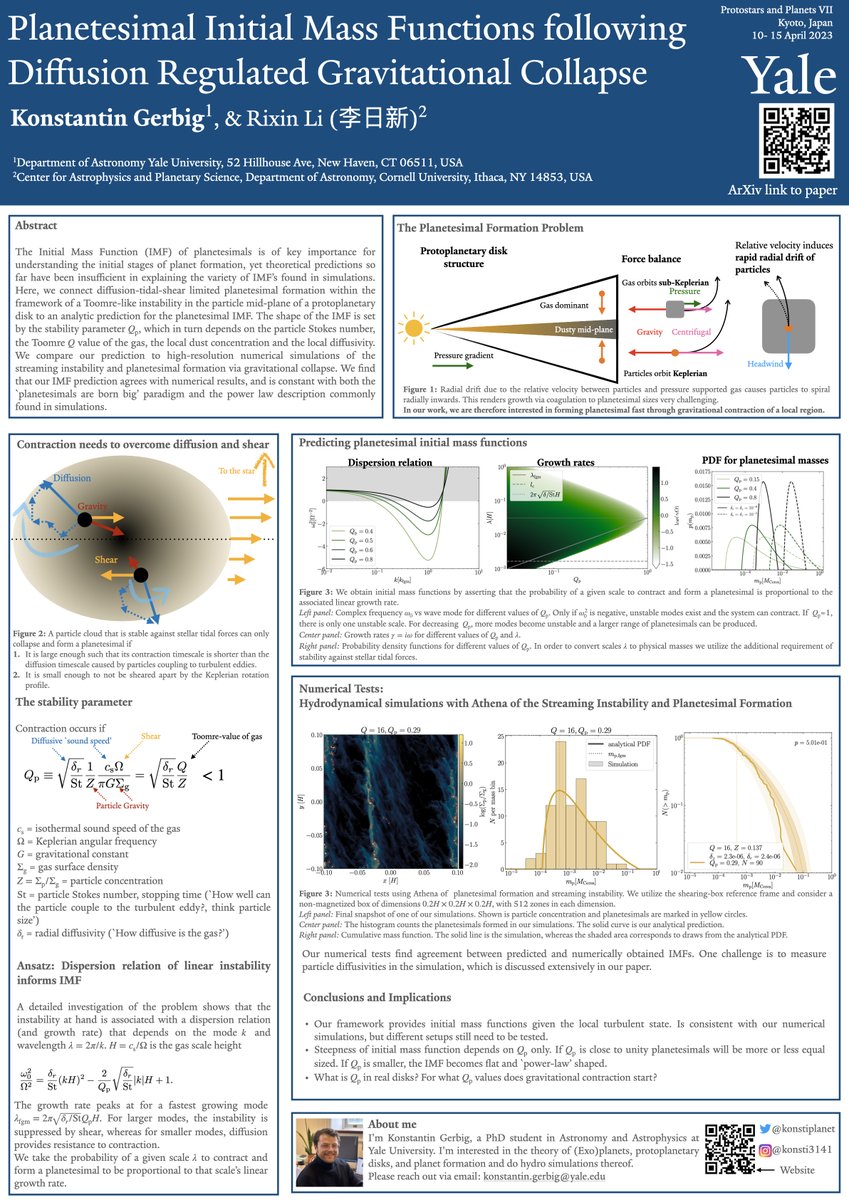
Also, if you're at #ppvii and you're interested in planetesimal formation, check out my somewhat hastily created poster on our work. Poster number PF-06-0013