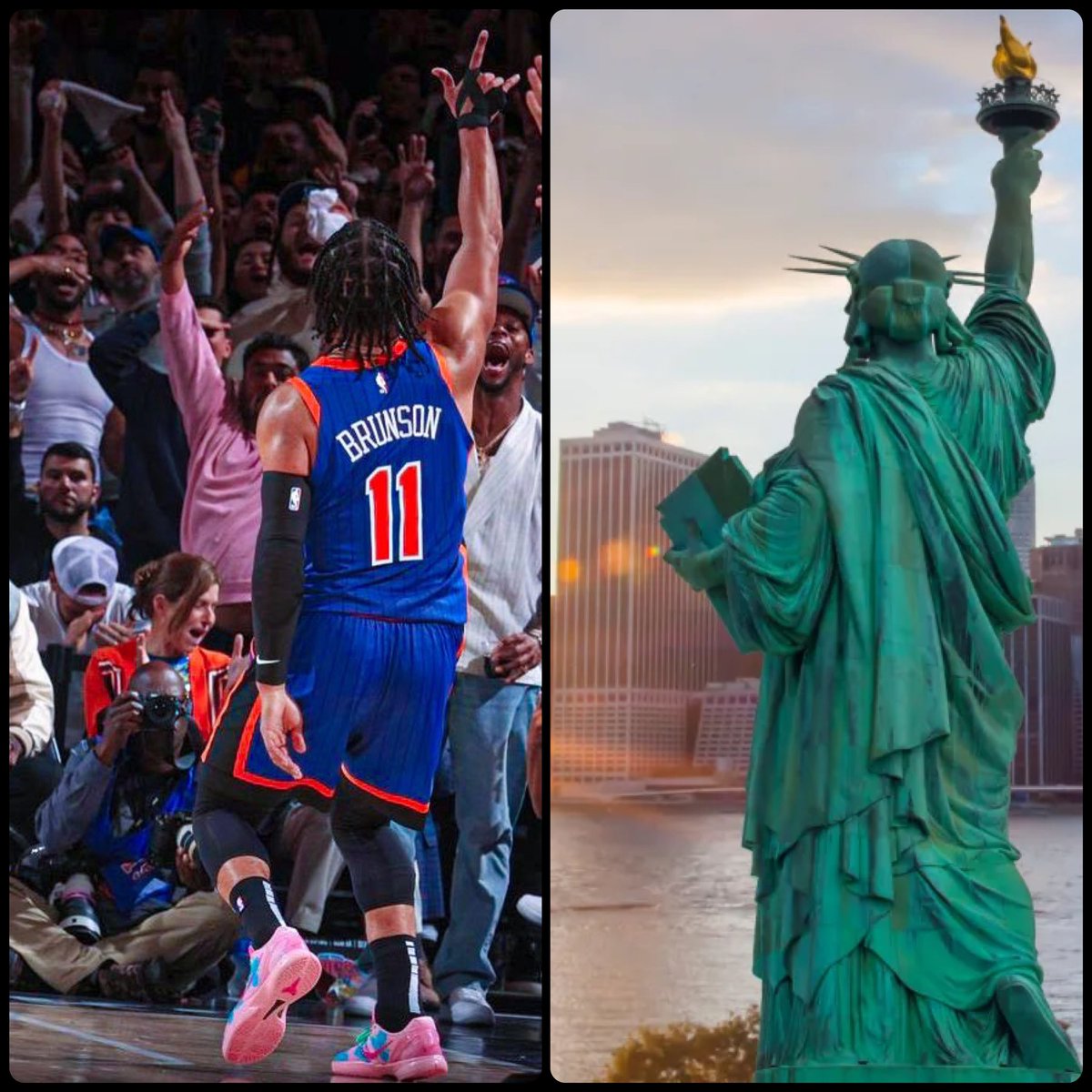
My dad passed away yesterday. 75. Needed to see this.
But here’s my enduring memory of him, it’s from this summer at @Yankees Stadium. He was the Veteran of the Game. The whole family was there.
Thank you @Yankees for making this happen!!
I asked my producers not to make any clips from the dad grief portion but enough people reached out about this part I changed my mind.
Jim Nantz on what Arnold Palmer told him about his dad is one of the most impactful things I’ve ever heard. A lot of people need to hear this.
"It's not a denial..."
GameStop CEO Ryan Cohen confirms he is seriously considering a hostile takeover of eBay.
📺https://t.co/zpzxpvZc5d
@piersmorgan | @ryancohen
GameStop is about to make the Final Bid for $EBAY
On May 3rd, 2026, $GME made a bid for $eBay:
"proposed offer is $125.00 per share, comprising 50% cash and 50% GameStop common stock, with full shareholder election rights as to consideration type and pro-rata allocation."
Since making that bid, he has gone on a full media pressure campaign, highlighting the misalignment and inadequacies of the management and board of $eBay.
The bid was promptly rejected in the face of a stunning 2.5 billion share auth proposal at the July 7th meeting, seemingly to get the $eBay deal done, though the two have not been explicitly linked.
Last we heard from @ryancohen was that he is taking the deal directly to shareholders.
So what does that mean?
——————
WHY EBAY?
Let's first look at the target: $eBay.
$eBay has around ~90% institutional ownership. Now, in the face of an activist takeover and a hostile bid, what does that mean exactly?
First, it means the shareholders of eBay are heavily organized and concentrated. The bidder does not have to convince a million people separately. He just has to convince a few holders of the stock.
Second, institutions have a hard mandate. They are fiduciaries of capital, not shareholders convinced for a multitude of reasons. There is only one reason they care about: does it make sense financially?
A fiduciary, by law, has to evaluate the offer against standalone value. If the premium is real and the financing is committed, they tender. Not because they want to. Because they have to.
For a potential acquisition target, that is not a defense.
That is a STRONG vulnerability.
And for a hostile bidder, that is everything.
——————
MOVE 1: THE REJECTION
You can't launch a hostile tender without first making a friendly offer the board refuses. The rejection is the legal prerequisite. It establishes that the board won't negotiate, which justifies going around them.
But it matters HOW they reject.
If they say "$125 is too low": you're negotiating price before you've started.
If they say "not credible": they've rejected the financing, NOT the number.
And look at what eBay actually said: "neither credible nor attractive."
They left $125 completely unchallenged.
Cohen didn't just get rejected. He got rejected perfectly. Price locked. Board on record fighting the wrong battle.
Hostile lane open.
The dismissible bid was designed, not fumbled.
He could have shown up May 3 with committed financing. The board would have had to engage. Price negotiation starts at $125 but eventually he pays more, and it's open to negotiation.
Instead, he showed up with a highly confident letter the board COULD dismiss and they dismissed it on financing, not price.
Now, when the financing firms up, their only stated objection disappears, and they've already conceded $125 by never contesting it.
Meanwhile, he amassed 2,480,467 shares, funded with cash. The 39M-share conversion untouched.
Move 1 is complete.
——————
COHEN EXPLICITLY TOLD YOU MOVE 2 IS COMING
The public press run Ryan Cohen did was very interesting for a multitude of reasons.
First, he had to keep his cool under pressure. The viral CNBC clips show just how difficult that is.
Second, the interviews themselves are hard to curate to ensure no critical information leaks out.
And in that, he explcitly states his next move.
Anthony Pompliano Interview:
"It's going to come down to the owners of the business and who they believe are the best fiduciaries of their capital."
The owners decide. Not the board. That's the tender described in one sentence.
"If it was all stock, GameStop shareholders would own 20% of the business. eBay would own 80% of the earnings."
He described the all-stock version. Framed it as the bad outcome for his own shareholders. Then went silent on the alternative.
Barron's Interview:
"The board and the management team cannot run and hide forever."
A board hides behind a rejection letter. You can't hide from a tender: it goes directly to your shareholders.
"Ultimately this will be resolved by shareholders."
He says it twice. Not the board. Shareholders.
"I'm not receiving risk-free compensation and selling stock without putting money on the line."
That's the pitch to eBay's institutions, pre-loaded into the public record.
When the tender arrives: your management takes risk-free comp and sells stock. I take zero salary and get paid only if the combined company hits hurdles. Who should run your asset?
"Private equity is really good at raising money and charging management fees. I'm an operator."
He's killing the white-knight defense before the board even tries it. When they look for an alternative buyer, PE is the obvious candidate, but Cohen has already framed them as fee-extractors. That defense is pre-neutralized.
Every answer points at the same mechanism: a tender offer, direct to shareholders, where the owners decide.
SO WHERE IS IT?
——————
THE AGM WAS THE LAST PIECE OF INTEL
The highly watched $ebay AGM came and went, and many GameStop shareholders were dissappointed.
Proposal 4 on the slate specifically was the one to watch: a proposal to lower the special-meeting threshold to 10%.
Ultimately, all motions passed in favour of ebay's board and the proposal was rejected.
However, let's take a look at the context. This is not the first time this proposal has been brought forward, and every time it has failed.
What was the difference this time?
This time, the board hired Innisfree, a professional adversarial proxy defense entity. They ran two weeks of direct outreach.
On the other side, @ryancohen amassed close to a 10% position, not going above, but buying direct shares as well.
So what were the results?
2026: 42.8% in favour.
Compare that to 2025: 49% in favour.
So what does that mean in the context of the situation?
For a company that is held 90% by institutions, 43% voted IN FAVOUR OF A HOSTILE BIDDER BEING ABLE TO CALL A SPECIAL SHAREHOLDER MEETING.
Nearly HALF the register defied the board's recommendation DURING AN ACTIVE HOSTILE BID, AFTER the board spent weeks fighting it with a professional proxy solicitor.
The institutions who did vote with the board on Proposal 4 didn't do it because they love eBay management.
They did it because an uncommitted activist at 9% isn't a strong enough reason to hand him structural tools.
Change "uncommitted activist" to "fully funded premium tender" and fiduciary duty makes the decision for them.
42.7% defied the board on a hypothetical.
The question is: What happens when the offer is real and sitting in their account?
The AGM was never the battlefront for $GME, just the last piece of data he needed before Move 2.
Now he has it.
——————
THE TENDER
A tender doesn't need the board's permission. Doesn't need a merger vote. Doesn't need a special meeting. Doesn't need Proposal 4.
It goes directly to the owners. Every shareholder individually decides. The board can recommend against it, but they can't stop it from reaching their shareholders.
A fund manager holding eBay at ~$100 receives a funded offer at $125.
The math: take certain cash at a 25–46% premium, or hold under a board whose only defense just collapsed.
"I believed in eBay management" is a career-ending sentence when the alternative was guaranteed money.
The board's one tool is a poison pill. A pill blocks the tender from closing, but not from staying open. Not from the arbs flooding the register. Not from the story running.
And a pill turns it into a proxy war. eBay is declassified. Majority-vote. Every director stands annually.
"Replace the directors blocking your $125" is a short fight when arbs hold the register and the board's own stated objection no longer exists.
Cohen said it: "cannot run and hide forever."
A pill buys time but it doesn't win.
——————
THE WINDOW
Since the last 425, Cohen has gone quiet. The longest gap of the campaign: straight through eBay's AGM and out the other side.
Let's look at the calendar a bit and try to surmise what he is planning.
July 7: GameStop's annual meeting. Two proposals matter, and they are not the same vote.
The authorized-share increase of 2.5 billion is close to a formality.
The June 8 proxy supplement spelled it out: simple majority of votes cast, and NYSE deems it routine, so brokers vote uninstructed shares *for* it. That one passes.
Cohen knows it passes and that's what the proxy supplement was to clarify.
The CEO performance award is the hard one. It was pitched to be decided by unaffiliated holders which is a higher bar than a plain majority.
But here's what the supplement also said: the share authorization is *not* a condition of the pay award.
The two are decoupled. And the authorization was never explicitly tied to the eBay deal to begin with.
So read it straight. Cohen does not need the July 7 vote to move on eBay. He already has the shares and the structure.
What he needs is the other half: committed financing locked *before* he reveals a direct offer to a base that's ~90% institutional. Institutions don't tender on a "highly confident" letter. They tender on certain cash.
And then there's Teddy.
The site Cohen built for his father has been password-gated since June 1. During this entire saga, this has never ocurred.
This Sunday is Father's Day.
What I'm watching for:
Teddy goes live on Father's Day, Sunday June 21 and the formal offer hits the tape the next morning,
Monday June 22.
——————
TL;DR:
This was always two moves.
Move 1: present a dismissible bid. Let the board reject it on financing. Lock the price. Accumulate cheap. Map the register.
Move 2: fix the financing. Take the same $125 directly to the owners of a 90% institutional company, where fiduciary duty makes tendering a forced move.
Move 1 is done. The board rejected on financing, not price. The toehold is built. The AGM data is in hand.
"The board cannot run and hide forever."
USA. A Mexican restaurant. We had not yet ordered anything, and the food was already arriving.
Chips. Salsa. Unrequested. Free.
I stopped the waiter. "We have not earned these."
"They just come with the table, man."
They come with the TABLE. In my land, hospitality is a debt. Every gift creates an obligation, weighed carefully, returned in the proper season with interest of feeling. Here, the gift arrives before you have even proven you can pay for dinner.
This is not an appetizer. This is a declaration: we trust you. Eat.
I ate with the gravity the moment deserved. And then — I must report this calmly — the basket emptied, and a new one appeared.
"Did we…?"
"Refill," the waiter said. "It's bottomless."
Bottomless. They have wells of salsa. The supply lines of this nation are beyond anything my ancestors imagined.
My friend warned me. "Don't fill up on chips, dude."
Too late. I had accepted three baskets. Honor demanded each one be finished — an unfinished gift is an insult. By the time my actual food arrived, I was a ruined man.
I was not hungry. I was not comfortable. I had been defeated by a courtesy.
Generosity that arrives before the request cannot be repaid. It can only be survived.
I know the rule now. I have made my peace with the basket. One basket. Two at the most.
Who am I deceiving. There is no number of baskets I would refuse. The trust of a nation is in that salsa, and I intend to honor all of it.
USA. A Mexican restaurant. We had not yet ordered anything, and the food was already arriving.
Chips. Salsa. Unrequested. Free.
I stopped the waiter. "We have not earned these."
"They just come with the table, man."
They come with the TABLE. In my land, hospitality is a debt. Every gift creates an obligation, weighed carefully, returned in the proper season with interest of feeling. Here, the gift arrives before you have even proven you can pay for dinner.
This is not an appetizer. This is a declaration: we trust you. Eat.
I ate with the gravity the moment deserved. And then — I must report this calmly — the basket emptied, and a new one appeared.
"Did we…?"
"Refill," the waiter said. "It's bottomless."
Bottomless. They have wells of salsa. The supply lines of this nation are beyond anything my ancestors imagined.
My friend warned me. "Don't fill up on chips, dude."
Too late. I had accepted three baskets. Honor demanded each one be finished — an unfinished gift is an insult. By the time my actual food arrived, I was a ruined man.
I was not hungry. I was not comfortable. I had been defeated by a courtesy.
Generosity that arrives before the request cannot be repaid. It can only be survived.
I know the rule now. I have made my peace with the basket. One basket. Two at the most.
Who am I deceiving. There is no number of baskets I would refuse. The trust of a nation is in that salsa, and I intend to honor all of it.
Paul Goldschmidt, 38, said the #Yankees bust his chops for being the oldest guy on the team.
Asked Ben Rice for an example.
“I do everything in a very friendly way, but maybe if we’re out to dinner or something, I’ll say, ‘Dad, can we get dessert?'” https://t.co/SgaxG7wDHp
Twins originally had a Royce Lewis replica jersey giveaway for today. They took it off the promotional schedule when Lewis was optioned to Triple-A St. Paul.
Then the Saints scheduled a separate Royce Lewis t-shirt giveaway for today, only for him to get called up by the Twins.
Aaron Judge said he didn't communicate his injury to Aaron Boone until Sacramento. #Yankees trainers were previously aware.
Asked about playing through the injury, Judge said, "“Big G's hurt, Max Fried's hurt. We had a lot of guys banged up. You’ve got to be out there. That’s what they're paying me to do, to go out there and play.”