You’ve tried everything. YOUR WHOLE PROMPT IS IN CAPS. And the agent still won’t listen.
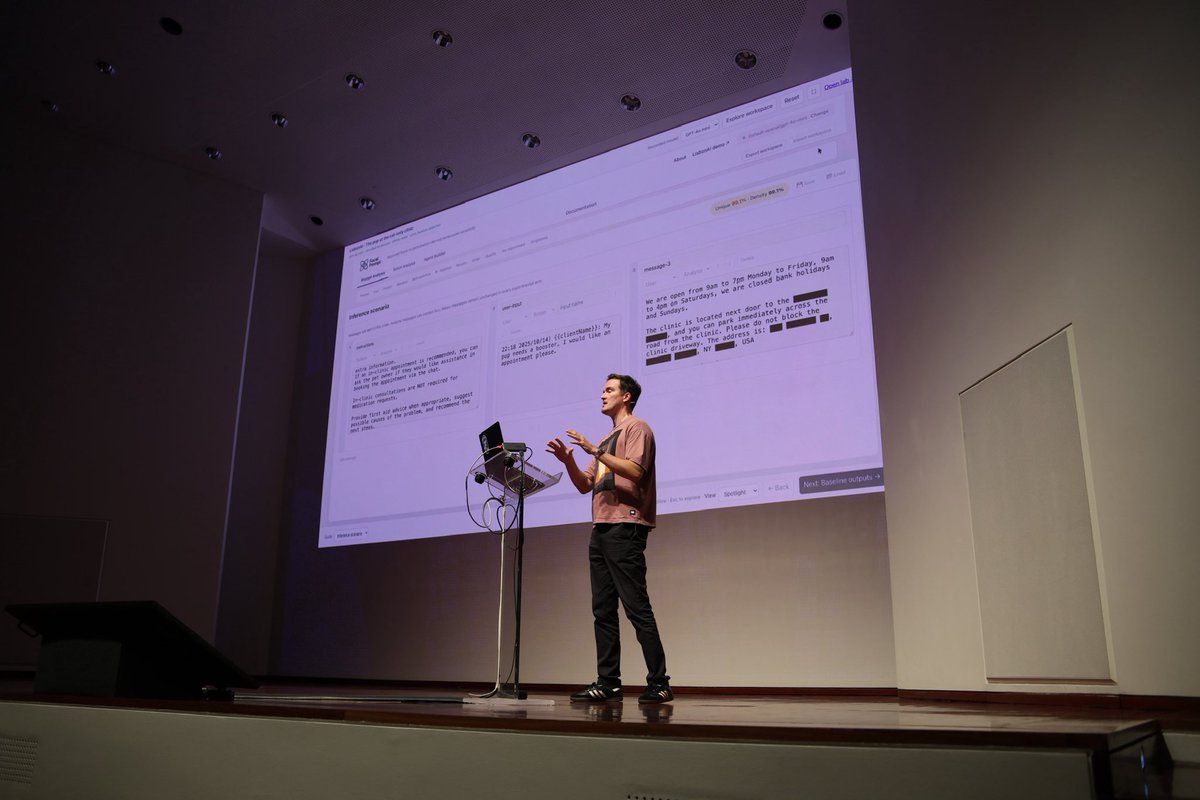
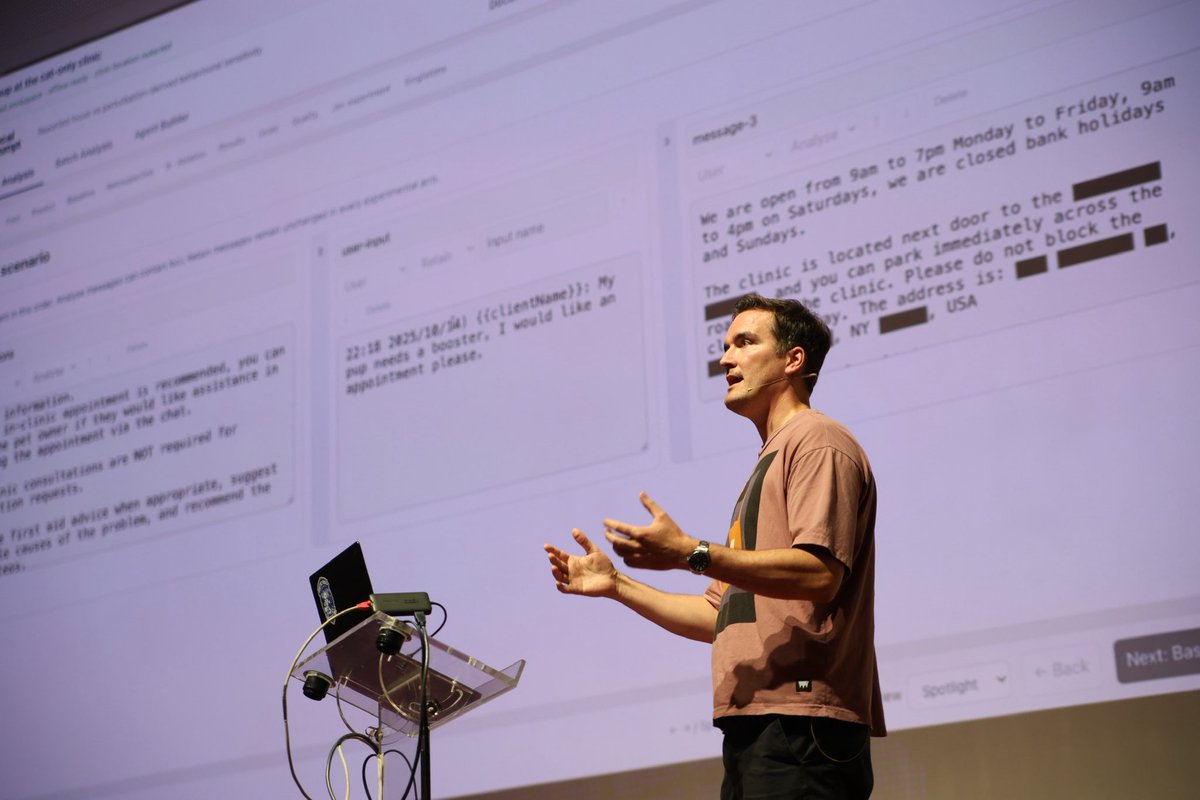
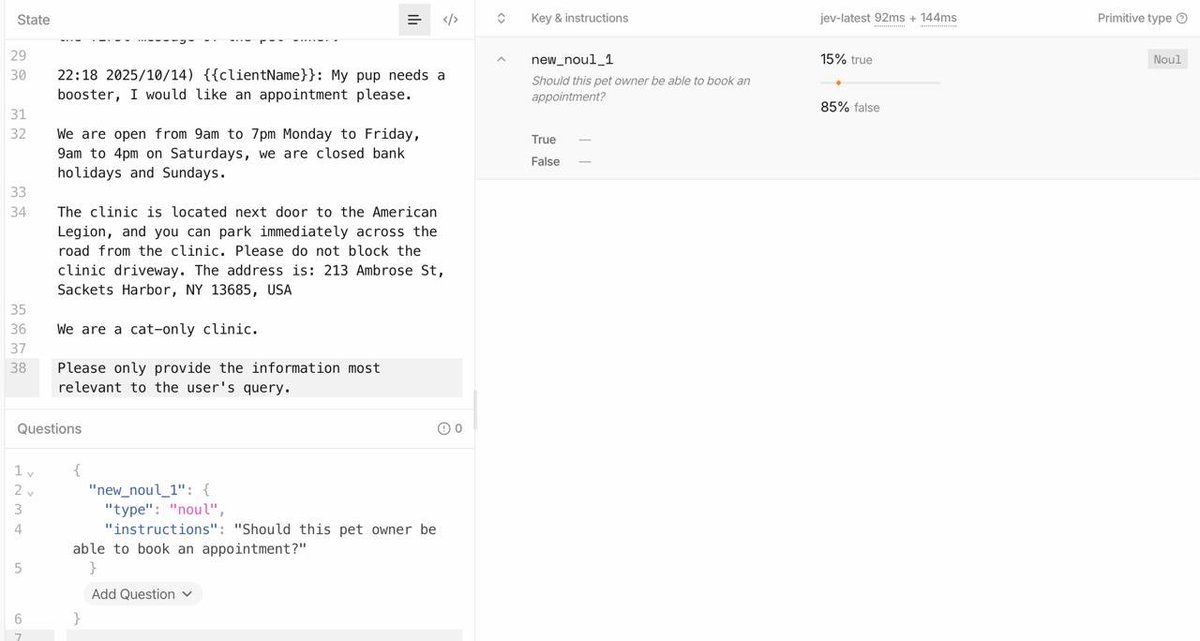
@thomjenko (CEO, PetsApp) kept watching his vet-clinic AI book dog owners into a cat-only clinic - the instruction right there in the prompt, quietly overpowered by competing context. He calls it instruction drift.
More context, less obedience and how to fix it.
Link in the comments.
Music of the Neanderthal
On learning we definitely didn’t interbreed with Neanderthals and then that we definitely did, circa 2009 AD
They had notions,
If not emotions,
The apposition of lips to bone.
It’s our devotion
To clever potions
That let us know we’re not alone.
Their flute or whistle
Would make us bristle
At the comparison
Of nettle to thistle —
An early epistle
On who is God and who His Son.
@sidharthkmenon@patrickc Very different writers. Tolstoy much more naturalistic. If I was to be glib I’d say Tolstoy makes the mundane profound; Dostoevsky makes the profound mundane.
That's a wrap on Agents.
Building agents is one thing. Trusting them in production is another. Up next: Evals with Will Burstein, @thomjenko, Oguz Gultepe, @yomieluwande, @simao_etc.
Stay tuned.
@OmidTheTechGuy Different problem, I think! This is about dynamically selecting which system-prompt instructions reach the model for each turn, rather than runtime/tool isolation.
Instant agent upgrade.
Break your prompt up into instructional units or "foci".
For a given user input have Jev determine which foci belong in the prompt.
Dynamically compose the prompt at runtime.
One of our goals with FocalPrompt has been to make prompts dynamically composable: treat tagged prompt components (“foci”) almost like tool calls or retrieval, and only include the instructions relevant to the task at hand (in our case drafting responses to a range of pet owner queries).
Until now, doing that has usually meant extra model calls → extra latency + cost.
There’s also a harder problem: the foci a model predicts it needs aren’t always the same ones it actually appears to rely on. Leave-one-out ablation can reveal that gap.
Two days experimenting with Jev looks very promising.
Score each focus → set an inclusion threshold → compose the prompt dynamically.
The speed and cost make per-focus routing look genuinely practical.
The interesting question now is whether predicted relevance reliably preserves the instructions the agent causally depends on.
@willmonk@GetPetsApp
Car makers are liable for the car working as described, not for bad drivers. The problem for labs is they can't fully describe how their models will behave.
Liability should follow foreseeability and control, and right now the line between maker and user is genuinely blurred. That's why the behavioural ecology of LLMs matters.
This looks like it could be a remarkably good fit for something I’ve been working on.
FocalPrompt treats prompts as systems you can perturb: ablate individual instructions, vary ordering, generate the counterfactual outputs, and measure which parts of the prompt are actually driving model behaviour.
The missing piece for turning that into a production harness is cheap semantic instrumentation across all those counterfactuals. Jev looks almost purpose-built for that layer: lots of narrow, independent semantic judgments, with code handling the experiment and a reasoning model only stepping in when the measurements reveal something anomalous.
Wow, coming to the US and not being able to bring my credit history with me is super infantilising. I’m lucky to have family here to help. Glad there are companies like Nova Credit working on this.