Please participate (link in Christina’s post below):
As @peter_mantas has correctly argued…
$QURE AMT-130 isn’t just impactful on the Huntington’s disease community…
If a therapy like AMT-130 — with this level of efficacy (based on the data at this stage) — doesn’t stand a chance, it will have a chilling effect across the entire biotech ecosystem.
There are many reasons to care about this.
—
$CLPT $XBI
Yesterday, we spoke to the @FDA about why Huntington’s disease should be considered a national priority under the CNPV Pilot Program.
Now the FDA is asking for public comments, and our community has an opportunity to be heard.
Please take a few minutes to submit a comment asking the FDA to prioritize fatal, progressive neurodegenerative diseases like Huntington’s when promising therapies are ready for review.
Comment here:
https://t.co/24u6kb42wV
Comments close June 29 at 11:59 PM ET.
#HuntingtonsDisease #HDCommunity #RareDisease
FDA offers new tables of examples of CDER (48) and CBER (9) approvals that included real world evidence (e.g. Medicare claims data) https://t.co/WfubxHH1th
$qure $clpt
As far as I can tell, this is a new FDA page… I could be wrong though but I think it is.. once again, possibly a page that has been there and I have never seen it. Way back page acts like it is new also. If this is new this is big, do what you will.
CBER Biological Product Approvals that Used Real-World Evidence
https://t.co/vAp4Jkfyrb
@peter_mantas@biggercapital@DesertDweller93
Katy, I appreciate your loyalty to Dr. Makary and I truly believe he wanted to reform a broken system. But as someone from the Huntington’s disease community, I need people to understand why so many families were deeply hurt by how we were characterized.
We were not “Big Pharma.” We were not paid lobbyists. We were families drowning in generational trauma because our loved ones are dying from one of the cruelest neurodegenerative diseases on earth.
And the hardest part? While many Huntington’s families, caregivers, and at-risk individuals were literally on Capitol Hill during Rare Disease Week meeting with lawmakers after paying our own way there, Dr. Makary was simultaneously speaking to reporters about “moneyed interests” and outside pressure surrounding AMT-130.
There were no corporate-funded advocacy campaigns behind us. Just families carrying decades of trauma, grief, and fear into congressional offices because we are terrified of running out of time. Nearly 50,000 signatures were gathered from HD families, grassroots advocates, caregivers, and supporters demanding urgency for AMT-130, and those petitions were hand-delivered directly to the FDA by members of the Huntington’s community themselves. Over 10,000 emails were also sent to FDA and members of Congress. Nobody paid us to do that. Fear did. Love did. Desperation did.
At the 2024 EL-PFDD meeting in Maryland, FDA sat across from more than 100 HD families and listened as we described watching parents, grandparents, siblings, and children slowly lose movement, speech, cognition, personality, and independence. People in those rooms cried with us. We were told urgency mattered.
Soon after we learned FDA aligned with uniQure on an accelerated pathway, many of us finally felt hope for the first time in our lives.
So yes, families became loud. Because this disease does not wait.
What also deeply damaged trust was watching Dr. Vinay Prasad speak anonymously to reporters about an active therapy. If someone cannot publicly face the people they serve during moments of crisis and scrutiny, they should not be leading CBER.
Leadership requires courage, transparency, and accountability. This is especially true in rare disease communities where every delay carries irreversible consequences.
Many of us respected Dr. Prasad intellectually. We respected his focus on scientific rigor. But from the patient/family side, much of what we experienced felt dismissive, detached, and at times unnecessarily combative toward a dying community simply asking to be heard.
And Dr. Makary protected that approach far too long.
The Huntington’s community is not asking for reckless science. FDA itself asked our community what level of risk we would accept, and nearly three-quarters of respondents said they would accept treatment risks for even a chance at 5 years without progression.
Because this disease does not wait for “perfect data.”
For families living with Huntington’s, every year means more neurons lost, more memories erased, more independence gone, and more people disappearing in front of us. AMT-130 showed the possibility of dramatically slowing that decline over three years. That is time with children. That is dignity. That is life itself.
We are not a lobbying machine. We are human beings trying to stop generations of suffering from continuing.
💙💜
#Huntingtonsdisease
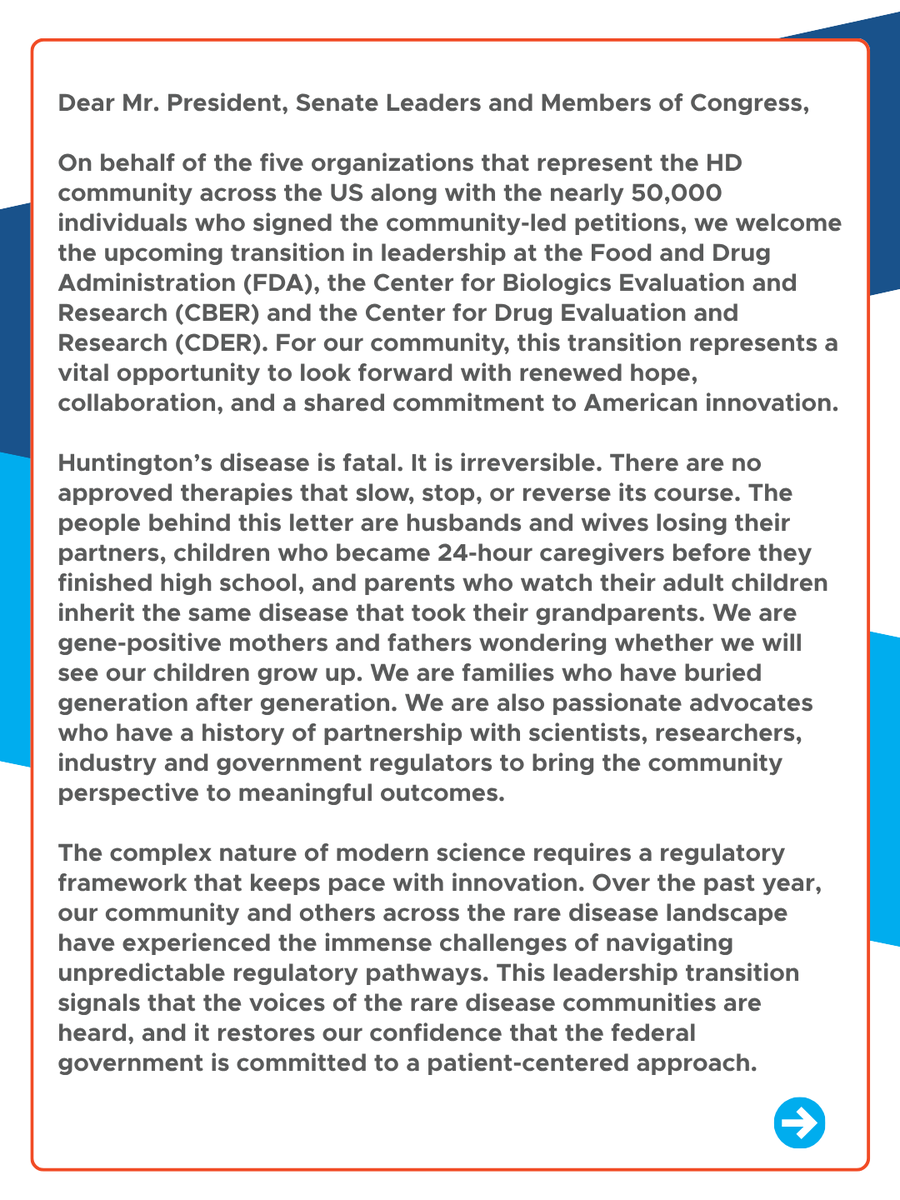
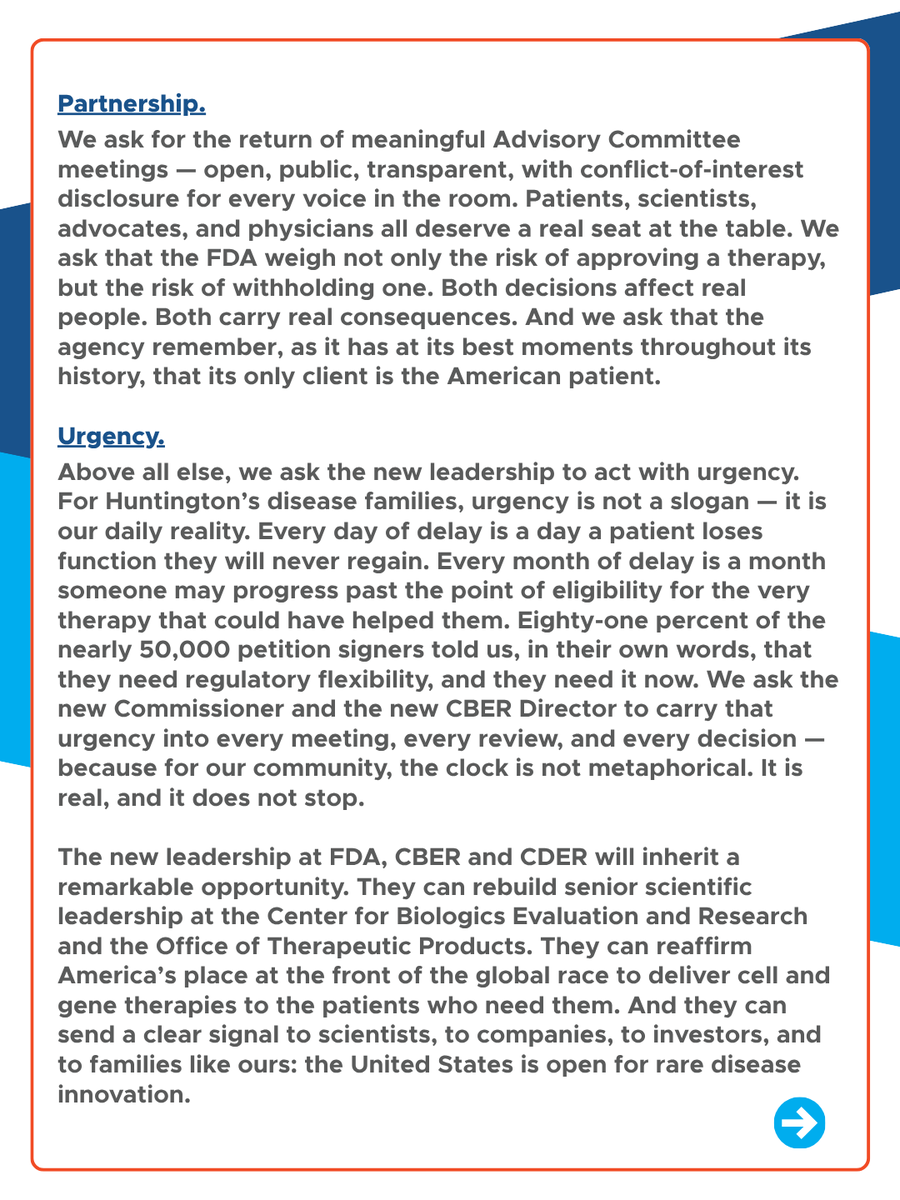
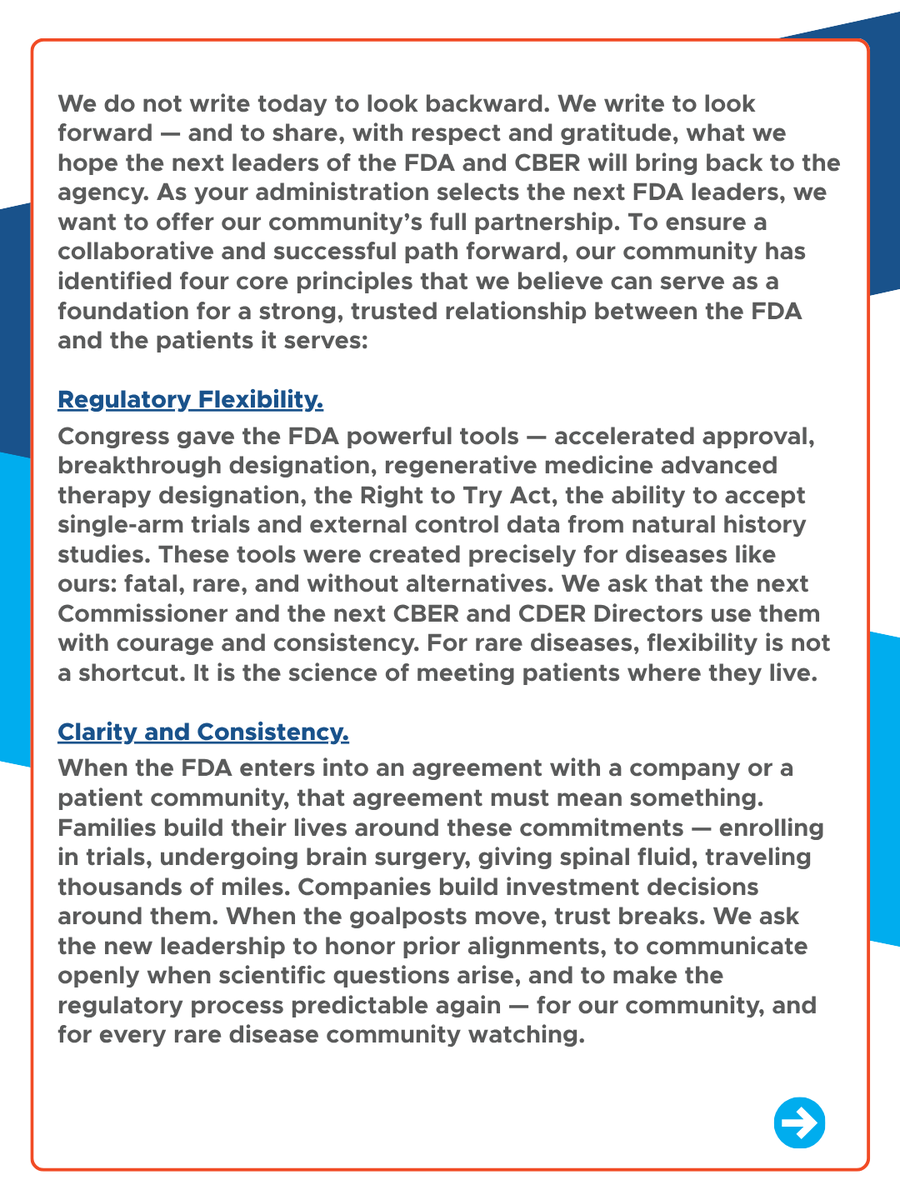
Inspired by advocates, families & community members, 5 #HD orgs came together today to call for a new chapter at the #FDA.
Asking for renewed hope, partnership, urgency, & stronger commitment to #RareDisease innovation & patient-centered progress💙
@mike98572986@SmileysWord Uniqure is not operating from a position of weakness anymore with the FDA. MHRA made it clear they see the potential of AMT-130 with the 3 year data and the national security narrative with the Chinese biotech industry is real.
America has always been a nation that refuses to put a price on human life.
Just recently, the United States carried out a high-risk operation to rescue a single downed pilot. In the process, multiple advanced aircraft — each worth well over $100 million — were destroyed. The total cost in equipment alone exceeded $300 million. Hundreds of American service members were put in harm’s way. And yet, the mission was carried out without hesitation.
Because that is who we are. We do not calculate the financial cost of saving one of our own and then decide it is too expensive. We do not say that one life is not worth the risk or the resources. We go get our people.
This same principle should guide how we approach medicine.
When there are treatments that offer real hope — treatments that could extend life or dramatically improve quality of life for patients who otherwise have no good options — we should not default to rejecting them because they are expensive or because the data is not yet perfect in every traditional sense. We should give patients and their doctors the information they need to make those decisions together.
Too often in recent years, the conversation around new medicines has been dominated by cost calculations rather than by what is actually possible for patients facing devastating diseases. That approach may sound responsible on paper, but it quietly accepts that some lives are worth saving and others are not — based on price.
I have spent my career developing and studying treatments for some of the most difficult conditions in medicine. I have seen what happens when we give patients real options, and I have seen what happens when we don’t.
The FDA’s job is to ensure that treatments are safe and that the science is sound. But once that bar is met, the decision about whether to try a promising therapy should ultimately rest with the patient and their physician — not with distant cost-effectiveness models that treat human life as a line item.
We are capable of doing both: demanding rigorous evidence where it matters most, while refusing to let financial calculations become the final word on whether someone gets a chance at more time with the people they love.
This is not to say that drugs must be expensive or that we should pay unlimited amounts for any treatment. It is simply to say that when deciding whether a medication should be available to patients who have no other options, cost should not be the deciding factor.
That is the America I believe in — the one that will spend hundreds of millions and risk everything to bring one person home, and the one that should bring the same urgency and humanity to the medicines that can bring people back from the edge.
Haha, this is hilarious. This is coming from an Arnold Ventures alumni.
They're so entrenched in their own ideology that they can't fathom the outrage against the @US_FDA + Arnold Ventures is genuine.
It can't possibly be real people or a real instance of collective activism — it has to be some sort of coordinated attack 🙄
Just take two seconds to scroll through my profile (or dozens of others) to realize the "who" @stuartbuck1 is pondering are the patients, families, and loved ones of those afflicted with rare diseases.
The real question isn't who's behind the posts...
... It's how an organization like Arnold Ventures — which claims to want to help the system — has done so much harm.
By grandstanding on the mission to make sure "our system shouldn't spend hundreds of thousands per patient on medicines that don't work," they've blocked promising therapies for patients whose lives are on a very short clock.
The part they won't say out loud:
They believe a human life is worth X, and rare disease patients provide a value of Y — where X > Y... so, screw'em.
—
$QURE $CLPT #XBI #FDA
Szarama staying at the FDA in any capacity is a problem.
She wasn’t just some random FDA hire. She was at Arnold Ventures, then went to ARPA-H for a few months, then was brought into CBER leadership by Vinay Prasad. That path deserves a lot more attention.
And when you look into ARPA-H, the original HARPA/ARPA-H concept traces back to a white paper co-authored by Michael Stebbins, who was previously an executive at the Laura and John Arnold Foundation.
It’s also important that Pink Sheet reported in Sept. 2025 that Szarama was “on detail to the CBER director’s office from ARPA-H.
So what exactly was her status at FDA?
Was she a formal FDA employee, or was she still an ARPA-H detailee?
What ethics screen was applied when a recent Arnold Ventures gene therapy policy author moved into CBER leadership?
Was she involved in any rare disease or gene therapy meetings?
And why is she staying at the FDA?
https://t.co/pW8sytMtQk
https://t.co/VSQpMvFZkb
https://t.co/ohNXTT1aR2
in addition to makary and prasad, without waiting for new leadership to decide, the administration went ahead and showed the rest of the leadership team associated with arnold ventures the door. this sends a strong message this administration is serious about innovation, cares about rare disease patients, and won't let american biotech lose its leadership position in the world.
I’ll be honest - hope feels unfamiliar right now.
The past several months have taken a toll in ways I’m still trying to process. The emotional exhaustion. The constant advocacy. The heartbreak of watching families beg for urgency while feeling like we were up against walls instead of working with people meant to protect patients. So as more changes continue unfolding, I’m not celebrating departures.
I’m breathing.
I’m making space for the possibility that maybe...just maybe...we could see leadership that actually understands what’s at stake when it comes to serious and rare diseases.
Leadership that values transparency.
Leadership that welcomes open scientific dialogue instead of closed doors.
Leadership that understands that every regulatory decision carries two risks: The risk of approving something… and the risk of doing nothing while patients decline.
That perspective matters.
I’ve seen some of @houmanhemmati recent comments, and while words are only words until matched by action, this is the kind of thinking patients have been desperately asking for.
The @US_FDA exists to protect patients, but protection cannot mean paralysis. Scientific rigor and urgency are not mutually exclusive.
Transparency builds trust.
And for communities like Huntington’s disease, time is not theoretical. It is brain cells. It is function. It is memories. It is moments with our children.
That’s the kind of leadership I hope for.
Not perfection.
Not politics.
Not power games.
Just honest, patient-centered leadership willing to listen, willing to engage openly, and willing to understand what’s truly at stake.
We still have a mountain to climb. We may still be starting over in many ways, but for the first time in a while, I can at least imagine a path forward worth fighting for.
#HuntingtonsDisease #RareDisease #StandUpSpeakUp4HD #TimeMatters #PatientsFirst
@realDonaldTrump@WhiteHouse@SenRonJohnson@SenRickScott@SenateAging@SenGillibrand@RepAuchincloss@HHSGov
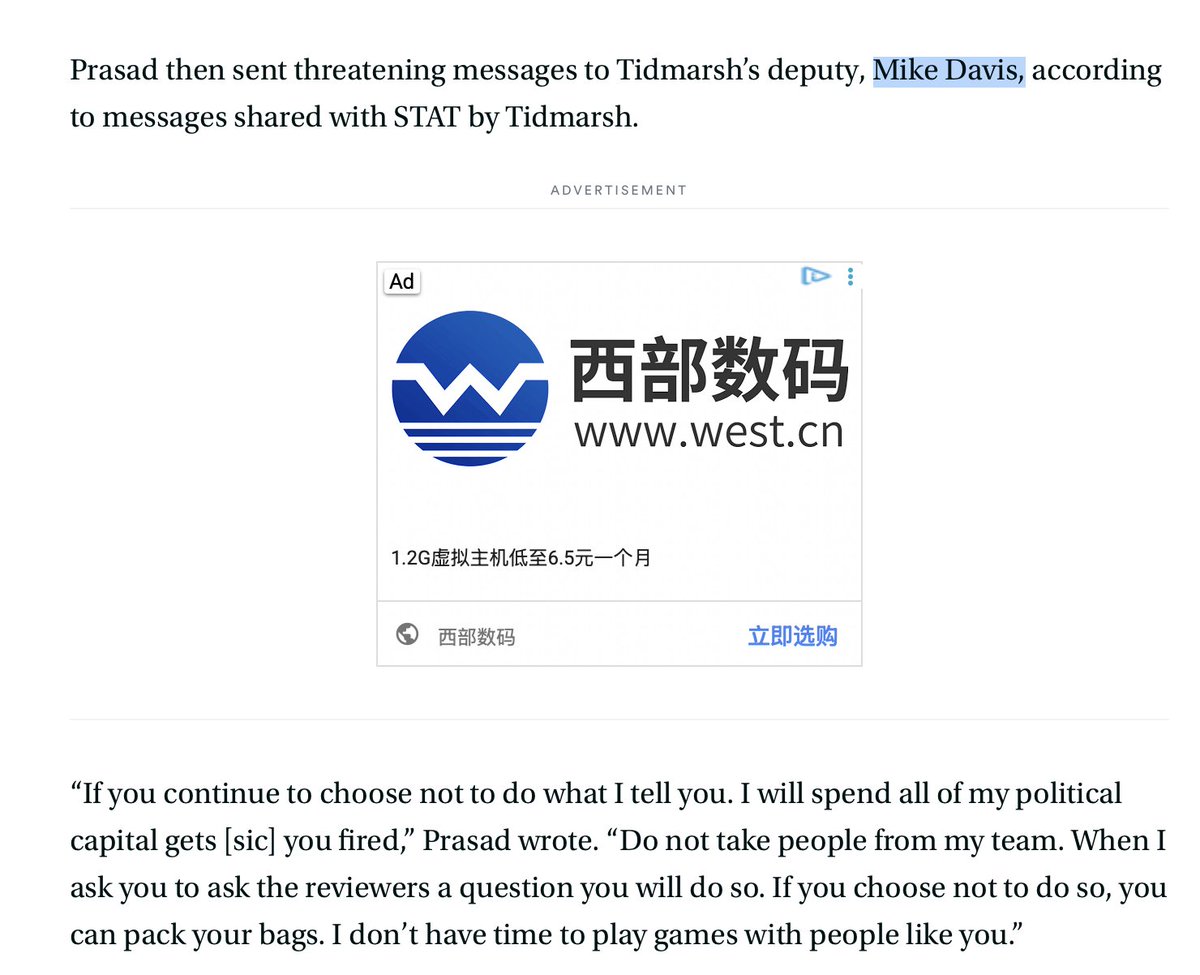
Mike Davis, the new acting CDER head, was the guy Vinay Prasad threatened to "spend all of my political capital to get you fired"
The irony that Vinay Prasad will be known as the only FDA CBER head (maybe only FDA employee?) to be fired TWICE. Good riddance...
https://t.co/EHPJ207pa3
Using AI & ML for single-arm clinical trials needed for rare disease populations: a preprint below on Digital Twins as Synthetic Controls in Single-Arm Trials by the @UnlearnAI team includes examples in both ALS & Huntington's disease #HDSA#ALS h/t @AnotherJonWalsh