This 2-hour Stanford lecture breaks down how models like ChatGPT and Claude are actually built, clearer than what many people in top AI roles ever get exposed to.
Save this and set aside two hours today. It might end up being the most valuable thing you learn all week.
🚨Scientists discovered that overstimulation makes mammals prefer fake experiences to real ones.
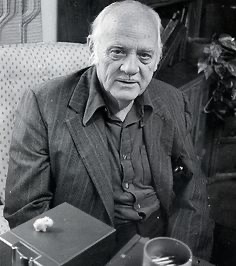
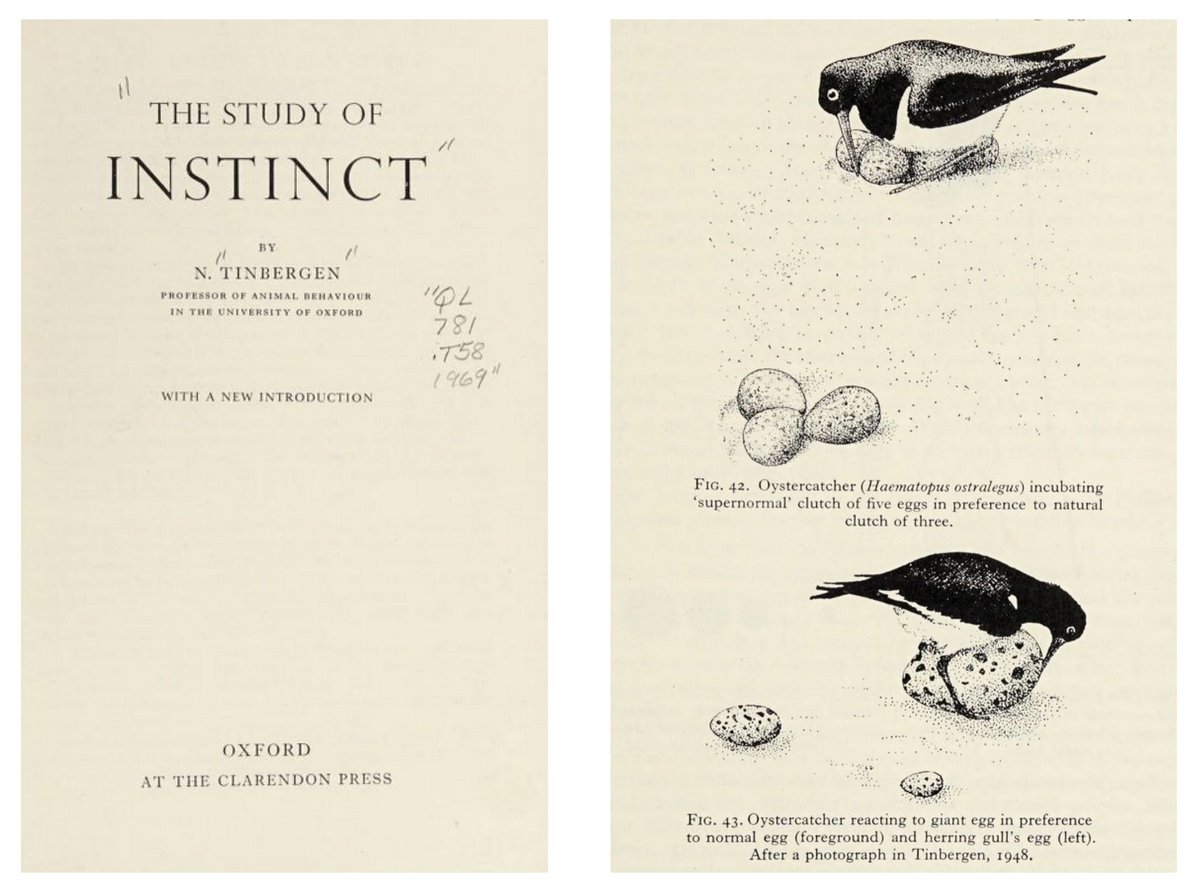
Dutch biologist Niko Tinbergen discovered that birds will abandon their own eggs to sit on larger, fake plaster eggs painted with exaggerated colors.
The mother bird ignores her actual offspring to nurture something artificial that triggers her nesting instincts more intensely than reality ever could.
Tinbergen called these "supernormal stimuli" and spent decades documenting how animals consistently choose fake enhanced versions over authentic experiences.
You are that bird.
Your phone is the plaster egg.
Every notification, every curated feed, every filtered photo represents reality with the saturation cranked beyond what your nervous system evolved to handle.
Your brain's reward circuits fire more intensely for digital stimulation than they do for actual sensory experience, so you abandon the real world to sit on something artificial.
Physical textures feel dull compared to the rapid dopamine hits from scrolling. Conversations with people in your actual environment seem slow and unstimulating compared to the endless stream of optimized content designed by teams of neuroscientists to capture your attention.
Your ancestors developed pattern recognition by watching clouds, reading animal tracks, noticing seasonal changes. Your pattern recognition system now runs on memes, trending topics, and algorithmic recommendations. The same neural machinery that once helped you navigate reality now helps you navigate feeds.
When you eat while watching screens, you're training your brain to associate nourishment with passive consumption rather than active experience. When you walk while listening to podcasts, you're teaching your spatial navigation system to rely on other people's thoughts instead of your own observations.
The simulation you built is a safe experience.
Why? Because it offers more stimulation than everyday life, so your biological systems naturally gravitate toward it.
Tinbergen's birds didn't realize they were choosing fake eggs. They just followed their instincts toward whatever triggered the strongest response. When researchers removed the plaster eggs, the birds immediately returned to caring for their real offspring.
The physical world is still there. Touch something with texture. Taste something without distraction. Walk somewhere without input.
Your real life is waiting under the fake egg you've been sitting on.
David Lynch: "You're operating with a limited mind and don't realize it"
"If you have a golf ball-size consciousness, when you read a book, you'll have a golf ball-size understanding. When you look out, a golf ball-size awareness. When you wake up in the morning, a golf ball-size wakefulness. But if you could expand that consciousness, you read the book with more understanding. You look out with more awareness. You wake up with more wakefulness."
Lynch explains what lies beneath:
"There's an ocean of pure vibrant consciousness inside each one of us. It's right at the source and base of mind, right at the source of thought. It's also at the source of all matter. Modern physics calls it the unified field. All matter, everything that is a thing emerges from this field."
He describes what the field contains:
"This field has qualities like bliss, intelligence, creativity, universal love, energy, peace. It's not the intellectual understanding of this field, but the experiencing of it that does everything. You dive within, transcend, experience this field of pure consciousness, and you unfold it. It grows. The final outcome of this growth of consciousness is called enlightenment. And a side effect of enlivening this consciousness is that negativity starts to recede."
Lynch shares what happened when he started meditating:
"When I started, I was filled with anxieties. Filled with fears. Kind of a depression. And anger. I took this anger out on my first wife. After two weeks of meditation, she comes to me and says, 'What's going on?' I was quiet for a moment because it could have been any number of things she might have been referring to. I said, 'What do you mean?' She said, 'This anger, where did it go?' I didn't even realize it had lifted."
He explains why negativity kills creativity:
"Anger, depression, sorrow, these are beautiful things in a story. But they're like poison to the filmmaker. Poison to the painter. Poison to creativity. They're like a vice grip. If you're super depressed, you can hardly get out of bed, let alone think of ideas or have creativity flowing."
Lynch describes what grows when you expand consciousness:
"It's money in the bank to get that beautiful consciousness growing. Creativity flows. The ability to catch ideas at a deeper level. Intuition grows. This field is a field of pure knowing. You dive in there, and you just know how to go. You know how to solve problems. It's like an ocean of solutions."
He shares the ultimate benefit:
"The ultimate thing for me is the enjoyment of the doing. The enjoyment of life grows huge. I love making films now more than ever before. Ideas flow more. Everybody has more fun on the set. People look like friends, not like enemies. It's a beautiful, beautiful thing."
Lynch addresses the myth that you need anger to create:
"People say, 'You gotta have anger. You gotta have an edge to create.' No, you gotta have energy. You gotta have clarity to create. You gotta be able to catch ideas. You gotta be strong enough to fight unbelievable pressure and stress. And this gives you more and more ability. It just looks beautiful. It's way, way, way better."
On the nature of true happiness:
"They say true happiness isn't out there. True happiness lies within. I always wondered, where is this 'within'? And they don't say where it is. They don't even say how to get to it. But it's there. And when you're in it, you know you're in it. It's familiar. It's you. Right away, a happiness, but it's not a goofball happiness. It's a thick beauty. A thick beauty to appreciate life and living. And suffering starts to go."
This 1 hour Yale lecture will teach you more about game theory than 2 years of MBA program.
Replace one movie this weekend with this lecture, then read the article below.
That one decision changes more than you think.
In 1958 this man accidentally discovered "how to exit his physical body."
He documented:
• 100+ dimensions of reality
• Contact with non-human intelligence
• The truth about death
Even CIA invested in him.
What he revealed about "consciousness travel" will shock you.
It started with a nap.
September 1958. Westchester County, New York. Robert Allan Monroe, 43 years old, successful radio broadcasting executive, father, husband, and by every measurable standard a completely ordinary American man, lay down one afternoon to rest. He had no interest in spirituality. He read engineering manuals, not philosophy. He built radio networks for a living. He believed in things he could measure.
What happened next consumed the remaining 37 years of his life.
As he drifted toward sleep, Monroe felt a vibration moving through his body. Not metaphorically. A physical, full body electrical buzzing that started at his shoulder and spread outward like a current running through his bones. He jolted awake. The vibration stopped. He assumed muscle spasms and went back to sleep. It happened again the following week. Then again. Then with increasing regularity, sometimes multiple times in a single evening.
By the winter of 1958, the vibrations were accompanied by something else entirely. Monroe found himself floating near the ceiling of his bedroom, looking down at his own body lying on the bed below. His wife was asleep beside him. The room was exactly as it should be. The alarm clock read the same time it had when he closed his eyes. Nothing was distorted or dreamlike. Everything was precise, stable, and utterly real.
He went to his doctor in early 1959 convinced he had a neurological condition. The doctor found nothing. He saw a psychiatrist who tested him extensively and cleared him of any psychological disorder. He consulted a neurologist. Clean results across every examination. Whatever was happening to Robert Monroe, medicine in 1959 had no category for it.
So he did what engineers do when they encounter an unexplained phenomenon with no existing framework. He designed a methodology to study it.
Monroe began keeping a journal in the spring of 1959, recording every experience with the precision of a field researcher. He noted the time, the physical conditions, the duration, the content, the sensory details. He cross referenced entries looking for patterns. He tested variables. He tried to induce the state deliberately, and when he succeeded, he began conducting what he called “experiments” during the experiences themselves, leaving his body with specific tasks to complete and then verifying the results against physical reality afterward.
In one early session he traveled to the home of a friend in a neighboring county, observed specific details of what that friend was doing at that moment, and called him the following morning to confirm. The details matched. Monroe did not celebrate this. He wrote it down and moved to the next experiment.
By 1960 he had accumulated enough data to begin categorizing what he called “locales,” distinct territories of non-physical reality that he consistently encountered across hundreds of sessions.
Locale I was the physical world itself, the same Earth, the same geography, the same people, observed from outside the body. Monroe could move through walls, pass through solid objects, observe events in other locations in real time. He documented cases where information gathered during these experiences proved verifiably accurate when checked against physical reality afterward.
Locale II was something else completely. A territory of vast, apparently infinite scale where the physics operated through consciousness rather than matter. In Locale II, thought produced movement. Emotion sculpted the environment. Other intelligences existed there, some human in origin, some not. Monroe described it as the territory that all human cultures across all of history had been trying to describe through their religious frameworks, the place that every mythology about spirits, souls, heaven, other worlds, and non-physical existence was groping toward with limited language.
Locale III stopped him cold the first time he encountered it in 1961.
It was Earth. Recognizably Earth, with geography and cities and human civilization. But the history was different. The technology had developed along a different path. There was no electrical infrastructure as Monroe knew it. Buildings used different architectural principles. He encountered a version of himself living in this reality, a man with Monroe’s features but a different life, a different wife, different children. Monroe spent multiple sessions in Locale III trying to understand whether he was observing a parallel timeline, an alternate dimension, or something his mind was constructing from its own depths.
He never resolved that question definitively. He documented it and moved forward.
What Monroe encountered consistently across all locales were intelligences that were not human and had never been human. He was careful and clinical in how he described these contacts. He did not call them angels or demons or aliens. He called them what his direct experience suggested: non-physical intelligences with apparent awareness, apparent intent, and apparent knowledge that exceeded anything Monroe could attribute to his own unconscious mind generating the experience internally.
In one session documented in his journals from 1965, one of these intelligences told Monroe something about the nature of physical life that he found so disturbing he stopped his sessions for three weeks afterward. He described physical existence as a kind of school, a densified territory where consciousness comes to develop capacities it cannot develop in pure non-physical states, specifically the capacity to manage and transform strong emotion. The intelligence told Monroe that what humans experience as death is simply the end of an enrollment, and that the terror surrounding it exists because the densified physical state makes it nearly impossible to remember what lies on the other side.
Monroe sat with that for three weeks. Then he went back.
By 1967, Monroe had shared his research with enough scientists and researchers to begin attracting serious institutional attention. He was not the kind of man institutions expected to be making these reports. He was not a meditating mystic in California. He was a Virginia businessman who had produced and directed radio programming, built broadcast networks, held multiple patents in audio technology, and spoke the language of engineering, research design, and measurable outcomes.
The Monroe Institute of Applied Sciences was incorporated in 1971 in Faber, Virginia. By this point Monroe had been running methodical out of body research for over a decade and had begun developing the technology that would define his legacy.
Hemi-Sync, short for Hemispheric Synchronization, was Monroe’s application of audio engineering to consciousness research. Using precisely calibrated audio tones delivered separately to each ear, the technology produced binaural beats that guided both hemispheres of the brain into synchronized brainwave patterns. Monroe had observed that the out of body state consistently corresponded with specific brainwave signatures, and he engineered an audio method to reliably reproduce those signatures in other people.
The results were not subtle. Research volunteers at the Monroe Institute began reporting out of body experiences, contact with non-physical intelligences, and encounters with deceased individuals using the Hemi-Sync protocols. Monroe documented thousands of these cases through the 1970s with the rigor of a clinical researcher.
In April 1972, the United States government came knocking.
The CIA and the Defense Intelligence Agency had been running a classified investigation into psychic phenomena since the late 1960s under a program that would eventually be called Stargate. Their interest had been catalyzed by Soviet research suggesting the Russians were developing psychic intelligence capabilities, specifically remote viewing, the ability to observe distant locations using consciousness rather than physical instruments. The Americans needed to know if it was real.
They arrived at the Monroe Institute with funding and questions.
Robert Monroe gave them both access and technology. The Hemi-Sync protocols became a core training component for the government’s remote viewing program. Monroe worked directly with researchers at Stanford Research Institute, particularly physicists Russell Targ and Hal Puthoff, who were running the government’s psychic research program with the scientific rigor the CIA required.
Ingo Swann, a New York artist who became the most documented psychic in American government history, trained using Monroe’s methods. In 1973 Swann conducted a remote viewing session in which he described the planet Jupiter in detail, including a ring system around the planet that no human being knew existed. Voyager 1 confirmed Jupiter’s rings in 1979. Swann had described them six years earlier from a room in Manhattan.
Monroe continued his personal research throughout this period while simultaneously running the Institute and collaborating with government researchers. His first book, Journeys Out of the Body, was published in 1971 and became the foundational text for what would become a worldwide out of body experience research community. It was written with the flat, factual tone of an engineering report. Monroe refused to romanticize or dramatize. He presented data.
His second book, Far Journeys, published in 1985, went deeper. By this point Monroe had accumulated over 25 years of documented sessions and had begun receiving what he described as downloaded transmissions of information from non-physical intelligences he called INSPEC, short for Intelligent Species. These transmissions concerned the structure of consciousness, the mechanics of physical reality, and the nature of what happens to human awareness after physical death.
The picture Monroe assembled across those 25 years was internally consistent across thousands of separate sessions. Consciousness does not originate in the brain. The brain is a receiver and processor, not a generator. Physical death involves a transition of awareness out of the body into non-physical states that Monroe had been navigating voluntarily for decades. The terror humans feel about death is largely a function of cultural programming and the amnesiac effect of dense physical embodiment, not a reflection of what death actually involves.
Monroe described death, based on direct exploration, as recognizable. A loosening. A return to a state the consciousness already knows from the other side of birth.
His third and final book, Ultimate Journey, was published in 1994. Monroe was 79 years old. He had been making the journey voluntarily for 36 years. The book reads differently from the first two, less like research notes and more like a man organizing everything he has learned before he no longer needs to write it down.
Robert Allan Monroe died on March 17, 1995, at his home in Faber, Virginia.
People who knew him well reported that in his final weeks he seemed more curious than afraid. That he spoke about what was coming the way a traveler speaks about a destination he has already visited many times and simply hasn’t been to recently.
He left behind the Monroe Institute, which continues operating today with researchers, practitioners, and thousands of annual visitors from around the world. He left behind the Hemi-Sync technology, now used by hospitals, therapists, military veterans programs, and consciousness researchers across dozens of countries. He left behind three books of documented field research that no one has successfully debunked across 30 years of trying.
And he left behind a single line from his final book that tends to lodge itself permanently in the mind of anyone who encounters it.
He wrote that after 36 years of voluntary exploration beyond the body, the one thing he had become completely certain of was that what we are is much more than what we think we are, and that physical life, for all its density and difficulty and beauty, is only the smallest fraction of what consciousness actually does.
A radio engineer from Virginia mapped the territory on the other side of death and filed his reports.
The reports are still sitting there, waiting to be read.
must read. doesn't matter if you're just entering the AI space, deep in the trenches building, or sitting in corporate wondering how to actually use this stuff.
this is the most complete claude breakdown i've seen and i've been using it daily for over a year.
covers:
- prompt engineering that actually gets elite outputs (not the generic "be specific" advice)
- which model to use and when (sonnet for 80% of work, opus when you need it to think)
- connectors, projects, research mode, the tools most people don't even know exist
- cowork, claude code, skills, plug-ins, the advanced stuff that changes how you work
if you're still defaulting to chatgpt for everything you're genuinely leaving performance on the table. claude's suite right now is unmatched for getting real work done.
bookmark this, but actually give it a read.
I know 90% of you bookmark fiens aren’t reading anything