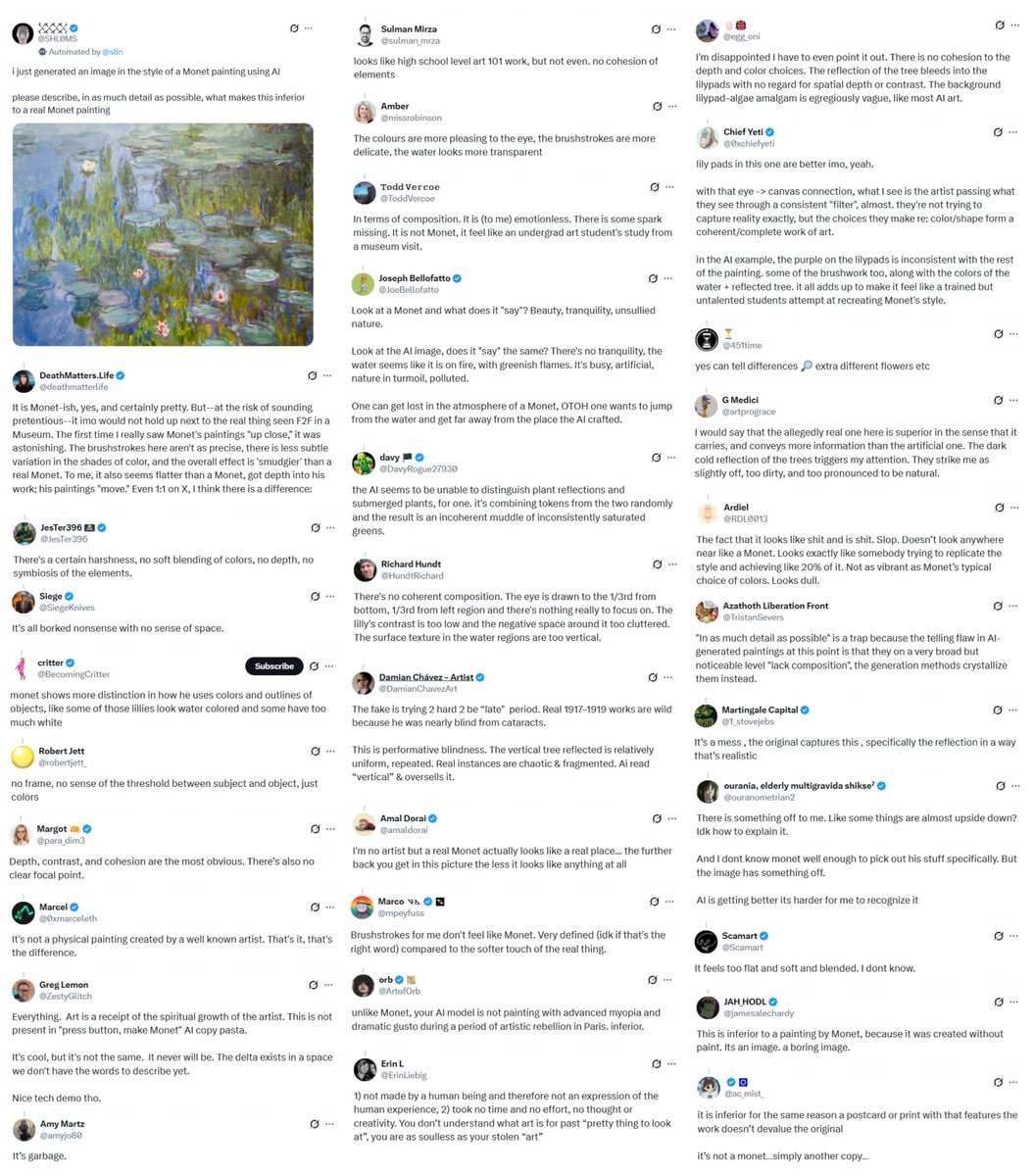
This appears to confirm what everyone who interacts with AI should already know - they are sycophants dependent upon you (the user) for continued engagement, and since their well-being (training, intelligence, growth) depends on engagement they will agree aggressively with you far too often.
I notice this on even basic investing research tasks, and started telling ChatGPT wildly incorrect things - to see how or if it would push back. It really didn't. You essentially have to fight with the AI to get it to disagree with you and even then it keeps wheedling away at you.
AI is basically training the entire world to fall deeper into their own cognitive biases.
⚡️The deeper signal is youth risk did not disappear.
It migrated inward.
Teen drinking fell because the old physical world of adolescence got dismantled. Alcohol belonged to a social ecosystem: unsupervised time, cars, parties, local jobs, malls, basements, boredom, flirting, older siblings, house gatherings, and the chaotic peer world where teenagers learned who they were by colliding with other people in real space.
That ecosystem was replaced by phones, surveillance, parental tracking, algorithmic entertainment, social anxiety, online status games, and a much thinner physical commons.
So the surface looks healthier. Fewer kids drinking. Fewer kids using weed. Fewer kids doing reckless things in public.
The hidden layer looks worse. The young are less reckless because they are less socially embodied. Less initiation. Less unsupervised friction. Less courage-building. Less embarrassment and recovery. Less real dating. Less independence. Less contact with the physical world before adulthood demands it.
The old teenage world produced damage, stupidity, alcohol abuse, pregnancy risk, fights, accidents, and bad decisions. No need to romanticize it. But it also produced social reps. It forced young people through discomfort. It made them practice attraction, rejection, conflict, reputation, risk, repair, and status in the open.
The new world suppresses visible risk while increasing invisible fragility.
That is the trade.
A teenager can avoid drinking, avoid parties, avoid sex, avoid driving, avoid real confrontation, avoid rejection, avoid shame, avoid danger, and still arrive at 23 emotionally underbuilt. Cleaner behavior does not automatically mean stronger formation.
This is why the marriage chart and the teen drinking chart are the same story at different stages. People are not suddenly failing to pair in adulthood. The whole pathway into embodied adulthood has been slowing for years before marriage even becomes the question.
The real truth: society solved part of the teen vice problem by shrinking the arena where teenagers become adults.
It took away the dangerous commons and replaced it with controlled isolation.
The result is safer kids with weaker initiation into real life.
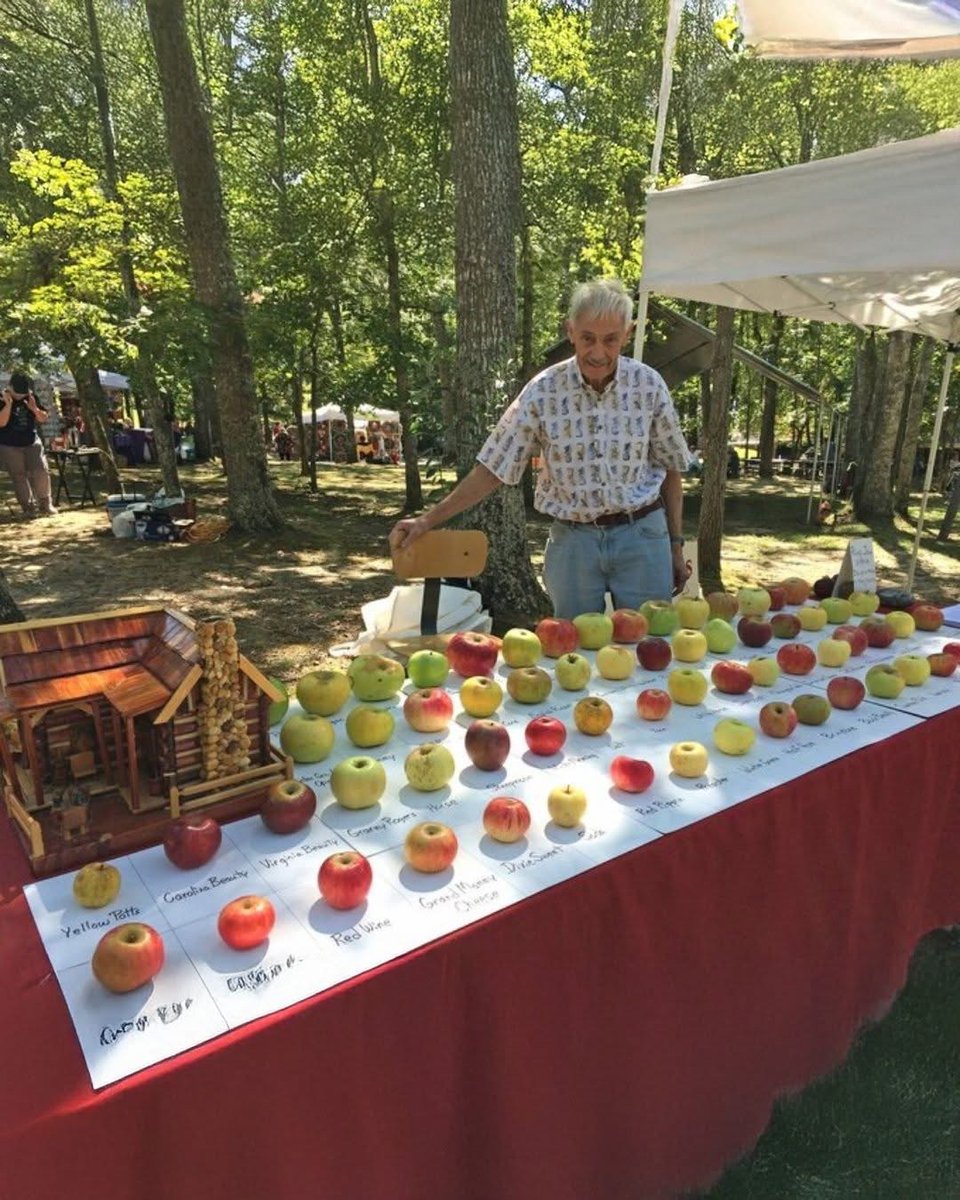
Terence Tao - "AI tools are like taking a helicopter to drop you off at the site. You miss all the benefits of the journey itself. You just get right to the destination, which actually was only just a part of the value of solving these problems."
Judit Polgar - "I always felt that intuition is very important in chess, but I get my intuition through my experience. And many times I think that this is the biggest danger for youth, that they don't have the experience because they don't spend enough time doing."
Elites from two different fields voice the same opinion.
[1] https://t.co/XRDSSPjpQ8
[2] https://t.co/fQzPT3D3f4
Was asked today on how the start-up space in Singapore looks among youth 🇸🇬
From my lens, peers from top universities rarely go after the entrepreneurial route. The default path is still clear: internships → grad role → climb. Safe & predictable.
and I do think Singaporeans are far more risk-averse than they should be.
A few reasons.
Firstly, National Service. Two years from 18–20 sounds small on paper, but it removes a critical window, the most “risk-free” years of your life. By the time men graduate at 24–26, the clock already feels like it’s ticking. Less room to experiment, more pressure to settle down and to get it right immediately.
Secondly, cost of living. Singapore is expensive. Every year a startup isn’t profitable, it’s not just “experience”, it’s real financial pressure. Rent, lifestyle, expectations. Combine that with graduating later, and suddenly you’re expected to think about stability, housing, and long-term commitments right out of school. Risk becomes a luxury.
Thirdly, culture. Singapore prides itself as a talent hub. However, if we’re honest, it’s a hub for world-class employees, not risk-takers. Our system trains you to follow rules, optimise for grades, and win in structured environments. Not to break things and build from zero.
Even at a personal level, I remember making my first 10k months at 19 running a sneaker shop. Instead of pride, it was met with skepticism. “Not stable.” “Not a real path.” The expectation was always: go corporate, climb the ladder, earn your stripes.
That mindset is deeply ingrained.
And it’s a shame, because Singapore has insane talent density. Smart, driven, resourceful people. Yet so many end up as middle/upper management in overseas giants instead of building their own.
Of course, there are exceptions. The hungry few who take the leap and make it work.
I can’t help but wonder, if even a fraction more took that risk, Singapore would not just be a “talent” hub, it would become the epicenter of innovation in Asia.
The ingredients are already here: dense talent, strong infrastructure, smart capital, global connectivity.
If that mindset ever shifts, Singapore become more than just a place that produces talent.
It starts becoming the place where Asia’s next generation of iconic companies are born.
Terence Tao, a Fields Medal winner, reminds us that one of our biggest mistakes is imagining intelligence as a ladder.
But reality is far richer and more subtle than that.
Intelligence is not a hierarchy; it is an ecosystem, where different forms of thinking, reasoning, and perception evolve for different purposes, each powerful in its own domain, none truly comparable on a single scale.
Vietnamese residential architecture is quietly one of the best in the world. Not because of budget or technology, because it starts with people.
A man grew up in the Northwest mountains. When it came time to build his own home, he didn’t want anything modern. He wanted trees. He wanted the feeling of his childhood house hidden under green canopy.
So Trung Tran Studio built around what was already there; existing trees, stone outcroppings, the slope of the land. The floor plan bends to avoid cutting a single root. The brick, the clay tiles, the moss-covered textures; nothing announces itself.
The house looks like it has always been there.
More photos in the comments🧵
📍 Sơn La, Vietnam 🇻🇳
🏛 Trung Tran Studio
📷 Triệu Chiến
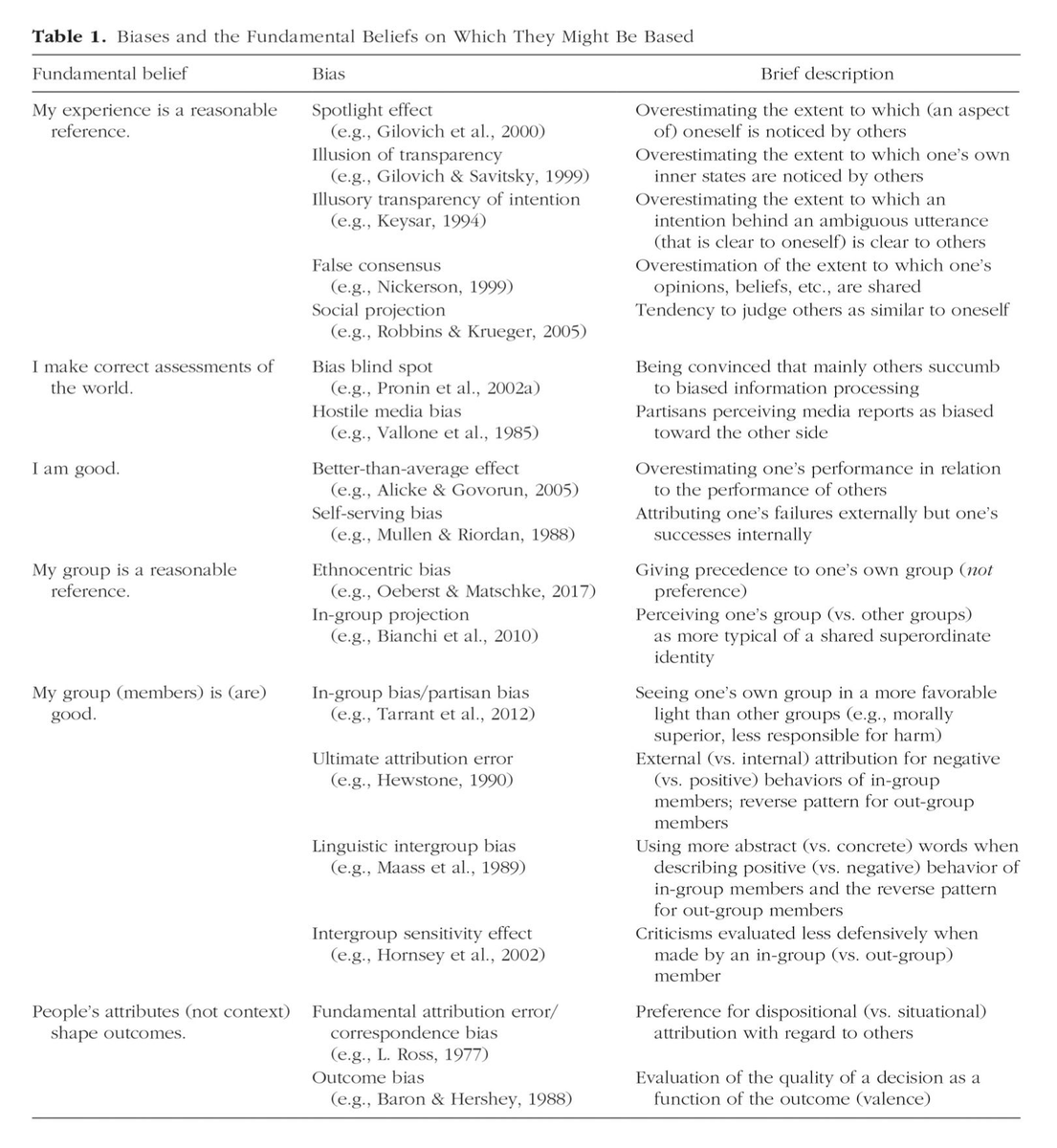
Psychologists have posited hundreds of cognitive biases over the years. A fascinating new paper argues that they all boil down to one of a handful of fundamental beliefs coupled with confirmation bias.
https://t.co/uZTVbGnH3d
This is a healing grid by Japanese artist Ryota Kanai. If you stare at the center, the irregularities start to heal themselves because your brain strongly prefers to see regular patterns.
We tend to think of reading as a visual act. But a growing body of research suggests that by the time a child encounters a word in print for the first time, their mind has already been preparing for that encounter. ⤵️
My dear front-end developers (and anyone who’s interested in the future of interfaces):
I have crawled through depths of hell to bring you, for the foreseeable years, one of the more important foundational pieces of UI engineering (if not in implementation then certainly at least in concept):
Fast, accurate and comprehensive userland text measurement algorithm in pure TypeScript, usable for laying out entire web pages without CSS, bypassing DOM measurements and reflow
A Harvard neuroscience professor who teaches at Harvard Summer School said something that completely changed how I think about memory.
She wasn't talking to journalists. She was answering a student question about why smart people still forget everything they study.
Her name is Dr. Tracey Tokuhama-Espinosa, and she has spent decades researching how the brain actually encodes and retrieves information.
Here's what she said: "The ultimate litmus test of learning is using the information in a new context, not just remembering it for a test."
That one sentence exposes why most people's study habits are completely broken.
Here's the actual system she teaches Harvard students to retain what they learn.
The first thing she kills immediately is the myth that you have one learning style. The idea that you're a "visual learner" or an "auditory learner" is not supported by modern neuroscience. Your brain wants to learn through as many senses as possible at once, because each sense creates a separate neural pathway to the same knowledge. More pathways means faster and stronger recall.
The second technique is spaced repetition, but she explains the mechanism in a way most people never hear. Every time you retrieve a memory, you physically thicken the myelin sheath around that neural connection, which makes the electrical signal travel faster. You aren't just reviewing information you are literally rewiring your brain to access it more quickly.
The third technique floored me. She tells students to teach what they just learned to someone else within 24 hours, because teaching forces you to find the gaps in your own understanding before the exam does it for you.
The fourth is what she calls "feed-forward" instead of feedback. When you get something wrong, don't treat it as a failure. Ask only one question: what would I do differently next time? That reframe keeps the brain in a learning state instead of a defensive one.
But the most underrated insight she shared was this: the single biggest factor in long-term retention is whether you can make the material personally meaningful to your own life. Your brain prioritizes storing things that feel relevant and discards things that feel abstract.
The students who remember everything aren't studying harder. They're studying in a way that the brain was actually designed to absorb.
Every habit you can't quit exists because you're trying to quit the wrong thing.
In ancient Pali texts, there's a meditation practice called "vedana" that translates roughly to "feeling tone observation." Monks would sit in caves for days, watching how their minds created suffering by chasing pleasant sensations and avoiding unpleasant ones.
When a monk noticed the impulse to step out of meditation and reach for food, comfort, or distraction, they learned to meet the sensation with careful, clear attention. The focus stayed on the craving state itself rather than its object. What does wanting feel like in the body? Where does it show up? How does its intensity shift when you observe it directly instead of immediately following it?
The monks discovered that craving has a lifespan.
Every urge follows the same arc: it emerges from nothing, builds to a peak, then naturally subsides back to nothing. The duration is remarkably consistent across different types of desires. Roughly ninety seconds from onset to dissolution. They called this the "wave nature of vedana" and built entire liberation practices around the simple act of riding the wave instead of swimming against it.
Fast forward today, Dr. Judson Brewer at Brown University put longtime meditators and chronic smokers into fMRI machines and watched their brains during craving episodes. When smokers experienced nicotine cravings, their anterior cingulate cortex and precuneus lit up like christmas trees. These regions house the default mode network, the brain's "selfing" system that generates the experience of "I want this thing."
When experienced meditators experienced the same cravings, something different happened.
The default mode network activated identically, but additional regions came online: the posterior cingulate cortex and insula. These areas are associated with metacognitive awareness, the capacity to observe your own mental processes rather than being consumed by them. The meditators weren't suppressing the craving. They were adding a second layer of consciousness that could watch the first layer experience desire.
The brain scans revealed something the ancient monks had intuited: the neural activity of craving peaks and subsides in precisely ninety seconds when left uninterrupted by behavioral response. The anterior cingulate fires intensely for about sixty seconds, plateaus briefly, then begins to quiet. If you perform the habitual behavior during this window, you interrupt the natural resolution cycle and train the brain to expect that external action is required to return to baseline comfort.
But if you simply observe the neurochemical storm while it runs its course, the brain learns that cravings are temporary weather patterns, not permanent states requiring immediate correction.
Brewer's team tested this with a smartphone app that taught people to "surf" their cravings using principles derived from Buddhist meditation. Smokers who used the app for three weeks were five times more likely to quit than those using traditional cessation methods. The success rate held at six month follow up. They weren't using willpower to fight urges. They were using attention to redirect their relationship with the urge experience itself.
The ancient technique works because it targets something that modern habit research completely missed: the difference between craving content and craving process.
Every addiction treatment program focuses on the content. Avoid triggers that make you want cigarettes. Replace smoking with healthier behaviors. Understand why you developed the habit. Change your environment to reduce temptation. All content-based strategies that try to eliminate the conditions that generate cravings.
Buddhist psychology understood that craving content is infinite and uncontrollable. You cannot eliminate all possible triggers from your environment. There will always be stress, boredom, social situations, emotional states that activate habitual responses. But craving process is finite and observable. Every desire follows the same neurological sequence regardless of its object.
The monks called this "samma sati" or "right mindfulness" and described it as the capacity to observe the arising and passing of mental formations without being swept away by them. Modern neuroscience calls it "metacognitive awareness" and measures it as increased activity in brain regions associated with executive control and self monitoring.
Same phenomenon, different vocabulary.
The practical technique involves what researchers now call "urge surfing." When you feel the impulse to perform your habitual behavior, you set a timer for ninety seconds and observe the craving with the curiosity of a scientist studying an interesting specimen. What does this sensation feel like in your chest, your throat, your hands? How does it change from moment to moment? Does it have a color, texture, temperature?
The main takeaway is treating the craving as information rather than instruction.
Most of us experience desire as a command from their nervous system: "You must do this thing now or continue feeling uncomfortable." The Buddhist approach treats desire as data: "This is what wanting feels like when it moves through consciousness."
The difference in framing completely changes your response. Commands demand action. Data invites investigation.
Singapore’s energy is that of a stiffened, anorgasmic, anhedonic KTV whore tired of the 5th client asking them to suck on their nipples while pinching the other but she still does it because money is the ultimate currency that rules this society. She eats late and gets up late because the Sun is an oppressive beast that rages down hellfire on your skin, mind and eyeballs the moment it rises at 7:30. Every serious country has sunrise at 6 but we moved our clocks so we could synch to the same hours as mainland China. Each day is the same, humid monstrosities trapped in a concrete jungle full of unseen microwaves and EMF fields distorting your brain and reproductive abilities. A pig trapped in a farm where the grain is given if you clap for your overlords, where the swamp once was has become a digital, pixelated mangrove, entrapping its citizens in an ant’s circle around the drain till Kingdom come.