The latest data from ENETS 2026
How will new data impact clinical practice? 📈
Expert insights from Prof. Louis de Mestier, Prof. Timon Vandamme (@TimonV), & Dr Alice Durand
📺 Watch for an update on:
-Breakthrough results from the COMPETE study with #PRRT in pancreatic #NETS before targeted therapy
-Strategies for re-challenge with PRRT
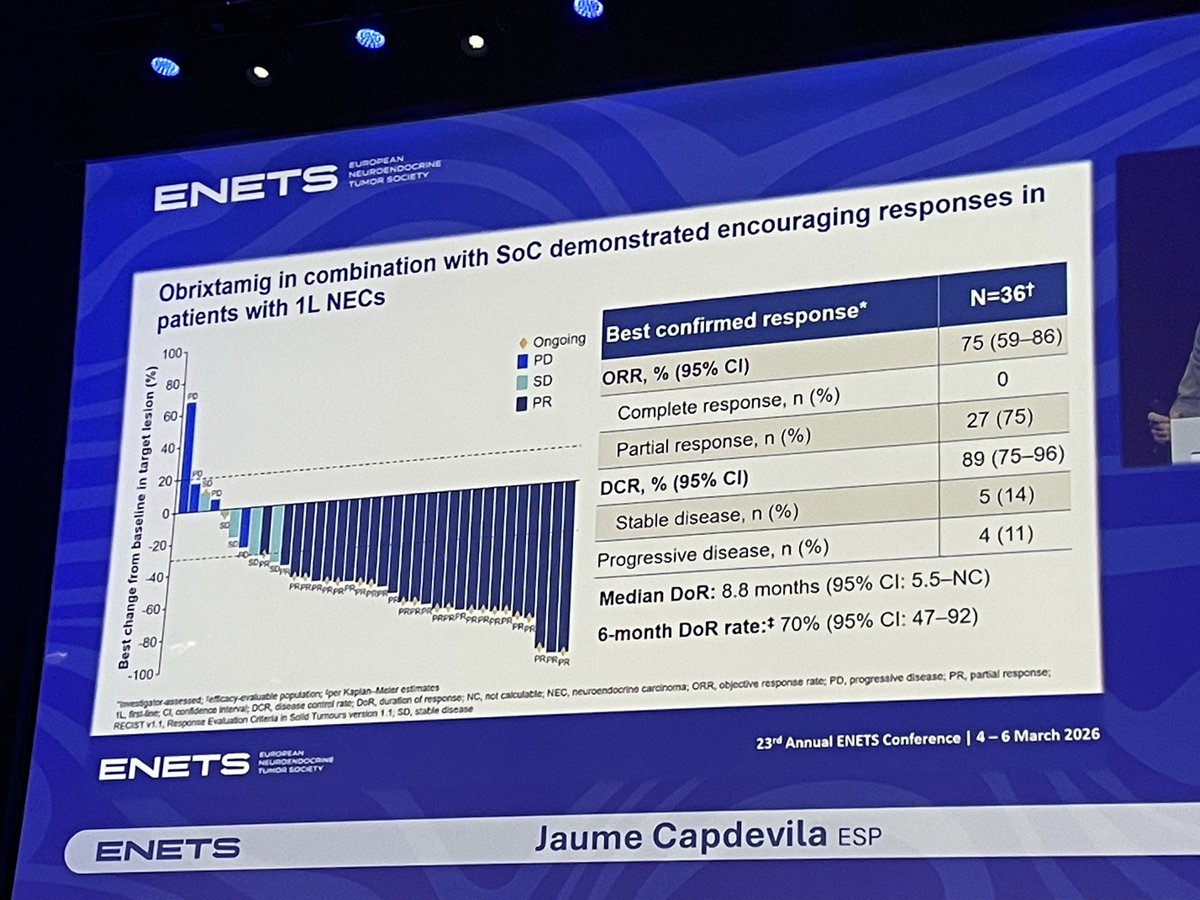
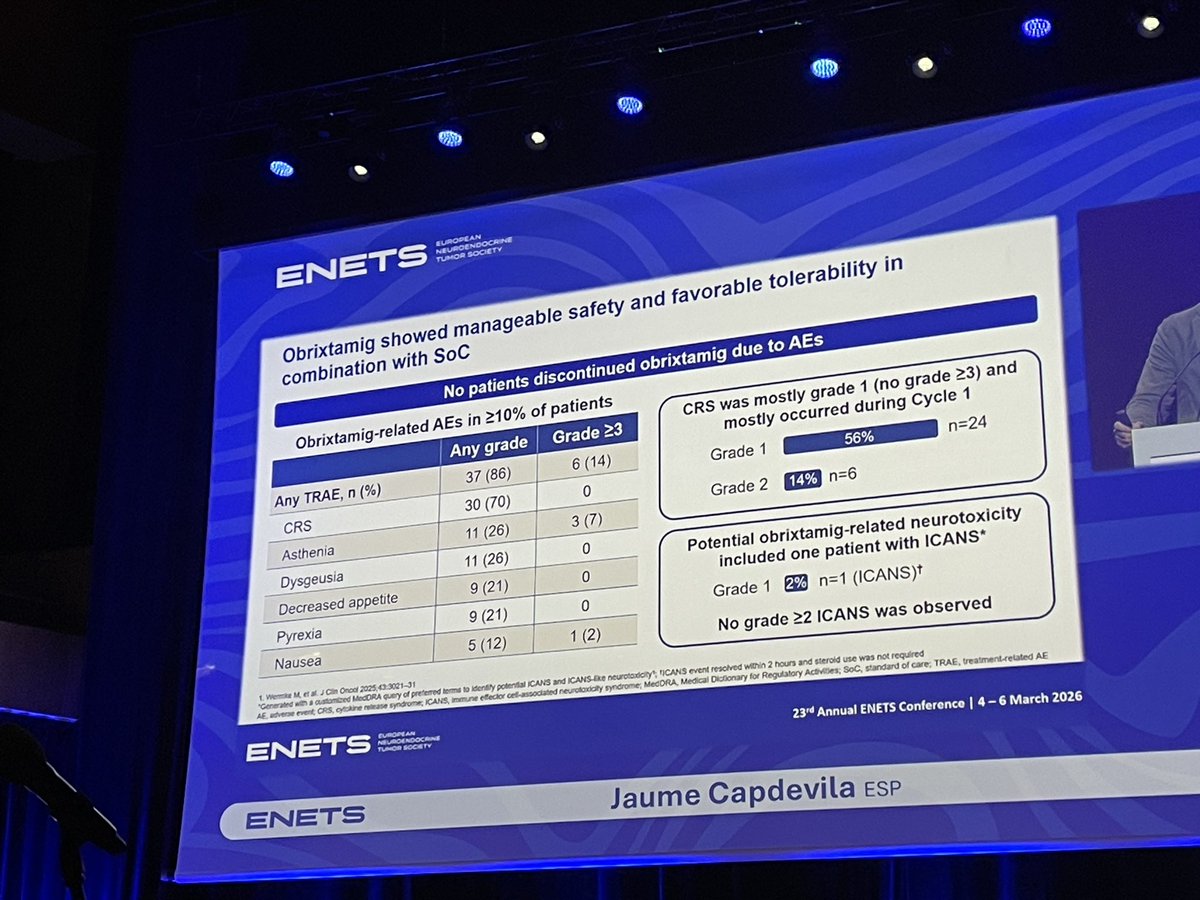
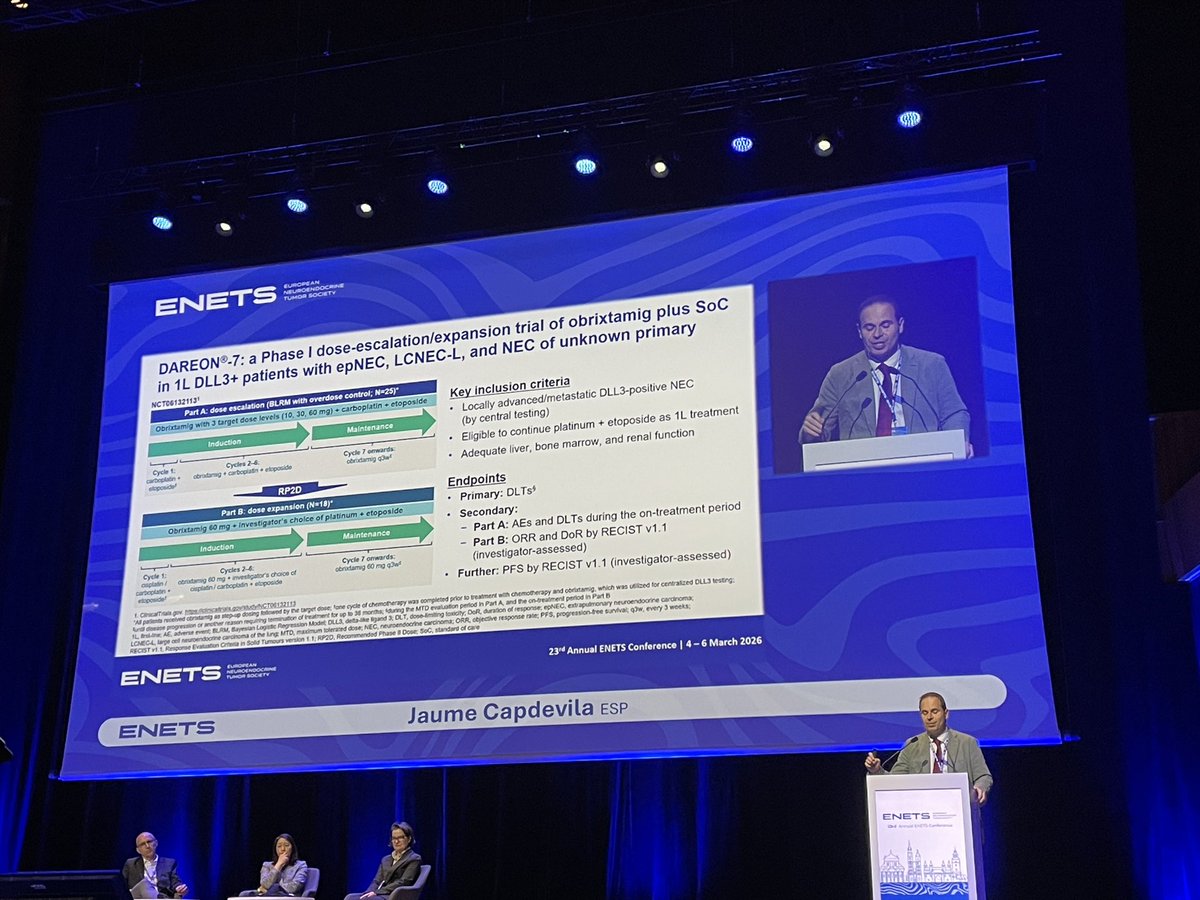
-Positive data from the DAREONᵀᴹ-7 trial of obrixtamig, a DLL3-targeted bi-specific T cell engager, as 1st line therapy for advanced NEC
-The role of surgery in stage 1–3 disease
-The interesting combination treatment of cabozantinib and temozolomide for NETs
Get the key clinical takeaways: https://t.co/c6TRCNZp9C
This educational programme is supported by an Independent Educational Grant from Ipsen. The content published on this website is under the responsibility of its authors. Some scientific data published on this website may not have been validated by the relevant Marketing Authorisation Committees and should not be put into practice. It should be read and understood with the utmost discernment and is provided for the purpose of disseminating information on the current state of research to the international scientific community.
#MedEd #OncTwitter #NETs
#NeuroendocrineTumors #NeuroendocrineCancer #NETCancer #ENETS2026
#ASCO26 is coming up!
With abstracts released I put together a top 10 (ok, top 12) GI abstracts I'm excited for.
Some things might fall off (or be added) pending full abstract text, but these are what I'm watching for and might be practice changing or scientifically interesting.
@ASCO@Onco_Nexus@OncoAlert@TheGutOncLab
🧬 Is lanreotide effective in higher Ki-67 GEP-NETs?
Dr. Timon Vandamme @TimonV@UZAnieuws shares real-world KINETICS data showing durable PFS and OS across Ki-67 subgroups, including more aggressive disease.
🎥 Watch on #Vumedi: https://t.co/PFN1wk5lvu
#NeuroendocrineTumors #Lanreotide
Update from #ENETS2026 📺
Get key takeaways from the congress, including:
🔎 Results of the COMPETE trial subgroup analysis comparing PRRT and everolimus
🔎 What the latest data from the DAREONᵀᴹ-7 trial reveal about obrixtamig, a DLL3 bi-specific T cell engager
🔎 The role of surgical resection in stage 1–3 NECs
🔎Strategies for re-challenging PRRT in NET patients
🔎 The interesting combination treatment of cabozantinib and temozolomide for NETs
From Prof. Louis de Mestier, Prof. Timon Vandamme (@TimonV), & Dr Alice Durand
See more! >> https://t.co/c6TRCNZp9C
This educational programme is supported by an Independent Educational Grant from Ipsen. The content published on this website is under the responsibility of its authors. Some scientific data published on this website may not have been validated by the relevant Marketing Authorisation Committees and should not be put into practice. It should be read and understood with the utmost discernment and is provided for the purpose of disseminating information on the current state of research to the international scientific community.
#MedEd #OncTwitter #NETs
#NeuroendocrineTumors #NeuroendocrineCancer #NETCancer
This month during ENETS 2026 we were delighted to bring together a new group of highly engaged early-career researchers from across Europe, representing a range of specialties. With the guidance of an experienced Scientific Committee, they began shaping collaborative projects in #NENs to advance knowledge and share insights across the field.
A sincere thank you to everyone involved, we look forward to seeing these projects develop and to the collaborations ahead.
📣 Update from #ENETS2026
Experts share their views on the latest practice-changing data in #neuroendocrinecancer
📺 From Prof. Louis de Mestier, Prof. Timon Vandamme (@TimonV), & Dr Alice Durand
The experts discuss:
➡️ Breakthrough results presented from the COMPETE study
➡️ Positive data from the DAREONᵀᴹ-7 trial
➡️ The interesting combination treatment of cabozantinib and temozolomide for NETs
…and more!
See the rest of this programme & get the key clinical takeaways: https://t.co/c6TRCNZp9C
This educational programme is supported by an Independent Educational Grant from Ipsen. The content published on this website is under the responsibility of its authors. Some scientific data published on this website may not have been validated by the relevant Marketing Authorisation Committees and should not be put into practice. It should be read and understood with the utmost discernment and is provided for the purpose of disseminating information on the current state of research to the international scientific community.
#MedEd #OncTwitter #NETs
#NeuroendocrineTumors #NETCancer
📺 Highlights from #ENETS2026
Discover the latest clinical practice changing insights from the conference in Krakow, Poland.
Experts Prof. Louis de Mestier, Prof. @TimonV and Dr Alice Durand share insights into new data on PRRT in treatment sequencing and re-challenge in NETs, obrixtamig as 1st line therapy in advanced NEC, and the role of surgery in stage 1–3 disease. In addition, they discuss interesting combination treatment.
How will new data impact clinical practice? Watch the video below to find out.
This educational programme is supported by an Independent Educational Grant from Ipsen. The content published on this website is under the responsibility of its authors. Some scientific data published on this website may not have been validated by the relevant Marketing Authorisation Committees and should not be put into practice. It should be read and understood with the utmost discernment and is provided for the purpose of disseminating information on the current state of research to the international scientific community.
#MedEd #NeuroendocrineTumors #NeuroendocrineCancer #NETs #NETCancer
Great question! We don’t really know (yet). If low grade, good biology, I tend to continue. For high G2 or G3, clearly more aggressive disease- I stop (provided non-functional disease-as in no carcinoid syndrome). Two trials are looking at this- SAUNA and STOPNET. COMPETE trial actually did not continue SSAs in non functional tumors!
Good for pathologists to have a differential for SSTR+ tumors that are *not* neuroendocrine - fibrous dysplasia, FDC sarcoma, phosphaturic mesenchymal tumor, and glomus tumor, just to name a few #BSTpath
SSTR+ incidentalomas, they certainly are real! Interesting study by @TimonV and others. Almost 2000 SSTR PET scans. 13.2% with SSTR+ incidentaloma but only 6% malignant. Much similar to my experience, thyroid, brain (meningioma) and prostate most common.
https://t.co/LX0MYObcnP
Op donderdag 2 oktober waren wij aanwezig bij het DBnets congres. Tijdens dit congres delen Belgische en Nederlandse specialisten van de kenniscentra hun ervaringen, onderzoeken en casuïstiek met elkaar. Zoals gebruikelijk mochten de Belgische en Nederlandse patiëntenorganisaties
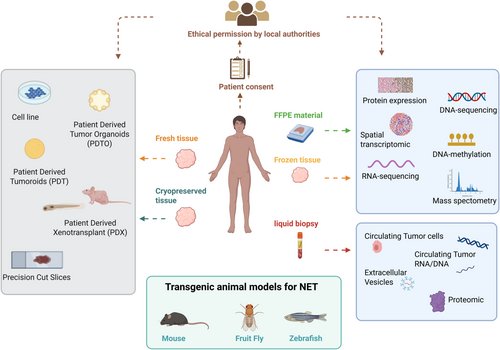
Clinical advancements against NETs need sound preclinical research.
Just hot off the press: White paper on best practices for translational research in neuroendocrine neoplasms
Great collaboration led by the ENETS Basic and Translational Research Group!
https://t.co/BrD4d3d6Zw
Our new editorial published in @JNCI_Now where we discuss how to improve the success rates of phase 3 oncology trials. Led by the brilliant @lateuwen who is soon visiting my unit @queensu@QueensuSCRI for a short-term fellowship.
https://t.co/Wd5AJIwNVq
Obrixtamig, a DLL3/CD3 IgG-like T-cell engager for SCLC and epNECs. Just out in JCO. Clearly efficacy in these hard-to-treat cancers and larger studies ongoing will hopefully confirm that.
https://t.co/mCDpVGRCxX
ctDNA Detection in Cancer: A Comprehensive Overview of Current Detection Methods and Prospects
https://t.co/oQGk37YxPG
Review explores the evolving role of circulating tumor DNA (ctDNA)🧬 as a minimally invasive biomarker in oncology, highlighting how different detection methods—ranging from sensitive, cost-effective PCR-based assays to more comprehensive next-generation sequencing (NGS) techniques—can be selected based on clinical need. It also discusses emerging technologies like third-generation sequencing and fragmentomics, emphasizing the increasing complexity and potential of ctDNA analysis to enhance cancer diagnosis, monitoring, and personalized treatment.
@TimonV@PLaurentPuig