@emukamel@KordingLab Neuro for the sake of understanding how the brain works is a perfectly lofty goal in its own right. It's just objectively true that current neuro research is doing little to nothing to drive AI research forward. Nothing wrong with that, they're just different fields.
@ylecun@pfau@KordingLab You you put an idea into math, it is easy to think that it is just math
The problem is that there are infinitely many ways to get something that us just math, not much of a guidance
If you're wondering whether neuroscience is useful for AI, consider the counterfactual world where engineers knew nothing about neuroscience. Do you think that we wouldn't have convolutional networks or reinforcement learning?
No Free Lunch from Deep Learning in Neuroscience: A Case Study through Models of the Entorhinal-Hippocampal Circuit https://t.co/8ZtMqoXVmD #biorxiv_neursci
Almost every abstract has a line that says "however, bla bla bla is still poorly understood" and it's never clear what's the cutoff for being understood
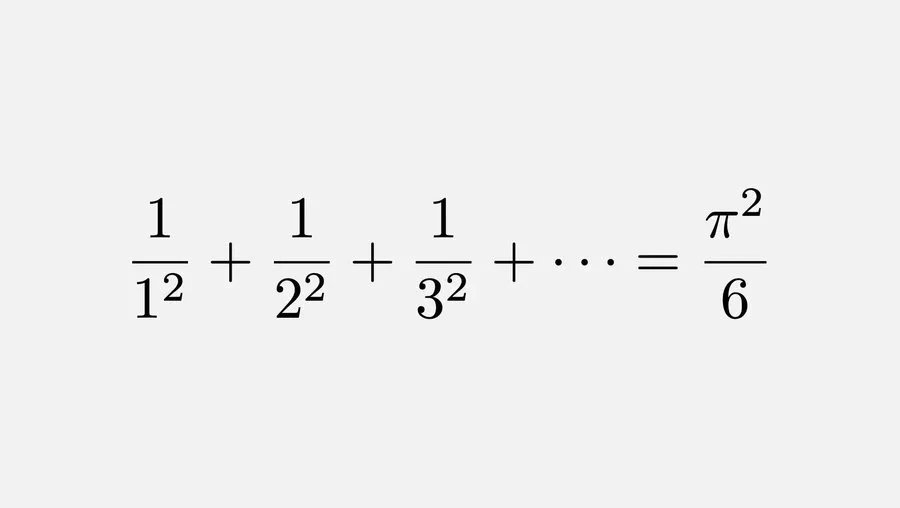
During the 17th century, this deceptively simple series, eluded the efforts of many mathematicians, including Newton, Liebniz and Jakob Bernoulli. It was Euler that in 1734, at the age of 27, derived the solution: π²/6
Optimal quantization solves a minimum Optimal Transport projection. Lloyd algorithm computes a stationary point of this non-convex energy (see work by Canas and Rosasco https://t.co/yladoE9Q4O)
I asked participants in a workshop, what is stopping them from being an #OpenScience champion. This is what they responded.
Is it worrying that they put "system" at the top?
Anything missing here in your opinion?
@behrenstimb@TPVogels I was joking. You greatly contributed to the community by setting @worldwideneuro up during the pandemic. I am also looking forward to seeing more of your research work.