Everyone is talking about the impact of closing the Strait of Hormuz on oil and gas. I haven't seen much discussion of the war's impact on helium.
Most people think of helium as being a fun gas you use for children's balloons. But helium is actually one of the most important industrial gases, used in rockets, MRIs, quantum computers, and most importantly, in the production of semiconductors.
Qatar produces ~30% of the world's helium as a byproduct of its natural gas wells, and that supply is now cut off from the global market. 🧵
A cabinet official told me on Friday that the reciprocal duties announced today are the “start, not the end” of the negotiating process. They will make it clear they mean business, and now negotiations will commence. Some countries may respond by increasing duties on U.S. goods, in which case the U.S. may further escalate. Other countries l will make concessions, as we saw already today from Vietnam and Israel who eliminated all duties on U.S. goods. We will have to wait and see before we know what the new rules of the game will be.
Ep 133 with @typesfast (CEO, Flexport)
(Trump’s) Tariff Drama / (Trump's) Trade Wars
The Hidden World of US Shipping
Opportunities for AI Automation in Logistics
Reflections on Building Flexport
Panama Canal Conspiracy
Love this clip from Jensen Huang (Nvidia CEO) on why innovation requires failure.
"Unless you have a tolerance for failure, you will never experiment. If you don't experiment you won't innovate, and if you don't innovate you won't succeed."
Patrick Collison, on how companies should communicate differently as they grow: "You should generally shift from speaking to writing. It’s not that you should speak less. You need to add writing. Speaking can only happen once, and generally not to everyone. Writing persists through time and can be updated. It also adds rigor and clarity."
@patrickc
.@bgurley on the state of tech in 2024:
-- risk-on happens slow, risk-off happens fast
-- valuation expansion = less focus on profits
-- this time was unique bc later-stage startups had major cash positions
-- so "day of reckoning" was delayed
-- expects 24 to be as bad as 23
If you told me 10 years ago that a group of the smartest engineers in the land would evoke the threat, "Do what I say or I will go to work at Microsoft," I would not have believed you. Amazing shift in corporate reputation (and much credit to Satya).
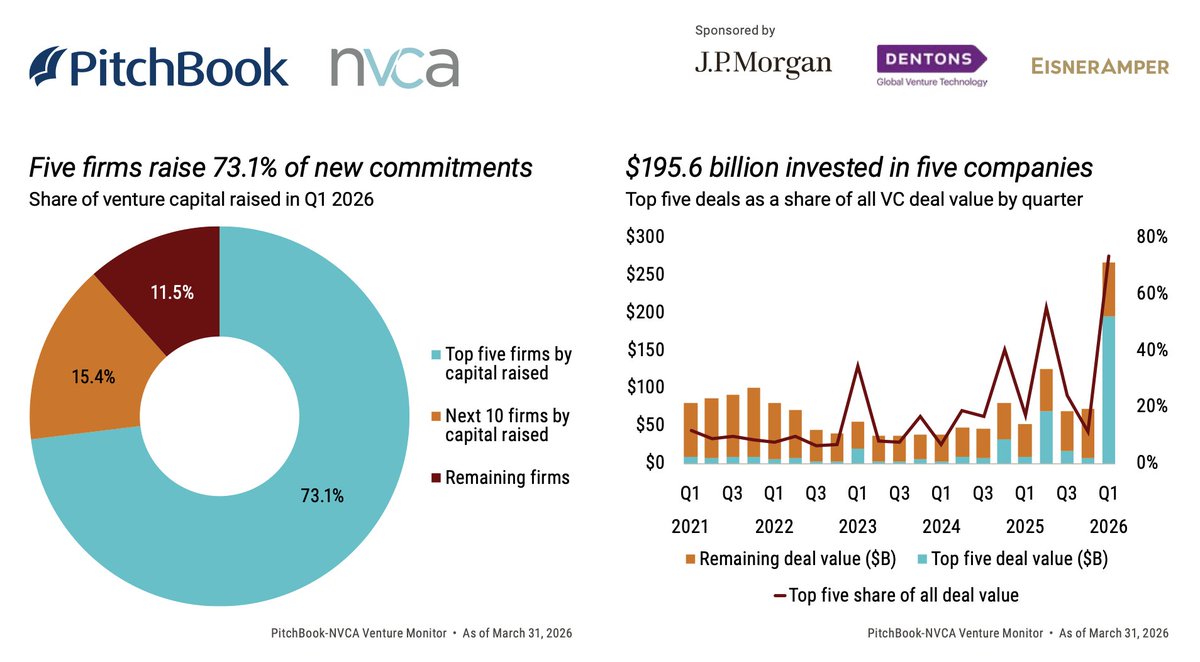
There are also new market realities. Public comps have changed materially, & founder expectations have not moved as fast. Whole industries trade at a fraction of former multiples. So in many cases there simply isn't a market clearing price. This takes time.
Getting a ton of great applications for HF0 rn
If you are applying to YC tn, feel free to just send [email protected] your YC app
We can interview you on Friday so that you can have offers from both HF0 and YC before making a decision.
- Tech optimism
- Deflation worries
- Public backlash
@RChoongWilkins recaps some of the top stories you may have missed in China this week https://t.co/npzluvfoM5
If someone asked me to give investing advice to a 30-year-old today who had just made their first million, I would first point them somewhere else. I’m not a financial advisor and don’t think I’m qualified to give anyone financial advice. The particulars matter too much. But if they insisted, I might say:
(1) If you want to play in early-stage tech investing (or anything high-risk, high-reward), ensure you have a plan for developing an ENORMOUS informational advantage. Aim to develop new skills and relationships through portfolio companies so that you can win over time, even if you “fail” with many bets going to zero. Only bet what you are comfortable losing and what you can recoup in other ways. Though my angel investing snowballed, I began with $10K checks and advising for sweat equity. Think of this as tuition for a real-world MBA. Are you willing to move to the hub of activity to ensure the best possible information and deal flow, as I did when I moved to SF lifetimes ago? Or make commensurate commitments or sacrifices to ensure you are in a position to win? If not, I’d suggest choosing a different game. Other people will take the initiatives that you won’t, and they will beat you. Much of early-stage investing is cooperative, but let’s not kid ourselves, a lot of it is competitive, and not everyone will podium finish.
(2) For the rest—which could be everything—follow Buffett’s advice. Keep it simple.
One cautionary example of doing the opposite: I spotted the COVID curve ball early, and I made a lot of very “sophisticated” (complicated) decisions related to investing, and the associated research, diligence, phone calls, and so on chewed up an unbelievable amount of time and energy. Eighteen to twenty-four months later, I’d done very well but decided to look at how passive S&P 500 returns would’ve added up over the same period, and… they were roughly the same. Of course, you can’t always bank on this outcome, but beware of seeking complexity if you’ve been rewarded for problem-solving throughout your life. Looking back over the last 15+ years, the handful of investment decisions that made all the difference have been simple and were somewhat obvious to me, no major gear-grinding required.
(3) Knowing when to buy isn’t enough. Have policies and rules for when you will sell, or the universe will punish you with very bad and very expensive decisions.
(4) Don’t discount luck, including lucky timing. I started angel investing seriously in 2008 and hit a golden window of converging trends, cheap valuations (by today’s standards), and an uncrowded playing field. The financial crisis had culled the herd of a ton of investors and fair-weather founders. It was a target-rich environment, even for someone with very little to invest. Micro-VCs were just cracking out of their shells, and the big players hadn’t started assailing the seed stage stuff. In retrospect, it was a wildly rare combo of things. I don’t believe I could replicate what I did in 2008–2012 now.
(5) Personally, I’ve largely stepped back from angel investing to double down on writing and the podcast (The Tim Ferriss Show, soon to hit 1B downloads). This comes from a desire for more predictability and less stress. I love the excitement of startups, and I’ve had some lucky wins, but I don’t find it nearly as interesting as developing creative muscles that bring in forecastable revenue year after year. For me, that has compounded more reliably than the all-or-nothing bets. Massive ups and downs in sectors like crypto also take a toll that reduces my creative batteries. In this chapter of my life, I think simplicity is the name of the game (e.g., finding one decision that removes 100 decisions).
(6) Over-optimizing is just as bad, if not worse, than under-optimizing. Past a certain point, buying extra Skittles just doesn’t fucking matter. So, a note to self: stop fiddling around with your goddamn spreadsheets and get more interesting hobbies on the calendar. What hobbies? Exactly.
(7) If we assume the point of investing is ultimately to improve your quality of life and the quality of life of those you most care about, investments that consistently add stress over long periods of time probably don’t make sense. Money is traded for things or experiences that catalyze certain feelings. If your investments are generating the opposite spectrum of feelings, it might be time to reassess.
It’s easy to miss the forest for the trees. Money is a means, not an end.
And in the end, most things matter very, very little. Do what helps you sleep at night and wake up with a low heart rate. To me, those are the hallmarks of a world-class investor who gets the big picture.
https://t.co/CVXVWAKuGM
We're thrilled to announce our latest funding of $52M backed by @PayPal@cherubicvc@synchrony@northzoneVC@VoltCapital@KX. Magic is solving web3 onboarding and our mission is to give a wallet to every internet user.
👇 Read more
https://t.co/9tdZsH3lxH
One of toughest things about fundraising today is startups that are doing well but have fallen just below “the funding line”
E.g., a SaaS startup growing 100% at $5m ARR might get easily funded
If macro issues slow growth to 80%, that’s still pretty darn good. Just not enough.