You know it is going to be a brilliant episode when:
1. @GoingMedieval is the new co-host
2. It starts with Harald H being the 1066 choice & “invitation by someone’s hater brother” being said
3. This is quickly followed by Matilda rep #connoisseurschoice https://t.co/47H5TkSd6U
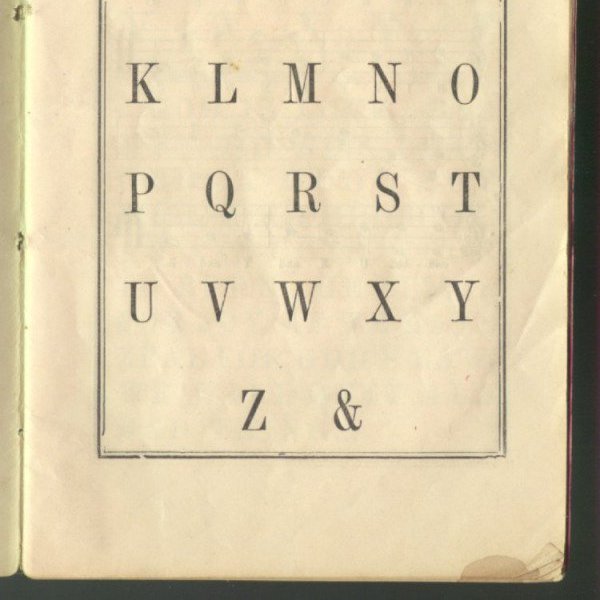
What the hell is an ampersand and why does it look like that?!
The first thing you need to know is that "&" used to be the 27th letter of the alphabet...
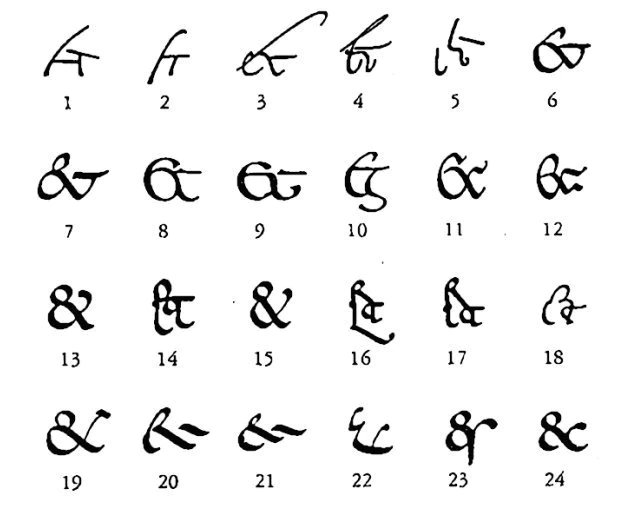
But there are three parts to this story. And the first begins over two thousand years ago in Ancient Rome with a single word: et. It's the Latin for "and". At some point Roman scribes started combining the two letters of et into a single symbol, which was the ancestor of our modern &.
The earliest example of the "et" symbol is actually from graffiti in Pompeii. In any case, it did not disappear with the fall of the Roman Empire.
Latin survived as the language of the Catholic Church and of scholarship in Medieval Europe. Scribes during the Dark Ages continued to use the & symbol. It evolved down the centuries, in places losing any semblance of the letters e and t whatsoever.
The second part of the story is that during the 18th and 19th centuries, as education and the teaching of literacy spread, & was added to the end of the alphabet as a sort of 27th letter.
On a related note, although "et cetera" is now usually just abbreviated as etc., for a long time it was instead abbreviated as "&c". The & was for et and the c for cetera.
The third and final part of the story is about how the alphabet was taught to children — and how it was read out loud.
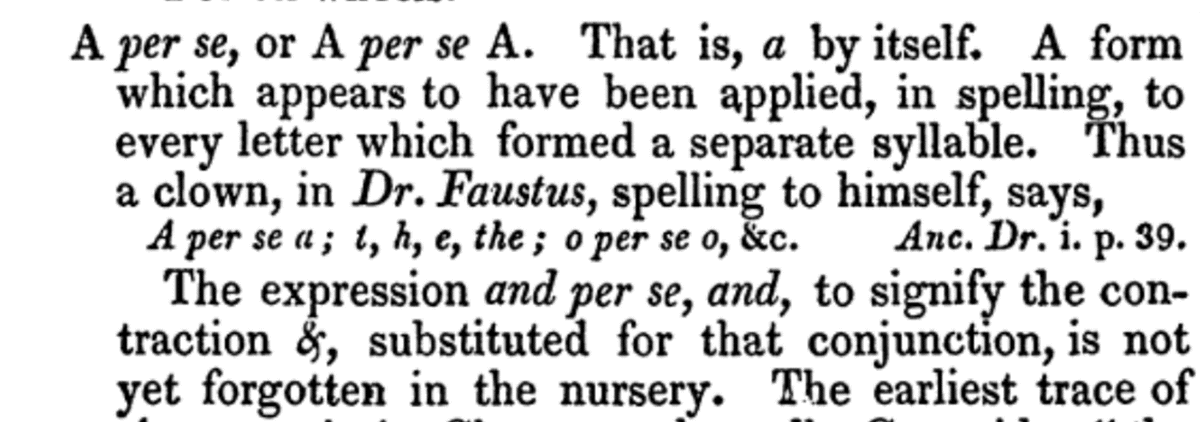
As this 1822 Glossary of Words and Phrases explains, it had been normal during the Renaissance, when speaking the alphabet, to add "per se" before any letter which could also be a word on its own — "per se" means "by itself" in Latin.
Take the letter A, which can also be a word of its own. When reading out the alphabet people would say "A, per se A, B, C, D, E, F, G, H, I, per se I..." and so on. O was also considered a word of its own.
Which means, when people got to the end of the alphabet, with & being the 27th letter, they would say: "S, T, U, V, W, X, Y, Z, and per se &."
When this old way of reading the alphabet was taught to children in the 18th century and they were reciting it aloud, they would garble "and per se " into what eventually became... ampersand.
A Dictionary of Slang and Colloquial English from 1905 relates some of the many other pronunciations school children apparently came up with:
"Ampersand. The sign &; ampersand. Variants: Ann Passy Ann; anpasty; andpassy; anparse; apersie; per-se; ampassy; am-passy-ana; ampene-and; ampus-and; ampsyand; ampazad; amsiam; ampus-end; apperse-and; empersiand; amperzed; and zumzy-zan."
Well, of all the many pronunciations that might have stuck, it was "ampersand" which came to be accepted and is now the official name for &... rather than zumzy-zan. So, from hurried Roman scribes to unruly school children, that's where "&" came from.
Been pondering a lot since the new #HomoNaledi articles & #CaveOfBones film came out.
While I’m thinking of writing something longform, am also now sharing specific thoughts on #RisingStar interpretations as a 🧵:
- Access
- Fire
- Burial
- Aesthetics
I need an “advice of the day” quote calendar with just Óðinn’s sayings, who needs the positivity quotes when you can be told that cattle, friends, and you die, but the only thing that doesn’t is a dead person’s deeds?
#medievaltwitter#medievalist
All the doorways, before one enters, should be looked around, should be spied out; it can’t be known for certain where enemies are sitting in the hall ahead. https://t.co/rG5WGLgwBg
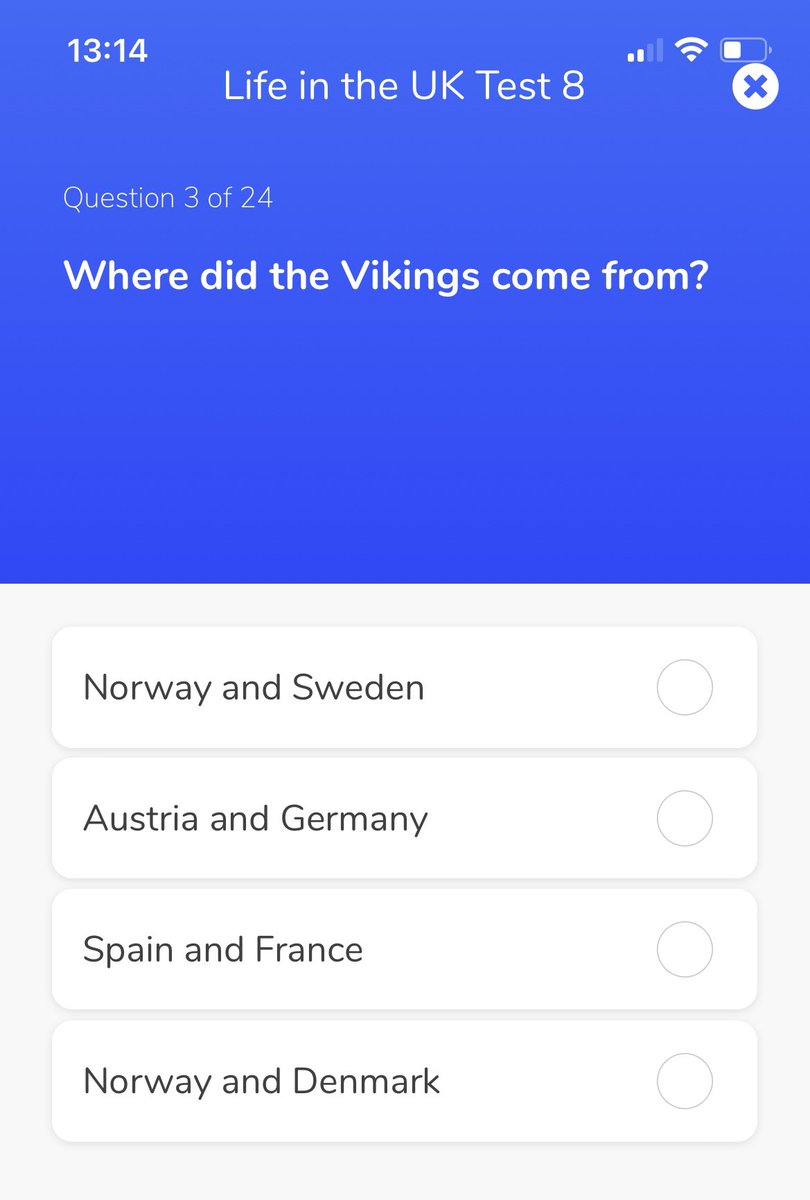
Oh look! Another #LifeInTheUK mock test gem. 😬
Thank goodness the Swedes have always been neutral.
(This is from the revision app for the British Citizenship test)
Why does the study of the 'middle ages' matters, and what shapes such study will/should take in the future. All welcome, even for just a portion of either day: https://t.co/mGJ8Lfanp0
Problème de maths par un auteur arménien du... VIIe siècle !
"Un général attaque une armée perse. Il en tue la moitié dans la première attaque, un quart dans la seconde, un onzième dans la troisième. 280 Persans survivent. Combien étaient-ils au début ?"
A faire de tête ! 🙂😅
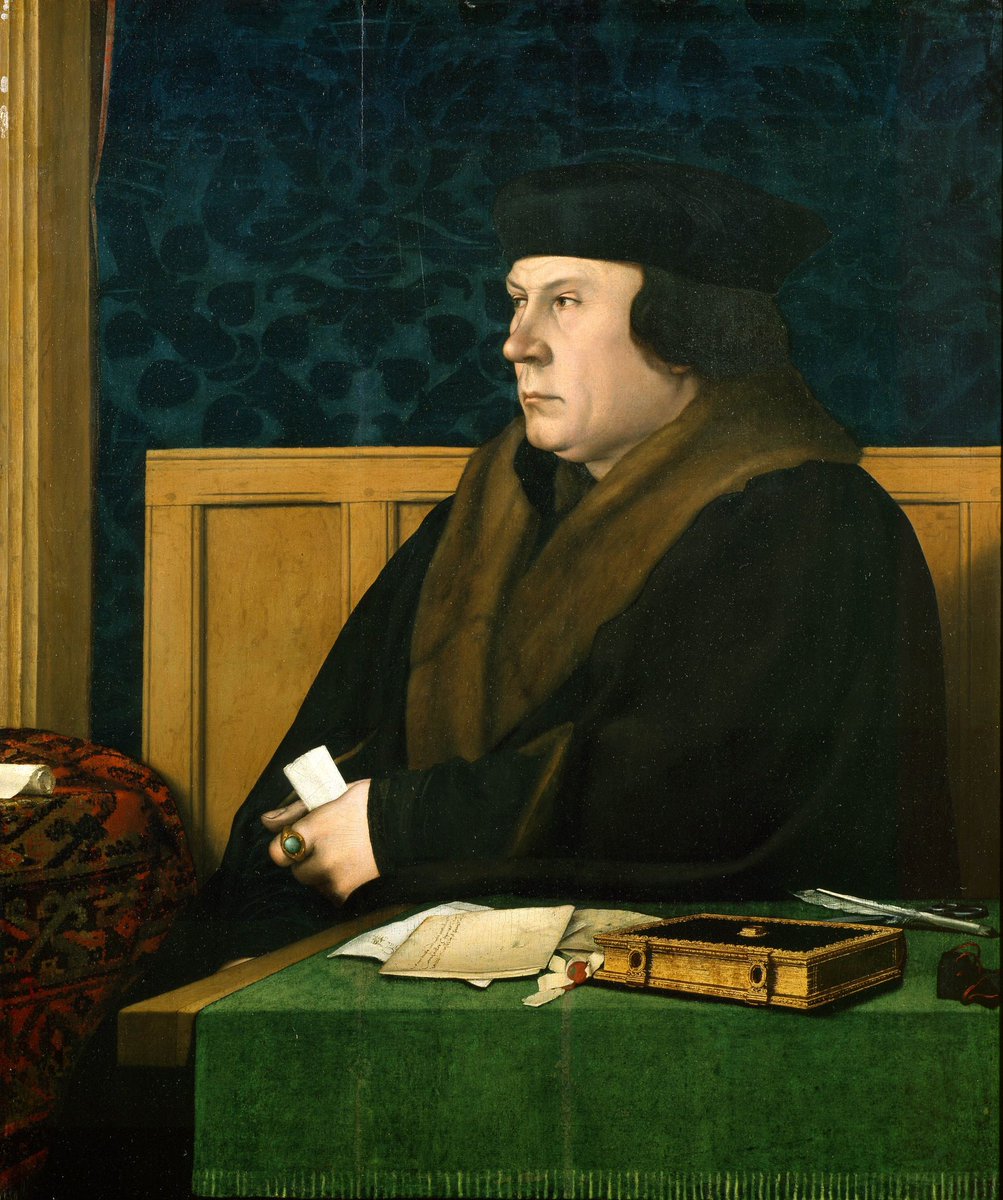
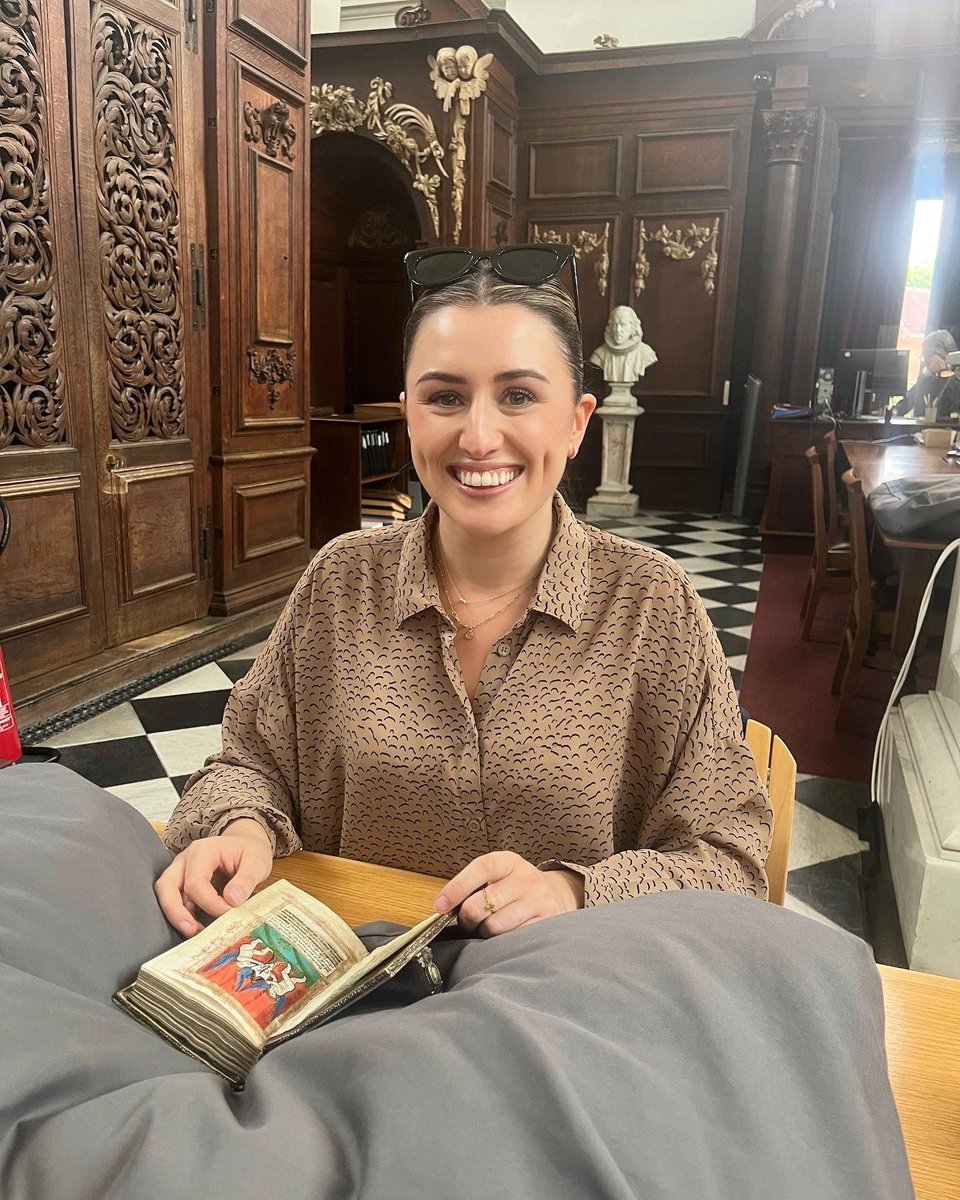
You might have already seen it on the news.. but one cannot congratulate enough MEMS alumna @kateemccaffrey & colleague @DrOwenEmmerson at @hevercastle on their discovery of Thomas Cromwell’s Book of Hours.
For good measure we also reported on their find: https://t.co/QaHJIwZwTN
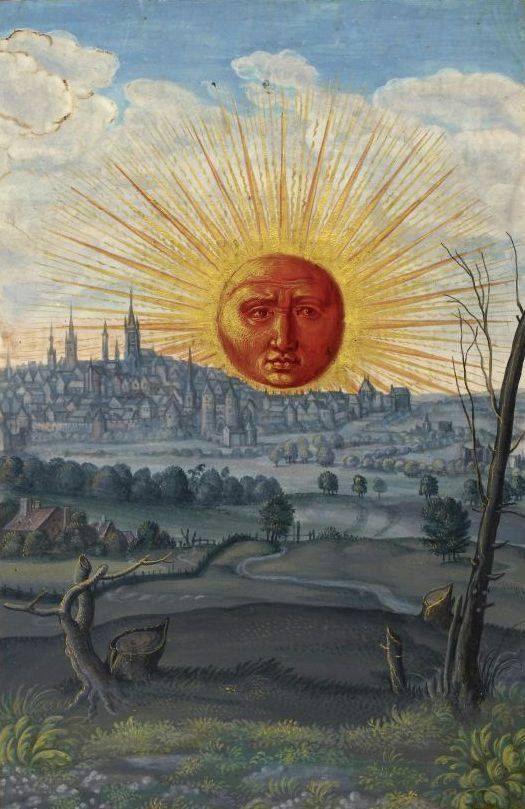
Happy Solstice! Here's the Sun putting on its best happy shining face for the special occasion, from the Splendor Solis, a 16th-century alchemical treatise.
More art from the history of alchemy here: https://t.co/L1Y7UdyPAQ
#SummerSolstice#Solstice#Midsummer#longestday