Extremely excited to announce that I'm (finally) joining the @laravel team!
Today is my first day as the VP of Marketing and Community. I love this community and I couldn't be more excited to join the team.
This is the era of builders, and Laravel is the best way to build.
I’m writing a book called Laravel Internals, and it’s almost there. 🚀
If you’ve ever wanted to understand how Laravel really works under the hood, you can join the waitlist and get notified when it’s released.
🔗 https://t.co/vAOnH3Ck4W
We just launched a new video series on Laracasts that covers the incredible Laravel AI SDK.
It's almost absurd how much you can accomplish with very little code. Give it a watch or bookmark!
https://t.co/IpEQvzCDXN
#asklaracon@inxilpro what was your feeling when your first pr was was approved in Laravel? How do you feel when you see other developers are using your merged code in their project?
#asklaracon@jessarcher is it possible to connect the nightwatch issue with GitHub/gitlab automatically so that we as a developer have a single place to maintain issues.
#asklaravel@jessarcher the nightwatch will handle huge amount of data. How do you maintain performance for nightwatch for fetching and presenting lots of data?
@asklaracon @taylorotwell you took lot of responsibilities for building laravel ecosystem experience smooth, and still exploring! Thanks for that.
I am wondering how difficult is that to manage them and handle so much commitments on your shoulders?
Today on Laracasts, @LukeDowning19 reviews all of the new features in the newly released @vuejs 3.4.
* defineModel() is my favorite.
https://t.co/sZXWEejM5I
𝗗𝗼 𝗬𝗼𝘂 𝗡𝗲𝗲𝗱 𝗧𝗼 𝗞𝗻𝗼𝘄 𝗔𝗹𝗹 𝗗𝗲𝘀𝗶𝗴𝗻 𝗣𝗮𝘁𝘁𝗲𝗿𝗻𝘀?
The answer is no. Even though we have 23 design patterns, around 10 are mostly used in everyday development. Knowing which patterns exist overall is good, but you need to know these very well.
Design patterns can be divided into three main types:
𝟭. 𝗖𝗿𝗲𝗮𝘁𝗶𝗼𝗻𝗮𝗹 𝗣𝗮𝘁𝘁𝗲𝗿𝗻𝘀
These design patterns deal with object creation mechanisms, trying to create objects in a manner suitable to the situation.
Important patterns in this group are:
🔹𝗙𝗮𝗰𝘁𝗼𝗿𝘆: This pattern allows delegating the instantiation logic to factory classes. The Factory Method creates objects without exposing the instantiation logic to the client.
🔹𝗦𝗶𝗻𝗴𝗹𝗲𝘁𝗼𝗻: The Singleton pattern ensures that a class has only one instance and provides a global point of access to it. It's useful when exactly one object is needed to coordinate actions across the system.
𝟮. 𝗦𝘁𝗿𝘂𝗰𝘁𝘂𝗿𝗮𝗹 𝗣𝗮𝘁𝘁𝗲𝗿𝗻𝘀
These patterns deal with the composition of classes and objects that form larger structures.
Important patterns in this group are:
🔹𝗔𝗱𝗮𝗽𝘁𝗲𝗿: This pattern works as a bridge between two incompatible interfaces. It wraps an existing class with a new interface to become compatible with the client's interface.
🔹𝗙𝗮𝗰𝗮𝗱𝗲: The Façade pattern provides a unified interface to a set of interfaces in a subsystem. Façade defines a higher-level interface that makes the subsystem easier to use.
🔹𝗗𝗲𝗰𝗼𝗿𝗮𝘁𝗼𝗿: This pattern dynamically adds/overrides behavior in an existing method of an object. This pattern provides a flexible alternative to subclassing for extending functionality.
🔹𝗣𝗿𝗼𝘅𝘆: The Proxy pattern provides a surrogate or placeholder for another object to control access to it. In its most general form, a proxy is a class functioning as an interface to something else.
𝟯. 𝗕𝗲𝗵𝗮𝘃𝗶𝗼𝗿𝗮𝗹 𝗣𝗮𝘁𝘁𝗲𝗿𝗻𝘀
These patterns are specifically concerned with communication between objects and how they interact and distribute work.
Important patterns in this group are:
🔹𝗖𝗼𝗺𝗺𝗮𝗻𝗱: The Command pattern encapsulates a request as an object, thus allowing users to parameterize clients with queues, requests, and operations.
🔹𝗧𝗲𝗺𝗽𝗹𝗮𝘁𝗲 𝗠𝗲𝘁𝗵𝗼𝗱: This pattern defines the program skeleton of an algorithm in a method called template method, which defers some steps to subclasses.
🔹𝗦𝘁𝗿𝗮𝘁𝗲𝗴𝘆: The Strategy pattern defines a family of algorithms, encapsulates each one, and makes them interchangeable. Strategy lets the algorithm vary independently from clients that use it.
🔹𝗢𝗯𝘀𝗲𝗿𝘃𝗲𝗿: This pattern defines a one-to-many dependency between objects so that all its dependents are notified and updated automatically when one object changes state.
Check out this helpful cheat sheet below.
Also, check my full e-book on Design patterns: https://t.co/tElCWHyX4K
#technology #softwareengineering #programming #techworldwithmilan #developers
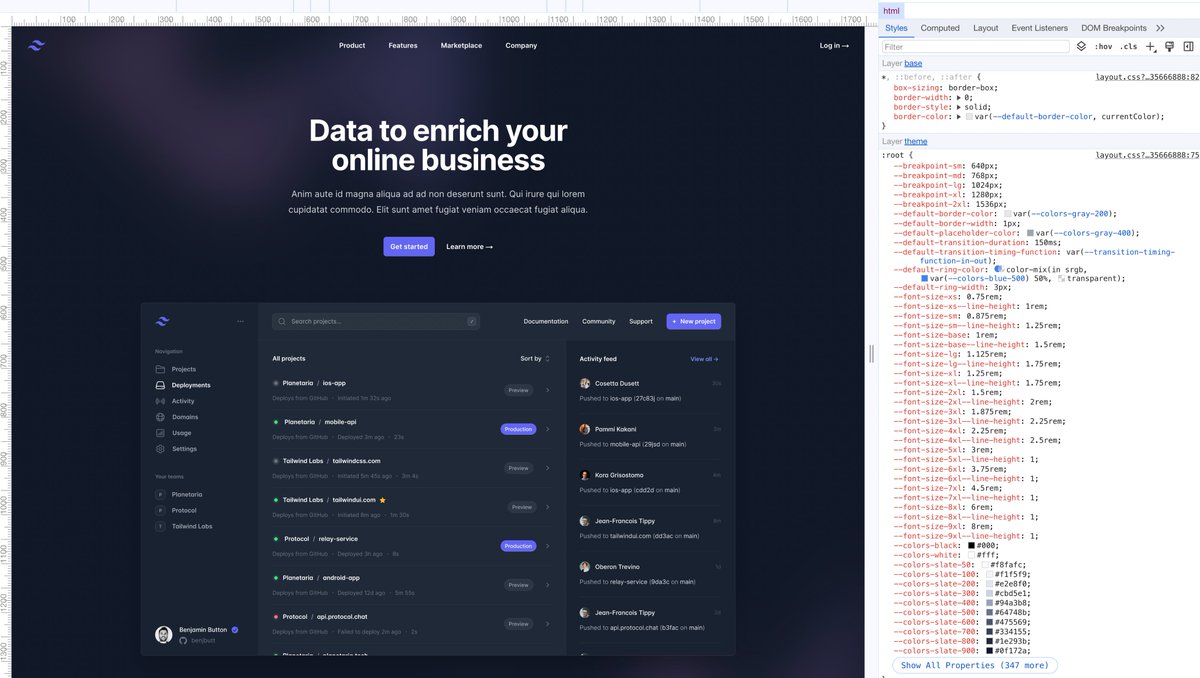
Big milestone today — first time rendering a Tailwind UI example pixel-for-pixel with the totally rewritten Tailwind CSS v4 codebase 🔥
Native cascade layers, variables for all theme values, opacity modifier support for variable colors via `color-mix` — brings me so much joy 🥹