This 2-hour Stanford lecture breaks down how models like ChatGPT and Claude are actually built, clearer than what many people in top AI roles ever get exposed to.
Save this and set aside two hours today. It might end up being the most valuable thing you learn all week.
October 10 2025 was the largest liquidation event in the history of crypto by a big margin. an estimated $20-30b of positions were liquidated. the previous record was $8b.
thus, it shouldn't be a surprise if a number of funds, incl. those with delta neutral strategies, are revealed to be blown out. it would be more of a surprise if they weren't.
I think we can unfortunately expect more bad news over the coming months, as we slowly learn who is swimming naked.
Amazon laid off 30,000 employees today, an even larger cut than during the industry contraction in 2022. The reason is simple:
They don’t have enough capex left to buy GPUs.
As a result, AWS growth has slowed, the market has punished them harshly, and now they must cut salaries to save money for GPU purchases—so the financials look better and they can tell a story of “AWS growth bottoming out.”
Every internet company software engineer (SDE) should buy Nvidia/AMD stock as a hedge—compensating for the risk of being squeezed out of the value chain by GPUs.
Entering 2024–2025, the main factor behind weak employment for American SDEs is no longer the massive over-expansion of 2021, nor the competition from lower-wage overseas engineering centers, and not yet the reduced demand caused by AI efficiency gains.
A new boss has arrived: GPU capex.
GPU capex is creating a strange “prosperous depression” inside internet companies:
The company’s revenue growth looks strong, stock prices keep rising—but wage expenses have become immovable constraints for management. Everyone worries about their jobs. Continuous layoffs increase the workload for those who remain. Morale collapses. It feels like the Great Depression all over again.
This isn’t a traditional recession. It’s capital’s radical redistribution between manpower and compute power.
Amazon’s 30,000-person layoff has been rumored for two months. The mid-year performance review, usually in July, was delayed to mid- or late August. The return-to-office (RTO) policy also served as a major excuse for the cuts. The AGI group will remain untouched; PXT, Devices & Services, and Operations will be the hardest hit. By convention, AWS will likely announce its cuts later—probably after AWS re:Invent—to squeeze every bit of output first.
Meanwhile, AWS’s Q2 backlog reached $195 billion, up 25% YoY.
This shows customers want to buy but AWS can’t deliver—demand remains scorching hot, and they simply can’t buy GPUs fast enough.
In an era where AI server supply can’t keep up with explosive demand, shifting opex (wages) to capex directly boosts company performance. Capital will ruthlessly punish any CSP or hyperscaler that fails to fully embrace this path.
Meta has quietly entered a “5% layoff every six months” rhythm. Recently, it cut 600 people in its AI org and also removed many directors across departments—same logic again: AI datacenter capacity is insufficient. In the past year, Meta revised up its 18-month capacity plan three times. Each time they thought they had overestimated demand—only to painfully realize a few months later that they had underestimated it.
Does this mean internet companies no longer need people?
Of course not. But after the hiring budget is slashed, they’re forced to squeeze productivity internally to compensate.
Big tech companies are now pulling every possible lever: building internal tools with agent functions, encouraging “one-click deployment vibes,” setting KPIs for AI usage rates, requiring departments to report AI adoption progress and use cases, and mandating periodic peer learning sessions.
All these frantic moves aim for just one modest goal: ~20% efficiency improvement.
What happens next?
To maintain growth and competitiveness—once efficiency gains plateau and layoffs hit the bone, when opex yields no more savings—the next step will be to sacrifice cash flow. Some, like Oracle, may even take on debt to sustain growth.
Nvidia and AMD, armed with huge cash reserves, will continue to push partners to invest in AI capex—just like OpenAI has done.
The biggest beneficiaries of all this will be the semiconductor supply chain.
A new normal may emerge: semiconductor companies’ profit margins surpass those of internet firms.
But they also bear the greatest risk:
Once VCs or hyperscalers notice token demand slowing—or even just growth decelerating—they’ll ruthlessly cut orders.
The transmission of that shock will be far faster than semiconductor production cycles.
When might that point arrive?
One reference indicator: when enterprise adoption reaches ~50%.
During the March 2000 internet bubble burst, U.S. internet penetration was around 52% (some data say 43%).
Currently, major internet companies’ GenAI daily-user penetration is rising from 50% toward 90%, while overall enterprise AI adoption is still under 10%.
That means growth is safe for now. Historically, the fastest phase of any technological revolution is when corporate adoption moves from 10% to 50%.
The Cisco bubble won’t repeat itself so simply.
This time, information flow is vastly richer. There will always be enough skeptics warning about bubbles—ensuring that when it does burst, it won’t be nearly as catastrophic.
The real story here is Amazon just cut 30,000 people not because business is bad, but because they need the money for GPUs. AWS has a $195B backlog growing 25% YoY but can't buy compute fast enough to meet demand. This is capital choosing GPUs over people, and every hyperscaler is doing it. Meta cuts 5% every six months for the same reason.
This isn't a recession. It's a radical reallocation from wages to capex, and the market rewards it directly. Companies are scrambling for 20% productivity gains through AI tools to make up for the lost headcount, forcing remaining employees to absorb more work. The math is simple: shift opex to capex, financials improve, stock goes up.
The GPU gold rush probably continues until enterprise AI adoption hits 50% (currently under 10%). But once token demand growth slows, semiconductor suppliers will face order cuts faster than their production cycles can adjust. For now, Nvidia's margins might actually exceed the internet companies buying their chips.
This is quite literally insane.
People will have humanoid robot companions helping them around the house (effectively) as soon as next year.
Cost = $499/mo or $20k one off payment.
Physical AI will be the next eureka moment.
Would you buy one?
Earthquake in Bangkok. Around 5.5 richter. My family and myself are safe. However, there is one 33 floor under construction building collapse. Pray for those people.
We don't really have much experience dealing with earthquake. Many eople thought they have vertigo.
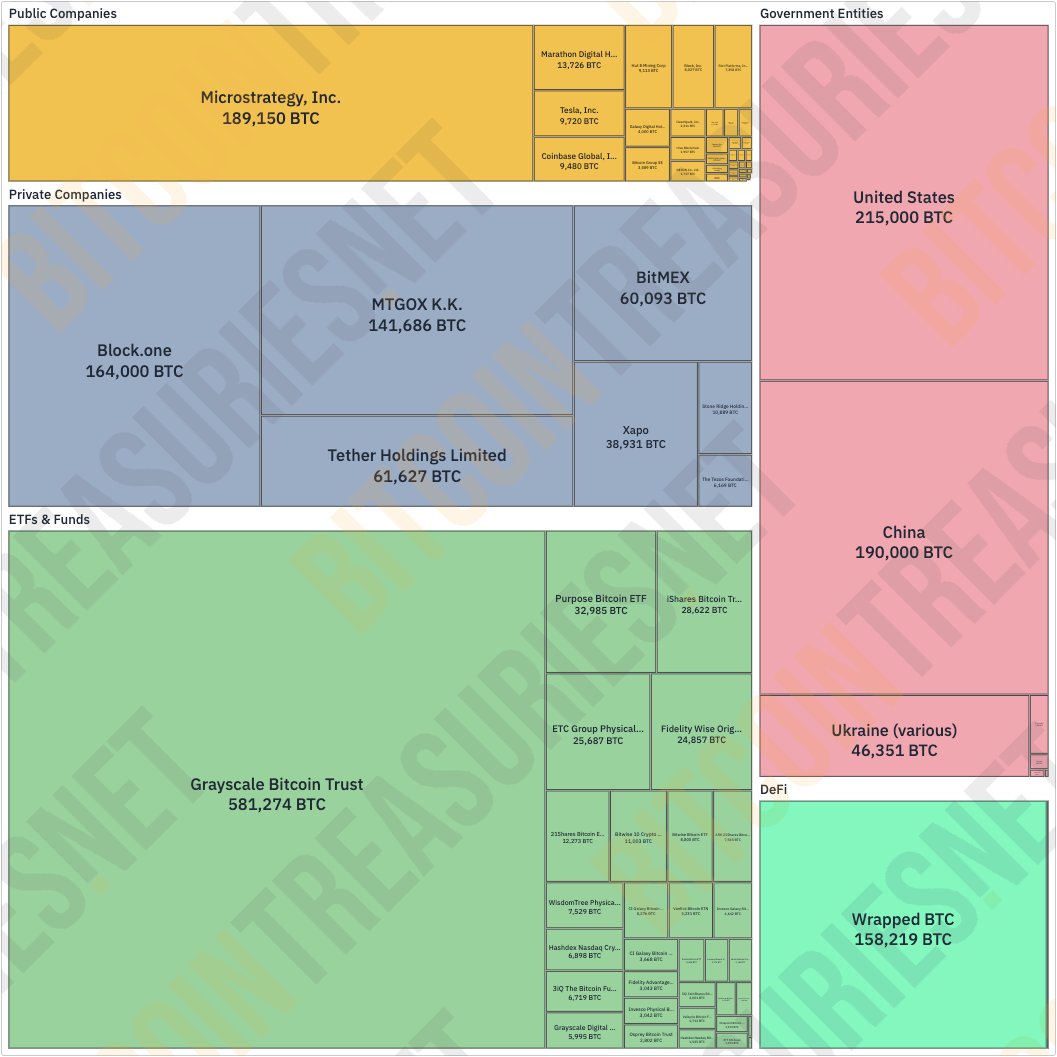
Where is all the #Bitcoin?
Between ETFs, funds, private and public companies, governments and even DeFi🤮, it only comes out to 2,170,327 BTC or ~10.33% of total supply.
The remaining BTC is in the hands of individuals or lost for good. Stay strong, hodlers.💪
Ready for a safer way to trade #Bitcoin? Discover the Liquid Network, where real-time gross settlement is changing the game, @Blockstream CEO Dr. @adam3us explains. 👇
Bitcoin ETF ได้รับการอนุมัติอย่างเป็นทางการจาก กลต สหรัฐ ให้ซื้อขายได้ในตลาดหุ้น NASDAQ, NYSE, CBOE, พรุ่งนี้ (พฤหัสบดี ของ อเมริกา) เริ่มซื้อขาย.. prepare for the real public money flowing in.
https://t.co/O9a57X4BDa
/7
อาจจะมองว่าเยอะ ถ้าใครยังไม่ได้รู้จักอุตสาหกรรมนี้ขอต้อนรับสู่ Bitcoin Rabbit Hole ครับ..หลุมนี้ลึกและน่าสนใจมาก ..ไม่มีอะไรฟรี ถ้าอยากจะได้รับผลตอบแทนครับ
Happy New Year! May your life filled with wealth that cannot be debased from the Big guys
/6
13. เข้าใจว่าทำไมเหรียญอื่นๆ ที่ไม่ใช่ Bitcoin คือ Shitcoin (เป็นการพนัน ที่มีเจ้ามือ.. unregistered securities)
14. Pending approval of Spot Bitcoin ETF by biggest fund companies in the world leading by BlackRock