Some folks don’t believe that a “principled AI company” would destroy books after they suck out all the information for their models, even one-of-a-kind books and manuscripts.
Here it is admitted in open court.
🦔AI companies are bulk-buying rare books, scanning them through high-speed machines that cut the spines off, and shredding the originals. A service called ISBNdb facilitates orders of up to a million books and keeps buyers anonymous. Pre-2022 books are premium because they're free of AI-generated text. A federal judge ruled the practice is fair use because eliminating the original means only one copy exists at a time. Anthropic hired the former head of Google Books partnerships to obtain "all the books in the world."
My Take
This got to me. A bookseller told 404 Media that rare books with almost no surviving copies are being fed into this pipeline. Books that survived wars, fires, and centuries of handling are being shredded so an AI can learn to write a better marketing email.
ISBNdb's website literally says "'AI company destroys two million books' is not a headline that generates sympathy," and they still built an entire business around making it happen quietly. They offer NDAs as a feature. They coach clients to call it "digital preservation."
I've covered AI companies scraping the internet, torrenting libraries, and stealing music. This is worse because it's irreversible. You can re-upload a website. You can reprint a bestseller. You can't replace the last three copies of an 18th-century botanical text once someone shreds them for training data. And the judge said it's legal. So it's going to accelerate.
"We shred rare books and offer NDAs so nobody finds out" is a legitimate business model in 2026. What a timeline.
Hedgie🤗
Edward Snowden said it the best:
"When you say 'I don't care about the right to privacy because I have nothing to hide,' that's no different than saying 'I don't care about freedom of speech because I have nothing to say.'"
"Simply because you are following the law, doesn't mean that you'll be exempt from governmental interference in your private life."
As someone who has personally spent $500k / mo+ on Google Ads for years, I can tell you with certainty:
This revenue growth in Search is artificial & extremely unhealthy for Google’s business long term
Search volumes are declining as legacy search is being increasingly cannibalized by non-monetized LLM queries
Google’s response?
Manufacture revenue growth via short-sighted, highly extractive, customer-hostile tactics. I.e. charge advertisers more for lower quality clicks, including clicks they do not want and explicitly did not approve Google to charge them for
A few examples to illustrate:
For all of its history until recently, Google operated on a 2nd price auction model
I.e. if you bid $5 CPC and the next highest bidder bids $1 CPC, Google charged you $1.01 for the click (one penny more than the 2nd highest bidder) rather than the $5 you bid
This was a genius move by Google early on as it incentivizes advertisers to input their true maximum willingness to pay rather than trying to play the game of bidding low and constantly adjusting to try to stay just ahead of the next highest bidder while still not paying too much
However recently, Google silently deprecated the 2nd price auction and began charging advertisers as much as their bid and budget caps allow, regardless of what anyone else is bidding
It’s a short-sighted cash grab at the expense of the long term health of the advertiser ecosystem
Making thing worse, Google also recently nerfed keyword targeting precision
Google previously had precise keyword targeting settings that allowed advertisers pick individual search phrases to bid on, defined down to the character w/ exact match or phrase match targeting
This was one of the core features that made search advertising magic, enabling advertisers to run extremely precise campaigns based on exactly what their target customer typed
But now, even if you bid on a specific term or phrase using the strictest exact
-match targeting settings, Google will show your ad across 1000’s of unrelated keywords, labeling them as as “exact match (close variant)”
The definition of “close variant” means whatever they want it to and changes constantly. The result is advertisers get billed for clicks that are totally irrelevant to their business and that their targeting settings explicitly forbid Google from targeting. Google does it anyway and there’s no ability to turn this off
So now exact match is broad match, and broad match is just meaningless spam
This is all very bad for advertisers, but for Google, it allows them to show your ad and bill you for clicks across 1000x more searches that were previously going unmonetized (mainly because they’re garbage queries no one wants)
This is how you grow revenue atop declining search volumes
Lastly, and perhaps most egregiously, Google quietly stopped respecting budget caps by a factor of 2x. For example campaigns we’ve been running for years with $1000 daily budget caps suddenly began spending $2000+ per day
And the extra spend is entirely on the garbage keywords Google arbitrarily throws in as “exact match (close variants)” which have no value to our business, but can’t be turned off
Google offers no refunds nor any recourse for overspend or spend on keywords you explicitly did not target
These are not the actions of a healthy business. These are the actions of company whose core business is in decline but desperately needs to pump quarterly earnings so Wall Street will continue to fund insane capex while hopefully looking through their rapidly deteriorating negative free cash flow
Google operated a benevolent monopoly for the better part of 25 yrs
Meaning the value Google captured from Search was but a small fraction of the value it created, and that spread produced a potential energy that justified expectations of high earnings growth far, far into the future
This is now no longer the case
At the alter of AI capex, Google is sacrificing the golden goose
A guy named Jonah accidentally built the most useful website on the internet.
It's called Privacy Guides.
This is the website Google would rather you not find, Meta actively lobbies against, data brokers have tried to discredit for years, and the entire advertising industry treats as a direct threat to their business model.
It has been online since 2019. It takes no affiliate money. It runs no ads. Journalists cite it. Security researchers trust it.
Here's how it works.
Privacy Guides is a curated recommendation list. The site itself sells nothing.
It just tells you which private tool actually replaces every surveillance product in your life, tested by security researchers and updated every month, organized into 40+ categories with the exact reason each pick was chosen.
→ Browsers that block trackers and ads by default
→ Email providers that cannot read your messages
→ Search engines that do not build a profile on you
→ Password managers you can self-host
→ VPNs that accept cash and Monero and log nothing
→ Messengers with end-to-end encryption Signal-tier or better
→ Photo apps that do not scan your camera roll
→ Health apps that do not sell your data to insurance companies
→ A custom Android OS called GrapheneOS that strips Google out of your phone entirely
The site is run by a non-profit called MAGIC Grants. Every recommendation goes through a public forum review, a GitHub pull request, and criteria published on the site so anyone can audit why a tool was chosen. No company can pay to be listed. No affiliate link exists on the entire domain.
Google can't shut this down. Meta can't shut this down. Amazon can't shut this down.
The entire $600 billion surveillance advertising industry is built on the assumption that you would never spend one afternoon on this website.
https://t.co/BQJjD1jANC
Problem: Too many mosquitoes
Ecologist: We could create shelters for bats, a natural predator of the mosquito!
Engineer: Me and the boys at Lockheed Martin devised an insect murder drone, it's totally impractical and could probably maim someone but hey we killed a moth with it
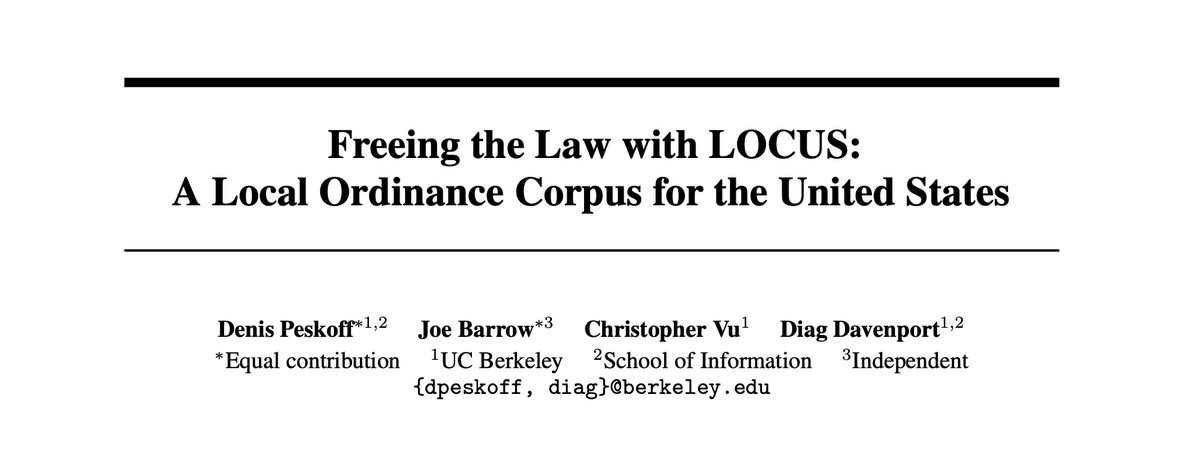
New paper: every law in America is technically public. But not really, until now!
With @DenisPeskoff at UC Berkeley, we built a corpus of ~every publicly accessibly city and county law, and released a huge chunk of it!
2.2 million laws, you're (probably) covered in it!
🧵
I am once again reminding you that getting artificial dopamine hits inside non-stop all day is frying your chimp brain more than you dare to imagine.
They can literally cook your entire life.
Heck, in general, if you are depressed, unmotivated, lazy, and even don’t enjoy life much immediately cut out all artificial dopamine hits and go outside.
You might laugh at this initially but give it 3 weeks and you will never look at social media the same.
It’s basic science.
D2 receptors, for example, are susceptible to downregulation from overstimulation, artificial blue light is shown to lead to a 30% reduction of tyrosine hydroxylase-positive neurons in the substantia nigra in many animal models etc.
So you can not live an overstimulating life indoors and wonder why you don’t derive pleasure from anything natural or why you're not driven to create something.
I feel obligated to let my fellow nerds know that paper-like screens are the foundation for healthier computing.
Reflective displays means no flicker, natural light, and blue-light-free amber backlight at night.
we’ll look back on the 2010-2020s as this utterly insane period where we stared into flickering screens most of our waking hours … wondering why we were so distracted and dysregulated
SOMEONE VIBE CODED A VIDEO STREAM THAT IS SECRETLY 100% TEXT SO IT CANT BE BLOCKED
it plays 360p video at 30fps, but theres no actual video on the page. every frame is just colored text characters being repainted on a canvas
to the browser its not media at all, its javascript updating some text
its called asciline, and here's the trick:
> the server decodes the real video and streams it as binary packed text over websockets
> the browser paints thousands of colored block characters fast enough to look like 360p
> ad blockers and autoplay blockers cant catch it because theres no video element to catch
> it streams in kilobytes since its just strings, so it runs on trash internet
since the video is literally text, you can apply css glows to it, let people copy paste a moving frame, or feed it straight to a local llm
however, an unblockable stream is also an unblockable ad as well
Read this open statement by Signal and your jaw will hit the floor.
Govts always use “protecting children” as their guise for more control and censorship.
I interviewed a prev Govt minister, who wrote the Online Safety Bill, and asked if they could tell me how a VPN worked. They couldn’t. These are the people writing these laws.
This new tool is another dangerous form of silent oppression that once again uses children’s safety as a guise to control the masses.
We can protect children online, but that starts at home, with parents, not in the Home Office, GCHQ, Apple, Google, Microsoft or Samsung.
You have noticed it. ChatGPT feels dumber than it used to. Your prompts that worked six months ago produce worse results now. The writing sounds flatter. The ideas sound safer. The internet itself feels like it is shrinking. Every article reads the same. Every email sounds the same. Every answer sounds like it was written by the same voice.
You thought it was you. It is not you.
Researchers at Oxford and Cambridge published a paper in Nature proving what is happening. They call it Model Collapse.
Here is the mechanism in one sentence. AI trained on AI-generated data gets dumber every generation until it forgets what real human data looked like.
The internet is filling with AI-generated content. Blog posts. Articles. Reviews. Comments. Social media. AI companies scrape the internet to train the next generation of models. Which means the next generation of AI is being trained on the output of the current generation.
Each cycle loses information. Not randomly. It loses the rarest, most unusual, most creative parts first. The researchers call these the "tails of the distribution." The weird ideas. The unexpected perspectives. The things that made the internet feel human. Those disappear first.
What remains is the average. The safe. The expected. The bland.
Then the next generation trains on that. And loses more. And the next generation trains on that. And loses more. The researchers proved this is not a slow decline. Major degradation happens within just a few iterations. Even when some of the original human data is preserved.
They tested it on large language models. On image generators. On statistical models. The pattern was the same every time. The output converges toward a narrow, flattened version of reality that looks nothing like the original data.
The lead researcher put it plainly. "Large language models are like fire. A useful tool. But one that pollutes the environment."
The pollution is invisible. You cannot see which sentence on the internet was written by a human and which was written by AI. Neither can the AI that is about to train on it. And once the tails are gone, they do not come back. The damage is irreversible.
This is not a prediction anymore. It is a diagnosis.
The internet you grew up on was built by humans writing things no algorithm would have written. Strange, personal, imperfect, alive. That internet is being diluted. One generation of AI at a time. And the models trained on what remains are learning a smaller and smaller version of the world.
Model Collapse is not a technical problem. It is a cultural one. The thing that made the internet worth reading is the thing that disappears first.
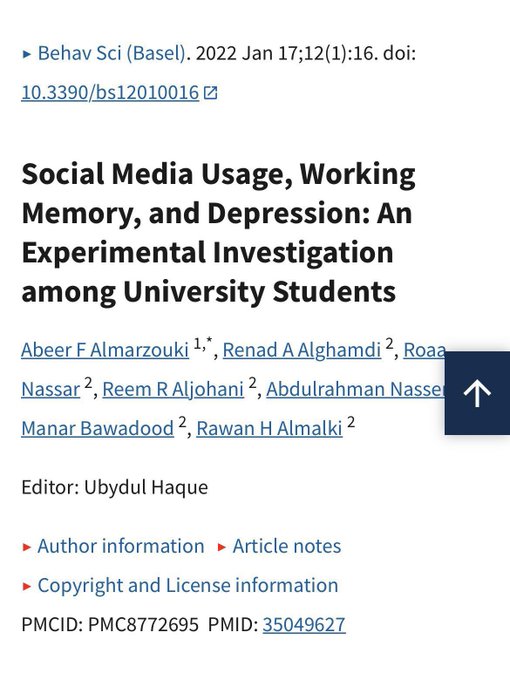
A study of 100,000 young adults across 163 countries just found the #1 cause of suicidal thoughts in Gen Z.
It wasn't trauma. It wasn't poverty.
It was the age they got their first smartphone.
Here's what they found, and it should scare every parent on earth:
GOOGLE, AMAZON, AND APPLE SPENT A DECADE CONVINCING YOU YOUR SMART HOME NEEDS THEIR CLOUD.
One guy in Norway just shipped 253 commits proving they were lying.
His name is Lasse Lian. The project is called Prism Desktop. It's a native Windows and Linux client for Home Assistant that runs entirely on your local network.
No Google account. No Amazon login. No Apple ID. No cloud relay. No subscription tier hiding behind a "Pro" badge.
Closed smart home vs Prism Desktop:
- Account required: Yes → No
- Voice data stored: On their servers → Never leaves your house
- Works without internet: No → Yes
- Costs: $99 hub + $5/month video storage → $0
- Source: Closed → MIT licensed, 253 commits public
- Vendor lock-in: Total → None
The whole app talks to Home Assistant over its WebSocket API. Your lights, your thermostats, your cameras, your locks. None of it touches a corporate server.
→ Drag and drop dashboard you actually own
→ Global keyboard shortcuts to any entity
→ PC notifications from your local automations
→ Real-time state sync without polling
→ Border effects, custom colors, the petty stuff matters
Here's the wildest part:
He shipped the first release on February 1, 2026. He's now on version 1.5.3, four months later. Solo developer. 14 releases. 160 stars and climbing.
The trillion-dollar smart home industry needed a decade and never built this.
One honest note: you need a Home Assistant instance on your network. This is the client. Setting up HA itself is the part that scares people, and it shouldn't.
100% Open Source. MIT License.
Link in the first comment.
MIT's Nobel Prize-winning economist proved that AI is mathematically guaranteed to destroy human knowledge.
They published a massive NBER paper modeling the long-term impact of AI on human cognition.
And they found the most alarming conclusion in the AI literature so far.
It’s called "Knowledge Collapse."
Here is how human progress actually works.
When you struggle to solve a complex problem, you generate two things:
General knowledge about how the world works, and context-specific knowledge about your exact problem.
Normally, humans acquire both at the same time. You do the hard work to solve your specific problem, and in the process, you learn a general principle.
You share that principle. That is how human knowledge grows.
Then comes Agentic AI.
AI is incredibly good at giving you the exact, context-specific answer you need right now. It hands the solution to you on a silver platter.
So you stop doing the hard work.
And because you stop doing the work, you stop generating the "general knowledge" that society relies on.
Acemoglu calls it the "knowledge-collapse equilibrium."
When AI reaches a certain accuracy threshold, the incentive for humans to learn drops to zero.
Nobody verifies. Nobody explores. Nobody discovers new fundamental truths.
Society gets increasingly sophisticated automated outputs, while our actual capacity to generate new knowledge quietly erodes.
But here is the most terrifying finding in the paper.
Welfare is "non-monotone" to AI accuracy.
That means as AI gets more accurate, society actually gets worse off.
When people think Flock, they think cameras...
It's more than that. It's an entire surveillance ecosystem that listens, watches, and tracks you, built quietly in your neighborhood without consent, under the banner of 'safety.' Welcome to the panopticon.
I think the main thing AI has taught me, through all the time savings it brings, is that I’m not a very interesting person
Faced with a surplus of free time, I realize I don’t really have hobbies besides content consumption
I’m forced to conclude that I don’t have very deep friendships, and am not a core member of any particular community
I’m not very cultured, I’m finding, and don’t have abiding interests in art or literature or history or much that isn’t directly related to my work
I have a work-centric life, in other words. AI pulls back the curtain on just how impoverished such an existence is, by disabusing me of its necessity
Given the freedom I’ve always said I wanted, I’m at a loss as to what to do with it, except plow myself even harder into work, thus exacerbating the lesson
There’s nothing more confronting to humans than freedom