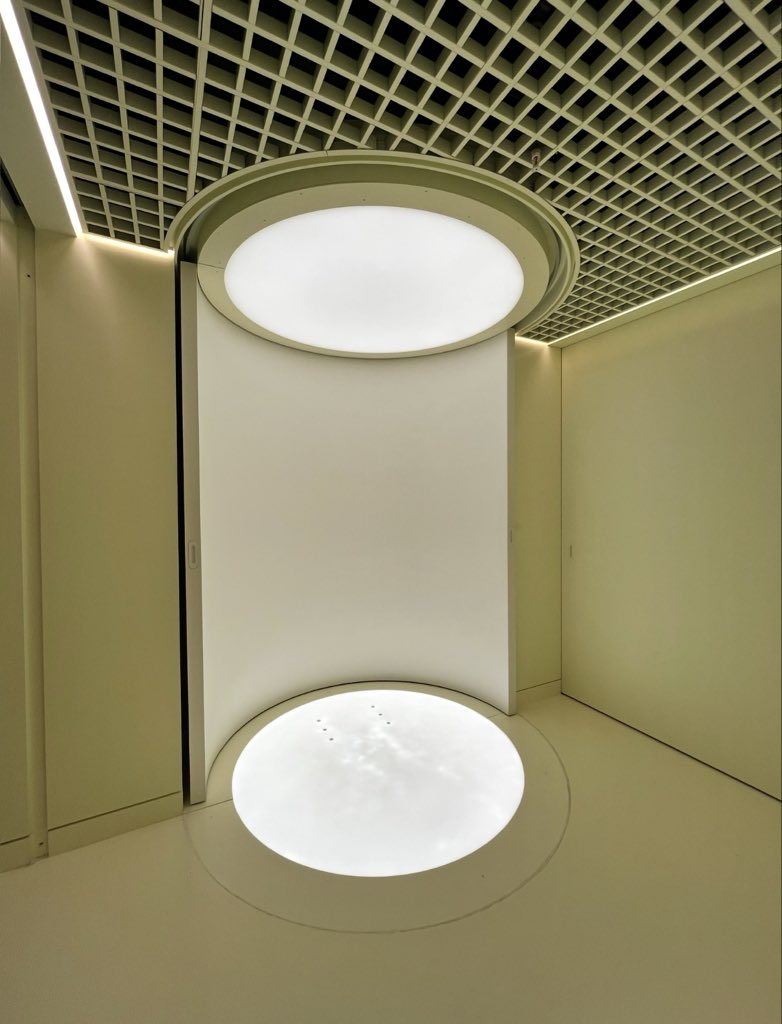
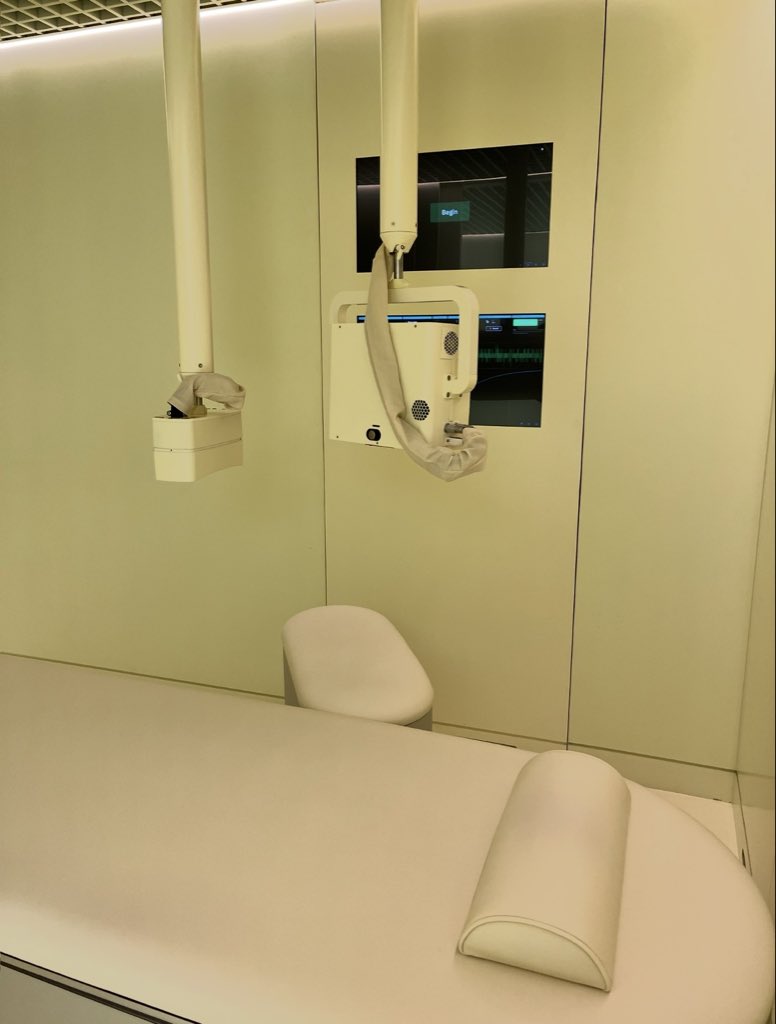
Same scan, new data.
We've upgraded all scans so you now get your body composition.
Body comp helps members understand visceral fat, the fat around your organs that a standard check or BMI typically misses.
Our clinicians want your wearable data, because how you live between scans is key to understanding what we capture during them.
The new Neko app brings it in from Apple Health. Our medical team reviews it alongside the millions of data points from your scan, to help you understand your health in full and shape it long term.
One of the most frustrating healthcare experiences of my life has been trying to get a doctor to look at my painstakingly collected and tracked health data.
Neko celebrates your effort to track and understand your health, and we now make it super-easy to bring that information to the conversation with our clinicians.
Cool updates coming to the @Neko Health scan today. Body comp, wearables integration and a first look at the next-gen scan room.
Every one of them is about catching more, earlier, so you can act on it.
As we reach 100K members, we’re doubling down on the value delivered per scan.
We started @Neko to transform healthcare from reactive to proactive and improve the health of billions of people. We built our technology to catch the signals that show up years before disease develops, at the stage where lifestyle changes can genuinely reverse the trajectory.
With body comp and lifestyle data now included in every scan at no extra cost and no extra time, our medical team has even more data and context to guide our members to better health.
The new scan room is our next gen hardware engineered to unlock new AI-powered capabilities across the Neko experience.
This is the first in a series of significant product updates to come.
Today we’re sharing 3 updates to the Neko Health scan:
1. Body Composition in every scan
- Sees what standard health checks and BMI misses
- Measures visceral fat and body fat percentage
- Powered by our own imaging technology
- Results explained same-visit by your Neko clinician
2. Wearable data in your clinical review
- Connect how you move, sleep & recover
- Sync’d via the new Neko Health app
- Adds lifestyle context to personalise your action plan
- Track changes between scans
3. And a first look at what's to come: our new scan room.
A Japanese immunologist spent 20 years proving that the chemicals trees release into the air walk into your bloodstream, hunt down your stress hormones, and arm your immune system in ways no therapist or pharmaceutical has ever matched, and most of the data has been sitting in Japanese medical journals for two decades waiting to be translated.
His name is Qing Li.
He is a clinical professor at Nippon Medical School in Tokyo and the president of the Japanese Society of Forest Medicine. The Japanese government has been funding his research since 2004, and the body of work he has produced is the reason forest bathing is now an officially prescribed clinical therapy in Japan and Korea.
The story actually starts in 1982, when the Japanese Ministry of Agriculture, Forestry and Fisheries coined the term shinrin-yoku to describe the practice of slow, mindful walking in a forest. They did it for a practical reason.
Japan was urbanizing fast, stress-related illness was climbing, and the country had thousands of square kilometers of forest sitting unused. The idea was to give people a reason to walk into the trees... They had no idea what was actually happening to the human body during those walks until Qing Li ran the first proper experiment in 2005.
He took twelve healthy adult men on a three-day, two-night trip to a forest park. They walked for a few hours each day. Nothing strenuous. No prescribed routes or breathing exercises. They simply walked slowly through the trees, breathing the air, looking at the forest.
Li drew blood and urine samples before the trip, on the second day, on the third day, on day seven after returning home, and again on day thirty.
The numbers that came back from the lab were not what anyone expected.
The activity of a specific type of immune cell called the natural killer cell, which is the cell your body uses to hunt down cancer cells and virus-infected cells before they can spread, had jumped by roughly 50 percent during the forest trip. The actual number of natural killer cells circulating in the bloodstream had increased significantly.
Three different anti-cancer proteins that those cells produce, called perforin, granzymes, and granulysin, had all risen sharply. And the effect did not disappear when the men went home. The immune boost was still measurable on day seven and was still partially present on day thirty.
Two hours a day in a forest had upgraded the immune system for a full month.
Li ran the same experiment with women a year later and found nearly identical results. Then he ran it with a control group who took a three-day trip through an urban area with the same amount of walking, the same hotel quality, and the same diet.
The urban group showed no measurable change in natural killer cell activity at all. The forest was doing the work, not the vacation.
The mechanism turned out to be a class of airborne molecules called phytoncides. Trees produce these compounds to defend themselves against insects, bacteria, and fungi. Pine, cedar, oak, and cypress trees release them in particularly large amounts, especially in warmer weather and after rainfall.
When you walk through a forest, you are inhaling those molecules into your lungs and absorbing them through your skin, and once inside your body they appear to directly stimulate the production and activity of the very immune cells Li was measuring in his lab.
Roughly 50 percent of the health benefit of a forest walk, according to Li's data, comes from the chemistry of the air itself. The other half comes from what the forest is doing to your nervous system.
This is where it stops being only about the immune system and starts being about stress.
A separate Japanese research team measured cortisol, the body's main stress hormone, in 84 participants across 35 different forest sites. They drew samples before and after a 30-minute walk in each forest and compared them to control walks in matched urban environments. The cortisol levels of the people who walked in the forest were lower than the cortisol levels of the people who walked in the city by a significant margin. Their heart rates were lower. Their blood pressure was lower.
The activity of their parasympathetic nervous system, which is the part responsible for rest and recovery, had gone up. The activity of their sympathetic nervous system, which is the part that drives fight or flight, had gone down.
Then a researcher at the University of Michigan named MaryCarol Hunter ran the cleanest version of this experiment ever done. She recruited participants from a city and told them to take a nature pill three times a week for eight weeks.
They were free to choose the time, the place, and the duration of the nature experience, as long as it was outside, in daylight, and free of phones, conversations, and aerobic exercise. They sent her saliva samples before and after each session so she could measure cortisol changes accurately and rule out the normal daily drop in stress hormones that happens to everyone.
The result was that participants experienced a 21.3 percent drop in cortisol per hour spent in nature, with the biggest payoff happening between minutes 20 and 30 of the walk.
After that, the cortisol kept dropping, but more slowly. The threshold dose for measurable stress relief was just 20 minutes outside in something that looked and felt like nature.
What none of this means is that nature is a substitute for therapy or for medication when someone genuinely needs them. Therapy treats different things than a walk does, and Li himself has been careful in interviews to call forest bathing a complementary intervention rather than a replacement for clinical care.
But what the research has settled is that the human body has a physiological response to being among trees that operates on the same biological systems modern medicine is trying to reach with drugs and clinical protocols, and that response is fast, measurable, and free.
The strangest part of Li's work is the implication he keeps repeating in interviews. The average person now spends more than 90 percent of their life indoors. Their cortisol stays elevated. Their natural killer cells stay sluggish.
Their parasympathetic nervous system rarely gets a chance to take over. The system that was tuned by millions of years of life under a canopy of trees is being asked to run permanently inside a box made of drywall and screens.
Your body has not forgotten what it is supposed to do in a forest. It is waiting for you to walk into one.
Results in less than an hour, not weeks. With a clinician in-person to explain what they mean. That's what we're building at @Neko.
@StevenBartlett shares his Neko experience with @lowcarbGP
https://t.co/EmRpShwzZT
Thinking about it more, this company is really four things in one, which lets it deliver a pristine experience at a great price:
1) R&D (designing its own tech)
2) manufacturing
3) a medical clinic
4) a consumer brand
Hope we see more similar big swings in other markets
We need to all work hard to live as long as possible, and in good health.
I’ve met many companies trying to support this mission. One stands out, that those in the US haven’t experienced yet.
I was blown away by the experience at @neko in London.
Insanely well crafted patient experience, 30 min from start to finish, £300 (way cheaper than most), and immediate blood/skin/other results that a doctor walks you through live.
They are focused on detecting and monitoring the things that most predict potential health problems at a very affordable annual cost. They’ve developed all their own technology, which feels like living in the future, now.
They are opening in NYC soon. Go in London if you can. Future is bright in so many ways. Thanks to @shak and @HNilsonne for hosting us. Go try it!
@united plz hold the DEN>SFO flight that's about to close boarding, you have 40+ teen volleyball players and their parents trying to make it. They made it through the tornado in STL and now sitting in Denver waiting to be let out!!!! Sincerely - a GS member.
@Verizon is there another outage? When will the network be back up? Second in three months! Please improve your customer communication. #verizon#outage#CNN