i'm fully convinced this is the future of education
Matt Pocock built a Claude skill called /teach, and the whole idea is a private tutor that builds an entire customized curriculum around YOU.
think about how school works now.
everyone gets the same lessons at the same pace, whether it's too slow for you or way over your head.
but a great private tutor does the opposite.
they watch where you specifically keep getting stuck, then drill that one weak spot until it clicks.
that's what /teach does automatically.
it finds the bottleneck in your learning and breaks it, over and over, until the thing you couldn't do becomes easy.
he used this skill to learn the Rubik's cube.
it found good sources, wrote him custom lessons with diagrams and little practice drills, and kept a running record of how he was doing.
the way it knows how he's doing is simple: he just tells it. as he practices, he reports back ("i can make the white cross," or "i can mostly solve it but i keep failing the corners"), and it writes that down.
so when he said he was stuck on one specific move, it built the next lesson only for that.
the reason it can do this is memory. most AI forgets everything the moment you close it, so you're always starting from zero.
/teach saves those notes about you on your computer and reads them back before every lesson. so it remembers your goal, what you've already learned, and exactly where you're struggling, then aims the next lesson right at that.
and this works for anything. languages, chess, guitar, onboarding a new hire to a company.
you point it at a topic and it builds you a personal course that keeps adjusting to you and gets smarter the more you use it.
Jeff Bezos reveals why compromise is one of the worst ways to resolve a disagreement
"An example of a really bad way of coming to agreement is compromise. If I say the ceiling is 11 feet and you say 12 feet, we say let's call it 11 and a half. That's compromise"
"The advantage of compromise is it's low energy. But it doesn't lead to truth"
"Another really bad resolution mechanism is who's more stubborn. Two executives disagree, they have a war of attrition, and whichever one gets exhausted first capitulates. You haven't arrived at truth, and this is very demoralizing"
"Escalation is better than a war of attrition. Escalate to your boss and say, we can't agree, we like each other, we're respectful, but we strongly disagree, we need you to make a decision"
"Exhausting the other person is not truth seeking. Compromise is not truth seeking"
Newman on the purpose of a university.
In The Idea of a University, John Henry
Newman argues that education is not
mere job training.
A university should train the mind to
see things whole.
Theology, reason, knowledge, and truth
belong together.
"A University training… aims at raising the
intellectual tone of society, at cultivating
the public mind."
tolle lege
Airport ritual: buy a book you’ll probably finish months later and convince yourself this flight is the perfect time to start.
What are you reading these days? Any recommendations worth adding to the travel reading list?
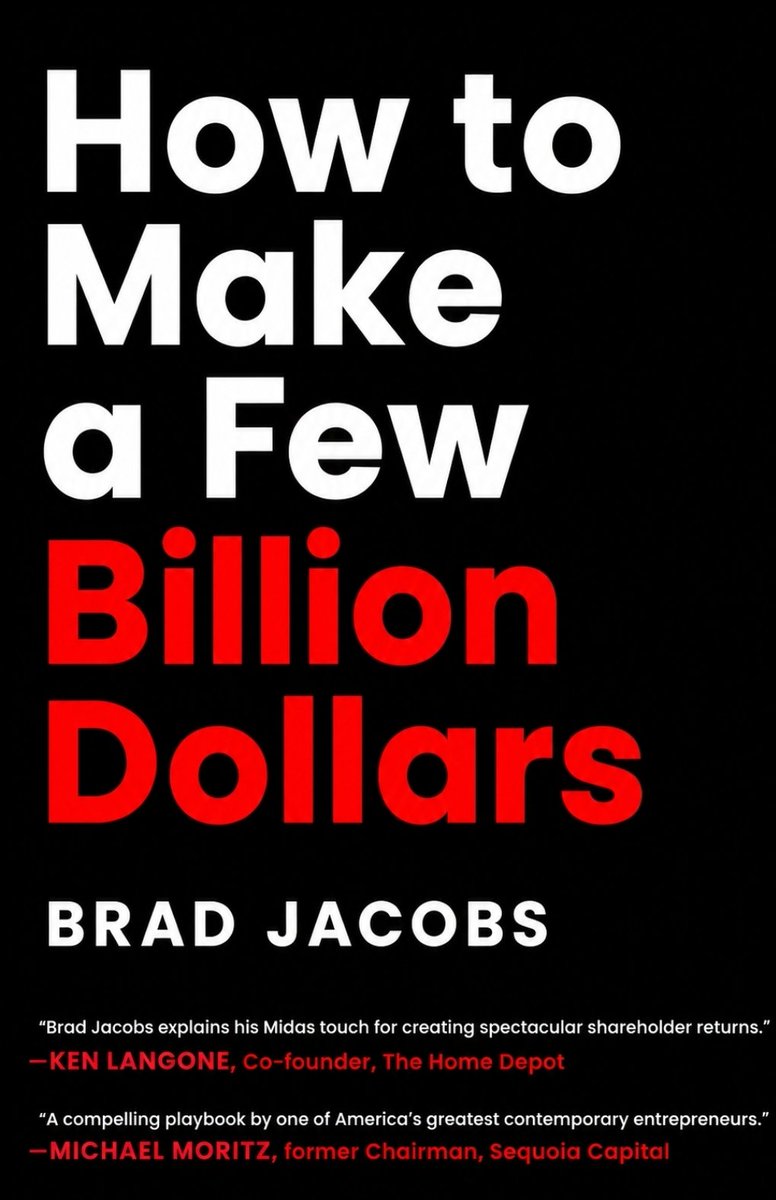
I bought The Man Who Solved the Market nearly two years ago during my stint at a prop trading firm. Despite(or because of) being surrounded by markets all day, I couldn't get through it then. A YouTube video recently pushed me to pick it up again, and this time I finished it.
An engineering professor who failed math her entire childhood spent years figuring out exactly what had been sabotaging her, and the answer was not low intelligence. It was a hidden mode her brain kept switching into that nobody had ever told her existed.
Her name is Barbara Oakley. The book is called A Mind for Numbers.
She failed math and science from grade school to the end of high school. Numbers felt like a language everyone else had been taught in secret.
So she ran toward the thing she was good at. She enlisted in the Army right after graduation, and the Army paid her to learn Russian at the Defense Language Institute in Monterey.
She got very good at Russian. Good enough to earn a degree in Slavic Languages, serve four years in Germany as a Signal Officer, and rise to Captain.
Then the wall appeared.
She watched her career options shrink because she could not handle the technical side of her own job. The people with math moved up and moved out. The people without it stayed stuck. So at 26 she did something that sounds insane. She left the Army and enrolled in engineering, starting from remedial math, sitting in classrooms with teenagers.
In between, she worked as a Russian translator on Soviet trawlers in the Bering Sea and as a radio operator in Antarctica. Today she is a professor of engineering at Oakland University with a doctorate in systems engineering.
The question that drove her for years was simple. What changed? She was the same brain that failed algebra. Why did it suddenly start working?
The clue was hiding in the one subject she had mastered. She noticed she had never learned Russian by staring at it. She practiced a little every day, walked away, came back, and the language quietly assembled itself between sessions. Math she had attacked the opposite way. Lock eyes with the problem. Push harder. Refuse to look away until it cracks.
It never cracked. And neuroscience explains why.
Your brain has two modes. The focused mode is the one you know. Tight attention, prefrontal cortex engaged, grinding through familiar steps. The diffuse mode is the one nobody teaches you. It runs in the background when you relax. It is loose, wide, and wired for connecting ideas that sit far apart from each other.
Oakley uses a pinball machine to explain the difference. In focused mode, the bumpers are packed tight. Your thought bounces in the same small circle, over the same ground, again and again. In diffuse mode, the bumpers spread out. The thought travels. It reaches parts of the brain the tight loop could never touch.
The trap has a name. The Einstellung effect. The first approach that comes to mind blocks every better approach behind it. The harder you focus, the tighter the loop, the more locked in you become. The grinding feels virtuous. It is actually the cage.
And every time her mind wandered off a math problem as a kid, she dragged it back, believing the wandering was laziness. The wandering was her brain trying to switch into the mode that solves things. She spent ten years fighting the half of her brain that wanted to help her.
You cannot run both modes at once. The diffuse mode only takes over when you genuinely let go. Which is why answers ambush you in the shower, on a walk, at the edge of sleep. Salvador Dali knew this. He napped in a chair holding a key over a plate, and the instant he drifted off, the key dropped, woke him, and he carried the half-formed ideas straight back into focused work. Edison did the same trick with ball bearings. Two of the most inventive minds in history were deliberately farming the mode the rest of us treat as slacking off.
The practical version fits in two sentences. Focus hard on the problem until you stall. Then stop completely, and let the other mode take the shift.
The break is not a reward for the work. The break is the work. It is also why cramming fails and procrastination is fatal. Diffuse mode needs hours and nights between focused sessions to build anything, and procrastination burns that time before the first session even starts.
Oakley failed math for ten years using one mode at full strength.
She became an engineering professor the day she started using both.