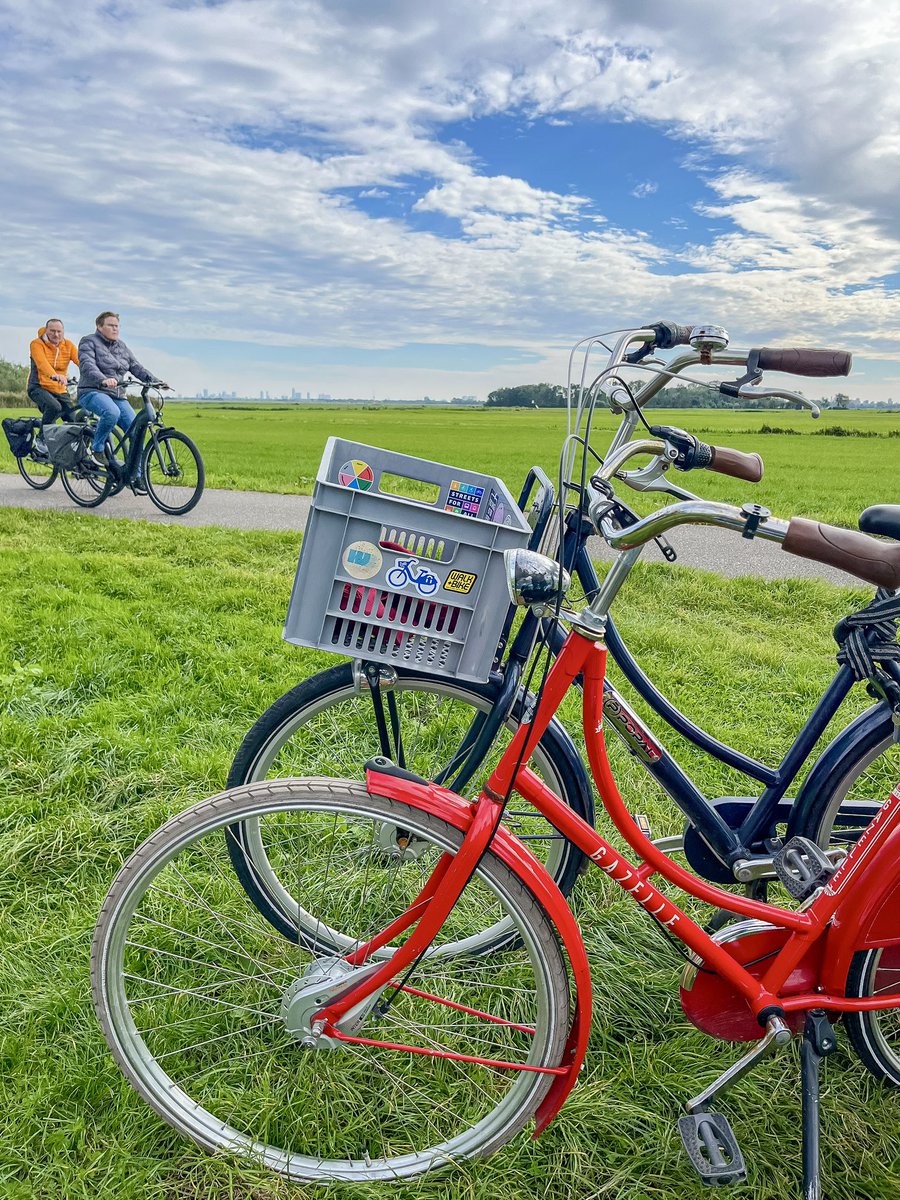
@AmericanFietser They are given lots of independence, even at a young age. Allowed to bike in large groups side by side. Little to no homework before 12 years. Bike, skate easily. Lots of skate parks & playgrounds. More vacation time for families. Work-life balance important for parents.
Remember, Paris wasn’t “always this way.”
It wasn’t even this way in late 2019 when I was last there.
Just a few years ago, #Paris was choking in car traffic much more.
This is new. This is leadership.
Cities are a result of choices.
HT @Khayat_Fouad
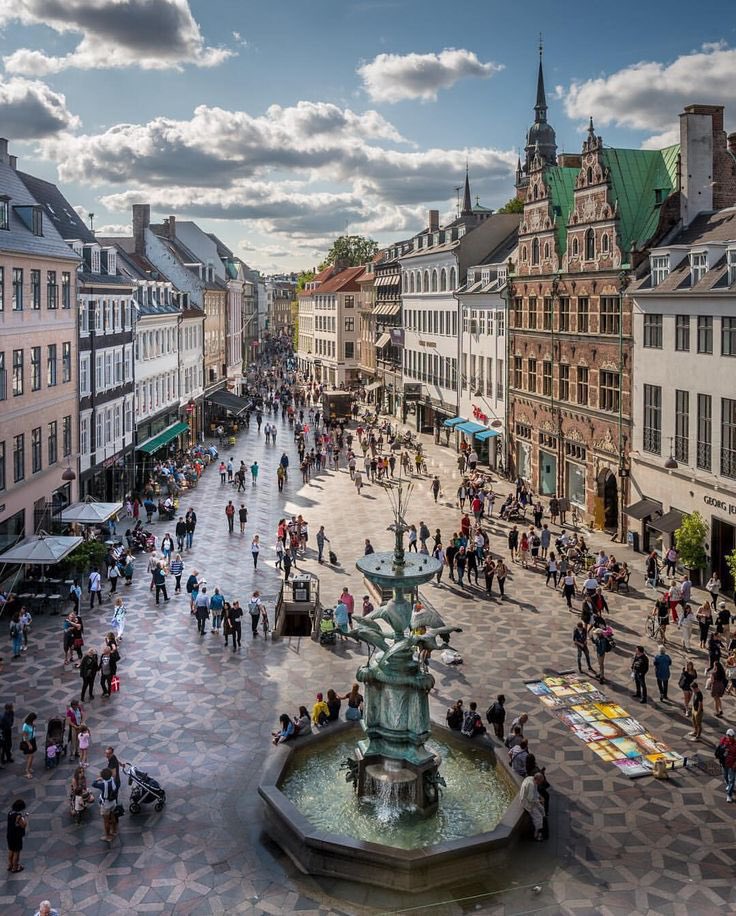
One of the most successful pedestrian streets in the world, the Strøget in Copenhagen was filled with cars until a 2 year pilot project in 1962. The opposition argued “no cars means no business” but the street has been a massive retail success, the city’s busiest shopping street.
In 2012, #Ghent Belgium’s bike trip mode share was 22%.
They wanted to get it to 35% by 2030.
Thru creative, decisive action, they reached 35% by 2019, in 7 years, 11 YEARS EARLY!
@Streetfilms tells the #Ghent story that I learned working there in 2019.
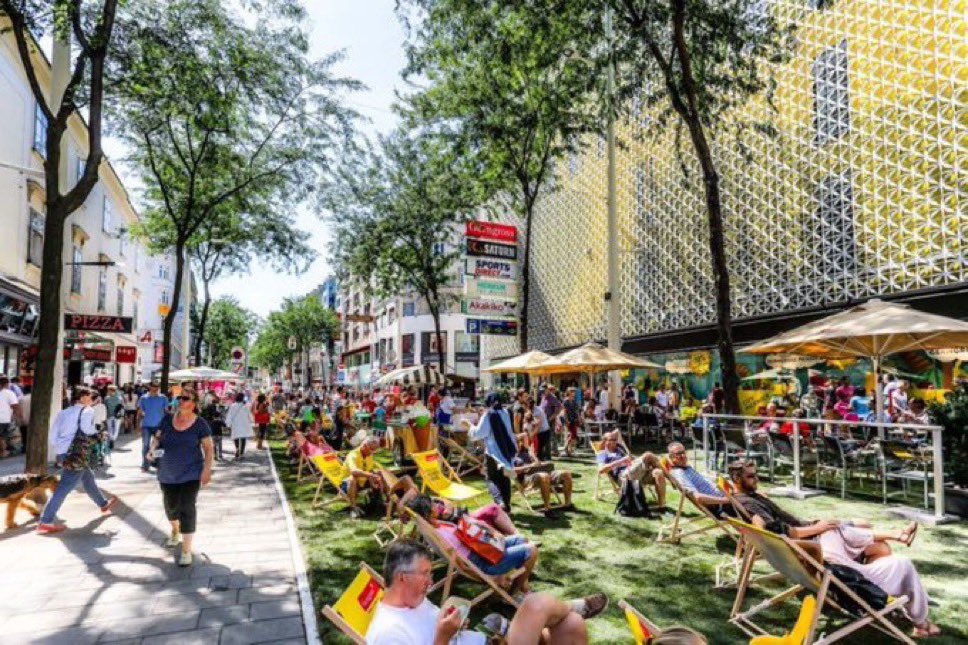
This Vienna street isn’t “closed” because cars have been removed. It has successfully been “opened” to everything else, to a diverse & invigorated civic life, because cars have been replaced by a multitude of wonderful things.
Language matters.
HT @_dmoser for pic
#OpenStreets
With much focus on how Dutch infrastructure enables cycling for transportation, it’s easy to forget how it enables cycling for recreation.
18 million inhabitants make 262 million such trips per year—for six billion kilometers—with huge impacts on physical/mental/economic health.
How the Dutch found that the only thing that really encourages cycling is a dense network of high quality bike-infrastructure.
Good quality cycle routes attract bike-riders, but they have to be close together.
Via @Cycling_Embassy#dutch#Delft
https://t.co/jyMKrF9RwG
How do we stop the exodus of young families from American metro areas?
As recent analyses of census data shows, millennials parents are fleeing the cities they moved to in their 20s and 30s. The main cause? The cost of the aspirational "house with a yard" is prohibitive in the city, so young families move to the burbs.
Cities can keep these families in the city by building courtyard block neighborhoods.
In the U.S. we talk about creating "3rd Places" where people can hang out outside of work or home. Unfortunately, most of these places are private and involve buying over priced food.
Barcelona's entire urban fabric is made up of 3rd Places, however. The private ones have affordable food and are open late. And the public ones are being carved out of spaces throughout the entire city.
Barcelona seems far more socially healthy than most U.S. cities.
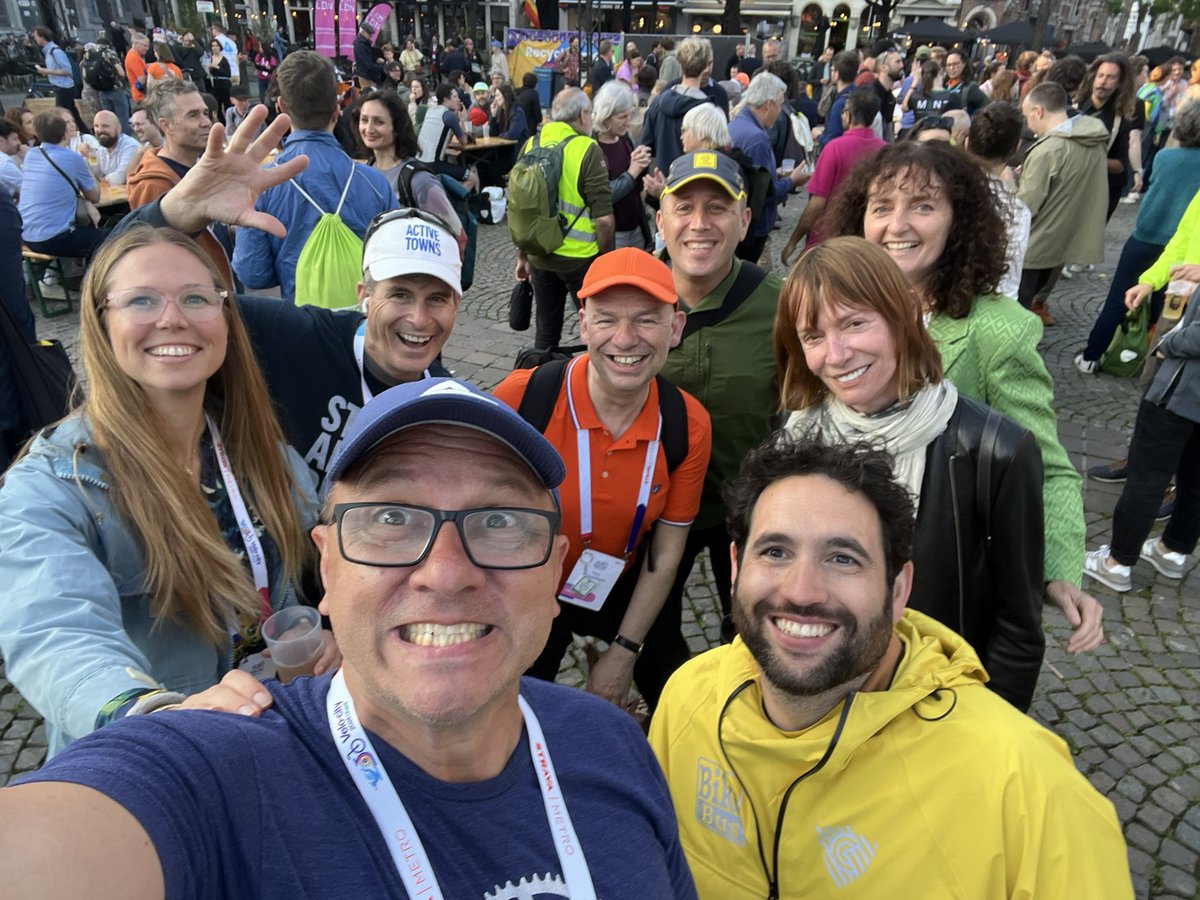
The best bike lanes in the world aren't the biggest or most expensive, they're the ones that make the critical connections people need. Riding and celebrating with streetfighters in Brussels and Ghent, talking about BICI and backlash at Velo-city 📷 @PurpleClarence#vc24
@modacitylife So glad you got to see our wonderful @34_ave#openstreet. If you had travelled a few more blocks you may have run into my wife & kid walking at dismissal!
For those who want to see some background from @NYC_DOT this is an excellent explainer!
https://t.co/siBeewy7O0
At the start of the pandemic, the City of New York’s Open Streets program closed 26 blocks of 34th Avenue in Jackson Heights to motor traffic.
It has evolved into a flourishing community initiative; reflecting a shared vision of how urban streets can better serve every resident.
@BicycleDutch Happy New Year Mark! I saw a woman with her friend cycling quickly down Griftstraat narrowly miss a fire cracker exploding a fraction of a second after she passed. No cycling for me on New Years Eve. A fair amount rode past though.