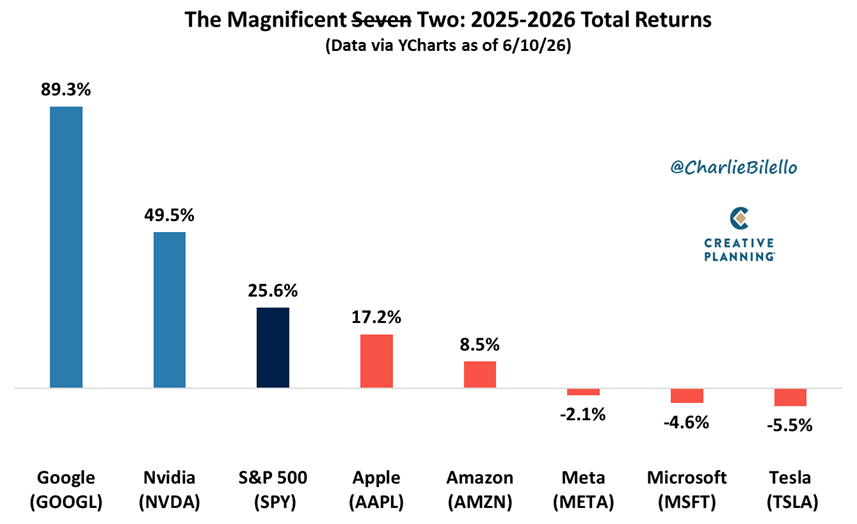
5 out of the 7 stocks in the Magnificent Seven have actually underperformed the S&P 500 since the start of 2025, a very different picture than 2023-2024.
Only Google and Nvidia have outperformed.
Over the last 50 trading days, technology stocks have beaten the rest of the market by an amount that is almost unprecedented.
The move from May 2026 to June 2026 is nearly vertical, pushing to levels never seen in the sample period.
This chart shows the S&P 500 Technology sector's 50-day trailing relative return versus the S&P 500 from 2015 through June 2026.
* Above 0% = Technology has outperformed the S&P 500 over the previous 50 trading days.
* Below 0% = Technology has underperformed the S&P 500.
The dashed line at +13.6% represents 3 standard deviations above normal.
The current reading is approximately +29.3%, which is 6 standard deviations above normal.
This is a momentum extreme. A 6-standard-deviation event is extraordinarily rare. Historically, extremes tend to mean-revert.
For a value investor, this chart is a reason to look aggressively for opportunities in everything technology has left behind.
The best we can say looking at military conflicts in the past is that with the passage of time the stock market has tended to rise, and the more time that has passed, the more it has risen.
That’s true for 2 reasons: 1) all wars eventually come to an end, and 2) the economy & earnings, even if impaired in the short run, still tend to grow in the long run in spite of these conflicts.
As we discussed in this past weekend's #BullBearReport, since the late-March lows, the S&P 500 has rallied more than 19%. In similar rebounds, stocks have typically pushed higher over one-, three-, six-, and twelve-month horizons, with average one-year gains above 41%!
@ISABELNET_SA
Savita BofA: Too many red flags. Take profits. $SPX
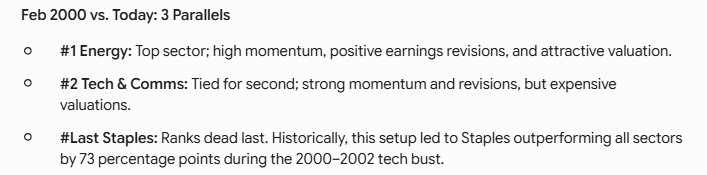
Our S&P 500 year-end target of 7100 suggests 6% downside from here. Today = Feb 2000 in three ways:
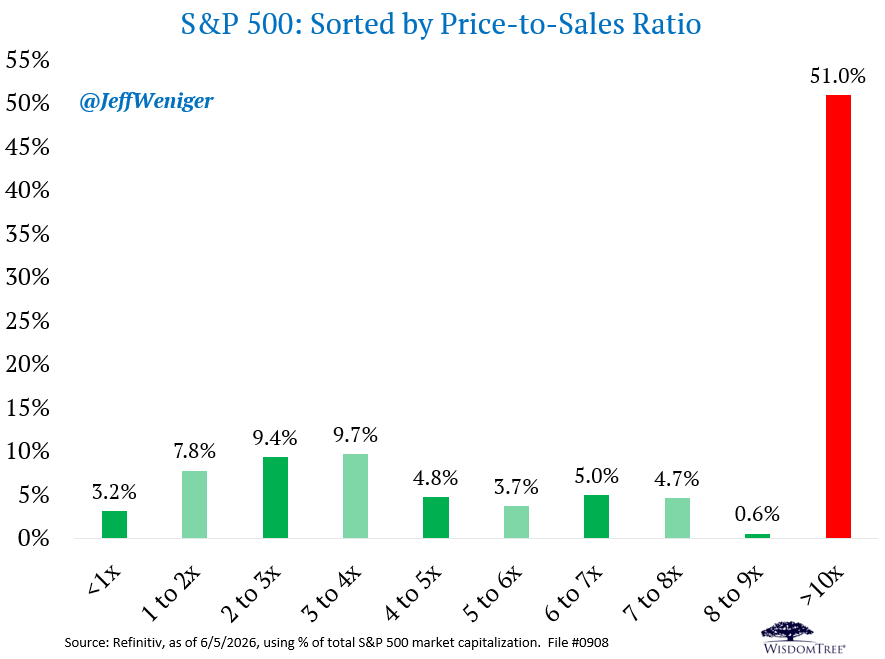
More than half the S&P 500's total value is now in stocks priced above 10x sales. This was once considered an outlandish valuation, as it leaves little room for error. The list includes Nvidia, Apple, GOOG, MSFT, Broadcom, Tesla, Micron, Eli Lilly, AMD, Oracle and 57 more.
This is a new chart that will be featured in our weekly SectorSnap report.
In addition to illustrating the S&P 500's valuation bands, it combines forward earnings estimates with a range of valuation scenarios to help frame where the market could be headed. Hope you like it! 🤙🏼
Find it here 👉🏼 https://t.co/0vNhdUfW5m
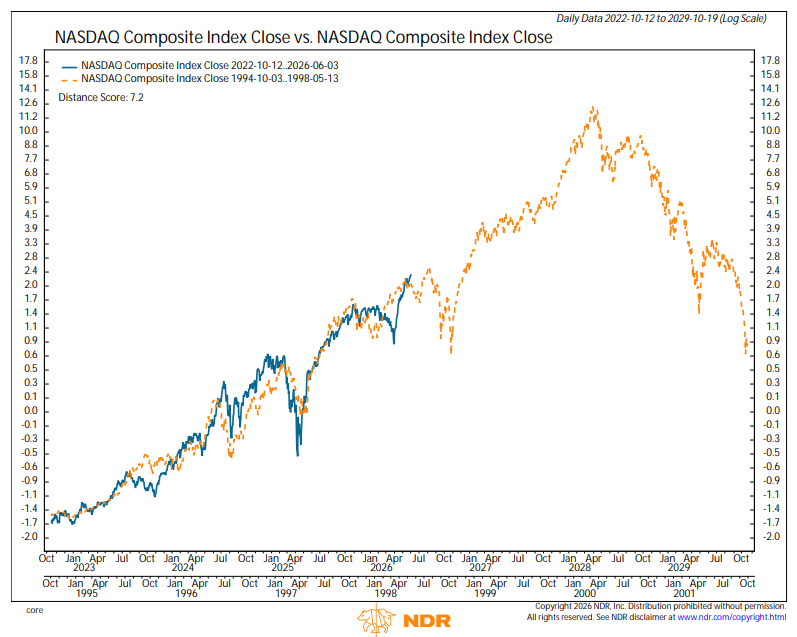
The "pattern matching" tool from @NDR_Research shows the Nasdaq tracking the https://t.co/PCNfBkK0Kp bubble but is closer to 1998 than 2000. This aligns with our view that a corrective process is coming but you should likely be a buyer than a seller for now. (Assuming the analog remains, but that is always the question.)
The tech sector P/E was near 32x last October
Fell to 19x in late March
Now just 23x @DualityResearch ... but have AI EPS estimates overshot?
https://t.co/mKBZHp6aon
The S&P 500 fell 2.6% today, its biggest one-day decline since last October. Downside volatility is the price of admission for investors. Embrace this risk - for without it, there would be no reward. $SPY
Secular bull markets always end with a valuation reversal, either because they reach bubble levels unsupported by fundamentals (1929 and 2000) or because they get derated by inflation (1968). Whenever the current trend comes to an end (hopefully not anytime soon), it will likely be for one of those two reasons. Perhaps it will even be both, if the two tail risks manifest at the same time. But for now, valuations are supported by the fundamentals of margins and credit spreads, so let’s enjoy the ride while we can.
According to @Experian, average monthly car payments in 4Q25 for new and used vehicles reached $767 and $537 respectively … consumers who rolled over previous loans (which were typically underwater) saw much higher monthly payments of $916
@DataArbor
Over half of CEOs anticipate AI having a moderate impact (but not fundamentally transformative) on their industry according to 2Q26 @conferenceboard confidence survey