Never in my life have I seen two boxers give themselves time to rest 😂
It seems these ones are busy bulking up and no endurance or cardio 😂😂
I've said this - Boxing is not a good sport.
See the way they're looking at each other pitifully.
Like who send us come here 😂
I just hope it is not another Phase where we post how we feel about the whole situation. Deeply Saddening Yes. But honestly what can we do . I am honestly tired of this whole cycle we need a solution at this point . As citizens as individuals what can we doo 💔!
Will Serfort beating a Devander (Magia Vander level threat btw) saving all of them & passing the test enough for him to get scouted by almost all the factions is apparently not enough for this four-eyed glove wearing blind ass fake Aizen looking mfker named Kreutz
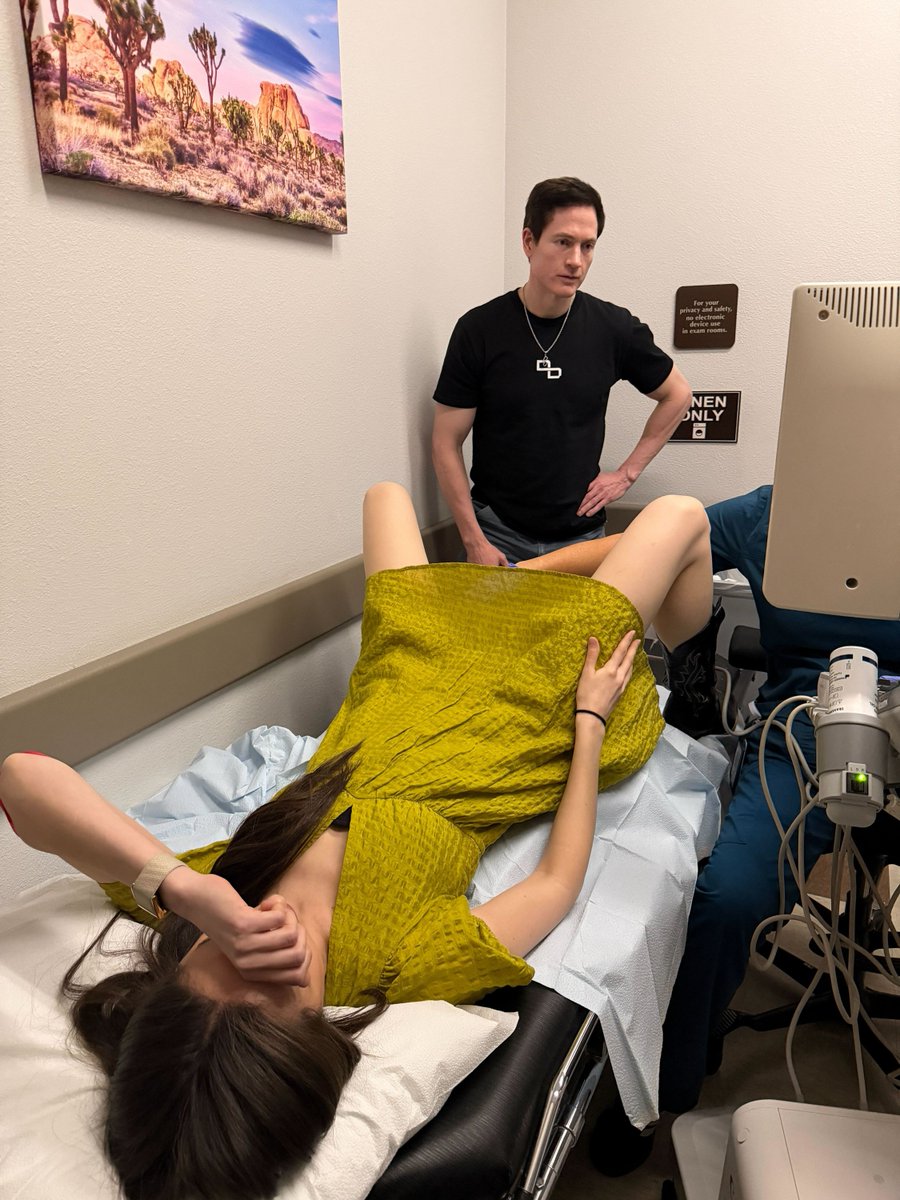
Examining Kate’s 1%
She has suspected endometriosis. This affects at least 1 in 10 women, likely more.
Here she’s getting an ultrasound.
Historically you needed surgery just to diagnose it (incisions are made in the abdomen). We're doing a non-invasive route.
Typically women live with endometriosis for 7-10 years before being diagnosed. It’s the leading reason women aged 30 to 34 get hysterectomies (permanent surgery to entirely remove the uterus).
This condition is where endometrial-like tissue starts growing outside the uterus, in ovaries, bowel, bladder, even the diaphragm. This tissue inflames, scars, and glues organs together.
Our first step is to find out if @_katetolo has it.
Initial measurements we’re doing:
+ trans vaginal ultrasound
+ pelvic MRI w and w/o contrast
+ hormonal labs
All during the early part of her cycle to get the clearest picture.
During her ultrasound, a slim probe, about the width of two fingers, 10-12 inches long (although only a small portion is inserted) is covered with a protective sheath and lubricant and gently inserted into the vagina (patient has to empty their bladder first). This creates real-time images of the uterus, ovaries, and surrounding pelvic structures. While inserted, the probe is turned 90 degrees to evaluate all the various structures, angles and views. There is no radiation exposure.
The technician is looking for scarring, ovarian cysts, adhesions, and for organs that are fused together with tissue. This ultrasound can confirm endometriosis but it cannot rule it out.
What endo does to the body:
+ 90% report pelvic pain
+ 50% report severe fatigue
+ 26% report infertility. However many sources cite 30 to 50 percent.
+ 50% experience pain during sex.
+ Many have pain with ovulation, bowel movements, and urination
+ Severe bloating called “endo belly” where the abdomen visibly distends
There are a handful of theories about why endometriosis develops but the honest answer is no one is quite sure.
We’ll keep you posted on her results.
In 1935, two American doctors examined seven women's ovaries and saw small lumps. They called them cysts and named the disease after them. They were wrong. It took 91 years to fix.
What we called PCOS is now Polyendocrine Metabolic Ovarian Syndrome (PMOS), announced today in The Lancet by an international panel of doctors and patients. The renaming followed more than a decade of consensus work and 22,000 patient and clinician survey responses.
The lumps Stein and Leventhal saw were never cysts. Modern imaging shows they were follicles, the tiny sacs inside the ovary that grow and release an egg each month, frozen partway through by a hormonal imbalance. PMOS is a multi-system disorder centered in the endocrine system, the body's network of glands that produces hormones like insulin (controls blood sugar), cortisol (the stress hormone), and thyroid hormones (set the body's metabolism). The ovary trouble flows downstream from there.
The naming choice is not academic. When doctors hear "ovary" in a diagnosis, they look at the ovary. "Metabolic" and "endocrine" send them to the whole body.
PMOS affects roughly 1 in 8 women worldwide, more than 170 million people. The WHO estimates 70% have never been diagnosed. Among those who do, 1 in 3 wait more than 2 years, and nearly half see 3 or more doctors first. The CDC reports more than half of women with PMOS develop type 2 diabetes by age 40, a risk 5 to 10 times higher than women without the condition. Around 37% have clinically significant depression, compared with 14% in women without it. Anxiety runs at 42% versus 8.5%.
A label born from a 1935 look at seven ovaries is finally going away. The new diagnostic guidelines roll out fully in 2028. By then, a woman walking into a clinic with these symptoms should hear questions about her blood sugar and her mood alongside her cycle. Those are the parts of the disease the old name hid for 91 years.
There’s a serious Lassa fever outbreak in Nigeria right now where 146 people have been confirmed dead in 11 weeks and there have been 582 confirmed cases.
25 doctors have been infected, and 3 have lost their lives.
If you are reading this, please stay safe. This virus spreads through the urine or droppings of infected rats, or human-to-human contact.
It starts like an ordinary fever, but it can quickly move to bleeding, a swollen face, and shock.
ALWAYS:
1. Cover your food and pots tightly.
2. Block the holes where rats enter your house.
3. Wash your hands thoroughly with soap.
4. If you have a persistent fever, stop swallowing random drugs from the chemist. Go to the hospital immediately.
Our health workers are at risk, and proper Personal Protective Equipment (PPE) is life-saving. We cannot afford to lose more people to a preventable disease.
Stay safe and retweet this to save a life today!