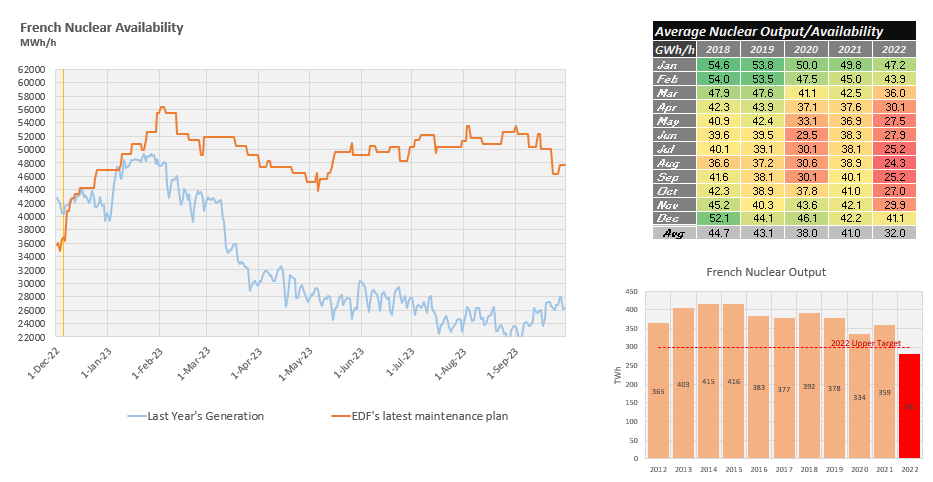
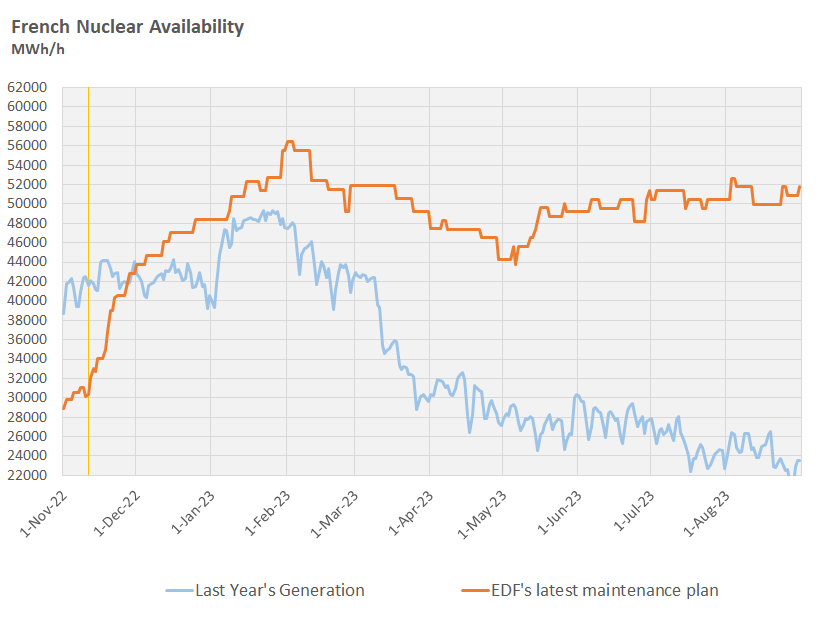
As far as I remember this is the first in a long time #EDF will produce less than 300TWh from its #nuclear fleet. Even the lower target of 280TWh is in jeopardy despite being almost at the same output than last year...
This is really remarkable: 75% of German (gas consuming) companies are saving gas without reducing their output. And almost 40% say they could reduce gas consumption even more without producing less.
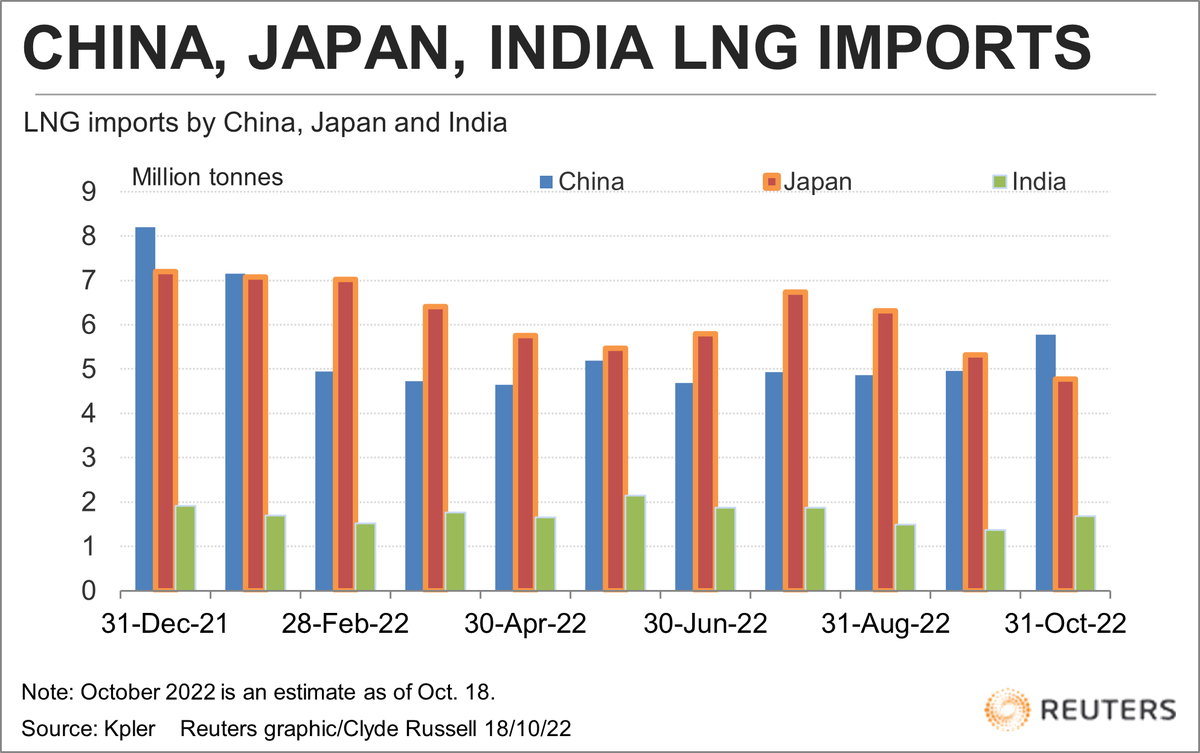
China’s reported decision to stop reselling #LNG cargoes, mainly to Europe, will tighten the market slightly. But it’s likely #China will still import less this winter given spot prices remain high and inventories are sufficient. #ONGT#natgas#energy https://t.co/P20Py1jOPc
After Malaysia now Nigeria. This time Europe being the direct importer.
Yes storages are full and LNG is queuing offshore but we need continuous strong arrivals throughout winter...
🇳🇬NigeriaLNG declared force majeure after massive flooding impacted production and exports of LNG. The facility is a massive 6 train terminal, with a total capacity of 22.5mt/y.
The situation on the global gas market keeps worsening and the🇪🇺EU stands to be seriously affected🧵
GERMANY TO EXTEND LIFETIME OF ALL THREE OPERATING NUCLEAR PLANTS
Reality setting in. It was always possible. Straightforward, even.
It was always going to help with the gas crisis, despite experts and Green politicians spreading falsehoods that it wouldn't help.
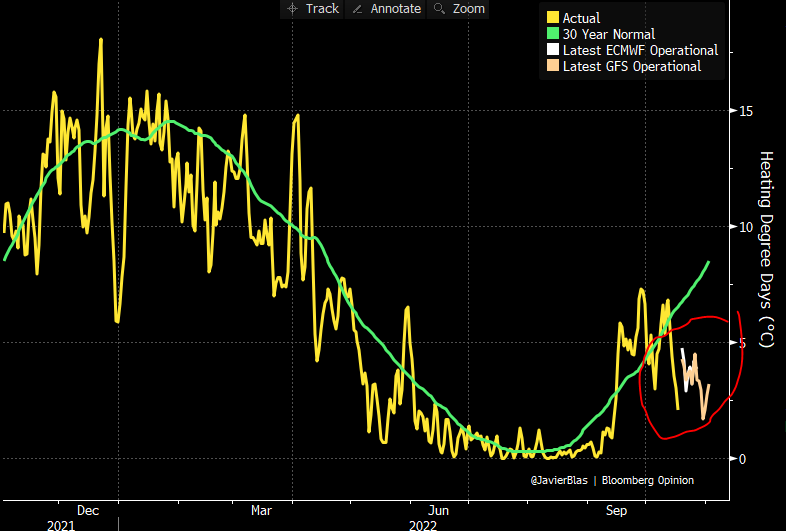
CHART OF THE DAY: After an early cold snap in late September, which pushed up gas demand in Europe, October is so far trending quite warmer-than-seasonal, helping to mute consumption and gas and power prices | #EnergyCrisis Chart is NWE heating degree days
I think what good energy policy-making currently needs most urgently is some basic idea of how commodity markets work.
Arbitrage & speculation, price formation, risk & liquidity management, links between retail supply and financial markets, platforms, price indices. That stuff.
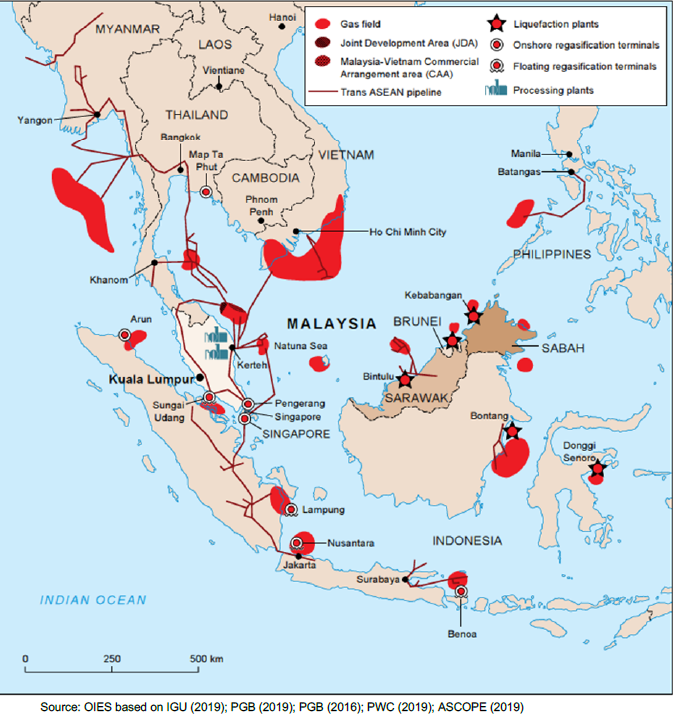
🇲🇾Malaysia gas exports are severely affected by a leak in the Sabah-Sarawak gas pipeline (SSGP), feeding one of the world's largest export terminals, Bintulu LNG.
LNG consumers in North Asia,🇯🇵in particular, took the incident seriously and also🇪🇺Europe should be really worried🧵
#Leag brings back 1GW mothballed lignite capacity:
> Jeanschwalde E & F (500MW each)
> F back since Saturday (mothballed in Oct-18)
> E back since 6 Oct (mb. in Oct-19)
Both were meant to start decommissioning in 2022 & 23, but extensive technical repairs have been performed
Thanks to mild weather, rain and wind, as well as low power demand across 🇪🇺 are currently helping to keep prices "low" on spot.
But demand won't stay low forever, especially the sensitivity in 🇫🇷 France is frightening when you see that nuclear output is still < 30 GW.
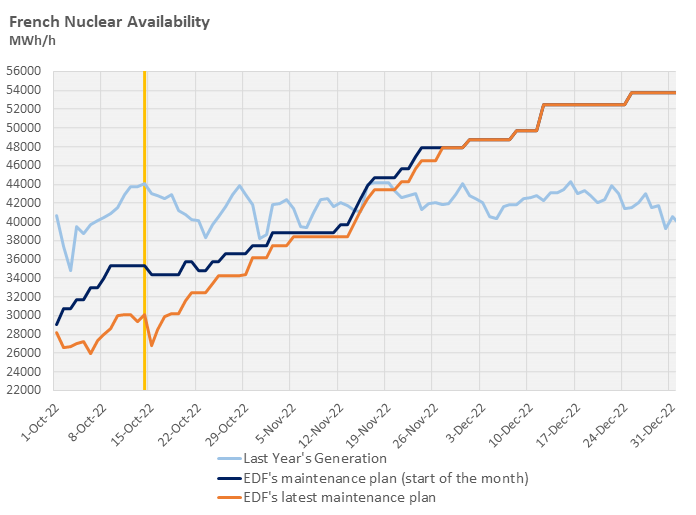
Why does my weekly check of the 🇫🇷 #Nukes always end in disappoint? See gap between 🟠& 🔵curve 😱
Ongoing strikes could further delay the ramp-up of 8 reactors (7.2GW) scheduled between 15 Oct & 15 Nov.
#EDF just pay the workers better. A small price for🇫🇷 & a big impact for🇪🇺
The Japanese government will essentially pay any price for LNG in the event companies can’t afford supply 🇯🇵 💰
🚢 The nation approved reforms to allow for the trade minister to order state-owned JOGMEC to buy gas when private firms can’t
By @shoko_oda
https://t.co/dH8Dfu7MwR
COLUMN: Let me tell you the unlikely, almost crazy, story of the Pskov LNG carrier, and what it says about how European nations (and Japan) continue to buy huge amounts of Russian LNG.
It's a moral, economic and geopolitical problem.
Via @opinion Link:
https://t.co/a9IKtPOzFB