Today, our schools come together to mark Remembrance Day, learning its history and remembering the fallen.
Students are taking part in school ceremonies and community events, showing respect and reflecting on the sacrifices of those who came before us.
We will remember them.
This shoudl also be a reminder that the cost of living crisis is in large part government imposed. You wouldn't have one if you weren't paying so much tax to cover regulations and subsidies. See housing as below, energy, labour costs etc etc etc
I hope the Government is taking note that people are often just quite sensible. The state has strenuously avoided warning us of things because we're not to be trusted to keep calm. Turns out we can be.
#BeReady
https://t.co/B7cYW46cwt
Why don’t we use a forklift to move weights at the gym?
Because the point isn’t to move the weights. It’s to get stronger.
The same is true of learning. If the goal is simply to get a task done as quickly as possible, technology will often do it better.
But at what cost? Excellent insights from @daisychristo.
Been asked a lot about “stockpiling” and it’s a really unhelpful term. This is about a bit of extra water, food, medication to get you through until responders can provide more help. 72 hours. It’s not a bunker
The government is doing just enough to pretend it warned us and nowhere near enough to face up to our many risks. National resilience should be a Downing Street podium/ address to the nation moment, not a WMS and a reluctant interview or two.
The national resilience moment that very nearly barely happened:
A huge amount of work has gone on behind the scenes to plan for the "Be Ready" rollout, which was first trailed during the dying days of Sir Keir Starmer's government.
Andy Burnham inherited the project as well as leadership of the much-promised but minimally-delivered national conversation on defence.
Yet he appears to have chosen not to speak out on the launch of the new readiness campaign despite its national significance.
Even Dan Jarvis, the security minister, who is leading on resilience, stayed away from journalists on Thursday, instead just publishing his ministerial statement and sending out a written post on social media.
This lacklustre approach was met privately with disappointment among members of the resilience community.
The concern - rightly or wrongly - is that it creates the impression that preparing the country (every post code!) for the possibility of any crisis, up to and including war, is not a top priority for the government.
https://t.co/MdiIXCUqFd
Our October half-term newsletter is here! ⭐
Catch up on the latest news, achievements and community highlights from across the trust as we round off a brilliant first half-term.
Read more ⬇️
https://t.co/stkWeOuK7b
It was brilliant to see so many of our Primary colleagues attend today's Primary Conference!
Thank you to our guest speakers for sharing their invaluable expertise and to everyone who attended and contributed to the day.
We hope you all enjoy a restful half-term break.
A former pupil of The Hill Primary Academy has left them £8,000, helping to transform their outdoor space for future generations.
It's a touching story about the lasting impact a school can have and the memories that stay with us long after we leave ❤️
https://t.co/Bd4vTVSHFy
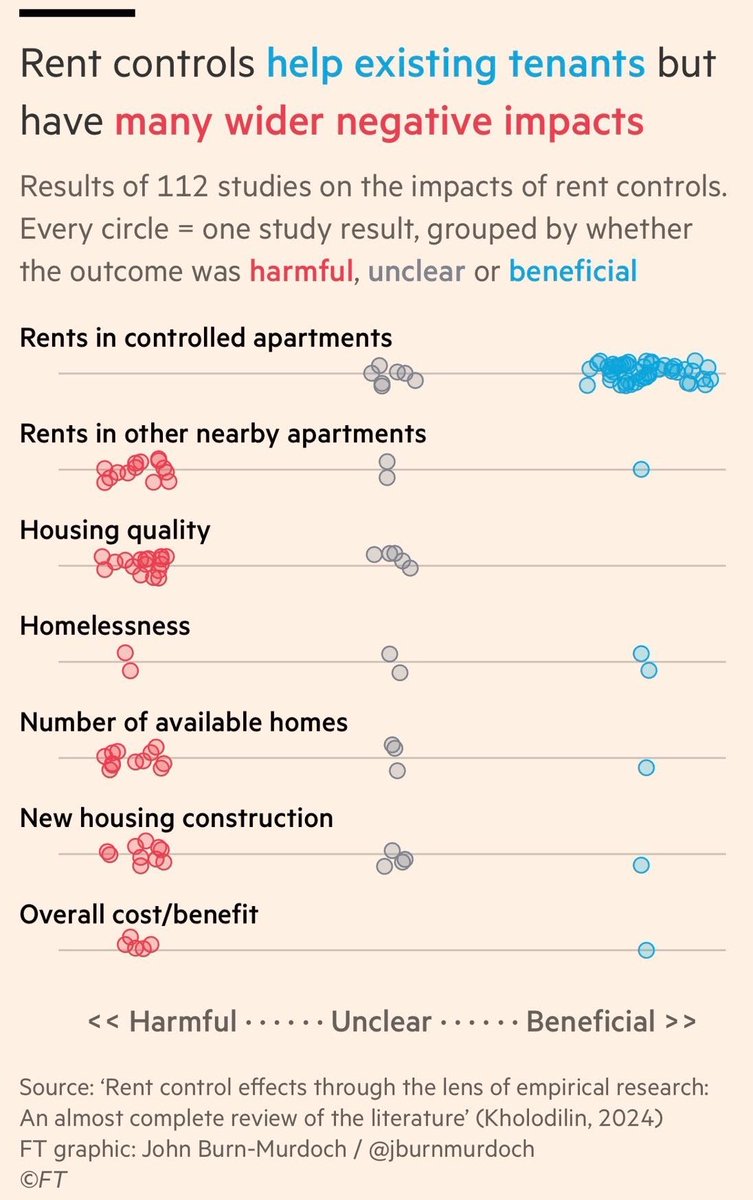
What’s the evidence on rent control?
I charted the findings from 112 studies:
Great for rent-controlled tenants ✅
But:
Pushes up rents for other people ❌
Pushes down new housing construction ❌
Pushes down building quality ❌
Given that nobody actually knows or can explain the case for the #Chagos Surrender, this polling question is merely a proxy for the question "do you side with any foreign country against your own?"
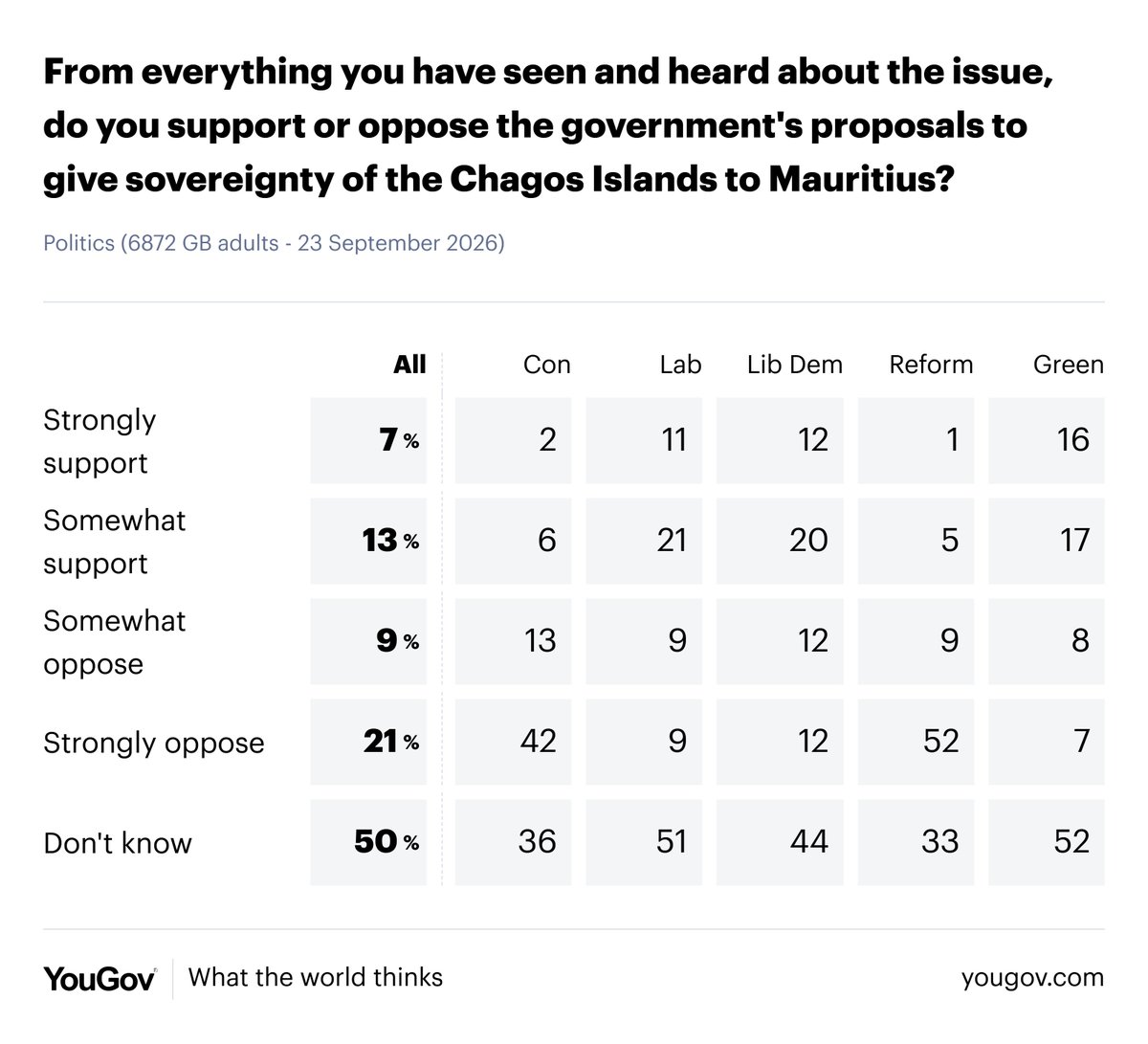
Britons are now more likely to oppose plans to give sovereignty of the Chagos Islands to Mauritius than to support them, as the government announces the proposals are under review due to a lack of US backing
Support: 20% (-7 from 20 Jan)
Oppose: 30% (+3)
Don't know: 50% (+5)
This sounds right. Many officials are planning to wait until there is a new administration in Washington to drive through this terrible deal, against Britain's interests and the wishes of the Chagossian people. It's an incredible act of self-harm.
The extent of the PISA gap between England + other western European countries is extraordinary.
In reading, the 25% most disadvantaged pupils in England outperformed the average for *all* students in Germany, France, the Netherlands, Norway etc...
A decade ago there was no gap
MP pay is too high and too low at the same time.
From April 2026 the basic salary is £98,599. Against a UK full-time median of around £39,000, that is a fortune. For someone who would otherwise be a local councillor, a party staffer, a mid-ranking official or a professional who never quite made it, it is the best job they will ever have. Safe, status-rich, and paid like a senior manager.
For a high achiever it is a pay cut. A decent private-sector director, a good lawyer, a consultant, a founder, a specialist doctor or a senior operator can earn more than that without the public abuse, the two homes, the lost weekends or the certainty that one bad clip ends the career.
IPSA itself benchmarks the job against police superintendents, NHS consultants and army colonels and still wants to inch toward £110,000 because even that is not competitive with what capable people can make outside.
So you get adverse selection. The salary is lavish if you are ordinary and modest if you are exceptional. The people for whom it is a step up apply. The people for whom it is a step down often do not. Then we act surprised that the Commons is full of dross.
You cannot simultaneously pay like a public-sector sinecure and expect private-sector talent. That is the whole problem.
There is a lot of criticism of how politicians get money, but just look how they spend it.
A £210k salary already includes danger money. £860k and a peerage is pure reward for failure.
https://t.co/6BKViYBleS
The take down of the Assisted Suicide Bill has been, through and through, a brilliant example of how the British constitution allows for serious debates, and particularly meaningful exchanges between the two Houses of Parliament, on one of the most serious matters there is.
The idea that one outcome proves to be "a bad day for democracy" for some when, surely, if the reverse outcome had taken place, these critics would have predictably lauded the same process, speaks volumes. All politicians, past and present, who hold this view have a lot to answer for.
Thinking on an higher level, this is actually a profound moment for our gloriously mushy constitutional order: their Lordships did just this, they asked the democratic House to have a longer think, ponder some more.
And it did, and changed its mind. And that's grand, that's how it ought be.