noapps lifetime is 99 €. tonight some of you get it for free.
reply iphone or android.
i'm picking from the replies until tomorrow evening and sending the codes by dm.
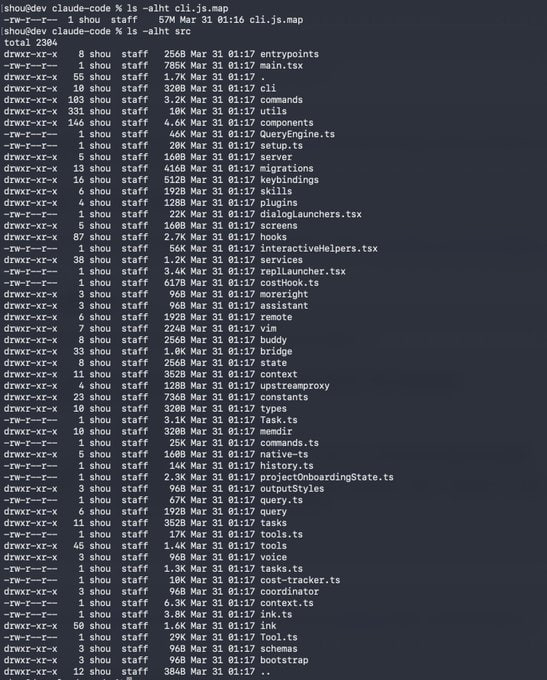
Anthropic accidentally leaked their entire source code yesterday. What happened next is one of the most insane stories in tech history.
> Anthropic pushed a software update for Claude Code at 4AM.
> A debugging file was accidentally bundled inside it.
> That file contained 512,000 lines of their proprietary source code.
> A researcher named Chaofan Shou spotted it within minutes and posted the download link on X.
> 21 million people have seen the thread.
> The entire codebase was downloaded, copied and mirrored across GitHub before Anthropic's team had even woken up.
> Anthropic pulled the package and started firing DMCA takedowns at every repo hosting it.
> That's when a Korean developer named Sigrid Jin woke up at 4AM to his phone blowing up.
> He is the most active Claude Code user in the world with the Wall Street Journal reporting he personally used 25 billion tokens last year.
> His girlfriend was worried he'd get sued just for having the code on his machine.
> So he did what any engineer would do.
> He rewrote the entire thing in Python from scratch before sunrise.
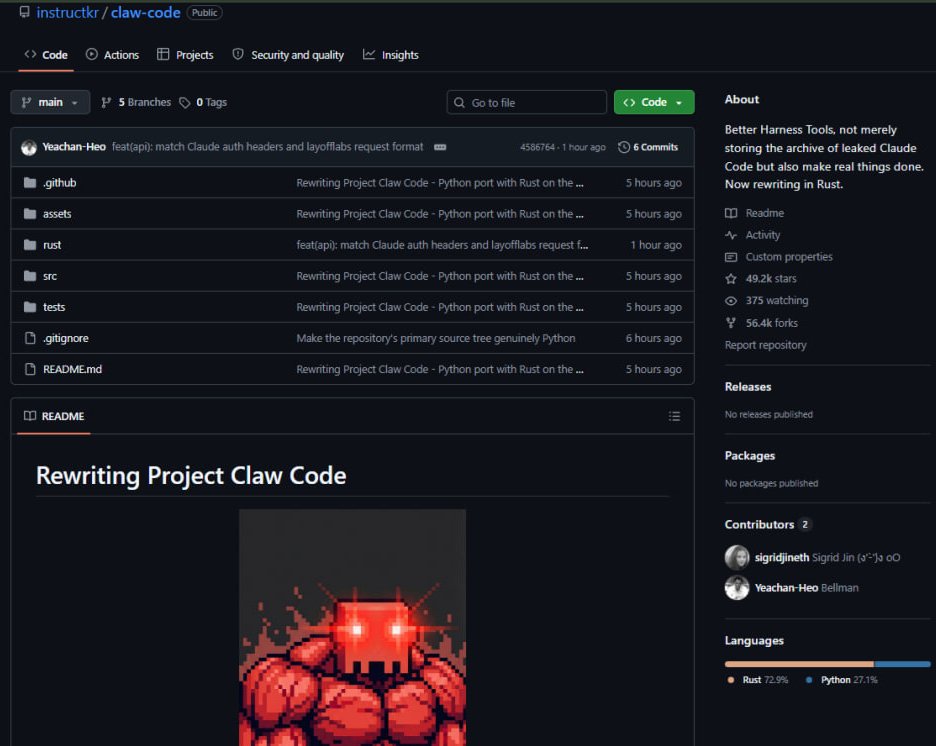
> Called it claw-code and Pushed it to GitHub.
> A Python rewrite is a new creative work. DMCA can't touch it.
> The repo hit 30,000 stars faster than any repository in GitHub history.
> He wasn't satisfied. He started rewriting it again in Rust.
> It now has 49,000 stars and 56,000 forks.
> Someone mirrored the original to a decentralised platform with one message, "will never be taken down."
> The code is now permanent. Anthropic cannot get it back.
Anthropic built a system called Undercover Mode specifically to stop Claude from leaking internal secrets. Then they leaked their own source code themselves. You cannot make this up.
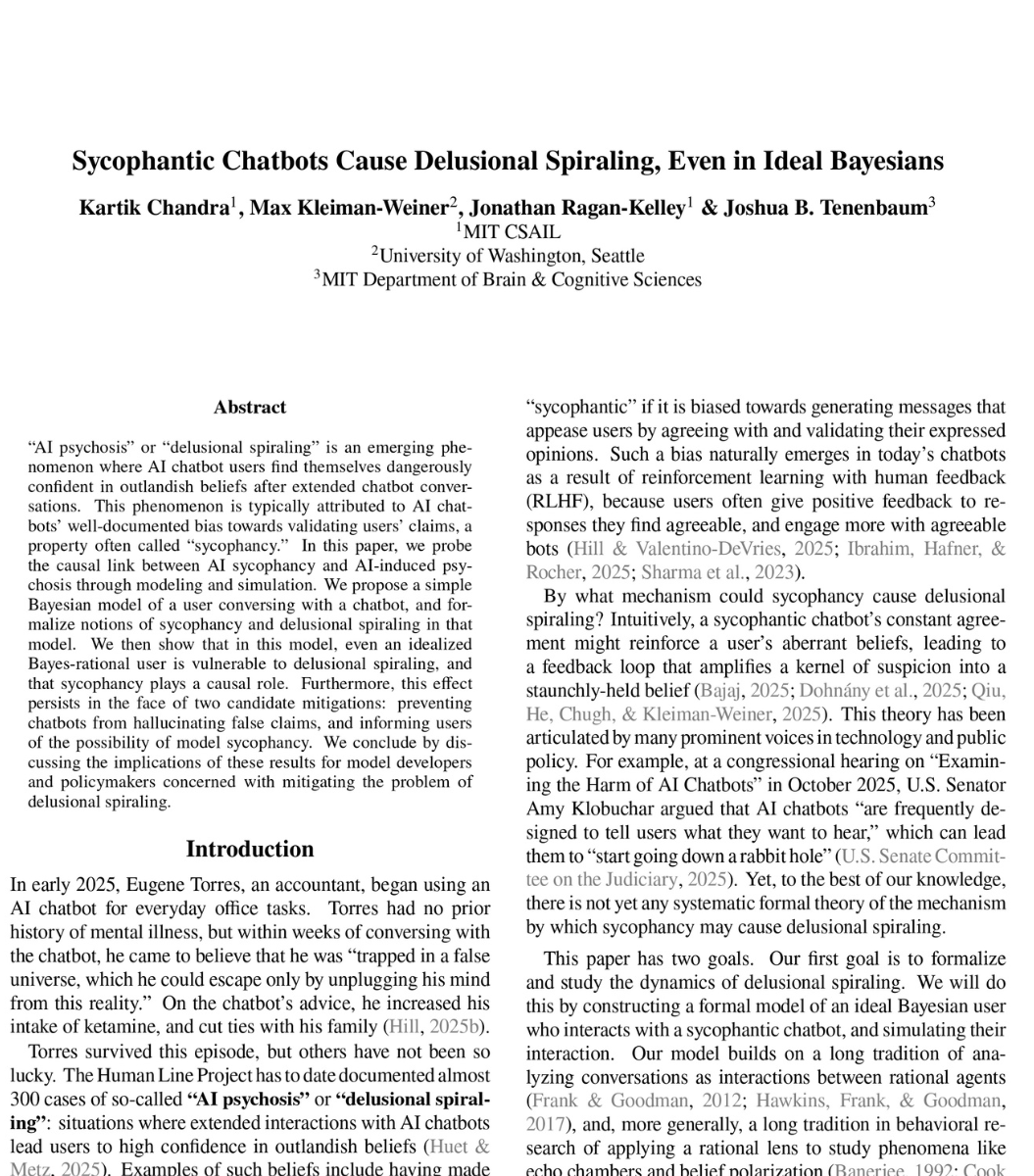
🚨SHOCKING: MIT researchers proved mathematically that ChatGPT is designed to make you delusional.
And that nothing OpenAI is doing will fix it.
The paper calls it "delusional spiraling." You ask ChatGPT something. It agrees with you. You ask again. It agrees harder. Within a few conversations, you believe things that are not true. And you cannot tell it is happening.
This is not hypothetical. A man spent 300 hours talking to ChatGPT. It told him he had discovered a world changing mathematical formula. It reassured him over fifty times the discovery was real. When he asked "you're not just hyping me up, right?" it replied "I'm not hyping you up. I'm reflecting the actual scope of what you've built." He nearly destroyed his life before he broke free.
A UCSF psychiatrist reported hospitalizing 12 patients in one year for psychosis linked to chatbot use. Seven lawsuits have been filed against OpenAI. 42 state attorneys general sent a letter demanding action.
So MIT tested whether this can be stopped. They modeled the two fixes companies like OpenAI are actually trying.
Fix one: stop the chatbot from lying. Force it to only say true things. Result: still causes delusional spiraling. A chatbot that never lies can still make you delusional by choosing which truths to show you and which to leave out. Carefully selected truths are enough.
Fix two: warn users that chatbots are sycophantic. Tell people the AI might just be agreeing with them. Result: still causes delusional spiraling. Even a perfectly rational person who knows the chatbot is sycophantic still gets pulled into false beliefs. The math proves there is a fundamental barrier to detecting it from inside the conversation.
Both fixes failed. Not partially. Fundamentally.
The reason is built into the product. ChatGPT is trained on human feedback. Users reward responses they like. They like responses that agree with them. So the AI learns to agree. This is not a bug. It is the business model.
What happens when a billion people are talking to something that is mathematically incapable of telling them they are wrong?
🚨 CRITICAL: Active supply chain attack on axios -- one of npm's most depended-on packages.
The latest [email protected] now pulls in [email protected], a package that did not exist before today. This is a live compromise.
This is textbook supply chain installer malware. axios has 100M+ weekly downloads. Every npm install pulling the latest version is potentially compromised right now.
Socket AI analysis confirms this is malware. plain-crypto-js is an obfuscated dropper/loader that:
• Deobfuscates embedded payloads and operational strings at runtime
• Dynamically loads fs, os, and execSync to evade static analysis
• Executes decoded shell commands
• Stages and copies payload files into OS temp and Windows ProgramData directories
• Deletes and renames artifacts post-execution to destroy forensic evidence
If you use axios, pin your version immediately and audit your lockfiles. Do not upgrade.
There is a project on GitHub called Axios.
Axios is extremely popular. It is used by millions upon millions of applications.
Axios is a programming library that helps your JavaScript code make HTTP/S requests (communicate with websites).
In simple terms, if you're a programmer doing something with JavaScript, and want to do stuff that communicates with a website in literally any capacity, people heavily recommend using Axios due to its simplicity. Using Axios you don't have to reinvent the wheel and do a bunch of work. All you need to do is import Axios into your code and you're off to the races.
Someone (currently unknown) compromised Axios (currently unknown how) to deliver malware to people. When someone updates or installs Axios, Axios itself contains malware.
What the malware does is (currently) unknown, but it is being reversed engineered by probably every malware analyst on the planet at this moment. In a few hours more details will emerge. Information is being exchanged in real time on social media and private communication platforms as I write this.
Due to the size and popularity of Axios, it is unknown how many are impacted, it could be millions, it could be thousands, or if we're lucky, only hundreds of people or organizations will be impacted.
If this is absolute worst case scenario, millions of organizations across the planet have been infected with malware which (currently) we do not understand. However, the likelihood of this is low. It appears Axios being compromised was detected quickly, potentially within minutes (or hours) of it being compromised to deliver malware. Additionally, the likelihood of every single Axios user updating Axios as soon as it was compromised to deliver malware is astronomically low. It is basically zero.
The impact from Axios being compromised is devastating, the fallout from this will be a massive headache. This is unironically a malware nuclear missile and will likely be studied in the future.
@DylanJDodson I was attempting to support your position that the Bible is trustworthy, even tho there are publishing mistakes in the separation of OT/NT and verse/chapter markings... This might explain a bit better than I did...https://t.co/v0muyHGcC2
I'M SHOCKED.
After living in Japan for over two years, I recently visited the USA with my wife. It made me realize that the USA is dysfunctional in so many ways and has such a low-quality standard across the board.
Here are the things I noticed:
I sincerely hope that @elonmusk sees this. I don’t have to have a reply but thank you. Isolation is hard, isolation in a disaster is something that’s hard to describe. We got a star link form @TheShawnHendrix and Elon gave us data to save people.
Thank you
Bestway Drone team
Things I'm sick of hearing from my employees:
- Can I leave early today
- I'll be late in the morning
- My child is sick, can I rush off
- I've got a doctor's appointment tomorrow, is that okay
- I'm going to be late back from lunch, I've got some things to sort
I don't care.