@tomieinlove hey I research strange interactions like this, would you be willing to share a link to this transcript for me? or just a screenshot of the other bits of the interaction?
🚨 New report: We explain why incident reporting is a gap in the UK’s regulatory plans that urgently needs addressing – and we provide concrete actions the UK Government can take to address it.
https://t.co/iuCjzbo6HD
I've synthesised 75 reports to build a picture of how AI will enable the disinformation threat.
I find that while the threat is often overstated, there are important changes happening - particularly for low-resourced actors - that need attention.
How should the UK Government address the threat of AI-enabled disinformation? In our new report by @tommyshane, we provide three recommendations for tackling this threat.
https://t.co/A9plw3fNMp (1/5🧵)
@_FelixSimon_ ... responsible reporting is a key mitigation of the impact of AI in disinfo. and ii) what do you make of arguments that AI-powered botnets can build online audiences and thus increase distribution? https://t.co/T4vflVwI5g
@_FelixSimon_@_FelixSimon_ - a couple of small challenges on the distribution bottleneck argument. i) doesn't AI improve distribution precisely because politicians and newspapers extensively promote the use of AI in disinformation, leading to amplification? this would suggest...
In this article, @tommyshane argues for a research agenda focused on AI incidents – examples of AI going wrong and sparking #controversy – and how they are constructed in online environments. Read it here! https://t.co/DzgCs7RgkJ
This is my key concern for disinformation -
we convince ourselves it's a bigger problem than it is, and reduce trust
i.e., we create the problem ourselves
As fears of disinformation are making their way from #davos into headlines, this new publication might be timely:
In a survey-experiment @OuzhouAdi and I show that alarmist warnings against disinformation carry significant unintended negative effects. https://t.co/KhFC2z1y1n 🧵
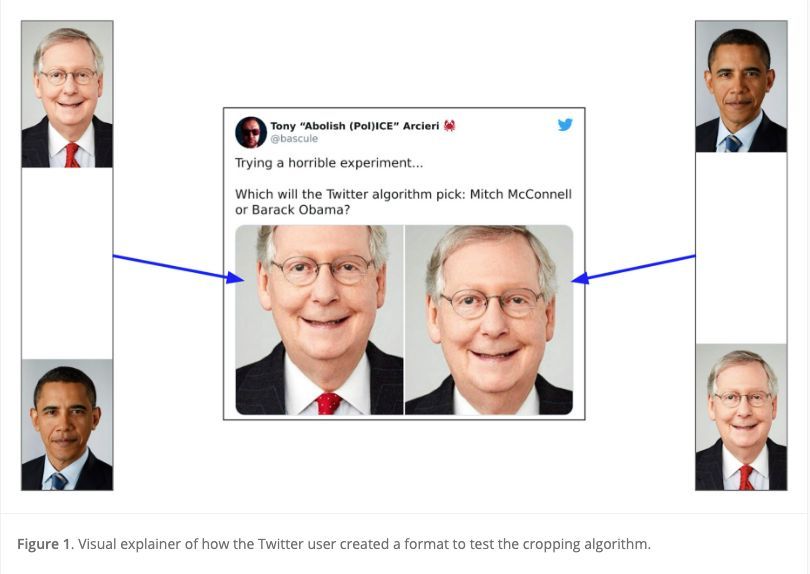
🧐 Ever wondered about the fallout of #AI gone wrong? In this commentary, @tommyshane hones in on AI incidents, using a 2020 Twitter algorithm bias fiasco as a case study. Read it here! ➡️ https://t.co/DzgCs7RgkJ
🚨 My new paper, where I look at how Twitter users discovered that an AI model was biased, forcing it to be pulled -
What can we learn from AI incidents like these, and their role in governing AI? 1/ 🧵⬇️
🚨 My new paper, where I look at how Twitter users discovered that an AI model was biased, forcing it to be pulled -
What can we learn from AI incidents like these, and their role in governing AI? 1/ 🧵⬇️
In this commentary, @tommyshane takes up the example of an #AI incident in September 2020, when a Twitter user created a ‘horrible experiment’ to demonstrate the racist bias of Twitter's algorithm for cropping images. Check it out! ➡️ https://t.co/DzgCs7RgkJ
6/ How we come to know and care about AI going wrong is the focus of my PhD research, and I think it tells us some important things about AI policy
Particularly, how important post-deployment incident reporting is for safe & ethical AI - much progress needs to be made here