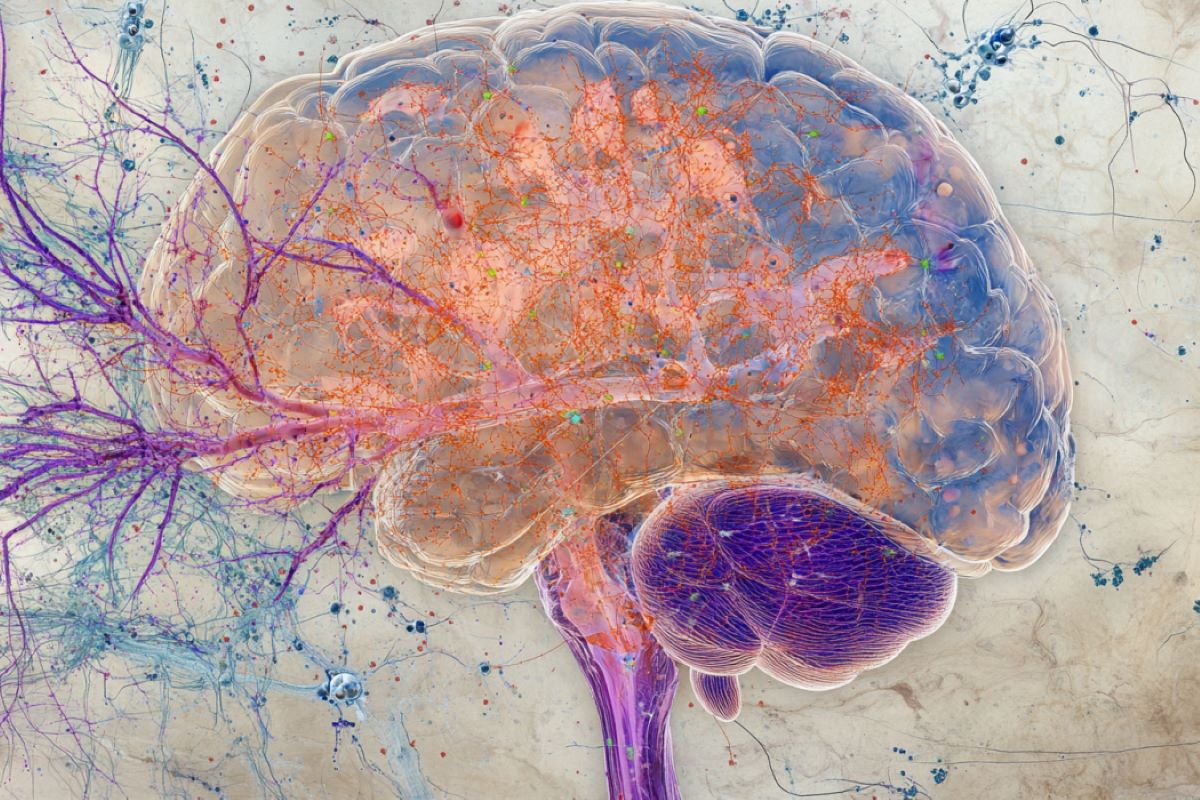
A New Scientific truth does not triumph by convincing its opponents and make them see the light, but rather because it’s opponents eventually die, and a new generation grows up that is familiar with it. ~Max Plangk
It’s official! I’m excited to share that this week I started my postdoctoral fellowship @RockefellerUniv in Dr. Jeffery Friedman’s lab. I’m so greatful for my time and training @SinaiBrain and I’m so excited for this new chapter 🧠✨
Dr. Bianca Jones Marlin is an @HHMINEWS Freeman Hrabowski Scholar & Assistant Professor at Columbia University 🧠
The Marlin Lab researches transgenerational epigenetic inheritance (how parents' lived experiences change the brains of future offspring) 🧬🐭
#BlackInNeuro
New in #JNeurosci: @criveraquiles et al. identified a new subset of neurons in mice that morphine may interact with to influence behavior. This neuron population could be a promising new opioid addiction treatment target. @msuneuroscience@michiganstateu
https://t.co/s9DgScoY0M
Oxytocin is the brain’s way of reminding us that love and trust are choices we make every day. 🧠❤️ The more we nurture connection, the stronger our bonds become. Choose love. Choose trust. Choose connection. #NeuroscienceOfLove#RayRayTheBrain#love#tonethescientist
The amygdala plays a big role in fear processing and emotional response. Practice reframing from negative thoughts to reduce its influence and take control of your reactions!
Happy New Year 🥳
Season 3 premiere of the Nerve Podcast now streaming on Apple Podcasts and Spotify. 🧠🧠✨ Tune into the scientist that makes it all happen! #neuroscience#education#tonethescientist
My work was recently published in the latest issue of Journal of Biocommunication in a featured article titled, “Frontiers in Medical Illustration: From Netter’s Naturalism to a Representation Revolution”
Check out the article here: https://t.co/Mp1Pl183KB
Amygdala Cells Linked to Anxiety
Researchers have identified distinct cell types in the amygdala, a brain region central to processing fear and anxiety, which could enable more targeted treatments for anxiety disorders.
Using gene expression analysis in human and macaque brains, scientists discovered specific cells, including FOXP2-expressing “gatekeeper” cells that help regulate emotional responses.
This study shows that each cell type has unique functions, with some types linked to genes associated with anxiety and potential drug receptors.
These insights may help pinpoint specific “chokepoints” in the amygdala’s cellular networks that contribute to extreme anxiety.
Targeting these cell types could lead to more effective treatments.
The findings bridge human and animal research, offering a clearer path for developing new therapies.
#BlackInNeuro has a BUSY weekend 🎉
Today we host a community #BrainCarnival with an expected 160+ attendees 🙌🏾✨
Tomorrow we’re back with our 3rd annual @SfNtweets social 💖 #SfN2024
I can’t wait to hang out with y’all!! 💃🏾
I’m proud to announce the official launch of the Center for Collective Healing at @HowardU! 🎉
Thank you to #Howard for hosting such an impactful conference and to everyone who made this possible. The future of #collectivehealing & improving community mental health is bright!
📝Applying to fellowships this season?
Join us Monday 9/16 at 5pm EST for a #CLGSEC workshop "Grad School 101: Applying to Fellowships" featuring panelists @ScienceYael, @jpschimel, & Luciana Custer as we guide you to identify & secure fellowships
Register https://t.co/A0BeFg5MPd
Thank you to everyone that has taken the time to answer this has been such an informative thread!! Also if anyone is doing neurobiology of addiction research and looking for postdocs let me know 😅