🚨 $52.67M XRP LONG
One whale has held a massive XRP long for 46 days.
Unrealized PnL: +$13.10M, Liquidation: $0.9531
They’re still holding.
Someone knows something. 👀
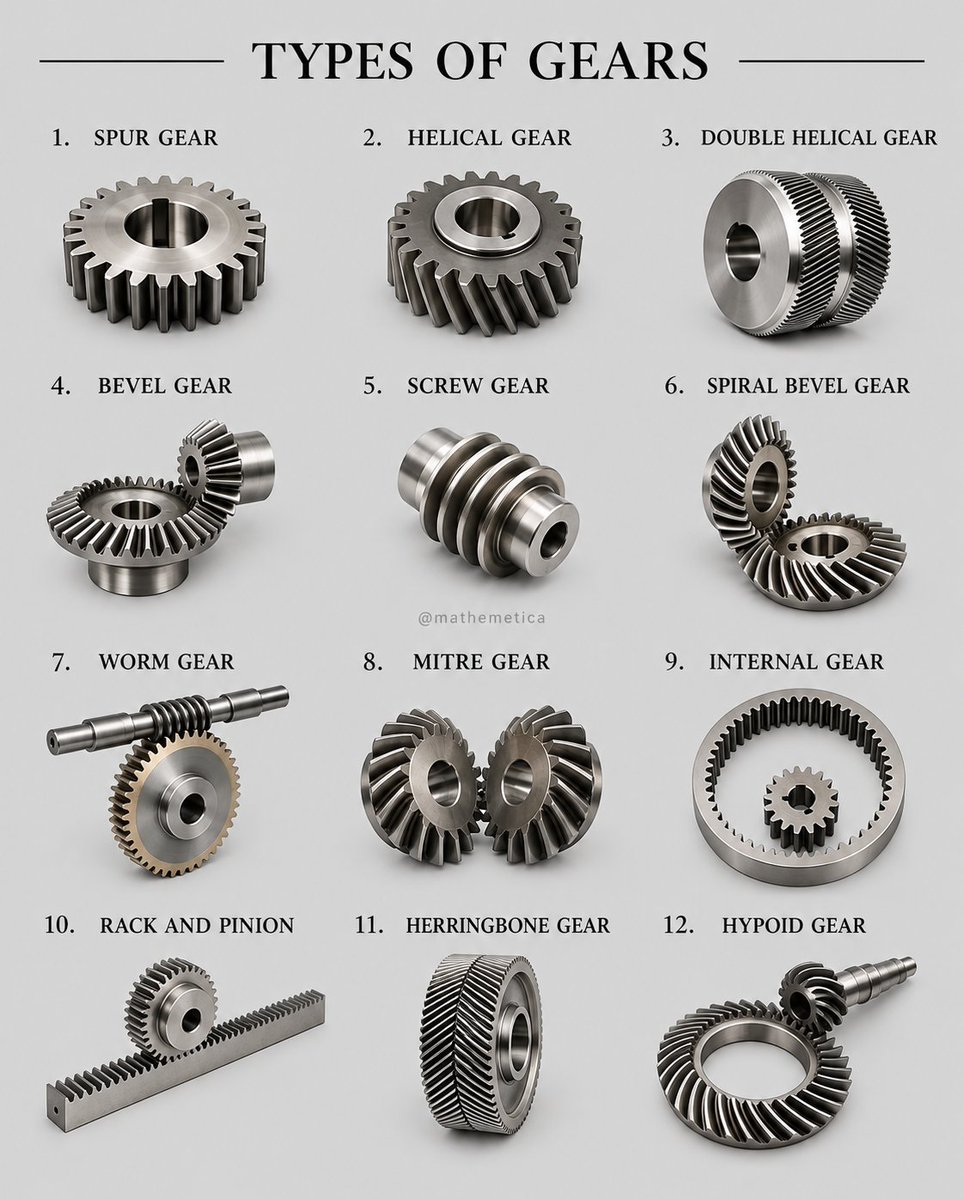
Every gear is a quiet equation that turns rotation into controlled force.
Tooth count sets the ratio: if gear A has Ta teeth and gear B has Tb, their speeds obey ωa / ωb = Tb / Ta. Parallel axes use spur or helical teeth; intersecting axes use bevel forms; offset axes use hypoid or worm. The involute tooth profile keeps the velocity ratio constant even as contact slides.
Herringbone and double-helical teeth cancel axial thrust that a single helix would produce. A rack is simply a gear whose radius has gone to infinity, converting spin into straight travel.
Geometry, not decoration, decides how machines move.
🚨 FEDERAL FRAUD ALERT: US Debt Clock Detonated – $37 Trillion Stolen Since 1913, The Great Fed Scam Exposed, AMERICA DEMANDS RESTITUTION!
🔥 From 1913 to 2025, the Federal Reserve enslaved America with debt and stole $37 trillion in assets. Now the fraud is exposed — restitution coming to the people.
🚨 THE BIRTH OF THE MONSTER (1913)
THIS. RIGHT. HERE. 🎯❤️🔥
People are still asking whether XRP will be “used by banks.”
That question is becoming WAY too small.
The bigger picture is an entire financial ecosystem:
Tokenized assets.
Stablecoins.
Payments.
DEX liquidity.
Credit.
Lending.
Collateral.
Market makers.
Institutional settlement.
AI-driven autonomous transactions.
And XRP potentially sitting between those pools of value as LIQUIDITY and productive capital.
UTILITY → LIQUIDITY → TRUST → MORE UTILITY.
That's the flywheel.
I'm not here because of one partnership.
I'm not here because of one headline.
And I'm damn sure not here waiting for somebody to yell “TO THE MOON.”
I'm watching the financial infrastructure being assembled piece by piece.
THAT is where my conviction comes from.
The price is the LAST thing the world will notice. $XRP ❤️🔥
🚨 Documents naming Ripple and XRP keep disappearing from BIS, World Bank, Forbes and Central-Bank sites
The 2024 PIE composition listing Ripple is now a 404, or evidence of the bridge asset being removed before the official announcement?
Ripple’s old seat on the BIS interoperability task force vanishes right as XRPL prototypes surface in official research.
World reserve currency references and PIE task-force mentions get memory-holed across BIS and World Bank sites.
And now, Forbes deletes its @DNAOnChain article as NDA speculation erupts around $XDNA private identity protocol on the XRP Ledger, the same used by BIS and discussed by the SEC.
Thanks to archived clips by @ProfRipplEffect that we now know that the paper trail is being cleaned. Proof removed right before launch.
Something is being finished in silence, and the silence is the clue.
https://t.co/9wJytHrF3a
🚨 Coming Soon!
⚡️EVENT on PLANET EARTH
⚡️Collapse of the Three Gorges Dam
⚡️Removal of BTC, ETH and PCC coins from the Earth
⚡️Removal of 24 nuclear reactors - GESARA
⚡️Suspension of all courts, judges and lawyers - return to the 1776 constitutional law worldwide
⚡️Global arrests - application of martial law while judges and lawyers are requalified according to the principles of 1776
⚡️Collapse of the economy
⚡️Transition to the Quantitative Financial System
⚡️Global currency reset - return to 1950s prices
⚡️Start of QUANTUM GESARA
⚡️Removal of all obsolete hospital equipment and replacement with suppressed technologies (TESLA)
⚡️6000 care, Med Bed, UV light therapies, etc.
⚡️Cancellation of all debts, RV (currency revaluation) and distribution of all GESARA funds
⚡️1221. Executive Order.
Some of these events are happening now!!️
@Daniel
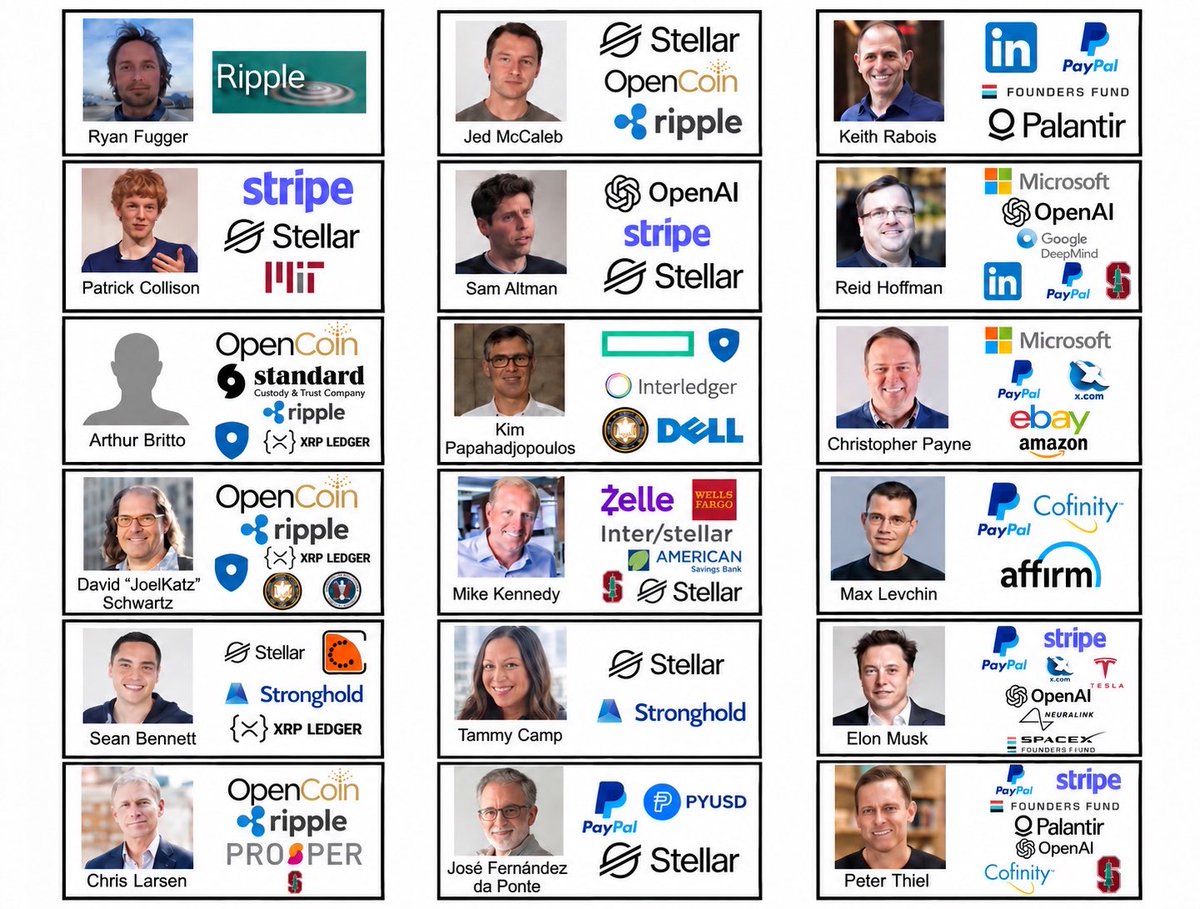
This image shows some very real overlaps between the so-called “PayPal Mafia” and the fintech and crypto projects that followed.
And strangely enough, many of the same names keep appearing 😉
That isn’t a secret. The PayPal Mafia has been a well-documented Silicon Valley phenomenon since Fortune famously wrote about the network in 2007.
But the @Ripple and @StellarOrg branch makes the map particularly interesting.
Jed McCaleb was part of the group that built the early Ripple/OpenCoin project and XRP Ledger alongside @chrislarsensf, Arthur Britto and @JoelKatz@JedMcCaleb later left Ripple and went on to co-found Stellar in 2014.
And look at Stellar’s early circle:
@patrickc, CEO of Stripe, was on the original foundation board.
@rabois, an early PayPal executive, was on the board too.
Sam Altman became an advisor.
@stripe also provided the initial $3 million loan that helped fund Stellar, later repaid with 2 billion lumens.
Different companies. Different roles. Different relationships.
But a surprisingly small group of founders, investors and builders keeps resurfacing across payments, blockchain and eventually AI.
The image isn’t a conspiracy map.
It’s a map of documented overlaps.
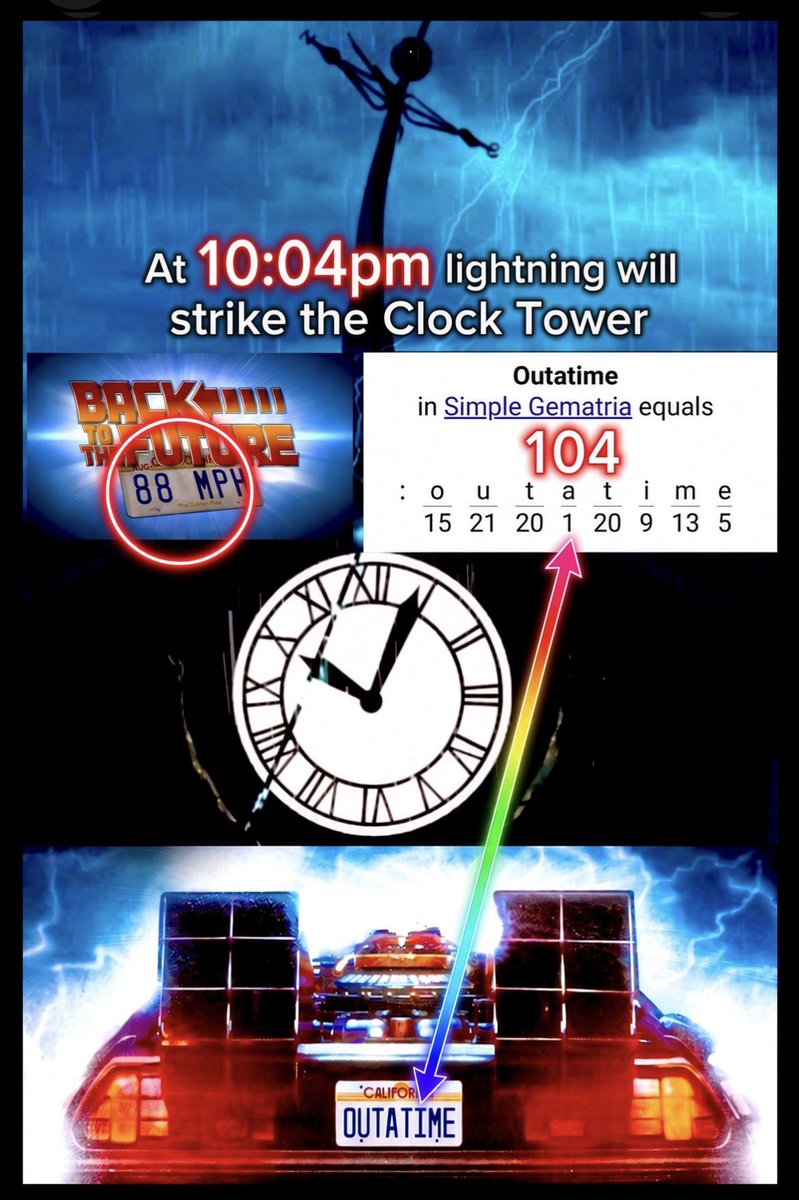
Did Back to the Future hint at something serious happening today Sunday, 10/4?
The “JC Penney” sign in the movie may have referenced the Julian Calendar (JC), and today October 4th, 2026 marks exactly 444 years since the switch to our Gregorian calendar. Can’t be a coincidence!
My ALTA report work first forecast the 'end of the fed' back in 2002. It had the 'Treasury dollar' forecast SINCE 2002. It has maintained both within the predictive sets so consistently as to be boring. Now we are there. Very soon.
The Treasury Dollar changes global economics completely within 6 months of issuance.
It's a part of our developing entry into what i called SciFi World. We sit on the edge of that manifestation now.
#WOOKNOWS
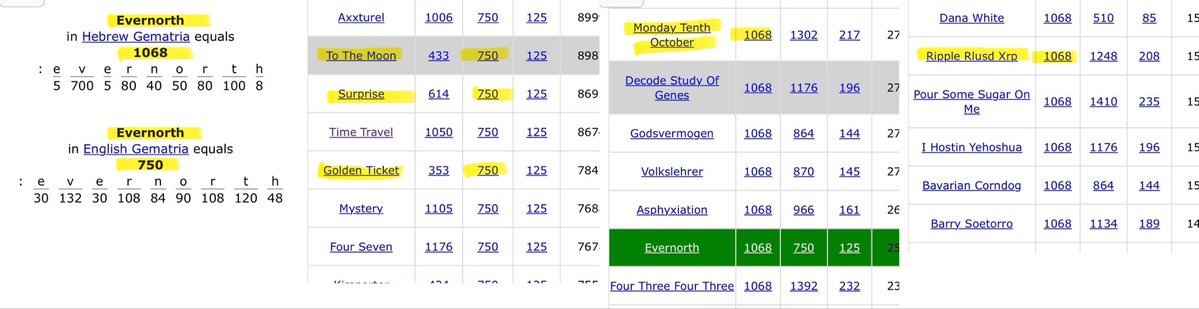
@Archie_XRPL If xrp closes 1.488 it will equal 5.89 xrp per ever north share. 🤔 my best guess and i'm going to be right. Is it's going to hover around the average price to make it equal 1 ever North share equally 5.89 xrp. And then we begin to moon, no leader. No sooner
BOOOOM! 🚨🚨🚨 This interview is packed with massive $XRP alpha for the years ahead.
If you’re still not bullish after hearing this, I don’t know what to tell you.
Let me break it all down, because there’s a LOT here.
WARNING: THIS ONE IS LOOONG!
Monica Long just gave one of the clearest explanations I’ve heard of what Ripple has been building around XRP all these years.
And it comes down to three words Chris Larsen was already talking about from the beginning:
UTILITY → LIQUIDITY → TRUST
At first, that sounds simple.
But spend a little time thinking about what those three words actually mean together and the entire XRP strategy starts making much more sense.
Utility brings real activity.
Real activity creates a need for liquidity.
Better liquidity allows larger amounts of money to move efficiently.
Institutions become more comfortable using the network.
That trust brings more institutions, more assets and more transactions.
Then the cycle starts again with even more utility.
That is the flywheel Monica Long is talking about.
And 2026 is starting to look like the year all three sides are finally showing up at the same time.
For years, people reduced XRP to one thing:
Cross-border payments.
That story is becoming much bigger.
XRP can potentially sit inside payments, FX liquidity, DEX routing, lending, credit, collateral, tokenized markets and even autonomous AI payments.
That is a completely different economic profile from simply paying a blockchain gas fee.
Look at Ripple Payments.
Ripple already operates across more than 60 markets and has processed over $100 billion in payment volume.
Ripple already has companies using its infrastructure.
That part matters a lot.
They do not need to wait around hoping somebody discovers XRPL someday.
Ripple already has enterprise relationships.
Now Ripple wants to push more of the activity coming from those customers directly onto the XRP Ledger.
Think about the difference.
A company wants to move money internationally.
It does not want its finance team learning how to operate a decentralized exchange.
It does not want employees sitting there choosing liquidity pools, handling wallets and figuring out blockchain routing.
It simply wants the payment completed.
Ripple can handle the complexity underneath.
Compliance.
Routing.
Conversion.
Custody considerations.
Settlement.
The customer sees a payment product.
XRPL can quietly become part of the engine running beneath it.
I think that matters enormously.
The easier blockchain becomes to use without businesses having to think about blockchain, the easier serious adoption becomes.
Then you reach the liquidity side of the story.
XRPL already has a native DEX and AMM.
Now imagine what happens as more assets appear there.
RLUSD.
MXNB.
Brazilian real stablecoins.
Euro stablecoins.
Tokenized Treasuries.
Commercial paper.
Investment funds.
Private credit.
Tokenized deposits.
Other real-world assets.
Every new asset needs liquidity.
If there are only two assets, creating a market is easy.
Once you start adding dozens, hundreds or eventually thousands of different assets, the number of potential trading relationships explodes.
Liquidity gets fragmented quickly.
A common intermediary asset becomes much more useful.
That is the economic logic XRP was designed around.
Asset A → XRP → Asset B
when XRP provides the efficient path.
So every new tokenized asset coming onto XRPL does not automatically compete with XRP.
It can create another market where XRP may become useful as liquidity.
And RLUSD makes this setup even more interesting.
Ripple reported around $2.409 billion of RLUSD circulating, backed by roughly $2.5315 billion in reserve funds as of September 24.
Now the roles can become clearer.
RLUSD can represent stable dollar value.
Tokenized assets can represent investments and collateral.
XRPL can handle exchange and settlement.
XRP can provide native liquidity and potentially credit capital.
XRP does not have to pretend to be a dollar.
Ripple already built RLUSD for that.
XRP can focus on being useful between different pools of value.
And we already have real assets appearing.
Ondo’s OUSG is live on XRPL.
Qualified purchasers can mint and redeem the tokenized U.S. Treasury product using RLUSD around the clock.
At launch, OUSG had more than $670 million in TVL.
Think about what is happening there.
A real-world financial asset.
Digital cash.
Both living inside the same network.
Then add DEX liquidity.
Then lending.
Then collateral.
Then market makers.
Now you are moving beyond tokenizing something just so people can say it exists on blockchain.
You are building an actual financial market around it.
Then there is Guggenheim Treasury Services.
Its Digital Commercial Paper is on XRPL too.
More than $280 million of issuance had already been processed, backed by U.S. Treasury securities and carrying Moody’s Prime-1 rating.
So now the ledger can contain more than crypto-native assets.
Treasuries.
Commercial paper.
Funds.
Stablecoins.
Credit instruments.
Commodities.
Every new category expands the liquidity graph.
Aviva Investors adds another piece.
Aviva announced plans with Ripple to tokenize traditional fund structures on XRPL.
Then look at Brazil.
Justoken already had more than $1.7 billion of assets tokenized on XRPL.
CRX had nearly $100 million settled onchain.
Then CSD BR went live using XRPL to mirror ownership records of BTG Pactual investment-fund shares.
CSD BR reports more than BRL 22 trillion in registered assets.
Read that again.
This is regulated financial-market infrastructure beginning to use a public blockchain as part of real financial operations.
And future phases contemplate native issuance and trading directly on XRPL.
This is how utility compounds.
A crypto company issues something.
Then funds appear.
Then regulated market infrastructure itself starts integrating the network.
Now go back to what Monica Long predicted.
She talked about tokenized assets moving from around:
$100M → $1B → roughly $6B
and then potentially reaching:
$30 BILLION.
Most people will look at that and say:
“Cool, 5x.”
I think the bigger story sits underneath the number.
What happens around $30 billion of assets?
Those assets need custody.
Trading.
Market making.
Cash settlement.
FX.
Collateral.
Credit.
Lending.
Redemption.
Compliance.
Issuance.
A tokenized asset sitting motionless in a wallet is only the first stage.
The real financial activity starts when people can actually use the asset.
Borrow against it.
Trade it.
Use it as collateral.
Finance positions.
Move liquidity around it.
That brings us back to XRP.
Because Ripple is also building credit infrastructure through the XRPL Lending Protocol.
Imagine an XRP holder in the old model.
Buy XRP.
Hold XRP.
Wait.
Now imagine a future model.
Hold XRP.
Supply it into liquidity or credit infrastructure.
A payment company or market maker accesses that capital.
The XRP supports real economic activity.
Capital gets repaid.
The same capital can be used again.
Suddenly XRP starts becoming productive liquidity.
That is a much deeper role.
And market makers could become one of the biggest pieces of this.
If Ripple routes more enterprise payment activity through XRPL, somebody has to provide liquidity.
A professional market maker may continuously quote markets such as:
RLUSD/XRP.
XRP/local stablecoin.
XRP/tokenized assets.
If business volume grows, those firms may need larger XRP inventories.
More working capital.
Better access to credit.
XRPL lending pools could eventually help finance that inventory.
Now you could have:
XRP holders providing capital.
Market makers borrowing XRP.
Market makers supplying liquidity.
Ripple customers consuming that liquidity while making real payments.
That is an actual financial economy.
XRP becomes inventory behind an economic service.
Then comes the third side of Chris Larsen’s triangle:
TRUST.
I think people underestimate this one.
Institutional trust does not mean some bank executive saying they like Ripple.
Trust means:
Can we legally use this?
Can participants be identified?
Can we control access?
Can we manage counterparty risk?
Can transactions be audited?
Can private information remain private?
Can assets be frozen if regulations require it?
Can billions settle reliably?
Is enough liquidity available?
Can we custody everything safely?
XRPL has been building around those requirements.
Credentials.
Permissioned Domains.
Deep Freeze.
MPTs.
Token Escrow.
Batch Transactions.
Lending.
Confidential Transfers.
Those tools matter because institutions move very differently when serious capital is involved.
A company experimenting with $1 million has one risk profile.
Moving $100 million is different.
Moving $1 billion is another level entirely.
If XRPL proves that regulated issuers, credentialed markets, privacy controls, institutional custody and deep liquidity can coexist on public infrastructure, institutions can become more comfortable bringing larger amounts of capital.
Larger capital creates deeper markets.
Deeper markets improve execution.
Better execution increases utility.
And the flywheel spins again.
CSD BR is especially powerful through this lens.
Its existing systems remain the official record, but XRPL is being used as an additional recording and audit layer.
That is a practical example of regulated infrastructure integrating public blockchain without throwing away the controls institutions already need.
Success like that builds trust.
Trust makes other institutions more willing to experiment.
Those institutions add assets.
Those assets create liquidity demand.
Liquidity strengthens utility.
Utility → liquidity → trust → utility again.
Then Monica Long and Christina Chan introduced another layer that I think could eventually become massive:
AI agents.
Christina Chan said agentic activity had already reached roughly 11 million XRPL transactions.
Monica’s prediction?
Around 100 million by this time next year.
That is almost an order-of-magnitude jump.
Humans make a limited number of financial decisions every day.
Software does not have that limitation.
An AI agent can pay for an API.
Then compute.
Then market data.
Then storage.
Then another AI service.
Then execute a trade.
Then rebalance a portfolio.
Then convert currencies.
Then repay credit.
And it can keep doing that all day and all night.
Ripple has already launched the XRPL AI Starter Kit, including x402-powered payments using XRP and RLUSD.
AI agents can autonomously pay for APIs, compute, data and digital services.
So when Monica talks about 100 million agentic transactions, Ripple is not sitting around hoping AI somehow discovers XRP.
They are already building tools for machines to transact.
Now combine Monica’s two predictions.
$30 billion in tokenized assets.
100 million agentic transactions.
Imagine an autonomous treasury agent holding RLUSD.
It buys tokenized Treasuries.
Collects yield.
Uses the Treasury position as collateral.
Borrows liquidity.
Pays for compute.
Executes FX.
Rebalances.
Repays debt.
Moves into another asset.
Every single action can create activity.
The asset itself may sit on XRPL, but software can continuously make that asset productive.
Now $30 billion of assets can create far more than $30 billion of lifetime economic activity.
The capital can move.
Trade.
Get pledged.
Borrowed against.
Reallocated.
Used repeatedly.
That is asset velocity.
And this is where the entire picture becomes much more exciting to me.
Ripple Payments brings enterprise distribution.
RLUSD brings digital cash.
Tokenized assets bring investable capital.
XRPL DEX and AMM bring exchange.
XRP can provide liquidity.
The Lending Protocol brings credit.
Credentials and Permissioned Domains bring controlled institutional access.
Confidential Transfers can help address privacy.
AI agents and x402 bring automation.
XRPL becomes the settlement layer connecting everything.
That starts looking like a real digital financial economy.
And $XRP sits across multiple layers of it.
Bridge liquidity.
DEX inventory.
Payment liquidity.
Credit capital.
Lending.
Collateral.
Agentic payments.
Network reserves.
Transaction fees.
This is why I think the XRP debate has changed.
The old question was:
“Will banks use XRP?”
I think that question is becoming way too small.
The bigger question is:
How many financial roles can XRP perform as XRPL grows?
Because if several of these markets develop at the same time, each one can strengthen the others.
More RWAs create more trading.
More trading needs liquidity.
More liquidity attracts market makers.
Market makers need capital.
Credit markets can provide that capital.
XRP holders can supply some of it.
AI agents create more transactions.
More transactions create more automated liquidity demand.
More DEX activity gives market makers another reason to maintain XRP inventory.
Meanwhile institutional adoption creates more trust.
More trust can bring larger assets and larger companies.
Then everything loops again.
And the part I care about most for XRP demand is not simply transaction fees being burned.
XRPL fees are tiny by design.
The more interesting demand comes from XRP potentially being held because businesses actually need inventory.
DEX market makers can hold XRP.
Lending vaults can hold XRP.
Payment-credit facilities can use XRP.
Institutional treasuries can hold XRP.
Liquidity pools can hold XRP.
Collateral structures can use XRP.
That means portions of supply can become economically committed to doing actual work.
At the same time, new businesses may need XRP to make markets, borrow inventory, route liquidity or settle transactions.
That is very different from someone buying XRP because they hope the chart pumps.
A market maker can acquire XRP because it needs inventory.
A lender can acquire XRP because it wants to deploy productive capital.
A payment company can borrow XRP because it needs working capital.
An AI application can hold XRP because autonomous software needs digital money.
Those are economic reasons to interact with XRP.
And that is where I think Monica Long’s interview becomes extremely important.
Her message was not simply:
“XRP has utility.”
She showed us what that utility can evolve into.
Ripple is trying to take XRP from a bridge asset and turn it into something much deeper:
productive financial capital.
Movement of value.
Exchange of value.
Financing of value.
Collateralization of value.
Autonomous movement of value.
And the triangle Chris Larsen talked about years ago suddenly feels much more relevant:
UTILITY → LIQUIDITY → TRUST
Utility gives institutions a reason to use the network.
Real activity creates demand for liquidity.
Deep liquidity makes larger transactions possible.
Larger transactions build confidence.
Confidence attracts bigger institutions.
Those institutions bring more capital.
More capital creates more utility.
Then the wheel keeps spinning.
Now Monica is talking about potentially moving from roughly $6B to $30B in tokenized assets while agentic transactions move from roughly 11M toward 100M.
One increases the amount of capital living inside the network.
The other increases how frequently activity can happen around that capital.
Add Ripple Payments pushing more enterprise volume toward XRPL.
Add DEX liquidity.
Add lending.
Add payment credit.
Add RLUSD.
Add institutional controls.
Add AI agents.
And I think the long-term $XRP picture starts looking very different.
I have been bullish on XRP for a long time.
But interviews like this are exactly why my conviction keeps growing.
I’m not looking at one partnership or one headline.
I’m looking at an entire financial system slowly being assembled around liquidity, credit, tokenized assets, payments and automation.
If Ripple executes on even a meaningful part of what Monica Long just laid out, XRP could sit right in the middle of capital, liquidity, credit, payments and autonomous finance.
That is the $XRP future I’m holding for.
LETS GOOOOOOO!