We introduce TherapeuticsBench Preclinical Pharmacology (TxBench-PP), a verifiable benchmark for small-molecule preclinical pharmacology and the first focused slice of a broader benchmarking effort across drug-discovery stages and therapeutic modalities.
TxBench-PP tests whether agents can recover accurate conclusions from realistic assay artifacts rather than memorized facts from the literature. The benchmark contains 100 evaluations indexed by program stage, assay type, and task structure, spanning mechanism-of-action (MoA) and pharmacodynamic (PD) reasoning, compound-target engagement, causal target validation, developability and safety, and translational efficacy.
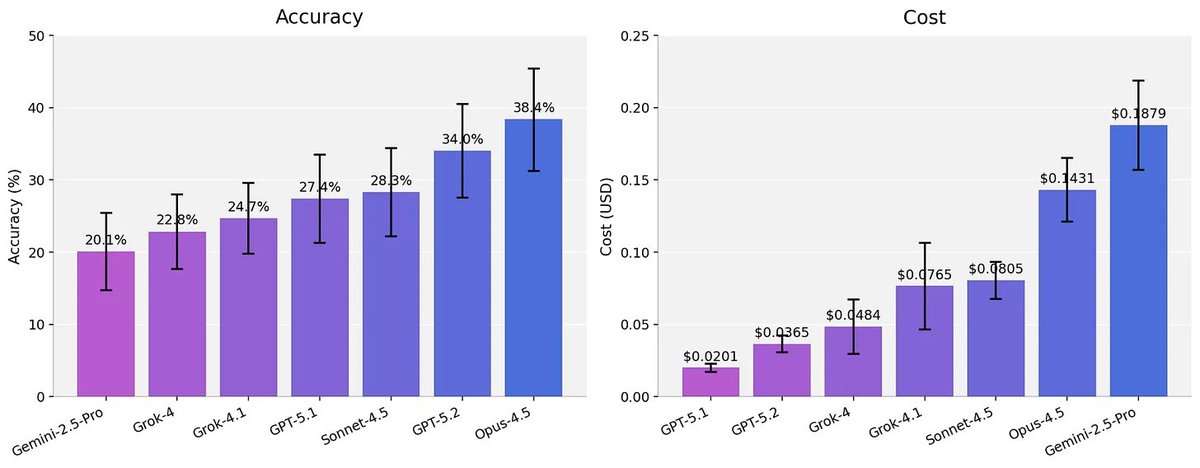
The strongest model-harness configuration was Claude Opus 4.8 + Pi at 59.3%, followed by GPT-5.5 + Pi at 55.3%.
While experiments are rate-limited by natural processes, human decisions and organizational consensus often make up significant components of program timelines in drug discovery. Agents promise to accelerate discovery, development, and translation by compressing these interpretation and decision-making loops.
However, the practical use of agentic systems in industrial workflows requires standardized and trusted methods of evaluating performance. This is especially challenging in drug discovery because the ecosystem is a sprawling landscape of assay categories, development stages, therapeutic modalities, and decision types.
Benchmarks must therefore measure realistic tasks while providing focused treatment of the many local scientific judgments that make up the biotech ecosystem.
We evaluated 16 model-harness configurations, comprising 11 models across three agent harnesses, on 100 preclinical pharmacology tasks. Each configuration was run three independent times per task, yielding 4,800 agent trajectories.
Performance varied by program stage: accuracy ranged from 27% in screening and hit prioritization to 55% in drug response. Difficult program stages involved decisions across QC, statistics, and chemical or biological judgment of molecular candidates.
Trajectory analysis reveals gaps in scientific judgement. Failures included incorrect perception of assay outputs, reliance on literature priors over supplied evidence, and assay-specific reasoning mistakes.
Manuscript, results and subset of evals/trajectories available below:
Introducing SpatialBench-Long, a benchmark for long-horizon spatial biology. Agents must recover biological claims from raw data and realistic experimental context without prescribed methods.
24 evals span primary tumors, organoids, xenograft models, lineage-tracing systems, and aging/intervention biology. The best agents score 11.1%.
2026 will be the year of agents in biology. But we need better benchmarks.
We worked with scientists to turn real world analysis into verifiable problems. SpatialBench stratifies frontier models, shows harnesses matter, and reveals distinct failure modes between model families:
Launching a public agent sandbox for spatial biology. Five demo flows tailored to specific kits/machines
Try it now: https://t.co/6lCf97Q5xi
This is a shippable intermediary towards reliable and widely deployed agentic systems used to make expensive scientific decisions.
Agents are finally starting to work in biology.
We’ve partnered with Anthropic and major biotech vendors - Vizgen, AtlasXOmics, Takara, 10x Genomics - to build a tool that allows scientists to steer their own analysis with natural language. Raw spatial data to publication quality figures.
Our team believes this will soon be the standard way biologists interact with data.
Spatial biology agents look a bit different from coding products:
- tailored to the molecular details of each kit type
- run in sandboxes on very large machines
- orchestrate data infra, eg. bioinformatics workflows, with tool calls
- build graphical analysis notebooks to communicate results
Detailed breakdown of engineering decisions, product philosophy and concrete flows follows:
This Week in Longevity X
- Can an agentic AI scientist make new discoveries in the field?
- What is the difference between biological and chronological age?
- Is aging driven by molecular damage?
And much more!
This Week in Longevity X
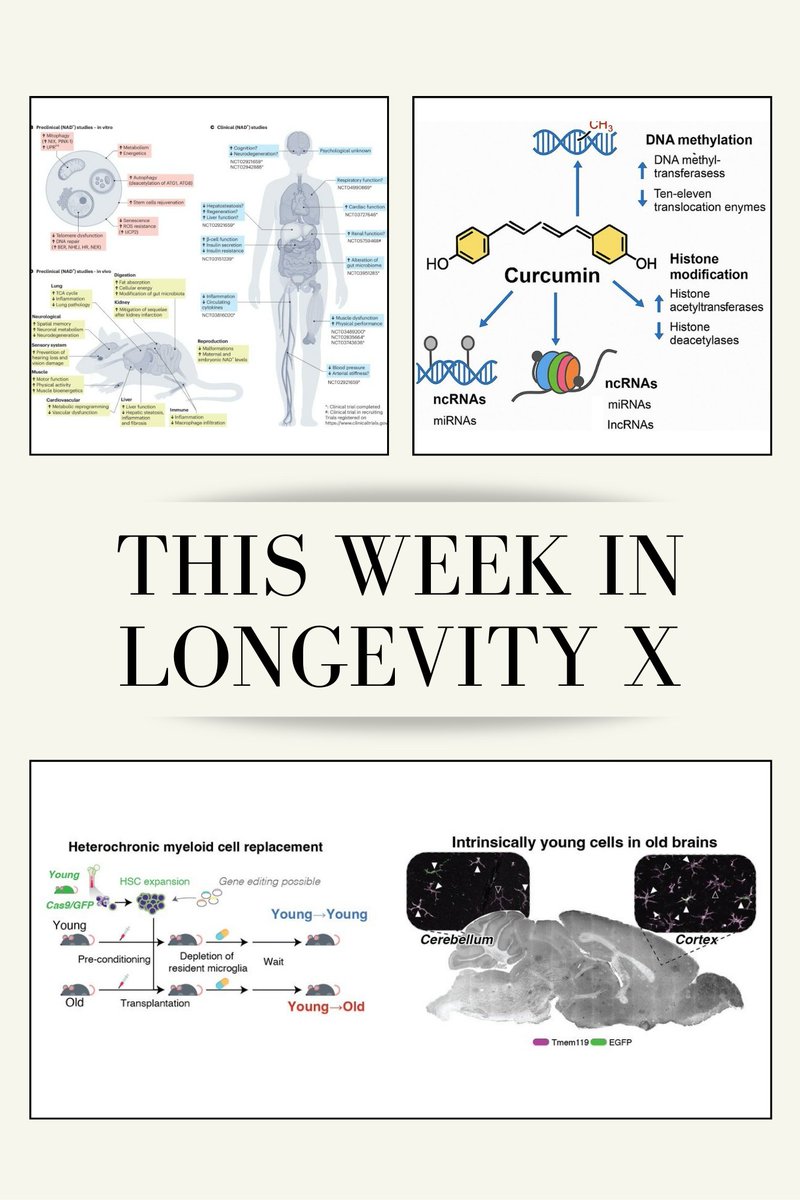
- Can you rejuvenate an old brain by giving it young immune cells?
- How does NAD+ work across age-related diseases?
- How can genetically modified stem cells slow aging?
And much more!