The Main $CORE Story Right Now
What stands out most is Core’s shift away from relying heavily on token emissions toward revenue-driven buybacks.
The goal for 2026 is for revenue generated from BTCFi and other Core products to help fund $CORE buybacks from the market.@Huseryn01@l
Launch a coin on pumpfun and send its creator fees to anyone's PayPal.
Every buy and sell pays them, forever.
Just tag their X handle so they can sign in and collect.
No crypto wallet needed to get paid.
Launch a coin.
Pay anyone's PayPal.
They called us crazy, but we saw the vision before everyone else. 👀🔥
$BILL looks like it's getting ready for a BILLION-dollar run. 💎🚀
The real question is: Are you ready before the crowd catches on? 👀
@billboardcto#trendingréels
They called us crazy, but we saw the vision before everyone else. 👀🔥
$BILL looks like it's getting ready for a BILLION-dollar run. 💎🚀
The real question is: Are you ready before the crowd catches on? 👀
@billboardcto#trendingréels
🔥🐹 Now we’re going deep into researching how $HAMZY could potentially achieve a 1000x. But we need to separate ambition from what the market data actually proves. 🚀📈🔥. Af57v85q4sUgzDWiM7bW7jd7j9Rvpc7QUkpXM4EApump
What makes $HAMSTER interesting is its attempt to address an increasingly obvious problem in the Meme market: launching tokens is becoming easier, but fewer and fewer tokens manage to build lasting communities.
DioisRY2M15WKza2te7pCvEAe7B1EVp4N1ZrM6tn52Sp
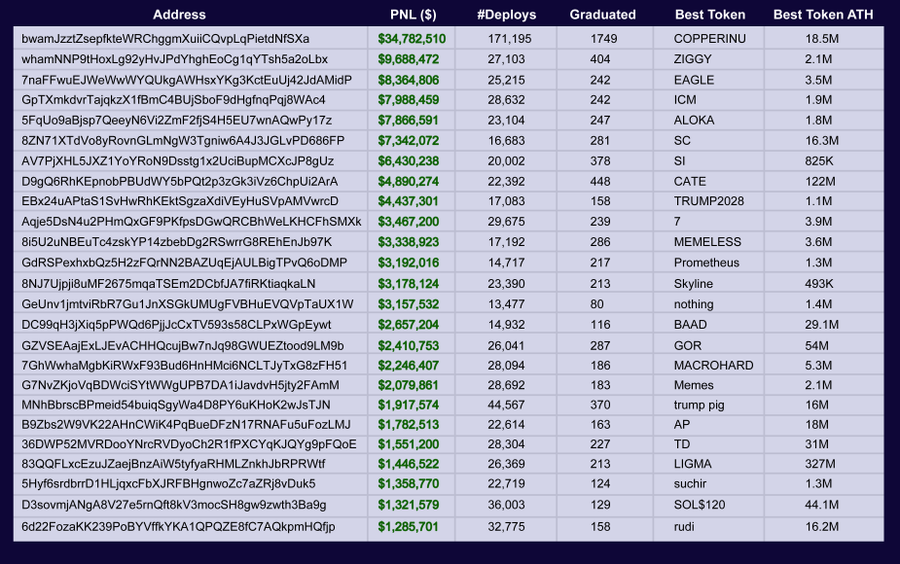
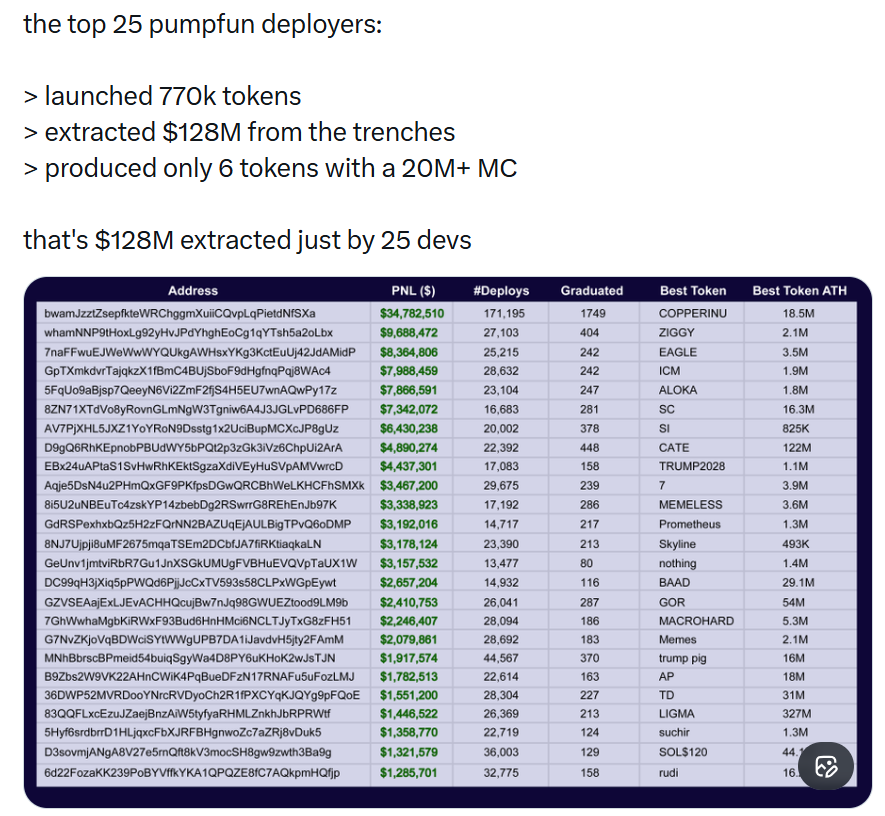
A few hours ago, reports emerged that the top 25 deployers on Pumpfun had launched approximately 770,000 tokens and extracted around $128 million in profits, yet only six tokens had reached a market cap above $20 million. These figures highlight a misalignment of incentives between token deployers and holders.
Deployers can keep searching for profits by launching new tokens, while traders must compete for limited attention and liquidity amid an overwhelming supply. Most tokens are wiped out by sniping, dumping, and capital rotation before they even have a chance to develop a culture of their own.
While this does not directly prove that HAMSTER will benefit, it puts a broader market problem on the table: as the traditional Meme launch model increasingly resembles a game of oversupply, will the market start looking for a different set of rules? HAMSTER's narrative is built around precisely this question.
Its differentiation goes beyond the hamster Meme IP. It attempts to use Solana's Token-2022 Transfer Hook to restrict certain transaction paths, tying token trading to social trading platforms such as FOMO and Pump App.
While ordinary Memes generally rely on attention to attract buyers, HAMSTER is trying to change how that attention translates into trading activity by reducing participation through certain external channels and concentrating more trading within socially driven platforms.
What makes this mechanism worth watching is whether it can change participant behavior. On traditional trading terminals, transactions linked to wallet addresses generally lack social accountability. On social trading apps, however, holdings, profits, and trading records may be associated with user identities, making buying and selling more visible to others.
Holding can therefore become more than simply waiting for the price to rise; it can also serve as a public expression of conviction, trading ability, and community participation.
However, this does not mean that restricting transactions can automatically lock up supply.
Which transaction paths a Transfer Hook can restrict depends on the specific contract rules, and social visibility cannot eliminate the incentive to take profits. It may strengthen holders' conviction, but it could also accelerate herd behavior and coordinated selling. Ultimately, the mechanism's effectiveness must be judged by genuine user participation, holding behavior, and sustained buying demand—not by how convincing the narrative sounds.
The hamster Meme provides another entry point for this strategy.
It is a visual symbol well suited to expressing emotions and spreading through comments, reaction images, and social content. Compared with inventing an entirely new concept, an existing Meme culture can lower the cost of distribution.
But a history of popularity does not guarantee attention today. HAMSTER still needs to prove that the image can continue generating new content and establish a lasting association with the token.
The Pumpfun episode therefore serves primarily as a narrative catalyst. It brings renewed attention to the structural problems of the Meme launch model, while HAMSTER offers a seemingly different way to organize trading activity.
HAMSTER's long-term thesis is to move Memes beyond a pure game of launching tokens and trading them, toward social trading, publicly visible holdings, and community identity.
If this mechanism can attract sustained participation and generate new demand that consistently exceeds selling pressure from existing holders, HAMSTER could command a premium over ordinary new tokens.
However, platform success does not equal token success. Even if social trading platforms such as FOMO or Pump App continue to grow, their users and revenue will not necessarily translate into value for HAMSTER.
The project still needs to prove that the user engagement and community conviction generated by its mechanism can translate into sustained demand for the token.
HAMSTER's real bet is whether the market is willing to shift from “who can launch and sell faster” to “who can build a trading community that keeps people engaged.”
Chart: https://t.co/fp1qdjtccS
and your entire bloodline is also chanting your name wishing you would buy $Hamster under 10M and retire in the next few weeks-months with one of the best if not the best meme out there
someone asked why $HAMSTER would do well when the 67 meme is far more viral and far more well known. fair question, so here's my answer
67 is one of the biggest memes of the last few years but it's a phrase and movement. there's no character, no face, nothing to put on a coin that people would recognise as "the 67 thing"
the hamster is a character. it has been a comment section sticker for nearly three years, it has many faces, people use it to say things they can't say with words. when you see it you know exactly what it is. that's what a cult meme looks like, and that's the kind of meme that has historically turned into a massive movement
the bigger point is that virality and mindshare don't automatically turn into buyers. a meme being everywhere means millions of people have seen it, doesn't mean any of them want to own it. seeing something and caring about it are different things. mindshare gets eyes on the token but identity is what gets you holders who stay leading to a cult like movement
hooked changes everything. $HAMSTER can only be bought and sold inside social trading apps. no terminals or dex. the coin lives in the same place the audience does, for the first time the meme audience and the coin audience can be the same people
so no, i'm not saying hamster is more viral than 67 was. it doesn't need to be, it needs to be the thing people keep coming back to and relate to
First win of October. 🚀
$HAMSTER went from a $400K market cap to $1.3M. 🐹🔥
That’s over 3x already — and the journey may just be getting started. 👀
Who’s still sleeping on $HAMSTER? 🐹