2019 U.S. Investing Champion (Options) | Grew up poor, quit corporate at 34. Follow to discover how to build wealth & passive income w/ options & index funds.
As far as I know, I'm the only person on the planet who can teach people how to achieve these returns while trading only 2 minutes per month and 10 minutes once a year to rebalance the portfolio.
Today's decline was a perfect time to consider this lesson.
How an account hypothetically performs with and without stock market insurance (i.e., put options).
Year 1: +40% stock market return:
· w/o puts: $100,000 grows to $140,000 (40% gain)
· w/ puts: $100,000 grows to $120,000 (only a 20% gain)
Year 2, a -50% bear market:
· w/o puts: $140,000 to $70,000 (-50% loss)
· w/ puts: $120,000 to $90,000 (-25% loss)
Year 3, +50% bear-market recovery:
· w/o puts: $70,000 to $105,000 (a 50% gain)
· w/ puts: $90,000 to $112,500 (only a 25% gain)
The account with put options had half the gains (and losses), and it's still higher after three years. Hard to believe, huh?
It's counterintuitive, which is why most people struggle to build wealth. The thing they chase, "high returns," isn't what you need to get rich.
The secret that all successful investors know: The less money you lose, the faster you build wealth!
Someone just told me that buying put option insurance for my portfolio was “retarded” (their words, not mine). Here is a reminder of why insurance is responsible for my high performance. Buffett knows this truth, and he's tried to tell you for years.
34 minutes.
That's how much time my portfolio takes per year.
2 minutes once a month to place a trade. 12 months = 24 minutes.
10 minutes once a year to rebalance.
What those minutes do:
1. Sell SPX credit spreads 6-12 months out. One trade, 2 minutes.
2. Hold S&P shares (SPY) and a LEAP call as the core.
3. Hold LEAP put insurance (a long-dated put option) so a crash can't wipe me out.
4. Rebalance once a year. Then leave it alone.
Zero losing credit spread trades so far this year, despite the correction.
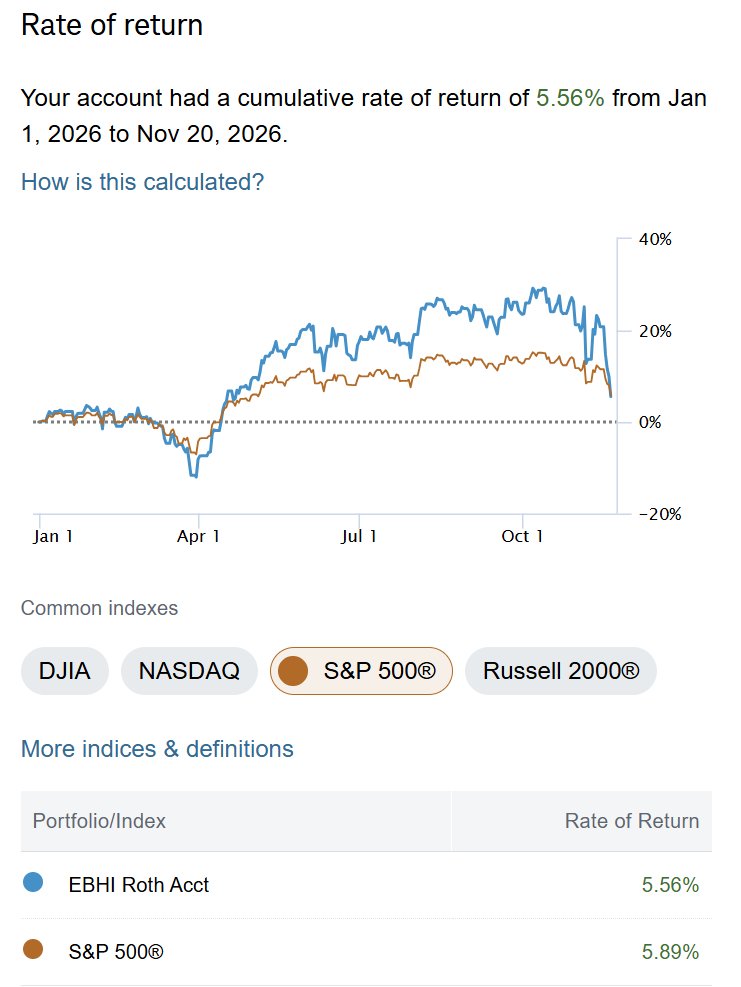
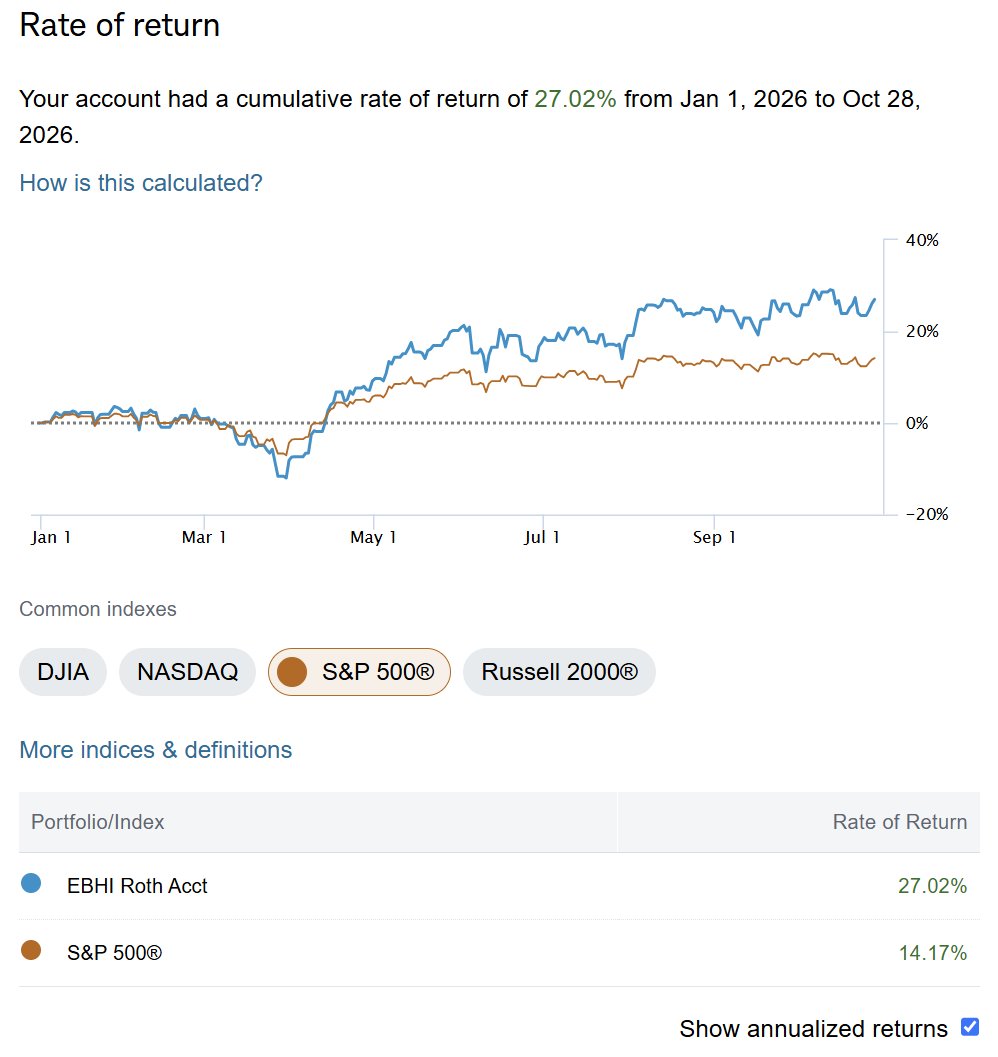
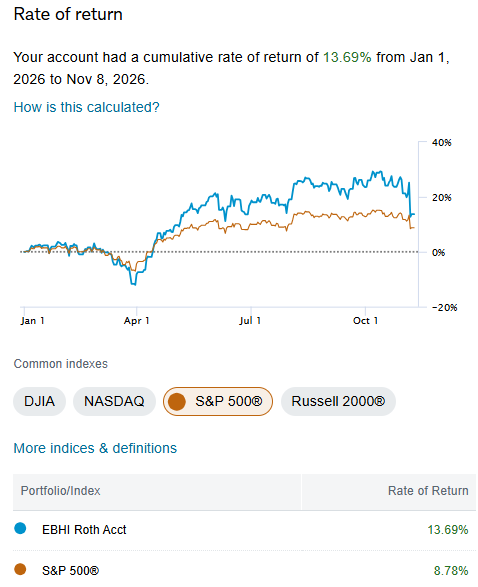
My strategy (EBHI, enhanced buy-and-hold + income): 13.7% vs the S&P's 8.8% as of 11-8-26. No contributions, only investment performance. I'll post my EBHI vs S&P numbers again at the end of each month.
Why so little time works: fewer trades mean fewer chances for fear and greed to get triggered. Fewer clicks, fewer mistakes. Strategies rarely sink people. Head trash (fear and greed) does.
You don't need hours a week to beat the market. Reply with the hours you spent on your portfolio last month and your year-to-date return vs the S&P.
Hold up. @DJW2028 why you on socials when you should be in class paying attention? 🤦🏾♂️. Fine, you get a one time pass since you gave me flowers. 🤪 Just teasing. Carry on…
@trunchenpunchen 🤣 Yes, I hate wasting time, and answering something I already covered in the post is a waste of time. However, I like you, so I made an exception. 😉
Zero losing credit spread trades so far this year, despite the correction. My strategy (EBHI, enhanced buy-and-hold + income): 13.7% vs the S&P's 8.8% as of 11-8-26. No contributions, only investment performance.
See it now? :)