That region is Wernicke’s area. In 1874, Wernicke described patients with damage there who talked fluently but whose words came out wrong. I see the same thing in my own patients. It was never clear why a listening area would matter for speaking.
Our new study is out today in the New England Journal of Medicine! We demonstrate a speech neuroprosthesis that decodes the attempted speech of a man with ALS into text with 97.5% accuracy, enabling him to communicate with his family, friends, and colleagues in his own home. 1/9
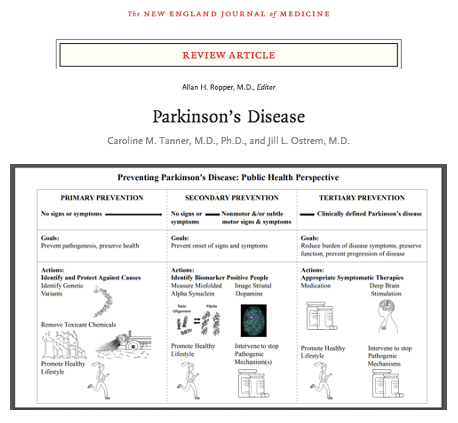
Can you name primary, secondary and tertiatry prevention strategies for Parkinson's disease? Caitlin Agarwal in @NEJM was the artist for this supplementary figure which is a gem and you should not miss reading and digesting it, as it is hidden in the supplementary information.
Key Points:
- Prevention includes 3 goals – 'primary prevention identifies and removes causes so disease does not develop, secondary prevention identifies the disease processes and intervenes to prevent symptom onset, and tertiary prevention reduces the burden and slows progression in manifest disease.'
- The figure addresses both 'a population perspective and individual perspective.'
- 'Primary prevention involves identifying and removing toxicant chemicals. Education regarding healthy lifestyle, including exercise, diet and sleep applies both to populations and to individuals.'
- 'Screening genetic risks even in the absence of disease-associated change.'
- An opportunity for 'gene-specific interventions.'
- Secondary prevention prevents 'development of manifest disease.' Biomarkers become key.
- Tertiary prevention 'aims to reduce the symptom burden of manifest disease and slow or stop progression.'
My take: We need to shift left from tertiary prevention to secondary and to primary prevention. This should be done concurrently as time is ticking for persons with disease and for persons who will get the disease.
https://t.co/mTmePdVkx4 #Parkinsons @ParkinsonDotOrg@endingpdbook@FixelInstitute
Are we closer to using blood instead of fluid from a spinal tap for Parkinson's diagnosis and proposed staging systems? Does disease duration influence the blood-based results? Nice new study by Schaeffer, Berg and colleagues @journal_PD.
Key Points:
- The authors have previously shown that misfolded α-synuclein can be detected in blood samples by seed amplification assay (SAA) using exosomes and in this study they follow up to show data on disease duration.
- Their methodology used neuronal exosomes in blood.
- Scientists are keying in to try to better understand the role of these 'exosomes' in your cells. Could they remove excess constituents and maintain cellular homeostasis? Could they regulate intercellular communication?
- Parkinson samples included in this study were collected over 5–9 years.
- 79 of 80 Parkinson samples and none of the controls had the SAA seeding.
- Longer disease duration was associated w/ lower α-synuclein seeding.
My take: The practicality, cost and access factors favoring a blood based biomarker to aid in Parkinson's diagnosis, staging and/or classification will all be huge future considerations. Spinal taps are a great source of biological fluid (which touches the brain), however I haven't yet met a person who would choose a spinal tap over a blood draw. This paper is terrific, however let's be careful as the sample in very small, and we need to see validation and replication using independent datasets. I love how they show the behavior of their test across various disease durations, as this will surely be critical for later interpretation(s)of findings. A lot of work to be done here and a lot of people rooting for a blood based approach. There are actually many groups working on this approach across the planet and the other recent big paper came from @Nature Medicine (a Japanese group Okuzumi and colleagues).
https://t.co/LadhWeGCjM #Parkinsons
Recent Nature Medicine Paper:
https://t.co/pYDJIt7N8r
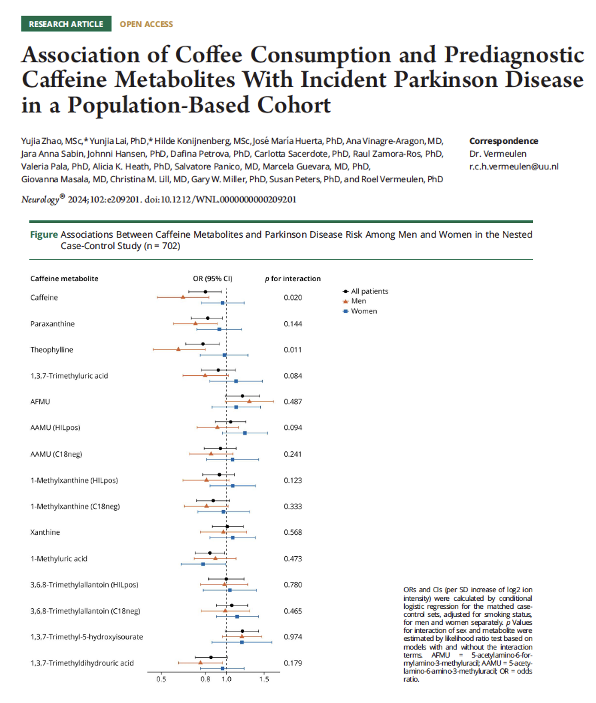
Are caffeine metabolites from the coffee you are drinking protective against a later diagnosis of Parkinson's?
Key Points:
- Boom! These authors quantified biomarkers of caffeine intake years before Parkinson's onset.
- They used associations between self-reported total coffee consumption and future Parkinson's risk from the EPIC4PD study.
- 6 European countries.
- Caffeine metabolites were quantified by high-resolution mass spectrometry in baseline collected plasma samples.
- 184,024 individuals.
- Comparing the highest coffee intake with non-consumers was 0.63 (95% CI 0.46–0.88, p = 0.006).
- In the nested case-control study, 351 cases with incident new) PD and 351 matched controls, 'prediagnostic caffeine and its primary metabolites, paraxanthine and theophylline, were inversely associated with PD risk.'
- Adjusting for smoking and alcohol consumption did not substantially change these results.
My take: Though the topic is somewhat controversial, as I sit at my desk drinking my coffee this morning and reading this study I choose to believe the results and that my actions will have a positive benefit. Absit invidia – let there be no ill will if you disagree with me.
https://t.co/ouPBTBiZ3b #Parkinsons #Coffee #Caffeine
Four life lessons I learned while studying statistics:
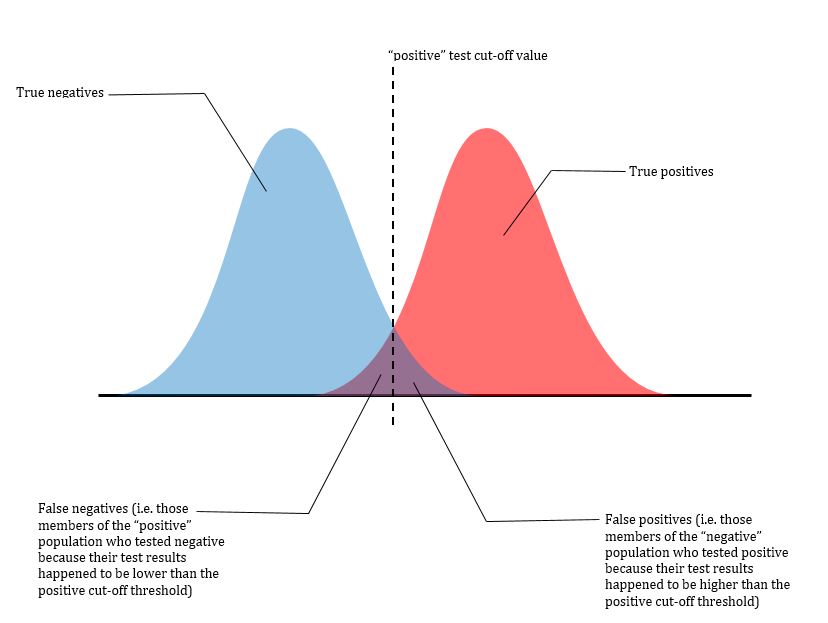
1. False positives vs false negatives: Fewer false positives often come at the cost of more false negatives and vice versa.
LIFE LESSON: The less stringent your criteria, the more crap you need to deal with, but the more stringent your criteria, the more genuinely good stuff you miss out on.
Missed opportunities is the price of never wasting your time. Wasting your time is the price of never missing an opportunity.
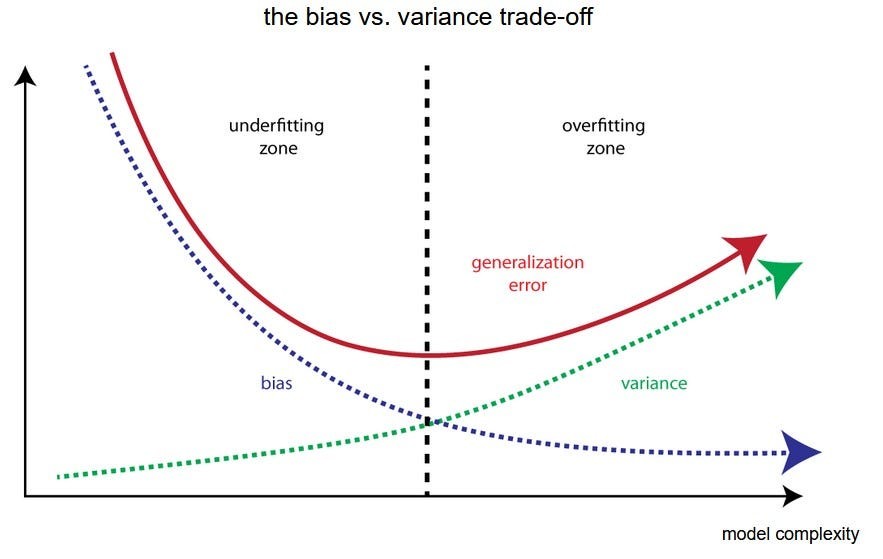
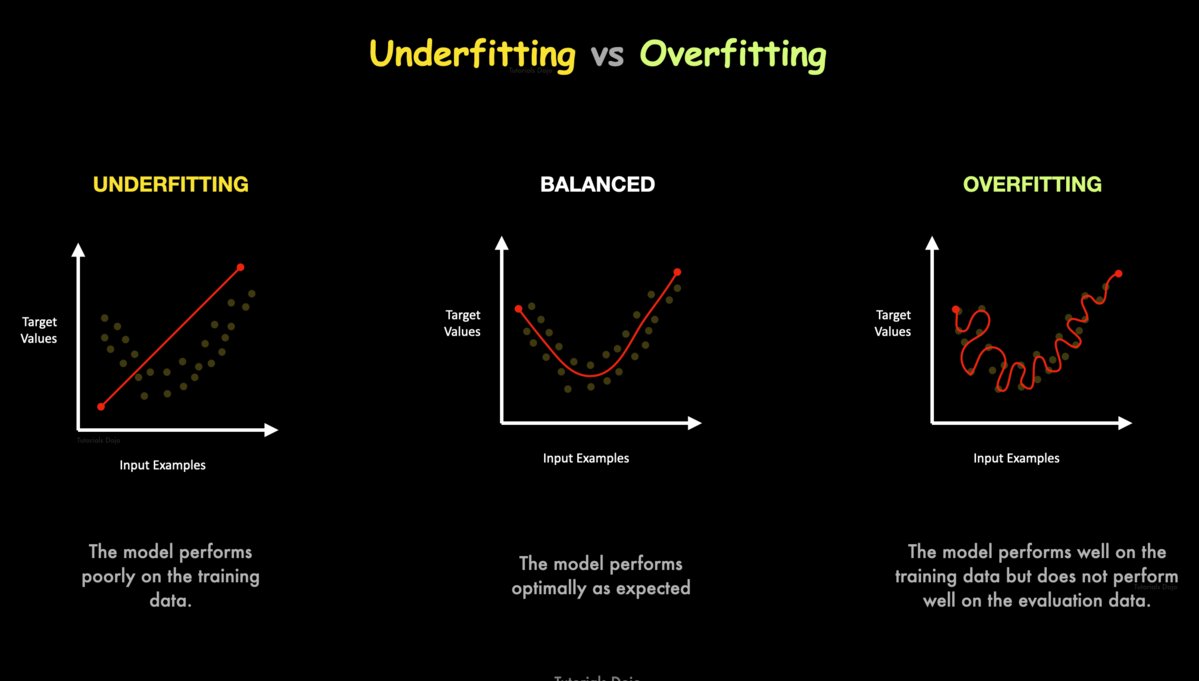
2. Overfitting vs Underfitting: Less flexible models can't fit the data. More flexible models are prone to picking up patterns that don't generalize.
LIFE LESSON: Over-thinking makes you more vulnerable to seeing patterns that aren't there. It turns you into a misinformation machine.
3. Bias vs Variance: More complex models give less consistent answers. Less complex models give more biased answers.
LIFE LESSON: There is a natural trade-off between nuanced thought and consensus.
People get mad when experts disagree especially when non-experts don't but that's actually what you would expect.
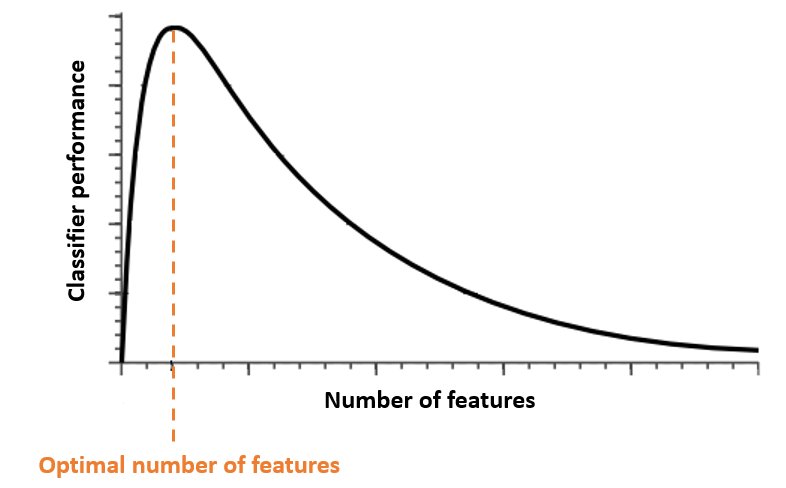
4. Curse of Dimensionality: Given a fixed amount of scenarios to learn from, there's a point beyond which considering additional factors stops helping.
LIFE LESSON: If you haven't experienced much, keep things simple. Nuance without experience is actively harmful.
SUMMARY:
The common theme I see is these are cautionary tales for over-thinkers like me. There are hard mathematical limitations on what we can possibly know as rational beings.
There is wisdom in knowing when to think but there's also wisdom in knowing when to stop.
i often wonder how much of male assholery is just biology. like how much of my annoying overconfidence is due to me being on a pretty potent dose of a steroid for most of my life while half of humanity is not.
I just learned that the jungle gym was invented in the late 1800s by a frustrated British mathematician named Charles Hinton who was trying (and failing) to teach his kids about the geometry of the 4 dimensional hypercube.
🔥📢Very excited to see our latest paper now out in @NatureNeuro
By combining temporal interference stimulation and fMRI, we show noninvasive and focal DBS of the human striatum during motor learning
@Neuro_X_EPFL@EPFL
Paper here:
https://t.co/9O1q4FQj0O
Thread below🧵
I think Andrew Huberman may have singlehandedly ruined the SF social scene. More so than ever, seems like people just stand around sober at parties and then go home early