Those healthcare surcharges diners love to hate may have done more for the city’s bottom line than for restaurant workers.
📝: Sara Deseran https://t.co/lL4vPbbFV5
A man with no working truck convinced Wall Street he had built the next Tesla. His company hit $30 BILLION. All he did was push it down a hill with no engine.
> Trevor Milton founded Nikola in 2014, named after the same inventor as Tesla.
> The goal was to build hydrogen powered trucks that would make diesel obsolete. He had no trucks.
> In 2018 he released a promotional video called Nikola One In Motion. It showed a sleek semi truck accelerating smoothly down an open highway.
Investors went wild.
> What nobody knew was that the truck had no engine, no fuel cell, and no propulsion system of any kind.
> Milton's team towed it to the top of a hill, tilted the camera to hide the slope, and let it roll.
> He spent the next four years doing the same thing with words. On podcasts, television and social media.
> Investors were told Nikola could produce its own hydrogen. It could not. They were told the trucks were ready for production. They were not. They were told orders were flooding in. They weren't.
> In June 2020 Nikola went public. Within days the company was worth $30 BILLION, more than Ford.
> Milton's personal stake hit $7.3 BILLION overnight.
> A $32.5 MILLION ranch in Utah followed. A record for the state at the time.
> In September 2020 Hindenburg Research published a report calling Nikola "an intricate fraud" built on "an ocean of lies." Milton resigned within ten days.
> A federal jury convicted him of securities fraud and wire fraud in 2022. Sentenced to four years in prison the following year.
> He never went. He was free on $100 MILLION bail pending appeal.
> He and his wife donated $3.2 MILLION to Donald Trump's 2024 campaign.
> In March 2025 Trump gave him a full pardon. The pardon erased $168 MILLION in restitution to defrauded shareholders.
> Nikola filed for bankruptcy the following month, leaving thousands of investors with nothing.
The company never had a product. The only thing that was real was the $30 BILLION valuation, the $7 BILLION that landed in his pocket and the pardon that made sure none of it had to be returned.
You buy a German anvil. It contains 83 moving parts and requires winding twice a day. It's forged from excellent steel, holds tolerances across all three striking faces to within three microns, includes a beautifully indexed horn-adjustment mechanism nobody asked for, and requires a proprietary 11-point spanner should you need to replace the rebound calibration bushing. It runs flawlessly for years, but one day it starts up in limp mode because the onboard anvil-management system detects that it's overdue for its 50,000-strike inspection.
You search AliExpress for a Chinese anvil, and are presented with a multitude of offerings from such household-name brands as DUKXJYIBF, HDBTGMXI, AND UEJQIP. They're all priced to within a few pennies of each other, appear completely identical except for the nameplate, and obviously all came out of the same factory. You text your blacksmith friend to ask if they're legit. He tells you he got one like that from KIXJBU a few years ago, and that it's been great and a terrific deal. You thank him, but KIXJBU seems to have folded so you buy the one from UEJQIP. When it arrives, it feels suspiciously light. You scratch it and realize it's iron-plated aluminum.
You buy an American anvil. It's five times the price of the competition, but it comes from a brand that your great-grandfather used to love. It comes boxed with a warranty registration postcard, twenty pages of safety instructions, assay certificate, and a regulatory slip which lists its FCC certification and ITAR registration. It looks just like your friend's KIXJBU. There's a "Made In China" sticker on the bottom.
You buy a Russian anvil. It arrives coated in cosmoline, wrapped in newspaper from 1974, and weighing 40% more than advertised. The finish looks like it was machined with a shovel. The face is not flat, but somehow this does not matter. You drop it off a truck, accidentally leave it outside for six winters, and use it to straighten a bulldozer blade. It's fine.
You buy a Swedish anvil. It comes flat-packed in a long cardboard box with cheerful Neo-Grotesk lettering and a line drawing of a smiling man assembling it with an Allen key. The instructions contain no words, only pictograms showing the anvil face, horn, waist, feet, and 112 identical-looking fasteners. Halfway through assembly, you discover that the pritchel hole was installed upside down, but only because you used peg B17 where you should have used peg B71. Once assembled, it is clean, stable, and works better than it has any right to. You immediately wonder whether you should have bought two.
You buy a Japanese anvil. It arrives wrapped in rice paper inside a paulownia box, accompanied by a certificate bearing three generations of signatures and a photograph of the first production example being presented to the Emperor. The face has been hand-polished by a seventy-eight-year-old master whose family has made striking surfaces since the Muromachi period. You are given detailed instructions for oiling it with a cloth folded in a specific way. It is the most beautiful object you own. You never quite work up the nerve to strike it.
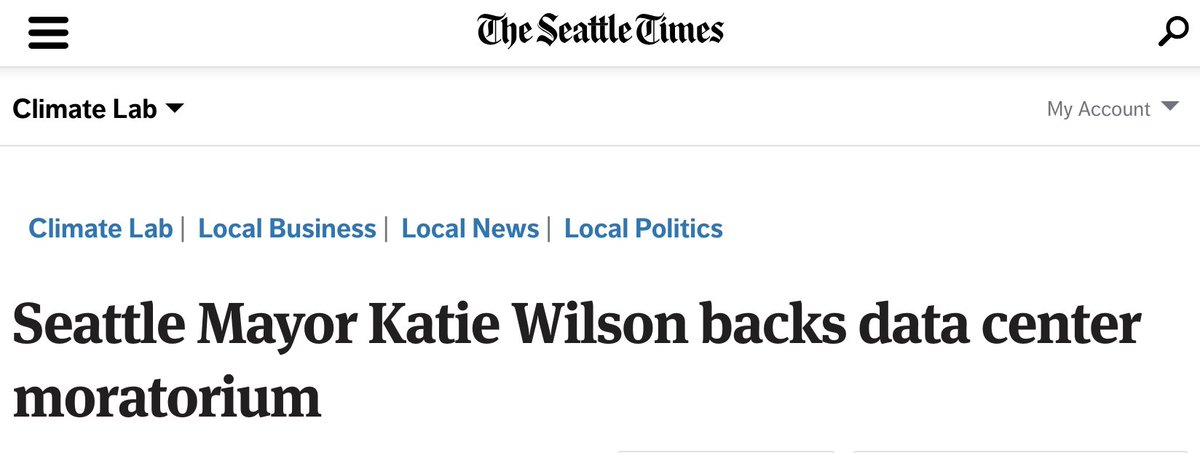
Seattle Mayor Katie Wilson has signaled her support for a data-center moratorium in Seattle, less than 10 years after the Seattle Times was proudly calling us "Cloud City."
Why has an anti-datacenter stance taken such hold on the left? What's the bigger picture?
Relatedly, what is the "Degrowth" movement? How does it relate to modern American leftism? 🧵
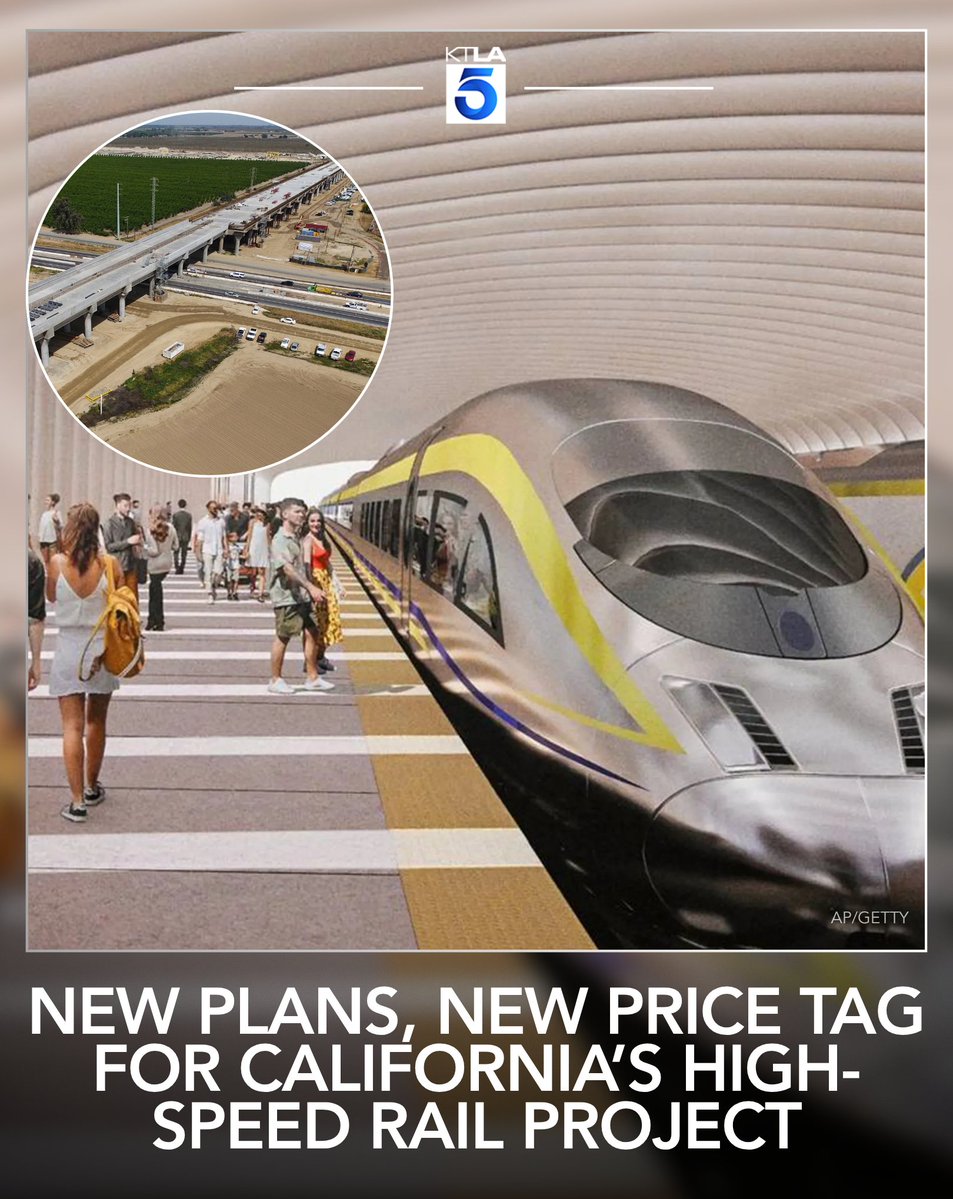
In a newly proposed business plan, project leaders estimate the Los Angeles-to-San Francisco segment will cost about $126 billion, with service beginning around 2040. https://t.co/6bRmBu3Jwt
“There are no maverick molecules in the universe.”
Haven’t seen a conversation like this—intellectual, philosophical, big picture—on tv in decades. It’s incredible.
America’s hopes for its first high-speed rail line were kindled in 2008, when California voters approved a ballot measure for a bullet train between Los Angeles and San Francisco. Nearly two decades later, that dream is yet to arrive. https://t.co/rDUsWKcxbN
In case you missed this QT…
It isn’t that “conservatives hate this”, which is a simpleton non-argument meant to appeal to lowest-common-denominator keyboard warriors. It’s because when it comes to even the good ideas, government (particularly liberal government beholden to labor and eco groups) is incredibly inept at actually doing the work.
DeSantis approved the Brightline extension from Orlando to Miami in 2019. It cost $5 billion, no taxpayer funding & was completed in 4 years. Every conservative is cool with. Cali has spent $16 billion of an estimated $135 bil in taxes, for 0 miles of rail. Spot the difference
@atrupar "Something like that."
Perhaps all these yokels that praise Trump for "telling it how it is" should understand that this kind of ambiguity is insane coming from the leader of the free world.