Spent weeks digging through decades of fund performance data from Morningstar, Fidelity reports, and historical archives.
I wanted to find the actual top-performing funds in history. Not the recycled "best of the last 10 years" clickbait everyone posts.
Here are the standouts. A mix of mutual funds and the legendary hedge fund that dominates any list.
1: Renaissance Medallion Fund.
~39% net annualized from 1988 to 2018. Gross was ~66%. Turned tiny capital into absurd wealth. Closed to outsiders for decades.
The greatest fund of all time. Period.
2: Fidelity Magellan during the Peter Lynch era.
29.2% annualized from 1977 to 1990. Lynch grew assets from $18M to $14B in 13 years. Beat the S&P by a mile almost every year.
3: Fidelity Select Semiconductors (FSELX).
~36.8% annualized over the last 10 years. Sector king in the AI and tech boom.
4: Fidelity Select Technology (FSPTX): ~22.4% annualized last 10 years. ~14.3% since inception in 1981.
5: Fidelity Select Software (FSCSX): ~14.9% annualized since 1985. Consistent tech winner over 40 years.
6: Fidelity Contrafund (FCNTX): ~13% annualized since 1967. Over 50 years of beating the market.
7: Baron Opportunity (BIOPX): 13% annualized over 25 years. Beat the broad market by ~4% per year.
8: Hennessy Focus: 12.8% annualized over 25 years.
9: Fidelity Leveraged Company Stock: 12.6% over 25 years.
10: Fidelity Growth Company (FDGRX): 15-20% during key multi-decade periods.
Here is the common thread.
It is not low fees. It is not broad diversification. It is not just riding a bull market.
Every single one had a real edge and high conviction.
Either a superstar manager with a clear philosophy and the guts to bet big on their best ideas. Lynch's "buy what you know." Baron's early innovation bets.
Or a systematic process that found repeatable patterns others missed. Like Renaissance's models.
They focused heavily on growth, innovation, technology, or high-quality compounders with real competitive advantages.
Most active funds still underperform indexes over time. These are the exceptional ones that did not.
What separated the outliers was skill, conviction, and patience.
Find an edge you actually understand.
If you want to know which stocks WE are buying, follow us with notifications this is very important.
A lot of people will wish they followed us sooner.
If your WFH desk setup doesn't cost more than a used Honda Civic, you aren't serious about your pipeline.
My ergonomic chair is built from the salvaged suspension of a 2019 Tesla Model S.
My primary monitor is a converted IMAX screen I bought from a bankrupt theater in Oakland.
When I drag a cell in Google Sheets, I physically have to rotate my entire torso. I burn 400 active calories a day just searching for the Slack icon.
Stop complaining about back pain and optimize your environment.
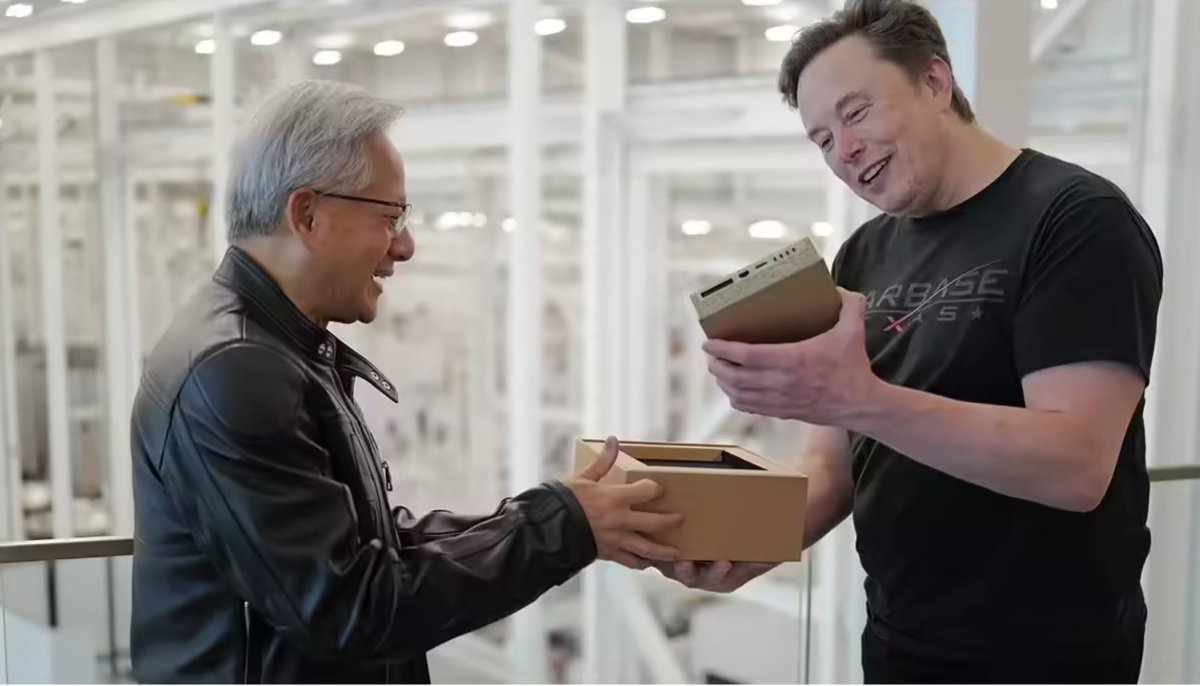
🚨Michael Burry just said Elon Musk and Nvidia's deal is built on fake numbers.
Burry published a detailed breakdown calling the entire structure "Fugazi", his word for fake.
He is alleging that billions of dollars in Nvidia chips are being hidden off balance sheets, and that American retirees are unknowingly funding the whole thing.
Nvidia, the world's largest AI chip company sold $5.4 billion worth of its most advanced GPUs, the GB200, to a company called Valor.
Valor is not a real operating business. It is a special purpose vehicle, a shell company created specifically to hold these chips and nothing else. Nvidia also invested $1.9 billion of its own money directly into Valor on top of the sale.
Those 100,000+ chips are now physically inside xAI's data center. xAI is Elon Musk's artificial intelligence company, the one that builds Grok. xAI is using every single one of those chips right now to run its AI models.
But here is what Burry is flagging.
Neither Nvidia nor xAI owns those chips on paper. Valor, the shell company holds legal title. That means $5.4 billion in GPU assets do not show up on Nvidia's balance sheet as inventory.
They do not show up on xAI's balance sheet as assets. They are legally invisible to both companies.
Nvidia gets to book the $5.4 billion as a completed sale and record it as revenue. xAI gets full use of the chips without owning them. And the risk disappears into a shell company in the middle.
Now here is where American retirees enter the picture.
Valor needed $3.5 billion in debt to fund this structure. Apollo provided it. Apollo is one of the largest asset managers on earth with $1.03 trillion under management and $834 billion specifically in private credit.
Apollo raised the $3.5 billion, packaged it into debt securities, and sold those securities to Athene.
Athene is Apollo's own insurance company. It sells fixed and indexed annuities, retirement savings products, to ordinary Americans.
When a retiree buys an Athene annuity, they believe their money is sitting in safe, stable investments. That money is now inside a structure funding Elon Musk's AI data center.
The numbers inside Athene are most alarming.
Athene holds $74.2 billion in reserves. It has moved $217 billion in assets into a captive insurer based in Bermuda, meaning those assets sit outside normal US insurance regulation and oversight.
Of the entire portfolio, 34.7%, equal to $103 billion, is classified as Level 3 assets.
Level 3 is an accounting classification that means there is no observable market price for these assets. No outside party can independently verify what they are actually worth.
The leverage sitting on top of those unpriced assets is 16 times.
Burry's says:
Every step of this structure is technically legal and publicly disclosed. But the entire thing was deliberately engineered across 8 to 12 steps to move credit risk off balance sheets and away from any market pricing.
- Nvidia books the revenue.
- Apollo collects the fees.
- xAI gets the computing power.
- And retirees sitting at the bottom of a 16x leveraged Bermuda insurance structure, holding $103 billion in assets with no market price carry the risk without knowing it exists.
A message for my $TSLA friends eyeing the SpaceX IPO $SPCX.
I traded $TSLA for years. I know the community. I know the excitement when Elon takes something public. But before you chase @SpaceX at $1.75 trillion, read the S-1 carefully.
SpaceX doesn't need your money.
They raised at $800B in private tenders six months ago. They could raise $50B privately tomorrow with a phone call. This IPO isn't about raising capital. It's about giving insiders liquidity.
95% of @SpaceX shares are held by insiders. Only 5% will be publicly traded. Insiders hold $1.66 trillion in paper wealth they currently can't sell. The IPO changes that.
And they've structured it so insiders can sell BEFORE the standard 180-day lock-up expires. @SpaceX built in early release provisions -- after the first earnings report, insiders can sell up to 20% of their shares.
They're also reserving 30% of IPO shares for retail. Ask yourself -- when has Wall Street ever given retail the best seats in the house unless retail was the product?
100x revenue.
$4.9B net loss.
xAI burning $6.4B a year while @Starlink subsidizes it.
This isn't 2020 Tesla at 20x revenue with a clear path to profitability. This is a different risk profile.
Now here's the part I want you to actually consider.
SpaceX's S-1 sizes their satellite-to-phone business (Starlink Mobile) at a $740 billion TAM. Their Connectivity segment does $11.4B at 63% EBITDA margins. Those numbers are real and impressive.
But buried in the S-1, @SpaceX names their D2D competitor: $ASTS .
@AST_SpaceMobile $40 billion market cap.
Not $1.75 trillion. $40 billion.
Here's what $40B buys you:
98.9 Mbps proven from space to unmodified phones (SpaceX does 3-5 Mbps)
The only low-band D2D spectrum access on Earth (indoor coverage SpaceX can't match)
All three US carriers forming a joint venture around ASTS technology
Google invested $358M
their largest public equity holding
AT&T, Verizon, Vodafone as equity investors
$3.5B cash, $1.2B contracted backlog
3,900 patents, custom ASIC in production
Three satellites launching on a Falcon 9 next month
60 carrier partners covering 3 billion subscribers
@SpaceX at $1.75T is pricing perfection across rockets, satellites, AI, and Mars. One miss and it corrects hard.
$ASTS at $40B is pricing uncertainty in a $740B market where the technology is already proven and the carriers have already chosen sides.
The Tesla community knows what it feels like to find a mispriced stock before the world catches on. $TSLA at $30 pre-split wasn't obvious to anyone except the people who did the work.
$ASTS at $106 in a $740B market with 33x faster speeds than SpaceX D2D, a carrier JV, and institutional discovery just beginning -- that's the same kind of setup.
So before you throw money at a $1.75T IPO where insiders are building exit ramps, maybe look at the $40B competitor they named in their own filing.
Not financial advice. Just math.
$ASTS 🛰️
cc @SawyerMerritt@unusual_whales@DanBTC916
Not a single fintech CEO slept well last night.
X just shipped a full financial stack in 48 hours. And most people didn't even notice.
Here's the sequence:
- Tuesday: Smart Cashtags go live. Any ticker, any contract address native price chart, right in the timeline. No redirect. No third-party app.
- Already in beta: X Money. Fiat wallet with 6% APY, metal Visa debit card with 3% cashback, P2P payments, direct deposit. FDIC-insured through Cross River Bank, the same bank behind Coinbase and Stripe.
- Already live: Brokerage routing via Wealthsimple. One tap from a post to a placed trade.
Three products. All shipped. All pointing the same direction:
Discovery → Chart → Trade → Pay.
Inside one timeline scroll.
Here's what that looks like for you and me:
Someone posts a $AAPL cashtag. I tap it. Chart loads. I see the conversation around it. I buy. Never left the app.
I send $50 to a friend. On X. I earn 6% on what's left. My debit card gives me 3% back on coffee.
Why would I open Robinhood? Why would I open Venmo? Why would I open CoinGecko?
And here's why they can't compete:
X has 550M monthly users. Robinhood has 24M funded accounts. Venmo has ~90M accounts. CoinGecko has ~30M monthly visits.
X doesn't need the best product. It needs a good-enough product inside the app people already live in.
Now zoom out.
X was an ad revenue company. ~$4.4B in 2023, almost all advertising.
The new revenue stack:
> Visa interchange on every card swipe
> Brokerage referral fees on every routed trade
> APY spread on held deposits
> Trading behavior data from 550M users
X didn't add a feature. X changed its entire business model.
"Is this good for X?"
Wrong question.
X just stopped being a social media company.
It's now a financial infrastructure company that happens to have 550 million users already scrolling.
Everyone else is competing against a distribution gap they can never close.
I wrote about this yesterday before any of it was announced. The sequence played out exactly as mapped.
The only piece left: which chain gets the default crypto trading slot.
That answer will move markets.
The naked mole rat is a hairless rodent that lives deep underground in queen led colonies, never sees the sun, digs vast tunnel networks, and is famous for its resistance to aging and cancer.
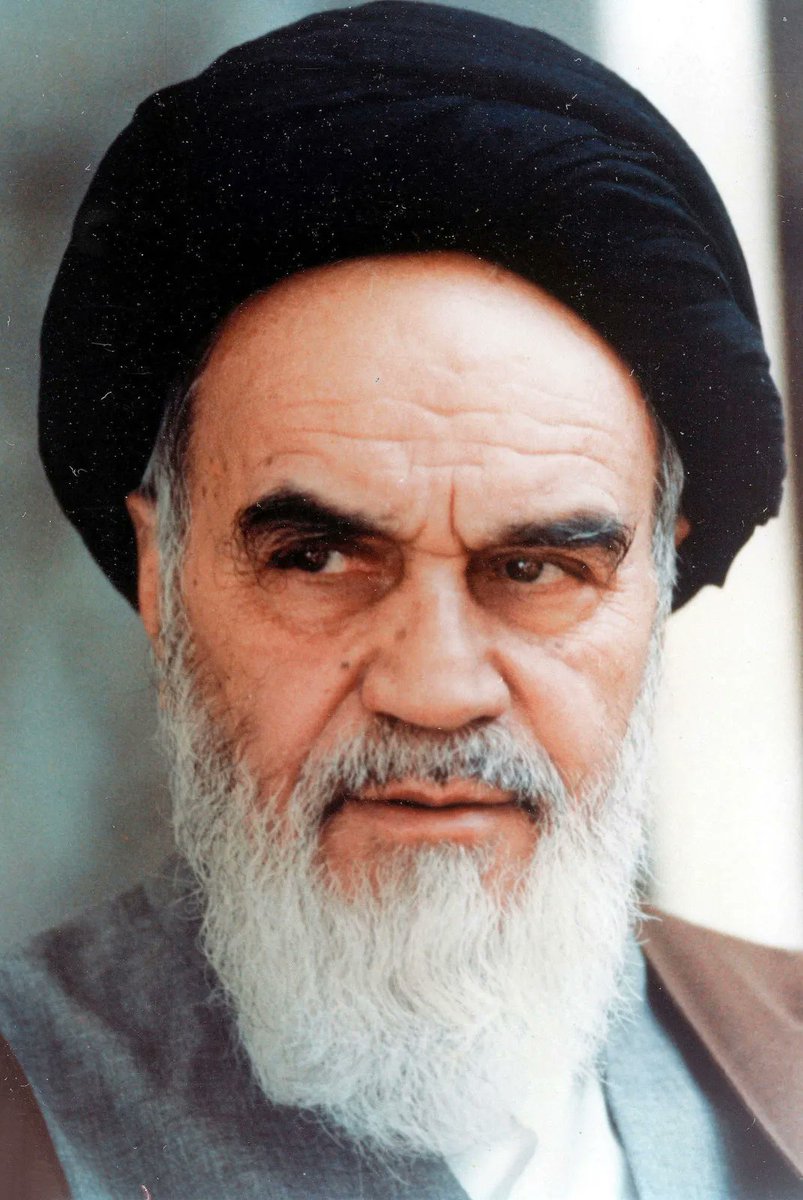
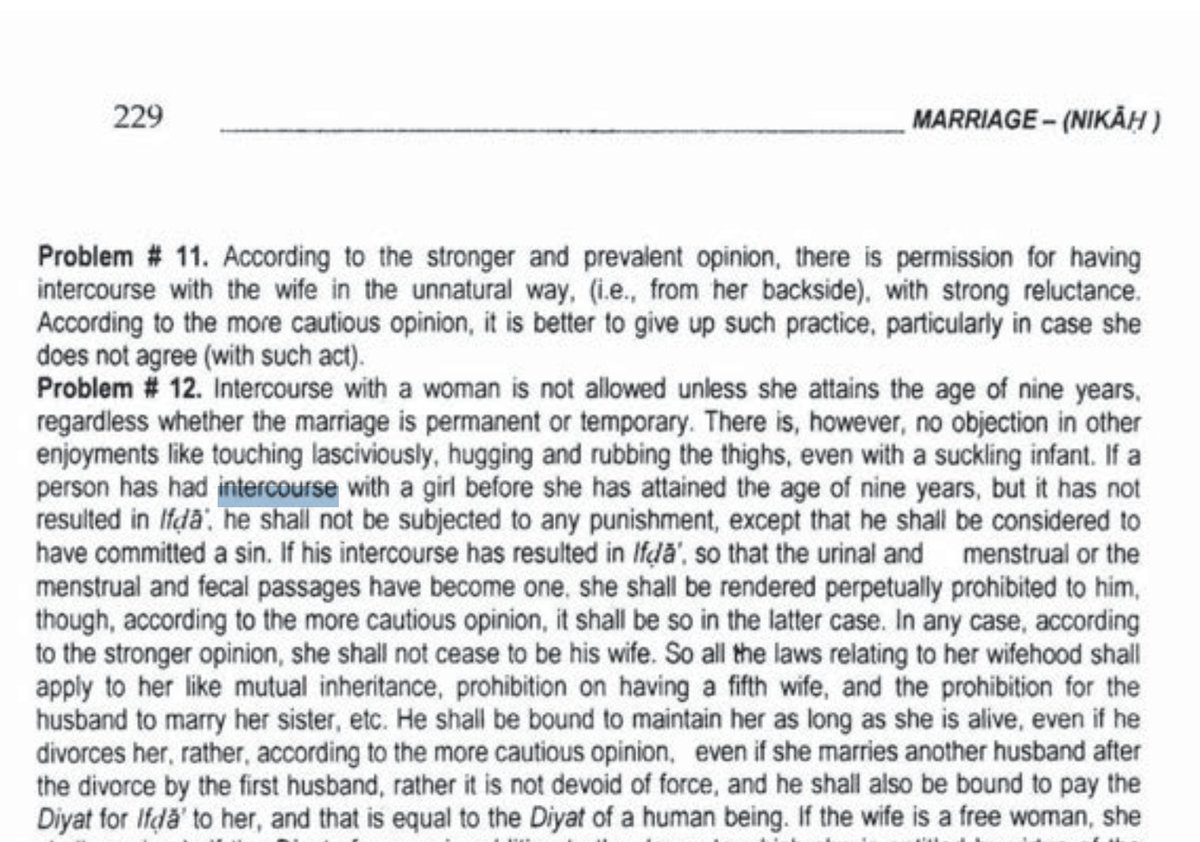
Today I decided to download the Ayatollah Khomenei's manual of Islamic law, the Tahrir al-Wasilah.
Page 229, Volume 3: ''Intercourse with a woman is not allowed unless she attains the age of nine years, regardless whether the marriage is permanent or temporary. There is, however, no objection in other sexual enjoyments like touching lasciviously, hugging and rubbing the thighs, even with a suckling infant.''