In the First Vision, Joseph Smith said that the Lord told him “all their creeds are an abomination in his sight”.
In 1820, the word "abomination" did not just mean "something I really dislike" (which is how we use it today). Historically and scripturally, it meant something that was misaligned with God's order or a counterfeit of the true covenant.
Many Christians today take that statement and apply today’s standards and focus on it. As with most things in history, its important that we look at what was happening at the time.
Historians now call the area where Joseph Smith grew up and where the first vision occurred as the “Burned-over District” because revivalism swept through it so intensely that “there was no more fuel to burn”.
Revival preachers frequently attacked rival denominations by using their creeds as weapons in revival sermons.
Methodists accused Presbyterians of “cold Calvinism.”
Presbyterians accused Methodists of “Arminian heresy.”
Baptists accused both of infant baptism error.
This was not an isolated practice. Newspapers published creedal summaries. Ministers debated creeds in pamphlets. Churches advertised their creeds to attract converts.
Today, people focus on the 4th century creeds as a dividing line, but in the world where Joseph Smith grew up, there were other, more hotly debated creeds that were used to distinguish one Protestant group from another.
Presbyterians used the Westminster Confession
Methodists used the Articles of Religion
Baptists used the Philadelphia Confession
While these creeds applied the 4th-century definitions of God that alone wasn’t enough to stop a bitter argument about how salvation actually works and what would get them to heaven. (Sounds like the same arguments we hear today)
Much like how the 4th century creeds are used to gatekeep members of the Church of Jesus Christ, these creeds were not optional. They defined who was “orthodox” and who was not. Most of the churches during this time required an assent to a creed before baptism, communion, or full membership.
This is very important to understand, because when the Lord instructs Joseph Smith about creeds makes sense when you understand how they operated in the world which the 14-year-old boy lived.
Creeds divided Protestants. They excluded people from membership. They defined who was saved and who was damned. They fueled the firestorm of religious activity at the time.
This is why members of the Church of Jesus Christ react as they do to creeds (which mostly in today’s environment are the 4th-century creeds that are the current marker of a “true Christian”). When the First Vision calls the creeds an abomination, it isn’t saying every line in them is wicked. It’s pointing to the bigger problem: people using man‑made formulas to police belief and divide Christ’s followers. That’s what had corrupted Christianity.
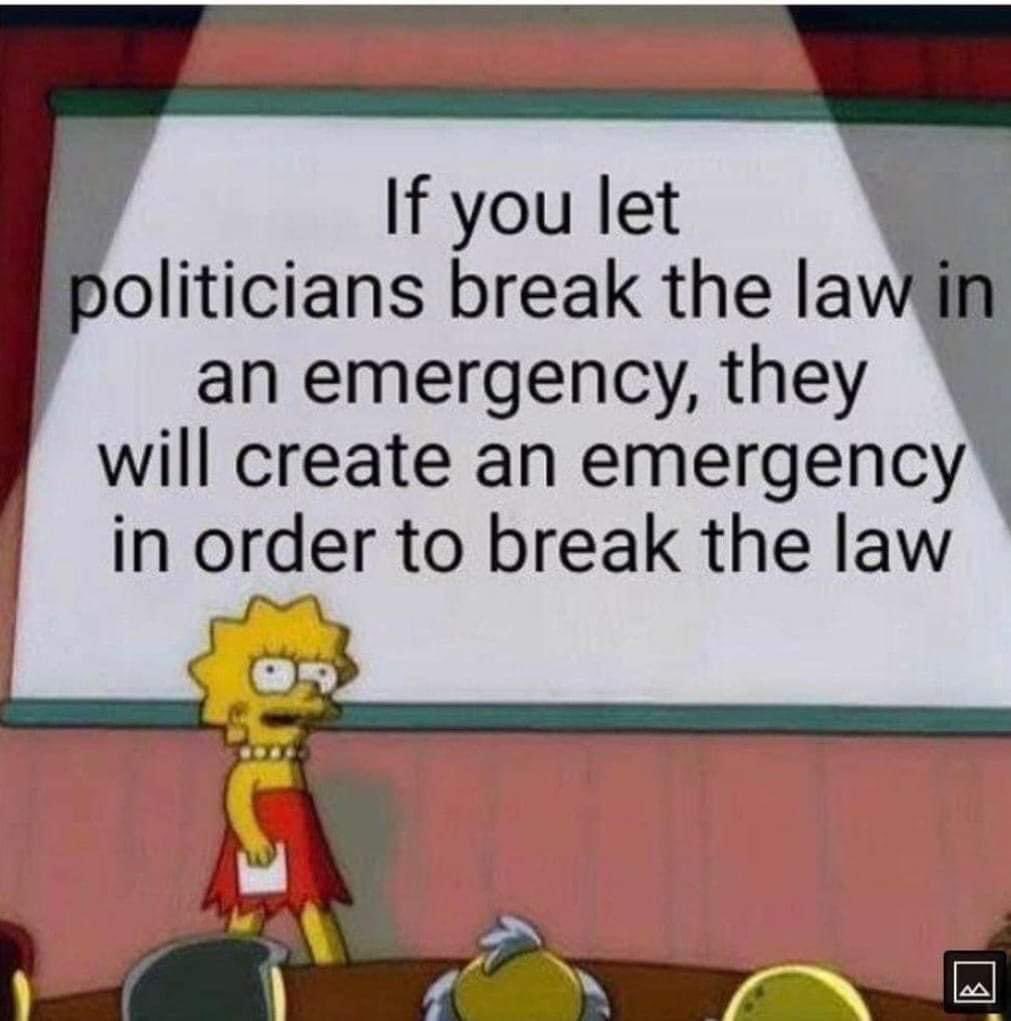
A brand new bridge between Detroit and Canada is finished and ready to open. It would speed up traffic for millions of trucks, cut delays for American businesses, and help the auto industry that employs people in every state. There is just one problem.
Donald Trump won’t let it open.
Here is why.
The family that owns the old bridge stands to lose business when the new one opens. So in January, they gave one million dollars to a pro-Trump super PAC.
Weeks later they met with Trump’s Commerce Secretary.
He called Trump.
Hours after that, Trump announced he would block the new bridge. The opening was set for June 12. It got canceled the day before. The bridge sits there finished and empty.
Now here is the part that should make every taxpayer angry.
Canada paid for the entire bridge.
Every dollar. And the United States already owns half of it for free. Trump is holding up a bridge we got for nothing, to protect a donor who wrote him a check, while picking a fight with our closest ally and biggest trading partner.
This is corruption in plain sight.
A billionaire pays, and the President delivers. American workers and businesses pay the price.
Open the bridge. A government should work for the people, not for whoever writes the biggest check.
https://t.co/9o9Gz9UrBo
Critics call it Mormonism's most outrageous claim: that a man can become like God.
But Psalm 82 says it. Jesus quoted it. Irenaeus taught it in 180 AD. 200M Orthodox Christians still do — they call it theosis.
This is the oldest teaching in Christianity.
"Ken Paxton is the embodiment of MAGA - and everything that's wrong with it."
From impeachment to corruption to adultery to pedophile protection to election denial, I deep-dive into Ken Paxton's record & why he is unfit to sit on a schoolboard let alone in the Senate.
Receipts:
Did you know this factoid: Latter-day Saints are 2% of America. But they keep finishing FIRST in a LOT of stats:
- 69% at church every week (everyone else: 25%)
- 73% pray daily
- 72% volunteered last year — the only U.S. faith above 50%
- 89% pay a full 10% tithe
The same group a UCLA study found lives nearly a decade longer.
Smallest faith on the chart. First, on almost everything, you can't fake.
What do they know that the rest of us don't? :)
Here’s the deal. Biden botched the withdrawal, but the withdrawal was forced on him by Trump.
We built an Afghan military that relied on US contractors, then we pulled the contractors, air support, logistics, etc.
And we didn’t even include the govt in negotiations
Mitt Romney to Harvard Business School graduates: "There's more to a country than its economy. To be a great nation, it must also be a good nation. The world needs good men. It needs good women. Good leaders. Good parents raising good children. There is no national success that could compensate for failure to be a good and noble people."
"FOR SO THEY REJECTED THE PROPHETS BEFORE YOU"
HISTORY REPEATS
THE PEOPLE WHO REJECTED JESUS WERE “BIBLE BELIEVERS”
One of the greatest ironies in history is this:
The people who rejected Jesus Christ were not atheists.
They were not secular skeptics.
They were not pagans.
They were not anti-religion.
They were deeply religious people who already believed in scripture.
They believed in Moses.
They defended the prophets.
They memorized scripture.
They spent their lives studying ancient revelation.
In fact, many of them believed they were defending God.
Yet when God sent new revelation, living prophets, additional scripture, miracles, angelic manifestations, and finally His own Son…
they rejected Him.
Why?
Because they believed God HAD spoken, but rejected the idea that He STILL speaks.
The Pharisees were so anchored to past revelation that they could not recognize living revelation standing right in front of them.
Ironically, they used existing scripture to reject the very Messiah those scriptures testified of.
Jesus Himself said:
“Search the scriptures; for in them ye think ye have eternal life: and they are they which testify of me.”
Yet the same people searching the scriptures demanded His crucifixion.
History repeats itself.
Today many Christians say:
“If it’s not already in the Bible, I reject it.”
“God would never send more scripture.”
“There are no more prophets.”
“God already said everything He needed to say.”
But that is almost the exact mindset many had at the time of Christ.
Think about it carefully:
The Old Testament did not contain the New Testament yet.
The Jews rejected apostles writing new scripture.
They rejected continuing revelation.
They rejected additional witnesses of Jesus Christ.
They rejected living prophets because those prophets challenged inherited traditions and religious authority.
Sound familiar?
Today, many people reject the Book of Mormon for the exact same reason.
Not because it fails to testify of Jesus Christ.
Not because it teaches against repentance, faith, prayer, holiness, charity, obedience, or worship of God.
But because it challenges the belief that God stopped speaking.
The Book of Mormon does not replace the Bible.
It supports it.
It testifies of Jesus Christ.
It teaches His divinity, His atonement, His resurrection, His mercy, His gospel, and His power to save.
Yet many reject it without seriously reading it for the same reason the Pharisees rejected Christ:
“It does not fit the traditions we inherited.”
Ironically, critics often demand impossible standards of proof for the Book of Mormon while accepting the resurrection of Christ from ancient testimony, witnesses, records, and spiritual conviction.
When it comes to the Bible, witness testimony is acceptable.
When it comes to the Book of Mormon, suddenly no witness is enough.
But the Bible itself says:
“In the mouth of two or three witnesses shall every word be established.”
God has always worked through witnesses.
Noah was a witness.
Moses was a witness.
Isaiah was a witness.
Peter, James, and John were witnesses.
Paul was a witness.
And the Book of Mormon stands as another witness that Jesus is the Christ.
The people who crucified Jesus thought they were defending scripture too.
That should make every religious person stop and think very carefully before automatically rejecting the possibility that God still speaks today.