Tom Brady says four days of treatment from Alex Guerrero relieved 10 years of elbow tendinitis and changed his NFL career
“It’s the first day of treatment and Alex starts working on me with this really deep force muscle work on my forearm muscles, on my bicep, on my tricep. He says, ‘Okay, it’s obvious why your elbow’s hurting. You have really bad tendinitis because you have these muscles that are really dense and really tight, and they’re tugging really hard on your elbow tendon, and your elbow tendon’s really inflamed. We’re going to take some Aleve to get some of the swelling down. We’re going to ice your tendon a little bit, and I’m going to begin, over time, to relax these muscles out so that they’re not so tight and so dense and so stiff’”
“I was like, ‘Well, that makes a lot of sense. I mean, I doubt it’ll work, but let’s see what happens.’ So he does it the first day, and I definitely felt some relief, but this has been 10 years I’ve been feeling this pain in my elbow. And he goes, ‘All right, well, I’m going to need to come see you again tomorrow. We’ll do it before you throw and then after you throw. So before you throw tomorrow at practice, come in and we’ll do like 30 minutes of pliability treatment, and then you can go out to practice’”
“He works on me, let’s call it a Monday. I get more treatment on Tuesday before practice, and I go out to practice and I can feel 70, 80% better already. I go back and I work with him after practice and he does the same thing. And after four days of treatment, for the first time in my entire life, I went out to practice, I threw the football for a couple hours, and I was not in excruciating pain after. At that point, I realized that was going to change my football career”
I challenge every player to ask themselves one question every time they put the ball on the floor…
“What did that dribble accomplish?”
Did it create an angle?
Collapse the defense?
Improve your passing window?
Get you downhill?
Create separation?
If the answer is “nothing,” it probably wasn’t necessary. The best offensive players don’t dribble more. They dribble with greater purpose.
Greg Oden says losing basketball helped him find himself
“It is enough. Don’t get me wrong, I would love $100,000,000 in the bank account. But right now, we got a beautiful home. My daughter just graduated fourth grade. My wife’s doing her thing.”
“When I really had to assess myself, I really started realizing, and I was intentional about this when I retired, trying to figure out who I was. Everything was always about the sport.”
“But then when it was taken away from me, who am I? I didn’t even know what I liked. If I take alcohol and partying out of the equation, and basketball, I’m literally a newborn baby again. So I really sat down and figured out, what are some things that I like?”
“I had to assess myself, and I realized I was a mentor. I really like doing this. I really like talking. I really like helping the younger generation, or even helping others.”
“For the past seven years, I’ve been teaching financial literacy to athletes. I enjoy doing stuff like that.”
“Now I’m trying to get in the public speaking space because my story is not a basketball story. It’s a life story.”
“I’m fulfilled in everything that I’m doing right now, but I know there’s more to come.”
Sam Presti defines the real goal of leadership
“In this job as a leader, what you want to do is build teams that you wish you could have been a part of.”
“We talk about our seasons as chapters. In order to best understand your story, you need to see it horizontally, not vertically.”
“Every year, our goal is to repeat a process—not chase an outcome. The process is to position our team and organization so that, if we are fortunate enough to have things break our way, we can achieve ultimate success.”
“What makes great teams lasting isn’t that they defeated their opponents. It’s that they also defeated the circumstances that stood in their way during their journey.”
“We have a chance to be a team that makes our mark over time. But we will not make our singular mark every single time.”
“That’s just not how this works. NBA history tells us there are no final victories.”
Do not surround yourself with loser friends who try to make you feel old and washed.
Mfs be 25 talking about “we’re uncs bro, we’re getting up there in age. Time to start a family, permanently secure that office job 9-5, lock in that mortgage and be a slave for the rest of my existence. Man what a life I had when I peaked in high school and college years ago, those days are done now time to embrace slavery.”
Like nah I’m good broski that’s all you.
Pete Crow-Armstrong says being locked in 100% of the time isn’t elite focus, it’s a shortcut to burnout
“You’ve got to be excited to go out there every inning. It’s important to take some moments off, not take pitches off, but the time in between pitches.”
“If nobody’s on… I’m letting my mind wander. I’m looking up into the bleachers… Seeing who’s there.”
“You’ve got to check out sometimes… So you can lock it back in.”
“If you are locked in 100% of the time… You’ll burn out in a couple weeks.”
“Other sports don’t have the luxury of our pace of play. It’s a different motor for sure.”
Draymond reacts to KD's comments on LeBron joining the Sixers
"You have to understand the way KD view basketball, the way KD view basketball is very Uncle Drew-ish, this game will and always will be about buckets... so he's going to mention the 25-point scorers... He also said the Sixers are better on paper than the 2016-17 Warriors... I don't know that I can agree with that, I don't really think it works."
I’m convinced that the most important skill in life is the ability to just figure it out. You’ll face a lot of problems that you have no idea how to solve. There’s nothing more valuable than knowing you’ll see it through. That you’ll handle it. Do the work. Get it done. Repeat.
Ironically the best way to get a girl back after she broke up with you is to act totally unfazed, say "okay," never beg her to change her mind, move on, never ever contact her again (or even view her stories again), and live your best life.
I don't know why this works so well, but, 9 times out of 10, it does.
What's interesting is that, when she finally comes crawling back, you won't be interested anymore.
Funny how that works.
The last football jersey Mike Macdonald ever put on was a high school one.
And he never got to wear it for the last game.
Six months ago he won the Super Bowl.
Centennial High School in Roswell, Georgia. Macdonald is a linebacker and fullback who keeps getting stingers, those nerve injuries that shoot fire down your arm.
Then, practicing for what would have been the final game of his high school career, he tears his ACL.
That's it. That's the whole playing career. No college ball. No walk on story. Done at 17.
So he did the only thing he could think of. He started hanging around his own team's coaching staff, unofficially, breaking down what he couldn't play in.
Then he went to the University of Georgia. As a FINANCE major. Football was over.
Except he couldn't leave it alone.
While still an undergrad, he took a job coaching linebackers and running backs at Cedar Shoals High School in Athens. A college kid, coaching high school defense on the side.
He graduated from Georgia's business school with honors. He had a clean, lucrative path in front of him.
Then he sat his dad down and said he wanted to be a football coach.
His father, a business guy, told him no. Straight up. His words about the profession: "Coaching is a tough, tough world."
Macdonald did it anyway.
In May 2010 Georgia hired him as a student assistant, running the offensive scout team. The lowest job in the building. Mark Richt's read on him: "It didn't take long to trust him enough to give him more."
He worked his way to defensive quality control. Got a master's degree. And then, after the 2013 season, his time was up.
He was 26 years old and unemployed.
His own description of that moment: "I graduated college without a job, which was a little scary."
So he gave up. Genuinely, actually gave up.
Mike Macdonald accepted a job at KPMG. Signed the offer letter. He was leaving football for corporate consulting, exactly like his father had suggested.
Now here's where the whole thing turns on a coin flip.
A year earlier, Macdonald had interviewed with the Ravens for a SCOUTING internship. And he blew it, because when the director of college scouting asked about his goals, Macdonald told the truth. He said he wanted to be a coach.
He didn't get the job. Somebody else did.
But he stayed in their files.
So in 2014, when John Harbaugh decided to start a coaching intern program, somebody remembered the Georgia kid who said he wanted to coach.
Two weeks after signing that KPMG offer letter, Macdonald called the recruiter, told them thanks but no thanks, got in his car, and drove to Baltimore.
His take on it now: "Talk about luck of the draw."
He was the lowest guy in the building. Shared an office with two other interns. Drew up opponents' plays on cards so real coaches could use them in practice.
And then he just kept climbing.
Defensive assistant. Defensive backs coach. Linebackers coach. Michigan defensive coordinator under Jim Harbaugh. Back to Baltimore as DEFENSIVE COORDINATOR at 34.
On January 31, 2024, the Seattle Seahawks made him the youngest head coach in the NFL.
Year two, he built the best scoring defense in football at 17.2 points per game, with a franchise record point differential of plus 191. Seattle won 14 of its last 15 including the playoffs and finished on a 10 game winning streak.
February 8, 2026. Super Bowl LX. Levi's Stadium.
His defense sacked Drake Maye six times, picked him off twice, and forced a fumble.
Seahawks 29, New England 13.
At 38 years old, Mike Macdonald became the third youngest head coach ever to win a Super Bowl. He is 3-0 in the postseason.
And here's the detail that finishes it.
Mike Macdonald was born in Scituate, Massachusetts.
The team he beat for the Lombardi Trophy was his hometown New England Patriots.
His own words on the field afterward: "I believe God called me to be a coach and I listened to Him."
A kid who never played a down of college football. Who tore his ACL before his last high school game. Who was two weeks into a consulting job before he turned around.
World champion.
Follow @thesportsontap, we post a story like this every day.
Your reputation operates like a line of credit. Years of reliability allow people to trust you before every fact is available, forgive an isolated error, and place larger responsibilities in your hands. Repeated small defaults raise the interest rate until even your honest words require verification.
25 is the limit. After my frontal lobe developed, not only have I not been able to love in that chaotic/toxic way like I did in my early 20s on an emotional level cos it’s just off putting. It is financially irresponsible in so many ways. Literally eats away at your time, focus and ability to make money.
I grew up resenting my aunt for being well-off but not helping us financially.
When I started working, I promised myself I’d be a better version of her. I helped siblings, nieces, nephews, family — whoever needed it.
Then Black Tax had me in a chokehold, and eventually debt started catching up with me.
That’s when I learned to set boundaries.
I finally understood that I don’t owe anyone financial support simply because we’re family. And, most importantly, I stopped feeling guilty about it.
Funny how adulthood teaches you to understand the people you once judged.
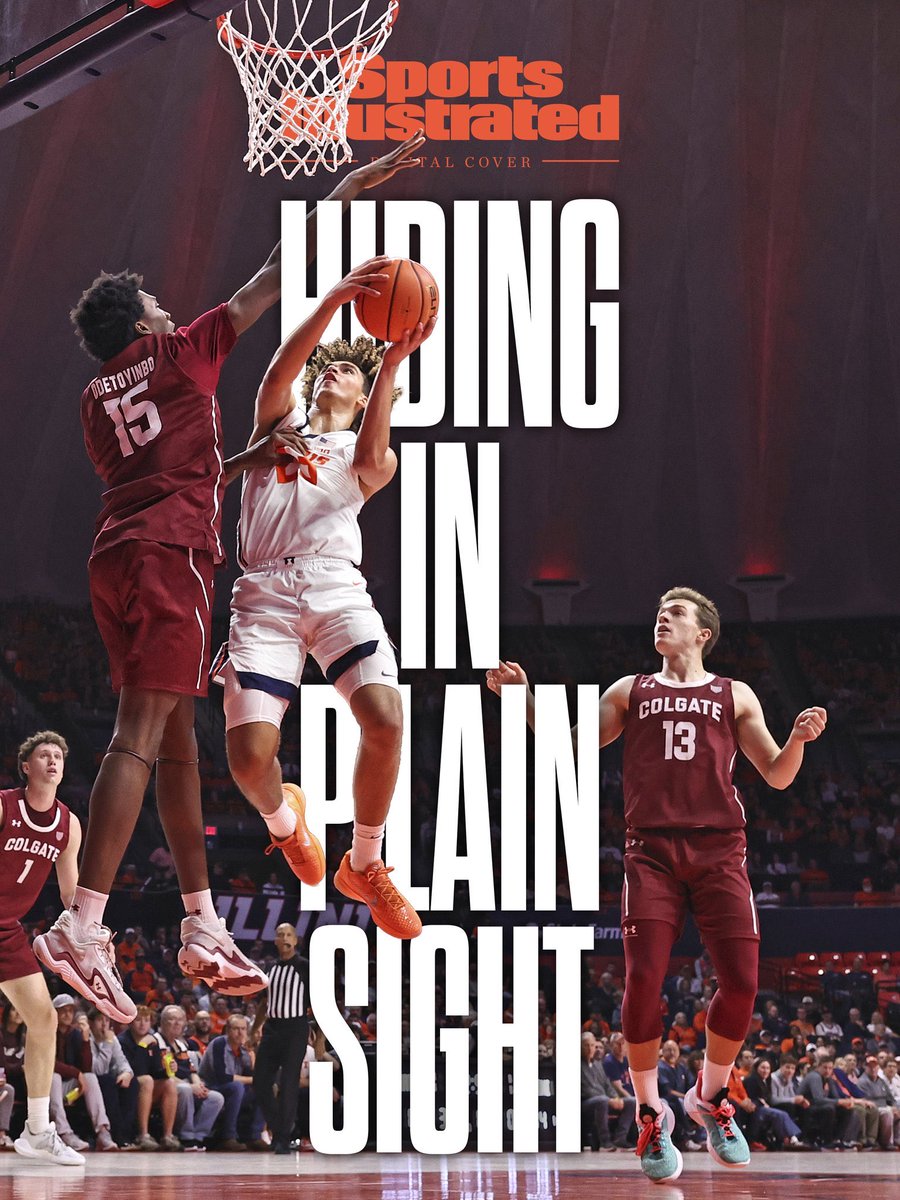
The easy narrative is that Keaton Wagler was an unseen, off-circuit recruit.
The real story is a lot more complicated and explains the imperfect art of modern recruiting.
SI Digital Cover on how the world missed Keaton Wagler… and why Illinois didn’t:
https://t.co/UwfYm2vyls