Is it possible to predict the course of alt. historical timelines w/ current forecasting methods? IARPA's FOCUS program studied this question for 3 years and is releasing all experimental materials to promote research on counterfactual forecasting: https://t.co/WR3Q1hZ4cG @jhuapl
"When did the person become the center of the Internet?" With Becoming Someone, @scalablecoop’s Manuel Cebrian and @iyadrahwan follow the inward trajectory of social media https://t.co/2W49yw9BTP
In 1960, JCR Licklider predicted: “In not too many years, human brains and computing machines will be coupled together very tightly, and the resulting partnership will think as no human brain has ever thought.” In 2018, our I2O director gives an update: https://t.co/jl7RTef1Rj
DARPA seeks college/university scientists & researchers to participate in our Polyplexus Pilot, an online platform being developed under the Gamifying the Search for Strategic Surprise (GS3) program: https://t.co/yGpb205xm8. More on GS3: https://t.co/hs6oX1MOr6 @AAUniversities
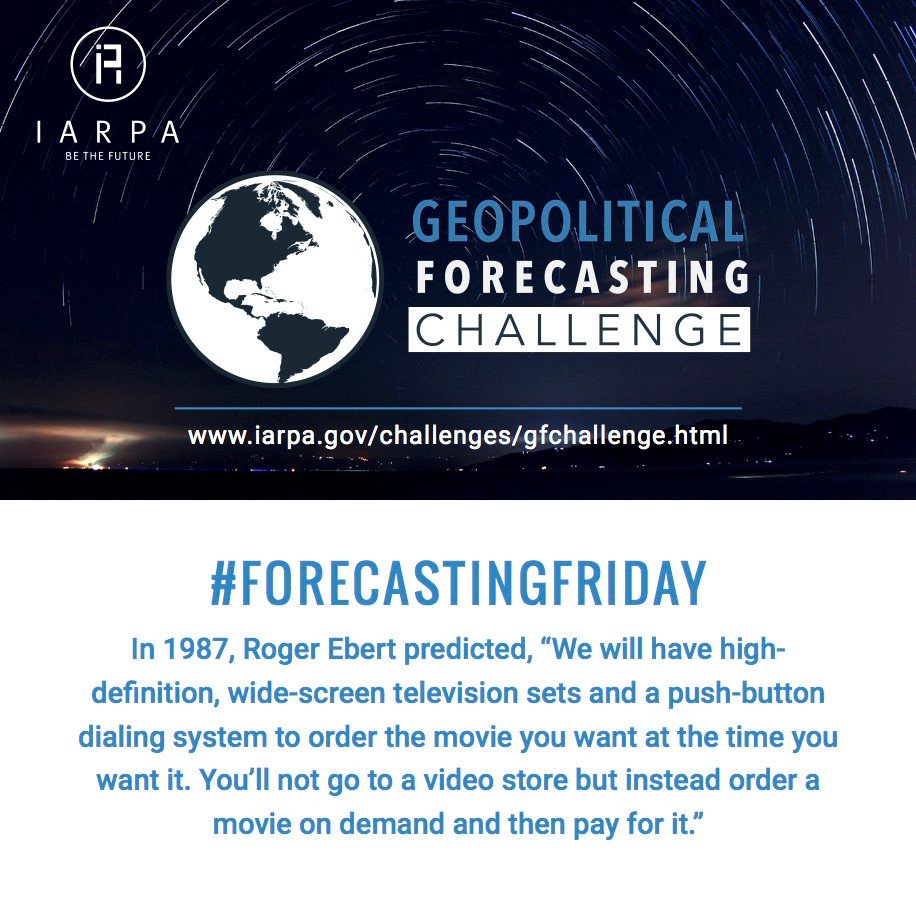
On today’s #ForecastingFriday, we bring you this neat #tech prediction. Have you mastered the art of predictions? Show us your skills through the #IARPAGFChallenge! https://t.co/LzbgSn582R
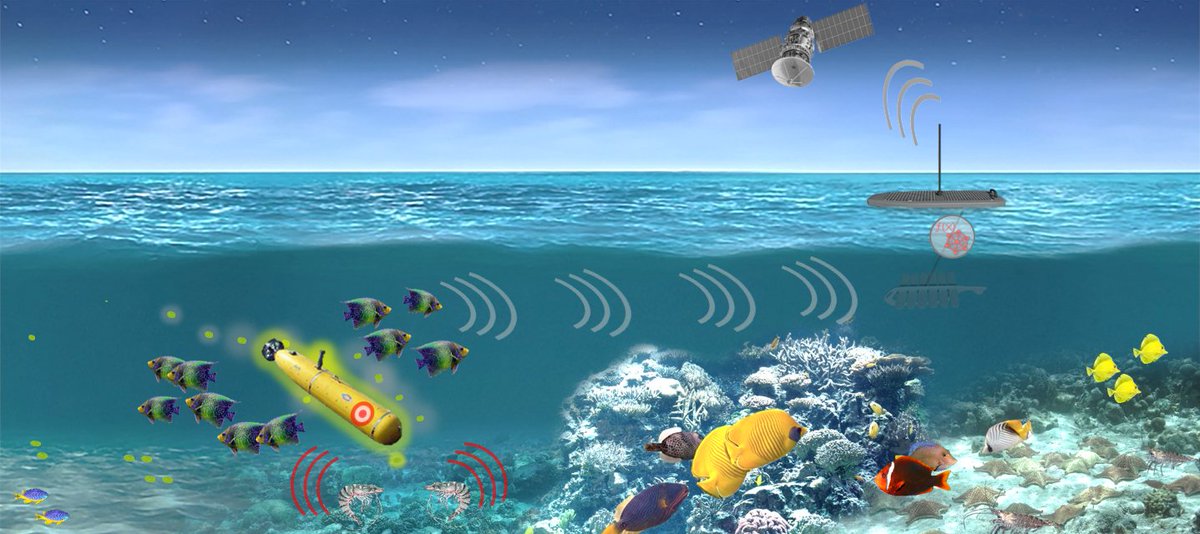
Our new Persistent Aquatic Living Sensors program turns to marine organisms to help monitor strategic waters. https://t.co/MK3Kt8OKnm Highly adapted sea life could help the U.S. military detect adversary activity over large areas. #oceanography#marinescience#sensors#navy
.@HRLLaboratories developed a high-res, low-power radar array that can spot suicide bombers from safe distances & help see in low-visibility conditions. The stationary array scans 3D images with a digitally synthesized beam. Supported by our ASTIR program. https://t.co/8xzyXyGwbU
Hybrid Forecasting Competition (HFC) research program is testing the limits of #geopolitical#forecasting. Join the program and test your skills as a forecaster while helping to develop systems that could produce the most accurate forecasts ever! https://t.co/1u1YzbCKu4