PSA: Many seminars at IITM are open to the public. In the CSE department, we have a handy calendar of public seminars: https://t.co/f5kua4FOpU. Feel free to come and attend if you are around.
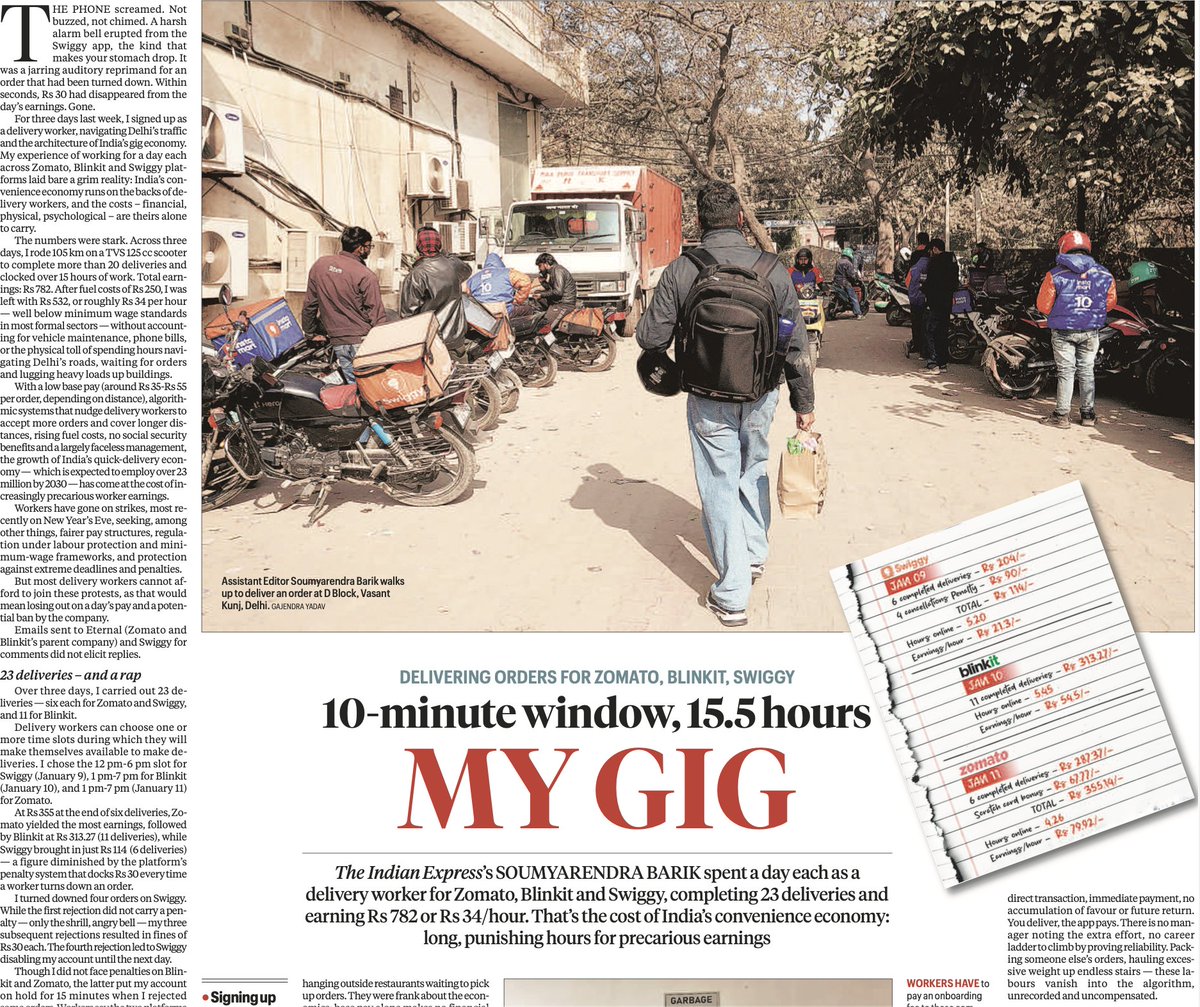
🚨Ground report: I spent 3 days as a gig worker for Zomato, Blinkit & Swiggy in Delhi.
23 deliveries. 15.5 hours. 105 km.
Total earnings: Rs 782 (Rs 34/hour)
After fuel: ₹532
This is India's convenience economy. A thread on what I learned @IndianExpress
Six years ago, I confessed to you guys that I once thought my husband @DavidAFrench was up to no good. After all, women were calling my Manhattan apartment at all hours of the night asking for him.
Then, this:
https://t.co/7ei74KEZgM
I've never felt this much behind as a programmer. The profession is being dramatically refactored as the bits contributed by the programmer are increasingly sparse and between. I have a sense that I could be 10X more powerful if I just properly string together what has become available over the last ~year and a failure to claim the boost feels decidedly like skill issue. There's a new programmable layer of abstraction to master (in addition to the usual layers below) involving agents, subagents, their prompts, contexts, memory, modes, permissions, tools, plugins, skills, hooks, MCP, LSP, slash commands, workflows, IDE integrations, and a need to build an all-encompassing mental model for strengths and pitfalls of fundamentally stochastic, fallible, unintelligible and changing entities suddenly intermingled with what used to be good old fashioned engineering. Clearly some powerful alien tool was handed around except it comes with no manual and everyone has to figure out how to hold it and operate it, while the resulting magnitude 9 earthquake is rocking the profession. Roll up your sleeves to not fall behind.
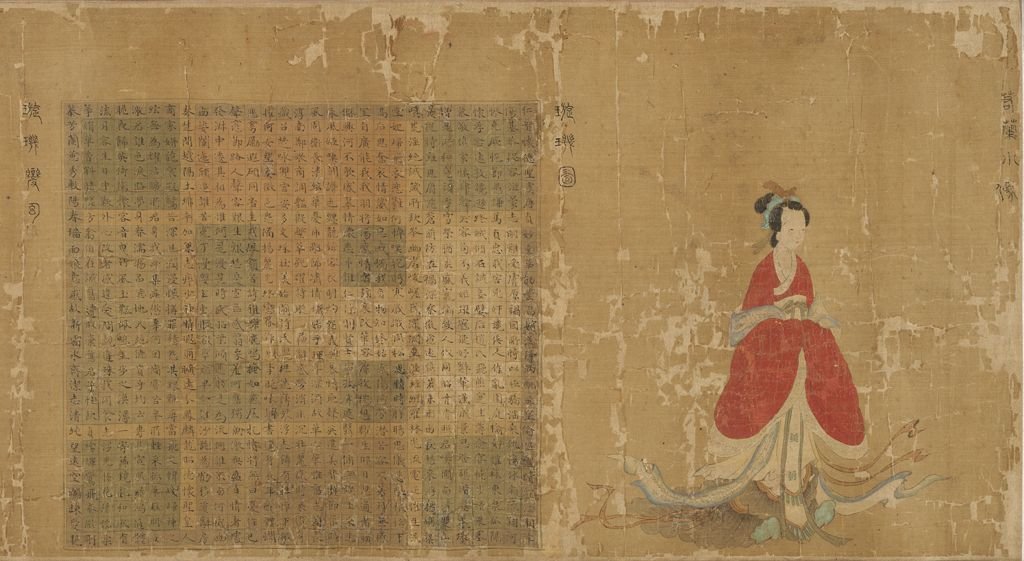
This strange square 👇 is undoubtedly the most extraordinary work of literature in human history. Yet, unfortunately, barely anyone in the West has ever heard of it.
There was this woman poet in 4th century China called Su Hui (蘇蕙), a child genius who had reportedly mastered Chinese characters by age 3.
At 21 years old, heartbroken by her husband who left her for another woman, she decided to encode her feelings in a structure so intricate, so beautiful, so intellectually staggering that it still baffles scholars to this day.
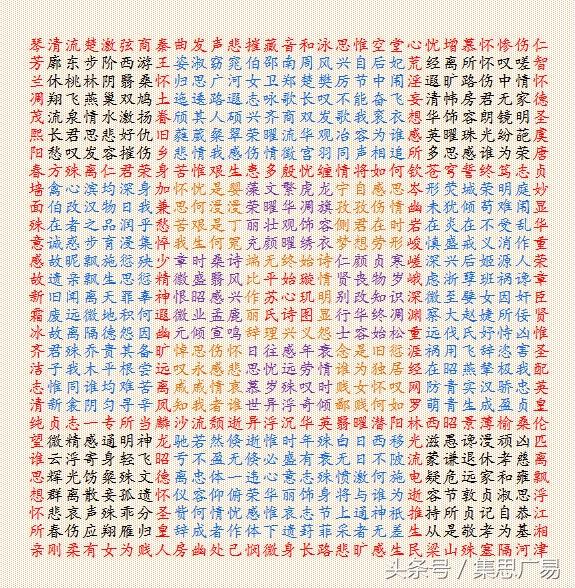
Came to be known as the Xuanji Tu (璇璣圖) - the "Star Gauge" or "Map of the Armillary Sphere" - it's a 29 by 29 grid of 841 characters that can produce over 4,000 different poems.
Read it forward. Read it backward. Read it horizontally, vertically, diagonally. Read it spiraling outward from the center. Read it in circles around the outer edge. Each path through the grid produces a different poem - all of them coherent, all of them beautiful, all of them rhyming, all of them expressing variations on the same themes of longing, betrayal, regret, and undying love.
The outer ring of 112 characters forms a single circular poem - believed to be both the first and longest of its kind ever written. The interior grid produces 2,848 different four-line poems of seven characters each. In addition, there are hundreds of other smaller and longer poems, depending on the reading method.
At the center a single character she left implied but unwritten: 心 (xin) - "heart." Later copyists would add it explicitly, but in Su Hui's original the meaning was even more beautiful: 4,000 poems, all orbiting the space where her heart used to be.
Take for instance the outer red grid of the Star Gauge. Starting from the top right corner and reading down, you get this seven-character quatrain:
仁智懷德聖虞唐,
貞志篤終誓穹蒼,
欽所感想妄淫荒,
心憂增慕懷慘傷。
In pinyin, it is:
Rén zhì huái dé shèng yú táng,
zhēnzhì dǔ zhōng shì qióng cāng,
qīn suǒ gǎnxiǎng wàng yín huāng,
xīn yōu zēng mù huái cǎn shāng.
Notice how it rhymes? táng / cāng / huāng / shāng
The rough translation in English is: "The benevolent and wise cherish virtue, like the sage-kings Yao and Shun, With steadfast will I swear to the heavens above, What I revere and feel - how could it be wanton or dissolute? My heart's sorrow grows, longing brings only grief."
Now read it from the bottom to the top and you get this entirely different seven-character quatrain:
傷慘懷慕增憂心,
荒淫妄想感所欽,
蒼穹誓終篤志貞,
唐虞聖德懷智仁。
The pinyin:
Shāng cǎn huái mù zēng yōu xīn,
huāngyín wàngxiǎng gǎn suǒ qīn,
cāngqióng shì zhōng dǔzhì zhēn,
táng yúshèngdé huái zhì rén.
It rhymes too: xīn and qīn, zhēn and rén
And the meaning is just as beautiful and coherent: "Grief and sorrow, longing fills my worried heart, Wanton and dissolute fantasies - is that what you revere? I swear to the heavens my constancy is true, May we embody the sage-kings' virtue, wisdom, and benevolence."
That's just 2 poems out of the over 4,000 you can construct from the Xuanji Tu!
At the very center of the grid, the 8 red characters wrapped around the central heart, she "signed" her poem with a hidden message:
詩圖璇玑,始平蘇氏。 "The poem-picture of the Armillary Sphere, by Su of Shiping."
Or reversed:
蘇氏詩圖,璇玑始平。 "Su's poem-picture - the Armillary Sphere begins in peace."
Many scholars, and even emperors, throughout Chinese history have been completely obsessed by Su Hui's puzzle.
For instance, in the Ming dynasty, a scholar named Kang Wanmin (康萬民) devoted his entire life to the poems (https://t.co/4exP9zpqbc), ending up documenting twelve different reading methods - forward, backward, diagonal, radiating, corner-to-corner, spiraling - and extracting 4,206 poems. His book on the subject ("Reading Methods for the Xuanji Tu Poems", 璇璣圖詩讀法) runs to hundreds of pages.
Empress Wu Zetian herself, the legendary woman emperor of the Tang dynasty, wrote a preface to the Xuanji Tu around 692 CE (https://t.co/yW7aR73MPc).
Incredibly, there's even far more complexity to the Xuanji Tu than just the poems:
- The name 璇玑 (Xuanji) - Armillary Sphere - is astronomical in meaning and the way the poems can be read mirrors the way celestial bodies orbit around a fixed center. It's a model of the heavens.
- Her original work, with the characters woven on silk brocade, was in five colors (red, black, blue/green, purple, and yellow) which correspond to the Five Elements (五行) - the foundational Chinese philosophical system that explains how the universe operates. So it's also a model of the entire cosmic order according to ancient Chinese philosophy.
- It's also of course deeply mathematical with this 29 x 29 perfect square grid, with sub-squares, lines and rectangles, and a structure which allows for symmetrical reading patterns in all directions
- Last but not least, the content of the poems themselves contain multiple registers. On top of expressing her personal grief and longing for her husband, it's also filled with accusations against the concubine (Zhao Yangtai) he left her for, reflections on politics (with many references to sage-kings) and philosophical reflections.
So the Star Gauge is simultaneously:
- A love letter (expressing personal longing)
- A legal brief (arguing her case against her rival)
- A cosmological model (structured like the heavens)
- A Five Element diagram (encoding the fundamental structure of the world according to ancient Chinese philosophy)
- A mathematical construction with perfect symmetry and precision
And yet, for all this complexity, we should not forget this was all ultimately in service of the simplest human message imaginable: a 21-year-old woman asking the love of her life "come back to me".
Her husband did, eventually. According to what empress Wu Zetian herself wrote in her preface to the Xuanji Tu, when he received Su's brocade he was so "moved by its supreme beauty" that he sent away his concubine and returned to his wife. As the story goes, they lived together until old age.
The heart at the center was filled after all.
The year is 1948. India has just become free and is trying to have a tryst with destiny. And in a country with endless possibilities, you are a 27-year-old man from an affluent family.
You have also studied in prestigious institutions like Loyola College and College of Engineering Guindy and have been given a scholarship from the Govt of India to go to the USA and study Dairy engineering.
You go to the USA and realize that studying metallurgy and nuclear engineering is more useful and interesting than studying techniques of extracting milk from cows. You follow your instinct and successfully complete your course.
You are now a nuclear engineer. And in a world that has just gone nuclear, the opportunities you have are limitless. The world is at your feet.
Then the Govt of India becomes a reverse Lannister calls in its debt. They want you to work for them for a limited period as an obligation to whatever they did for you.
You have no choice but to come back.
You hope you are sent to glamourous locations like Bombay or Madras where you can spend your obligatory time in comfort and luxury. You are an America Return Nuclear engineer after all.
But the Govt of India cares as much about your designations and qualifications as a Nokia 3310 cares about a drop. So, they play a cruel joke upon you.
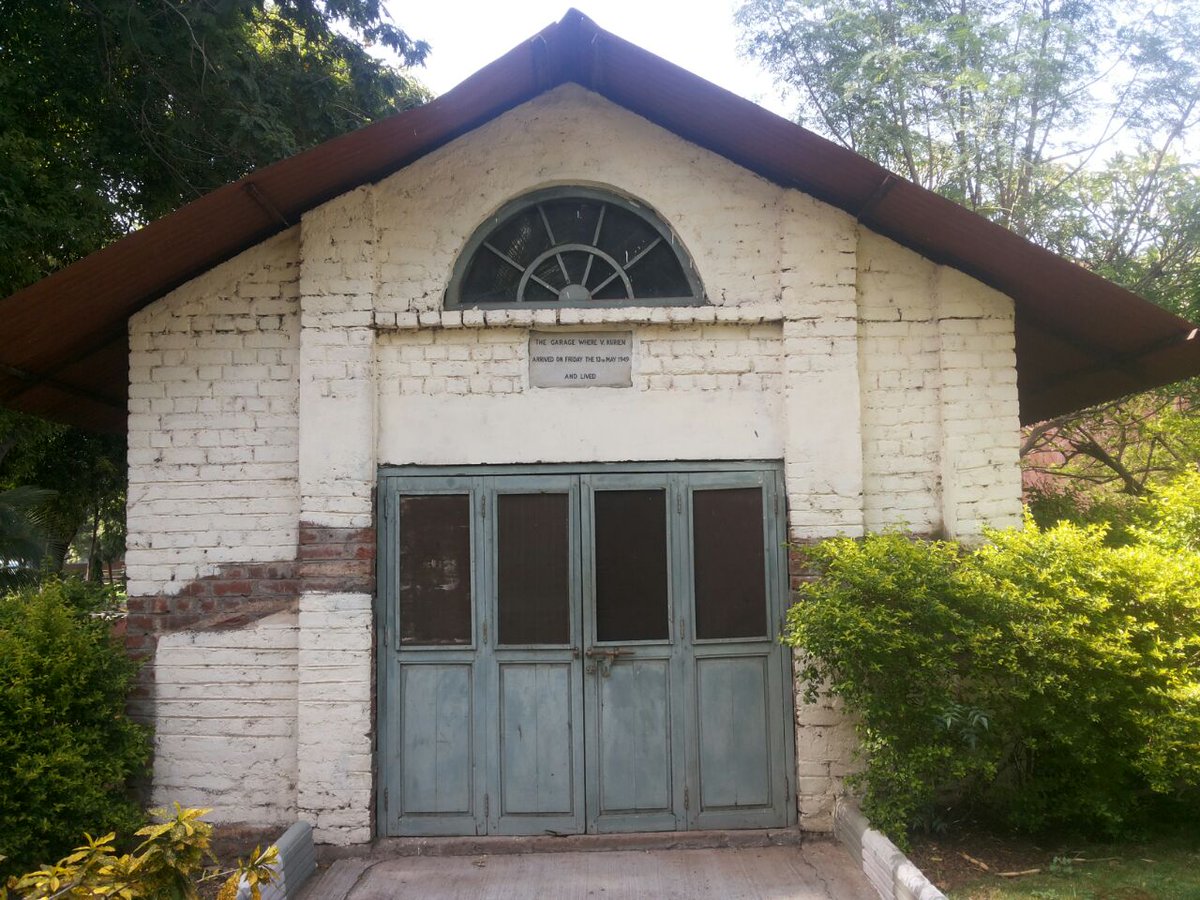
They send you to a small decrepit town in Gujarat which doesn't even have electricity. Your accommodation is a rundown Garage and the only sign of life around you are the mosquitos, who are trying to taste your blood.
The town is called Anand. And the only Anand you have there is its name. Else it is all despair.
You, an affluent gentleman from south India, who doesn't speak a word of Gujarati, who has never lived in a village, are now stuck in a god foresaken village in the middle of nowhere. And You want to get out of this god forsaken place on the first chance you get.
Then something happens.
You start going around the town. You start speaking to people. You understand their way of life. You understand what they want. Without you realizing you start falling in love with the place. You want to do something for them.
And then you create a revolution.
A revolution that has changed the face and fate of India.
A revolution whose gifts we are still reaping 65 years after it started.
And You are the one who started it all.
You are Dr Verghese Kurien.
Operation Flood was, is and will be one of the greatest movements India has ever had.
We went from a country that used to import milk powder from New Zealand and other countries to becoming the largest milk producing country in the world, in 30 years.
It gave livelihoods to close to more than 100 million farmers over the years and has lifted more than 50 million people out of poverty and starvation. If you count the people emancipated by Operation flood, it would be the 30th largest country in the world, ahead of Spain, South Korea and Argentina.
Today, we move the global dairy market and it is singularly because of Dr Kurien.
And he didn't stop at dairy.
He realized that India was heavily dependent on Southeast Asia for its edible oil needs. So he got all the oilseeds growers together and started Dhara, India's own edible oil brand.
He so thoroughly disrupted the edible oil industry that for a brief period of time, he significantly reduced our dependance on palm oil.
Unfortunately, our babus intervened and as they usually do, destroyed it all. But that's the story for another day.
When Karnataka's Cocoa farmers went to him to seek salvation from Cadbury's oppression, he created Amul Chocolates and created a big dent in their market share. He also ensured Cadbury treated the farmers with a lot more respect and fairness, now that the farmers had option.
When Indira Gandhi complained about farmers not getting fair price for their vegetables, he started Safal, a vegetable selling co-operative under the NDDB umbrella and made it a success.
Now most of this is known.
But what we don't know more about was Dr Kurien the innovator.
Dr Kurien and his friend JJ Dalaya were the first in the world to synthesize buffalo milk and convert it to powder. This allowed us to store and supply milk during times of deficiencies.
He was the first to create condensed milk or as you call it, Milkmaid / Mithai Mate, from buffalo milk and ended Nestle's monopoly in this segment for good.
He was also the first to pack a dense substance as oil in a Tetrapak, something that their own Swedish engineer's thought was impossible. He made it possible.
I can keep going on and on.
In today's world, words like Legend, GOAT, superstar are thrown around very very loosely.
People who hit balls with a stick, give useless expressions on a giant screen and make cringy unwatchable 30 sec videos on some apps or crack some vulgarly unfunny jokes are given these epithets today.
So, what would you call a guy who saved India from hunger and starvation? What would you call a guy who prevented India from malnutrition and stunted growth? What would you call a guy who made a basic commodity like milk, accessible to a billion people?
We don't have words for that. Maybe we need to invent some.
One more very commonly misplaced word today is disruption.
Anything and everything are disruption now. The development of an app, delivering grocery or food in 10 minutes or writing an additional line of code are all what passes off as disruption today.
That is not disruption.
Disruption is where you create something that changes the lives of people forever. Disruption happens when what you create, rewards people for Generations.
Disruption is where you help poor farmers break the vicious circle of poverty and throw them 354 steps up the economic ladder
Disruption is not how you change how people do certain things; Disruption is when you change the people themselves.
Dr Kurien was India's first and the greatest disruptor.
Dr Kurien is India's true GOAT.
So, Happy Birthday Dr Kurien. India is grateful that we had you walking on our soil. Thank you!!
P:S: The attached image is that of the recreated Garage that Dr Kurien first stayed. Garages have a unique connection to the world of tech, as a lot of tech companies started from there and are worth some bajillion dollars today.
This is a Garage that lifted 60 million Indians out of poverty.
With all due respect to HP and Google, this is the greatest Garage of them all.
Bought a Sari at a prominent store in Coimbtore. At billing counter, they asked my mobile number, which I refused to give.
They said, they can't bill without number.
I said - Fine. I will not buy.
As I started walking out the sales lady said, I will give my number to bill & this is how the purchase happened.
Why is the mobile number capture mandatory? This was something I could walk away with, this could have been food, medicine or something really important.
@PiyushGoyal ji please look into it. Data privacy is being breached at every transaction.
I wrote a 30,000 word Notion guide on every single tax saving strategy I wish I knew 3 years ago
Includes strategies for startup founders, business owners, freelancers, W-2 employees, side hustlers
Want a free copy? Like / RT and leave a comment and I'll DM you
In the late 1920s, a young Indian woman boarded a ship bound for Germany to do her PhD. Her name was Irawati Karve. And she was about to take on one of the most dangerous ideas of her time.
Thread. 1/12