The world of finance is changing fast. Faster than you think.
Payments are now part of the system.
Digital identity is the standard.
Assets become digital
This is a new base for how value moves around the world.
Ownership used to mean holding an asset. Today, it often means holding rights to it
Streaming platforms changed how we consume content. Tokenization is starting to do the same for finance, real estate, and intellectual property
#Tokenization#RWA#DigitalAssets#Fintech
AI can create content, however can you actually own it? Without clear rights, AI content may be monetized, traded, and distributed—but not truly owned.
#AI#Copyright#DigitalAssets
@FireblocksHQ The most notable part is the shift from pilots to implementation. As more banks enter the space, infrastructure and standards become critical
#Digitizing assets doesn't automatically make them accessible
AFI transformed an archive where finding the right #asset could take hours into a system with near-instant retrieval through centralized #DAM, metadata indexing, and AI-assisted tagging
https://t.co/2evG94UQF4
One campaign used to generate a few files. Today, it can generate hundreds of #assets across formats, regions, and channels.
That's why #digital_asset management became a necessity rather than a convenience.
Read: https://t.co/2evG94UQF4
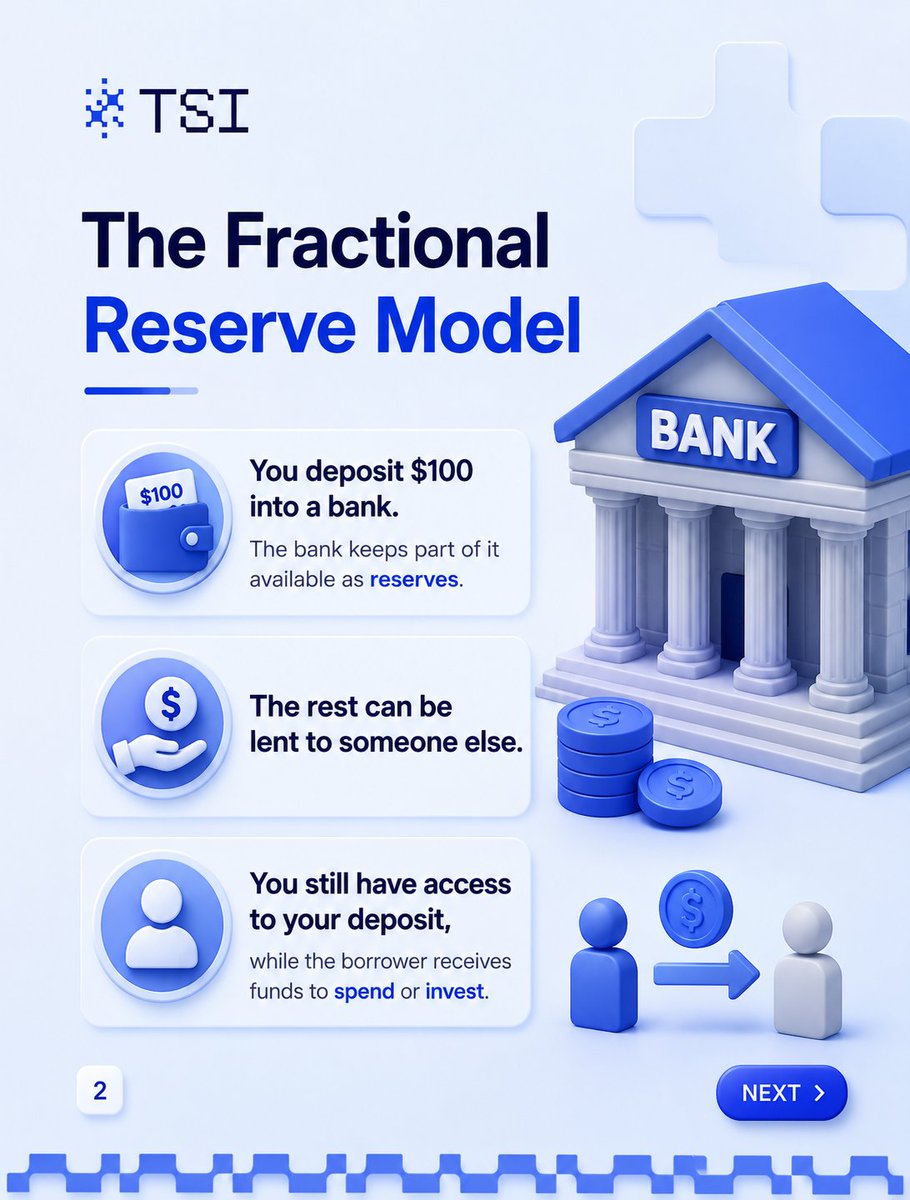
Most people think banks lend out money they already have, but #lending itself creates new money. Through fractional reserve banking, a single deposit can support multiple rounds of credit creation across the #financial system. Read the full article: https://t.co/jVDCsKkDEB
@BIS_org Liquidity requirements protect against short-term stress. Capital buffers protect against unexpected losses. You probably need both if stablecoins are going to operate at scale
🧵 In our latest article, we explore why asset markets remain fragmented and what it would take to connect real-world assets, investors, and liquidity within a single ecosystem
Read: https://t.co/T1XhE3lOFX
The internet has marketplaces for almost everything: cars, software, freelancers. But #investing in a building, business, or intellectual #property is still complicated. Maybe the next big #financial innovation will be a marketplace where all asset classes can finally meet
@coinbureau Interesting development. When major financial institutions focus on settlement infrastructure, the impact tends to extend far beyond crypto
@ecb@Isabel_Schnabel air point.
Stablecoins are already scaling faster than most regulatory frameworks, so the gap between innovation and policy is becoming the real risk.
Central banks adapting isn’t optional at this stage
@CoinDesk Big week for crypto policy.
Stablecoins + market structure moving at the same time — feels like things are finally turning into actual rules, not just discussions.
Every company has that one person who knows where everything is. It works until scale broke it. By the 2010s, managing #assets stopped being a people problem and became a systems problem. How did companies adapt, and what comes next with #TSI?
Read: https://t.co/2evG94UQF4
@BIS_org Tokenization alone isn’t enough. Markets still need trust, structure, and coordination to scale responsibly.
Good to see this becoming part of the broader institutional conversation.
#Banks scaled finance through trust infrastructure. Now capital markets are becoming digital — but trust still remains the foundation. That may become the defining challenge of #tokenization.
We examined this problem in our article: https://t.co/jVDCsKkDEB
Tokenize everything sounds good. But #token ≠ market. Tokenization gives you access, not #liquidity, demand, or price discovery. That’s why most RWAs don’t trade. Real success comes from solving demand (like treasuries), not just wrapping assets. No market → no value.