Don’t know much about this (before my time). ICG was started by a guy from Safeguard, which was a popular holding among the value crowd (Gottesman, Klarman…Buffett even followed it). Safeguard was also a large ICG shareholder.
ICG was an interesting liquidation a few years ago (it had some decent software/database assets). It turned out OK. Interestingly, Safeguard is now coming down the home stretch of its own liquidation.
I think Grainger had one of the first successful B2B sites in the 90s. For an older distributor, they’ve done a good job keeping up with tech changes (esp with MonotaRO in Japan).
Yesterday I talked with Unemployed Capital Allocator (@atelicinvest) about where AI is and isn’t eating SaaS. Highlights:
- Portfolio is ~85% software, 5M-500M mcap, mostly outside the US
- Playbook is to buy software at 0.5x to 1.5x ARR, companies that the market expects to die in 2-3 years, that he doesn’t expect to die
- “Software” is too broad of a term, need to go higher resolution than that
- Likes protected niches, software for the real world economy, often with late adopter customers
- Sees real risks from AI with increased competition, software execs making dumb AI capex, and some workflows collapsing
- Built his own software to help him with his investing process
Edited transcript below:
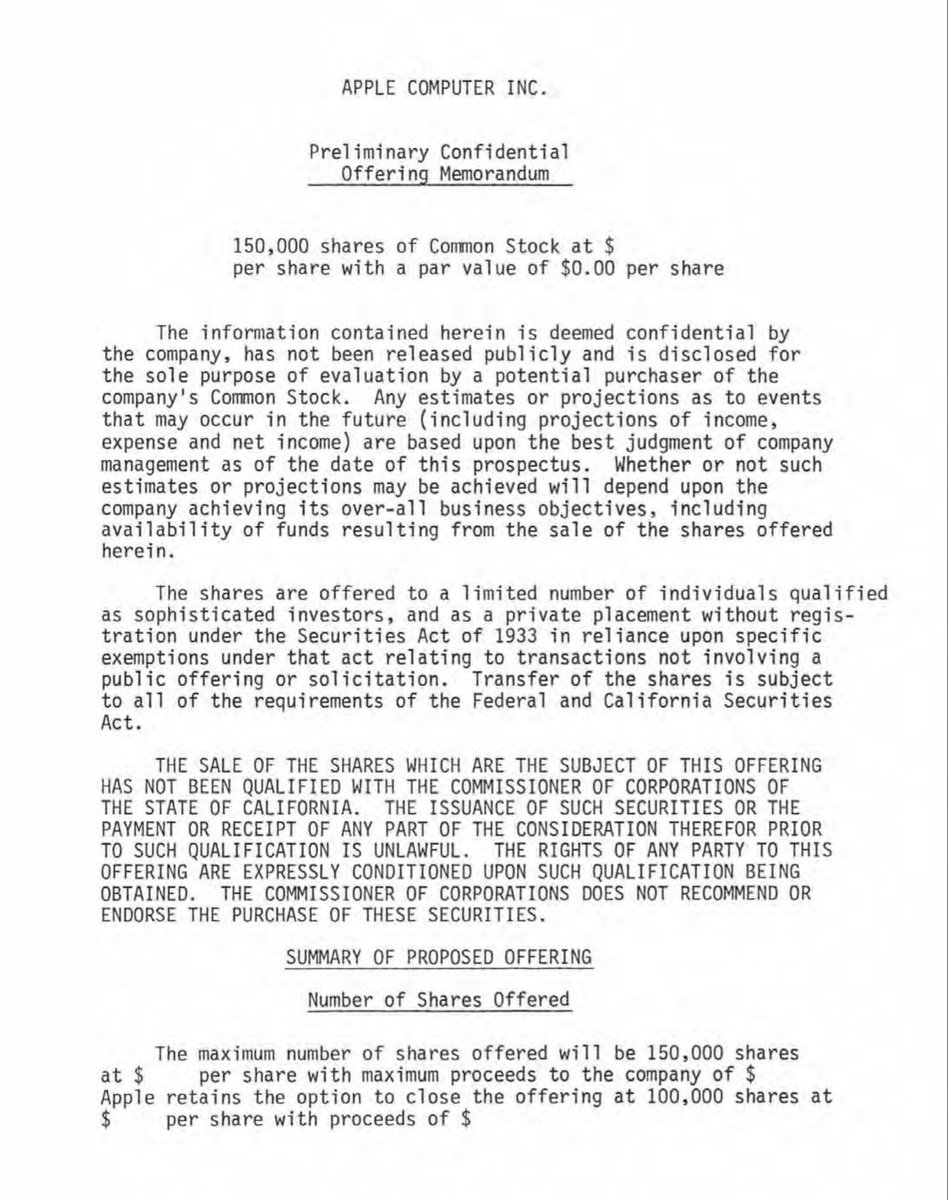
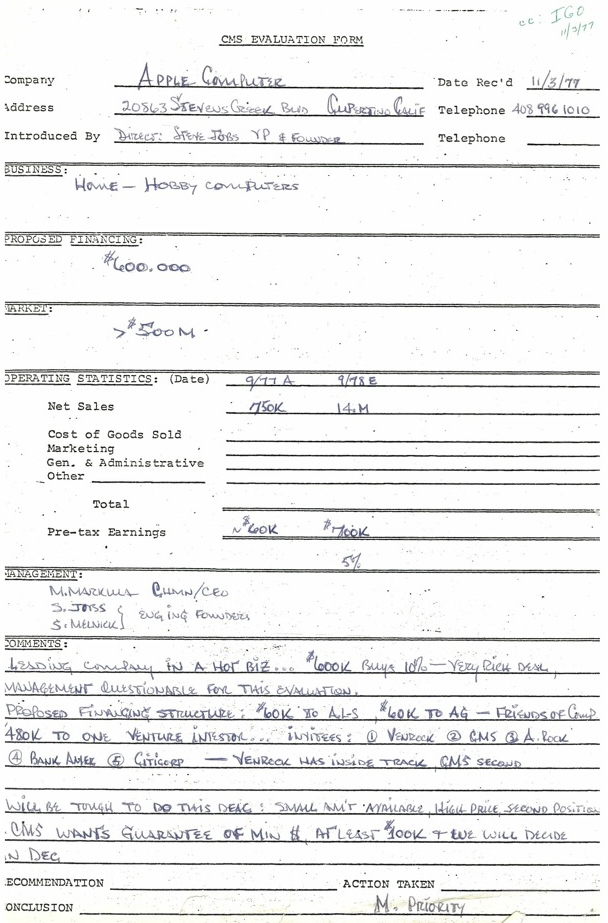
In honor of 50 years of Apple, we're sharing - for the first time ever - Don Valentine's original 1977 memo for Sequoia's investment into Apple Computer. #Apple50
Kingsway has some frontier privates (see below). Horizon owned some interesting Eastern European companies. There’s an Iraq-focused fund that one of the Firebird guys is involved with. Vostok, Sovereign, Hermitage and Soros back in the day. Acacia in the public markets.
It’s a tough way to invest. As far as I can tell, the only people that consistently make money in frontier markets (and hold on to what they make) are the trading houses.
@lundeen_ne Interesting comment by Buffett considering Wolfe built a business dealing in obscure situations + was arguably the best treasure hunter of them all.
Getty compounded at 15% for 50 years.
He started with a $3 million family trust in the Great Depression. By 1984, he turned it into $3 billion.
A 1,000x return from shrewd capital allocation.
People built careers coattailing Getty.
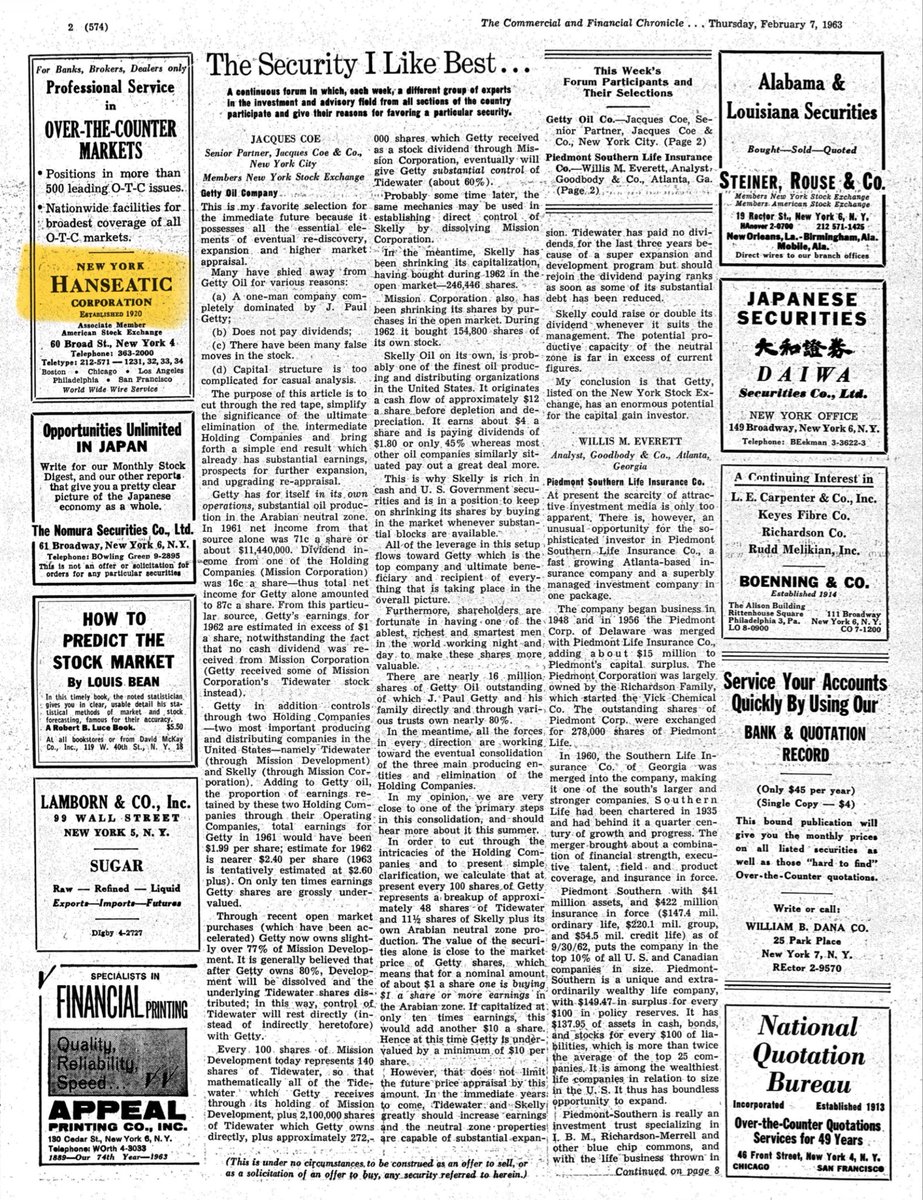
@ByrneHobart Also that NY Hanseatic ad.
Herb Wolfe was a sharp investor. Buffett even looked up to him. Wolfe was the one guy he said he’d invest with.
They were in some of the same investments in the 50s.
Onex taking control of Catlin's new insurer.
Bobby Le Blanc:
- Worked at Berkshire in the '90s
- Still a director at Berkshire's LifeCo
Worth watching what he does here.
https://t.co/1JQ4952GQg
@HalvioCapital Indeed. I started with a focus on these “coattails with a catalyst” type investments (see below). They’re still my favorite smaller situations. I’m trying to buy a few now that are the best I’ve seen in years.
It’s from an old blog. I set it up when I was starting out (late 2014). It was a short-lived project. I only did seven writeups before I figured out pitching weird nanocaps on the open web wasn’t my brightest idea.
They were:
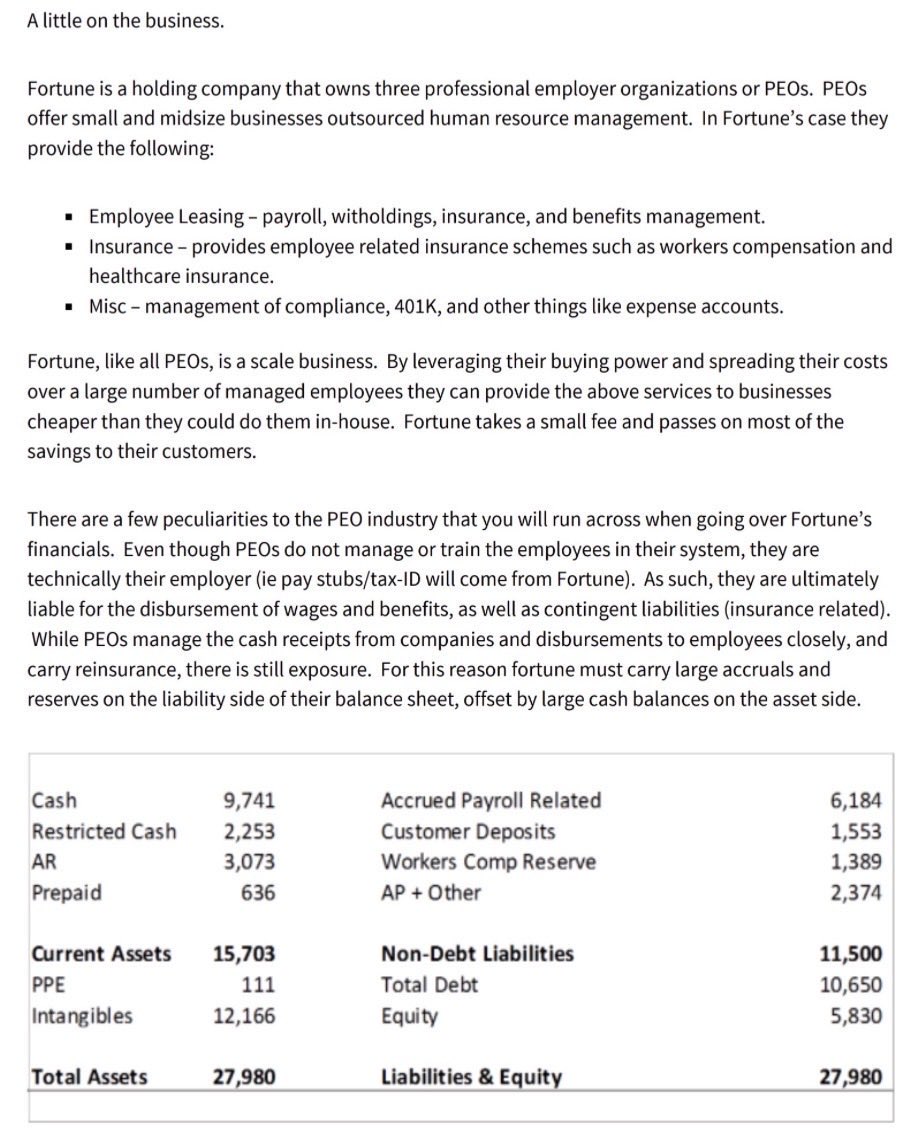
- Fortune
- Kreisler
- Imvescor
- CTC
- Precision Tune Auto
- CreditRiskMonitor
- Advant-E
Except for CRMZ, all were taken out (CTC at a loss). I was very green, and I cringe reading these now. But I also miss it. Those days were a lot of fun.
Did anyone else own/follow these names?
This is good advice from DCS.
Here's another area to look at: "coattails"
Small deals with thin floats where you can buy a few shares and tag along. Focus on situations where there's an exit baked into the deal.
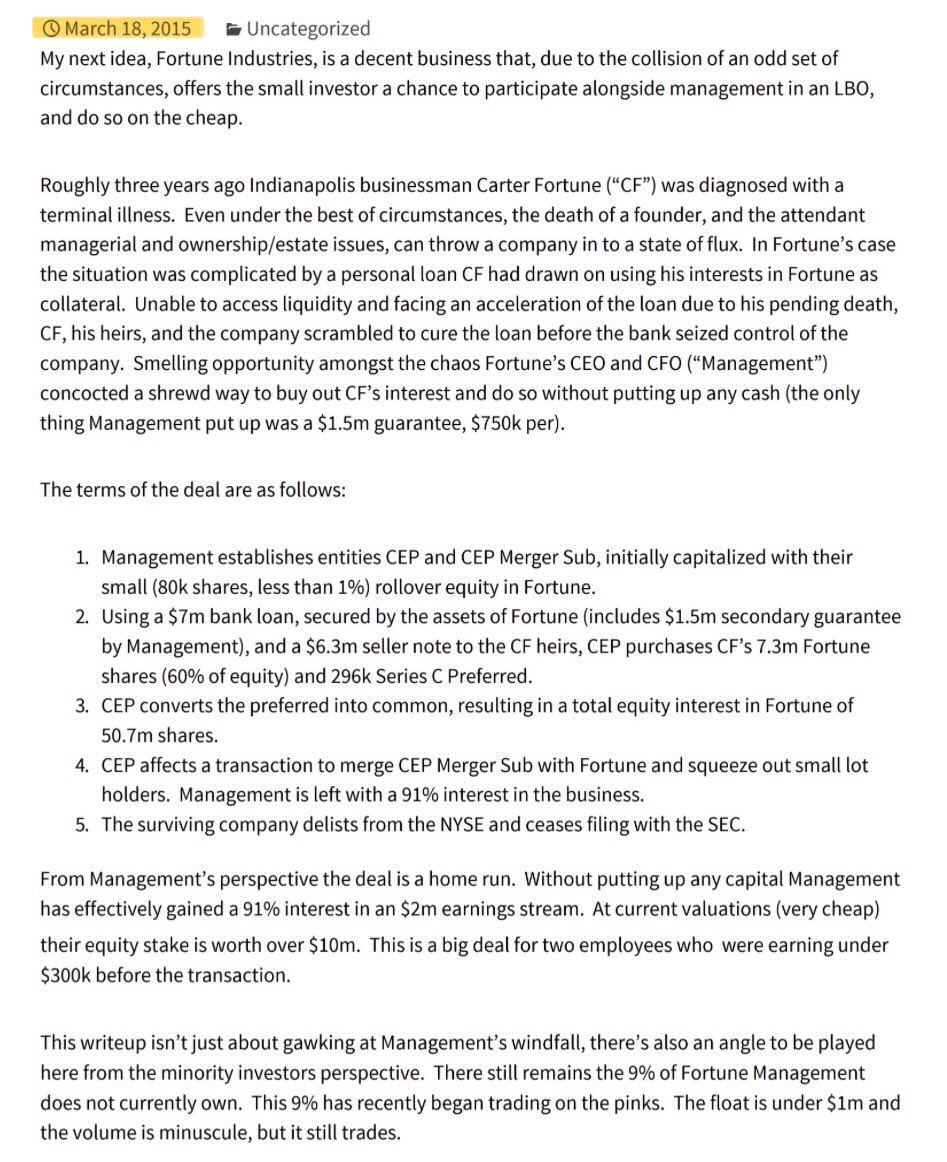
One of my writeups from when I started investing:
If I had $100,000 I'd do this:
- Read every filing.
- Arb odd lot tenders, new releases, liquidations, etc.
- Own 2-3 tiny companies trading at ~3x earnings and less than net cash.
I bet a smart person could do ~50% CAGR.
Issue is it takes all your time. Not investment advice.
My #1 worry in small companies (esp darks) is getting screwed. But how often do you get these small companies with great managers who look out for minorities? I’ve found that instead of looking for great management, look for great ‘setups’. Situations where you’re (a) aligned with the insiders and (b) can see the exit (in some cases, you can even create an exit yourself). I’m more concerned with these setups than I am with management quality.
Were the people at Fortune ideal managers looking out for small shareholders? No. But you had a setup where they had life-changing money on the line and you could invest alongside them. They had just taken out the preferreds and started issuing options at the subsidiary level. And it had downlisted and was trading between $0.02 and $0.20 (my writeup was actually on the high side of where it had traded).