"A “thinker” who doesn’t write, who skips the step of “merely” synthesizing their vague thoughts into prose, is not thinking."
I think this is true-ish, though interesting to consider the extent. Lots of people "think through conversation", which supplies helpful responsiveness, reactivity, alternatives, etc. I'm willing to call that an important kind of thinking.
Some thinking-through-writing is about generating options, then stepping back and asking: does this really capture the intent? How is it wrong? If the machine generates while you judge and steer towards the next options, that is a kind of thinking.
But as Fernando points out, using AI as a thinking partner takes constant skepticism and vigilance—and hence more willpower and metacognitive muscle than many will consistently muster.
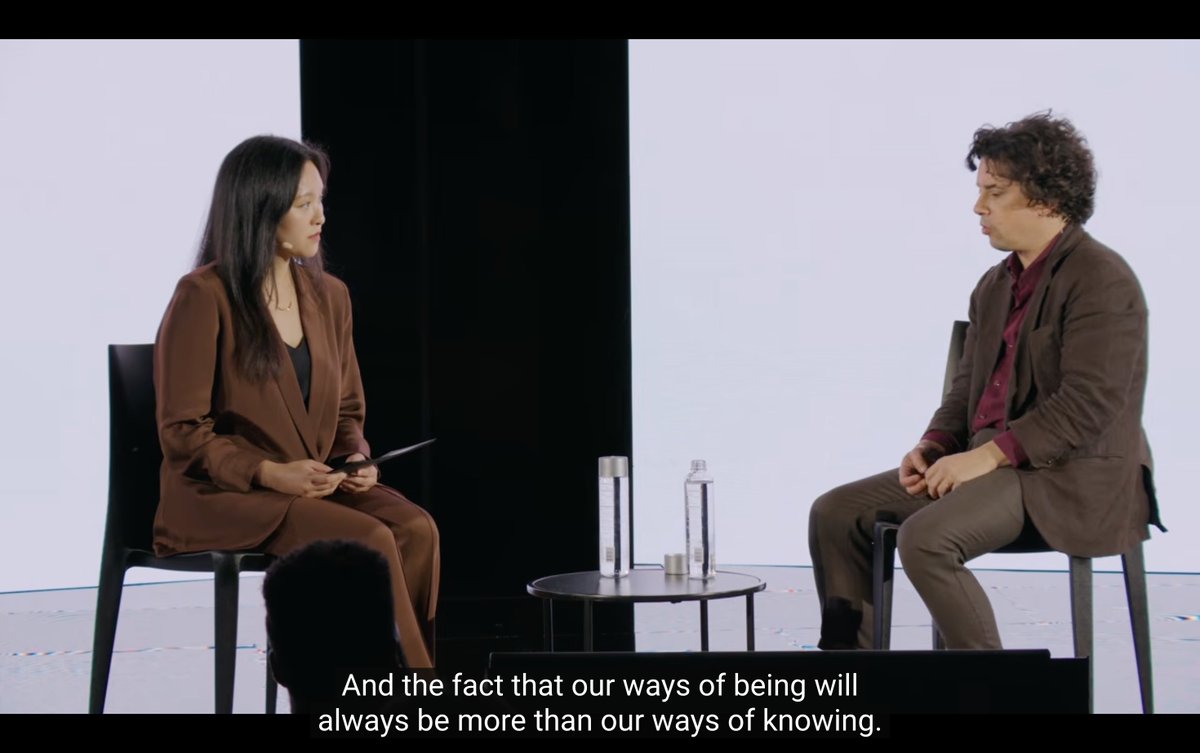
AI systems are optimized entirely for knowing functions. compressing, retrieving, pattern-matching, reducing local entropy. they do this extremely well.
what they can't do today is carry the continuous forward. judgment and intuition (some call the expression of these things "taste") aren't knowing functions, they're being functions.
i've been thinking about this in the context of building intelligent narrative pipelines, essentially an architecture for knowing and narrative coherence. the pipelines ingest signals, govern context, and sequence retrieval. the layer it can't loop (yet) is the intuitive curatorial one. that gap is a "being gap."
via @jasminewsun
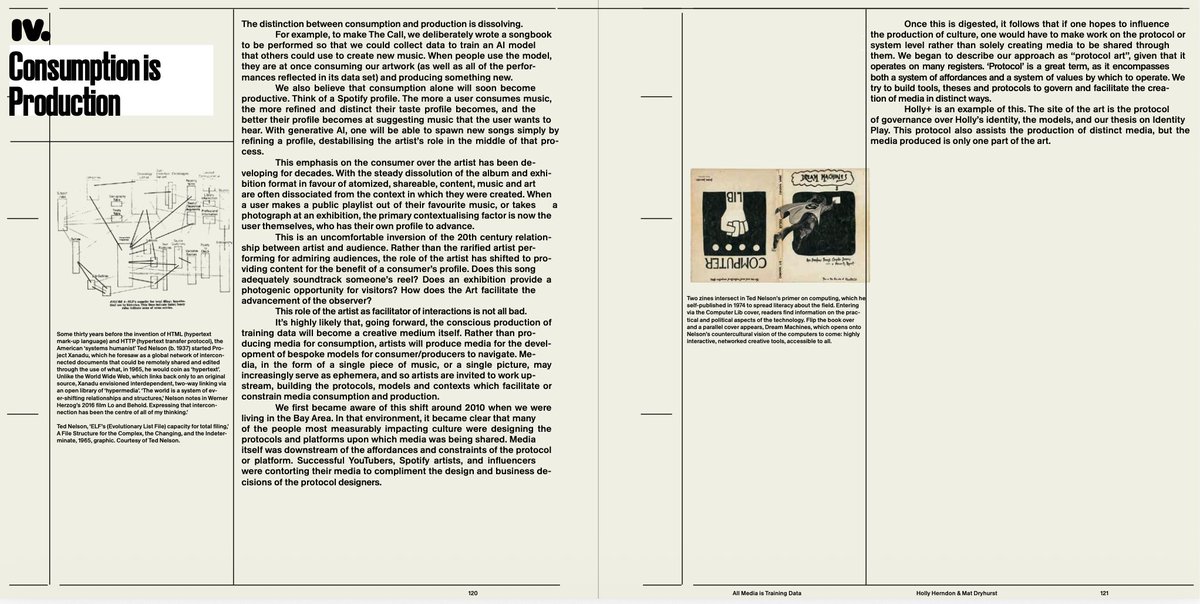
I increasingly think AI has created a new cultural category: consumption experienced as production. You can spend hours prompting images, code, videos, stories, and ideas and feel intensely engaged throughout the process. It feels active rather than passive. But often what is happening is that you are consuming an endless stream of machine-generated novelty, customised precisely to your tastes.
The cultural challenge of AI may not be distinguishing human-generated content from AI-generated content. It may be distinguishing genuine authorship from highly personalised entertainment.
Alternate design for @AREdotNA frame inspired by Mark Bernstein's 1998 essay Hypertext Gardens, which describes two structures of the web. Streams: time-based, linear, algorithmic (Twitter, most of today's internet) and Gardens: ones that grow and interconnect over time (Wikipedia).
The branches represent arena's network of connections with the golden traces hinting at how the frame travels through it to displays blocks.
. @p0 is hosting a 1-week museum pop-up for the history of the human web, with items from 1940 to now.
my favorite item is the Coolest Cooler (an og @Kickstarter project!)
shoutout to @lukaslevert and @yangyou for another amazing website launch 🧡