Very interesting talk 'Impact of Rapidly Increasing Satellites Dark Skies', linked above by Prof. Anthony Tyson, Distinguished Research Professor, University of California, Davis https://t.co/6JU4Z0jOab
O/H, credible predictions that in the next few years, with planned 🛰️ constellation growth, the night sky may be as bright as a half moon (for all). Very bad news for ground-based astronomy. (1 hr into this National Academies' 🎙️) https://t.co/GZeX58FINT https://t.co/UY8BgZVf4m
Celebrate National Dinosaur Day with our dino-sized observatory!
🦖Roman is both roughly as long and as massive as a T. rex. Prior to launch, the team will load it up with about 62 velociraptors worth of fuel (~2,500 pounds).
Learn more: https://t.co/nQ071tswND
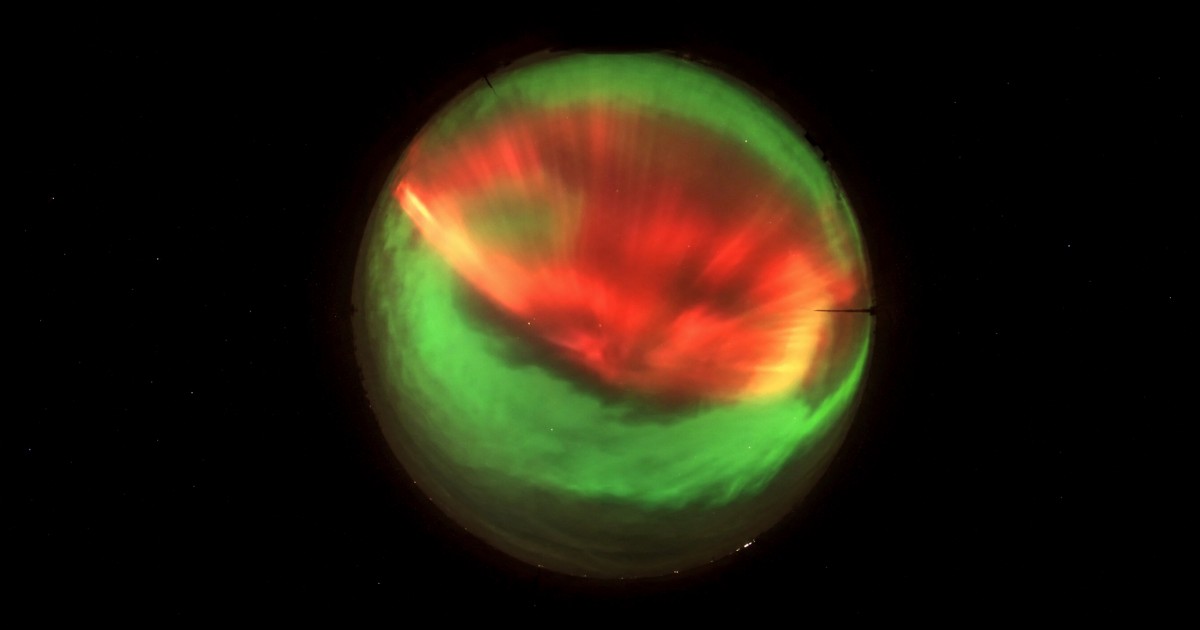
Artemis II took historic photos of the N and S aurora from space that could help answer an important question: are the auroras symmetric or not? We’re curious to learn more with your help! If you saw aurora April 3, 12:30-4am UTC, please make a report to https://t.co/H8M6qEdbuK.
@SNHWx Maybe a pilot, or a tourist, or some people working in Antarctica saw it? Maybe some in Iceland, Greenland, or eastern Canada had clear skies? Thanks for helping spread the word @SNHWx !
Outgassing from a second stage LEO rocket most likely. We have seen this exact same phenomenon before with the arc stretching north-south. It is not aurora or anything aurora-related.
Launching tonight: NASA’s STORIE mission! 🚀
STORIE will be mounted outside the International Space Station to study a giant doughnut of particles surrounding our planet that influence how Earth responds to solar eruptions.👇
Follow the launch: https://t.co/GdlghgSRUT
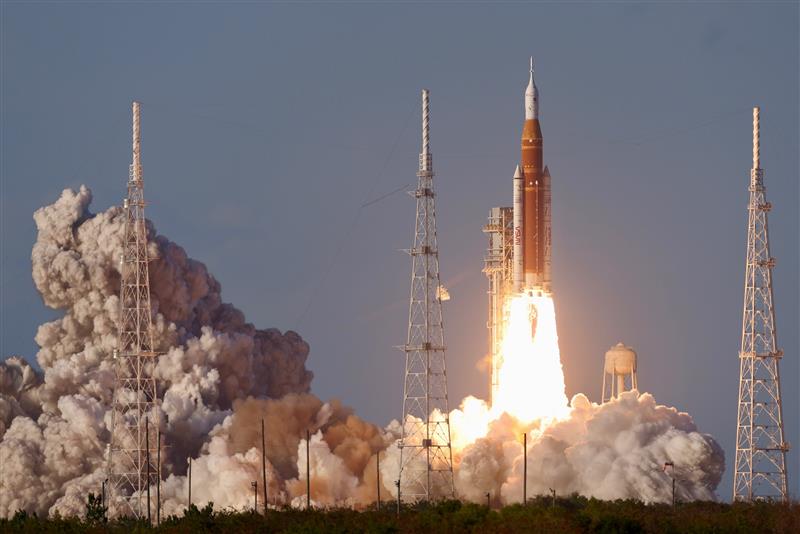
For the first time in over 50 years, humans are Moonbound.
At 6:35 p.m. EDT (2235 UTC) NASA’s Space Launch System rocket and the Orion spacecraft lifted off from the agency’s Kennedy Space Center in Florida, sending four astronauts on a planned test flight around the Moon and back. https://t.co/0Q9ZB4IWVI
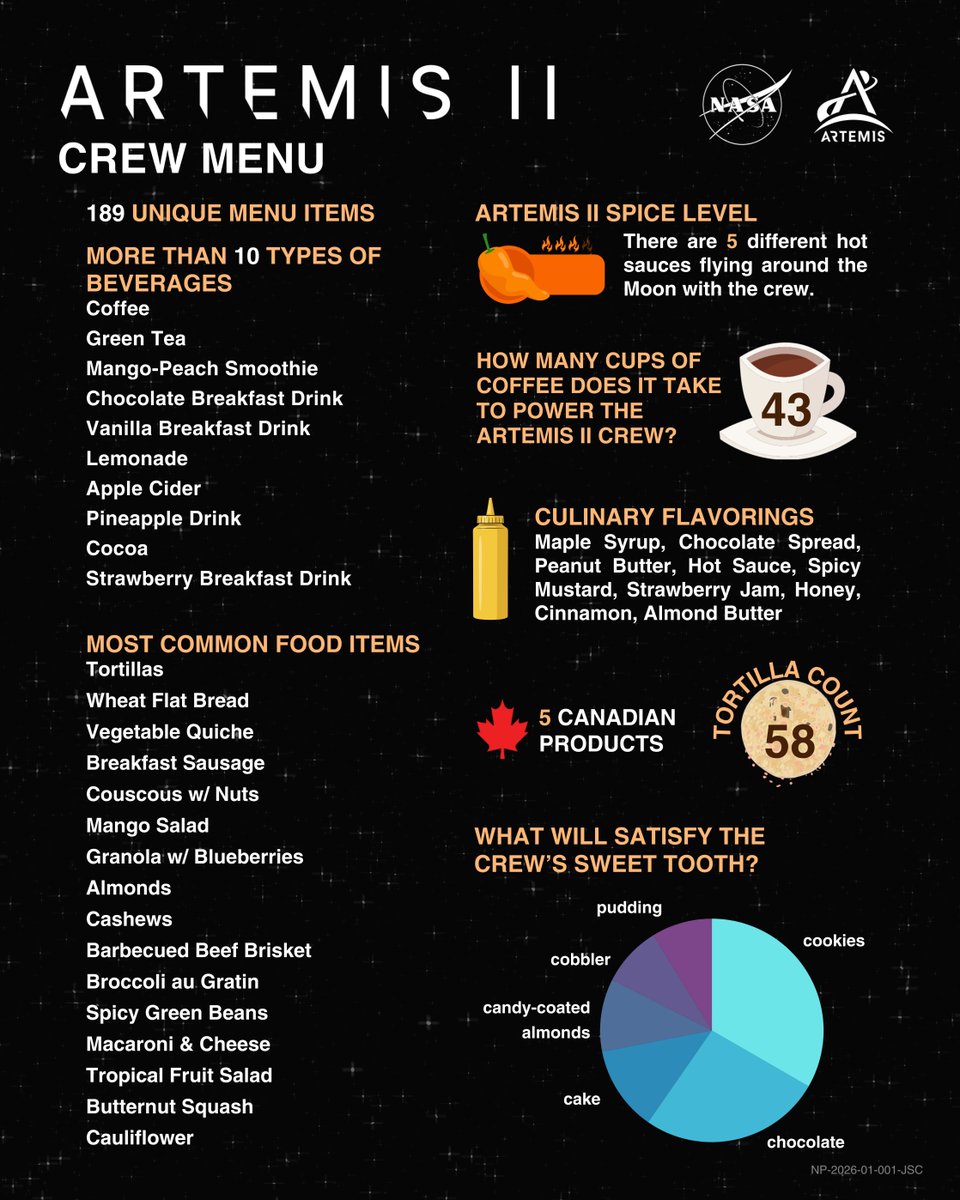
Brisket and cobbler and quiche, oh my!
Curious what astronauts eat on a 10-day trip around the Moon? Read about how we design and prepare meal plans for Artemis II: https://t.co/eVNGSQpM04
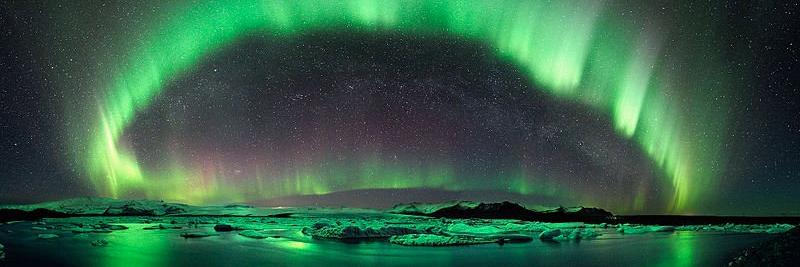
This is an incredible timelapse showing different types of aurora happening at the same time and changing across regions! Taller discrete arcs are in the distance poleward - more diffuse pulsating aurora in the foreground and happening more towards dawn.
On my first mission I completely fell in love with space photography - tough not to when you’re graced with this kind of unique perspective of viewing all that Earth has to behold from above. I’ve been so happy to bust out the array of impressive lenses that we have up here once again, and this time with even better cameras (Nikon Z9, vs the D5 from my previous mission).
I was lucky enough to capture some pretty good aurora (northern lights, here over Alaska and Canada) on my first timelapse attempt of the mission, stay tuned for more!
Hoping for some impressive solar events to put on a fascinating show like the ones a few months ago.
SSL leads the auroral imaging instrument for @NASA's forthcoming CINEMA mission, which will explore the connection between auroras and Earth's magnetotail.
👇Read more here:
https://t.co/BpGp4DzJKL
🙏to our partners @JHUAPL, @dartmouth and also @Vincent_Ledvina for story help.
All together now: solar flares do not produce aurora!
Why? Flares = light (no mass). What causes widespread auroral displays are solar storms (CMEs) hitting Earth. CMEs have mass. Flares can produce CMEs, but not always. This is why flare happening =/= big aurora show.