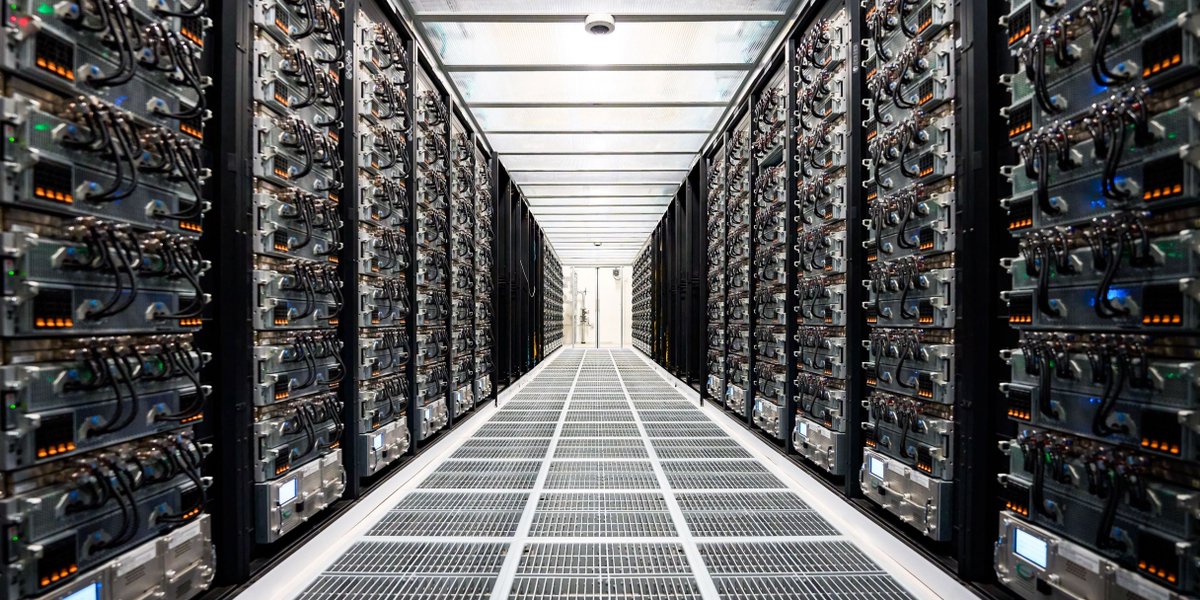
A Terawatt of power: What about a series of 24/365 PV power plants in space, launched with Starship and deployed in orbit ? Such plants could either beam their power to Earth, or use it in space, in AI Colossus-like data centers.
Tesla, xAI and SpaceX together make this possible, possibly even likely.
@herbertong@CernBasher@TeslaLarry@thejefflutz@elonmusk
Everything's Falling by The Warning debuts at Number 17 on Billboard 200™ in the United States.
It's the band's highest entry on the chart, surpassing Keep Me Fed (59). Congratulations @TheWarningBand2 🎉
BREAKING: Warren Buffett cuts off the Gates Foundation from his annual donations after nearly 20 years.
• The decision follows scrutiny over Bill Gates’ past association with Jeffrey Epstein
• The Gates Foundation received more than $47 billion from him since 2006.
Universal HIGH INCOME via checks issued by the Federal government is the best way to deal with unemployment caused by AI.
AI/robotics will produce goods & services far in excess of the increase in the money supply, so there will not be inflation.
This headline undersells the real story.
Stanford researchers identified 15-PGDH, a protein that increases as the body ages and drives tissue decline, as the root cause of cartilage loss. They call it a “gerozyme.” When they blocked it in old mice, cartilage thickened across the entire joint surface, and the regenerated tissue was hyaline cartilage, the smooth shock-absorbing kind found in healthy joints, not the weaker fibrocartilage that usually forms after injury.
The mechanism matters. They weren’t looking for stem cells and found none involved. Instead, existing chondrocytes changed their gene expression patterns and assumed a more youthful state. Old cells started behaving young again.
Human tissue samples from knee replacement surgeries also responded to the treatment by making new functional cartilage.
Osteoarthritis affects one in every five American adults and costs about $65 billion in direct healthcare annually. The global knee and hip replacement market will hit $30 billion by 2030. Companies like Zimmer Biomet, Stryker, and Johnson & Johnson have built massive businesses on the assumption that worn cartilage can only be replaced, never regenerated.
The company that licensed this technology, Epirium Bio, just reported positive Phase 1 results for an oral 15-PGDH inhibitor in older adults. Phase 2 starts mid-2026.
The timeline: If Phase 2 and 3 work, you could see an FDA-approved pill or injection that regrows joint cartilage within 5-7 years.
The loser here? Every company selling titanium and ceramic into aging bodies. The $30B replacement market gets repriced the moment Phase 2 hits.
Human trials: this year. Watch this space.
A major additional factor should be considered.
Satellites with localized AI compute, where just the results are beamed back from low-latency, sun-synchronous orbit, will be the lowest cost way to generate AI bitstreams in <3 years.
And by far the fastest way to scale within 4 years, because easy sources of electrical power are already hard to find on Earth. 1 megaton/year of satellites with 100kW per satellite yields 100GW of AI added per year with no operating or maintenance cost, connecting via high-bandwidth lasers to the Starlink constellation.
The level beyond that is constructing satellite factories on the Moon and using a mass driver (electromagnetic railgun) to accelerate AI satellites to lunar escape velocity without the need for rockets. That scales to >100TW/year of AI and enables non-trivial progress towards becoming a Kardashev II civilization.
I noticed the same. I asked Grok and ChatGPT today about their unemployment predictions for 2027/2028 - and they got it totally wrong (nothing happens bias).
But that is not surprising:
AI is trained to adopt average human thinking. It looks at the reasoning of "experts" and extrapolates from there.
Humans tend to famously think in analogies , not first principles.
First principles (or, as I used to call them before Elon, "principles"), are based on theoretic thinking: the extraction of clear, causal and generalized principles from our observations. Aka, "understanding".
Analogies are based on constructing blurry, statistical causalities from correlations (NOT understanding).
Most humans - and all current LLMs - only do the latter.
Thinking in Analogies nearly ALWAYS comes to the conclusion that nothing will "happen", because "happen" would mean something DEVIATES from what happened before - which is statistically not really possible (since that never happened before lol).
The key to survive and thrive in times of extreme change (NOW) is to learn to THINK, aka, extract the correct PRINCIPLES from reality.
Then, you can make SHARP and CORRECT predictions.
Tesla Robotaxi - The Ecosystem Opportunity
A bigger opportunity than Apple's App Store?
First, let's look at Apple's App Store. Then we'll think about what the Robotaxi ecosystem might look like.
Apple's App Store
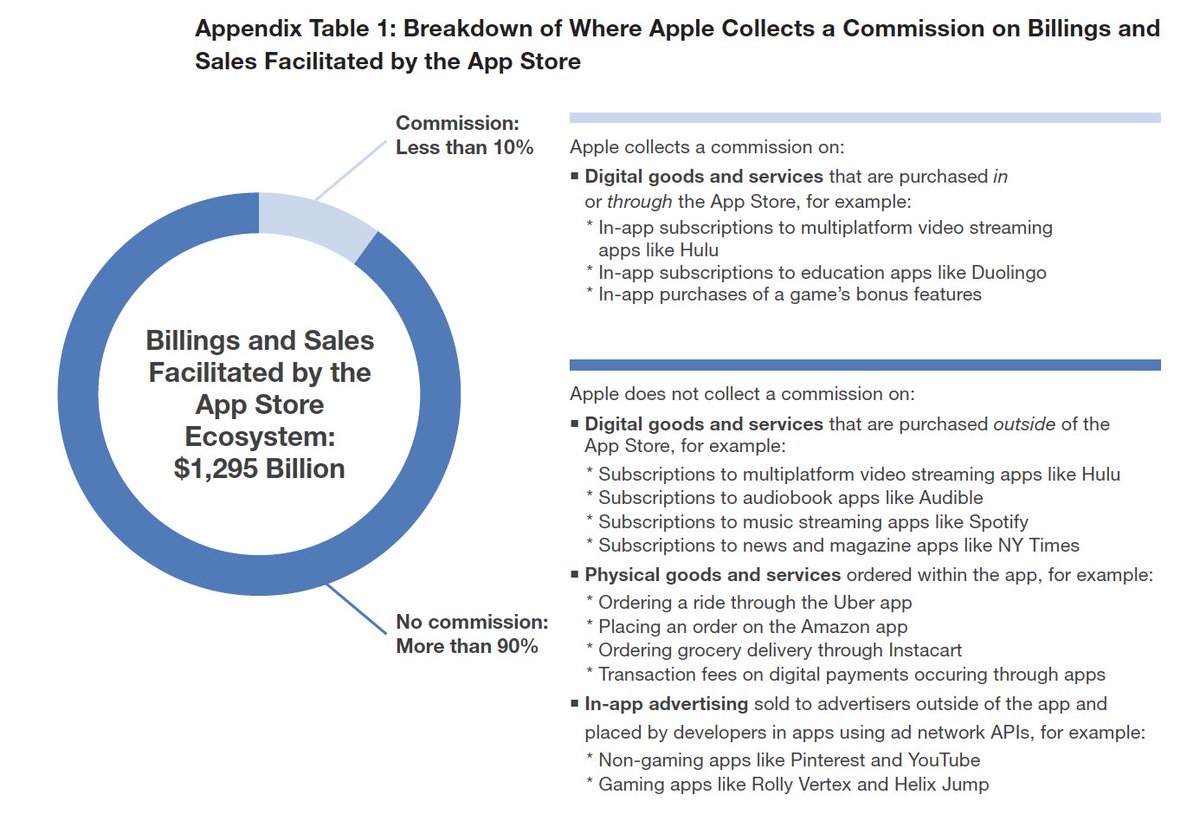
In 2024 an estimated $1.3 trillion of commerce was facilitated by Apple's App Store ecosystem - $131 billion of digital goods and services (for which Apple took it's cut), $1 trillion of physical goods and services (no cut for Apple) and another $150 billion in In-App advertising (again, no revenue for Apple).
The amount of commerce has grown by 2.5x over the last five years - from $514 billion to $1.3 trillion.
Apple's commission was taken on just 10% of the economic activity that's conducted over the App Store ecosystem, leaving 90% where Apple receives no commission.
So the iPhone/iPad are the products that have created a massive platform which allows others to offer their goods and services on top of.
Is Tesla's Robotaxi platform similar?
Yes.
But, better as Tesla can play two roles in some transactions - a facilitator and a service provider - allowing Tesla to capture platform fees and service revenue.
Tesla's Robotaxi Ecosystem
Tesla’s Robotaxi platform is poised to create a transformative ecosystem, much like Apple’s App Store, by leveraging its autonomous vehicle network as a foundation for layered goods and services.
Initially, Tesla will generate revenue by transporting passengers from point A to point B - a global market opportunity that's in the trillions.
However, as the Robotaxi fleet scales and becomes ubiquitous, the platform will enable a broader ecosystem of commerce, entertainment, and data-driven services.
Here’s how:
1. Delivery Services (The Logistics Network)
Robotaxis can double as a decentralized logistics network, revolutionizing last-mile delivery. Beyond passenger transport, Tesla’s autonomous vehicles could deliver groceries, meals, retail goods, or even medical supplies.
With no human driver, operating costs drop significantly, enabling Tesla to offer competitive pricing or partner with businesses for seamless integration.
For example, a retailer could integrate with Tesla’s API to dispatch Robotaxis for same-day delivery, creating a new revenue stream for Tesla via per-delivery fees or subscription models.
As the fleet grows, this logistics network could handle billions in commerce annually, much like Apple’s App Store facilitates physical goods sales.
Specific beneficiaries include:
DoorDash: A food delivery platform could integrate with Tesla’s API to dispatch Robotaxis for restaurant orders.
FedEx: This logistics giant could use Robotaxis for small-package deliveries in dense cities.
Instacart: Grocery delivery services could leverage Robotaxis to fulfill orders from local stores.
Walmart/Home Depot/Target: Retailers with e-commerce platforms could partner with Tesla to deliver their goods, enhancing same-day delivery capabilities and competing with Amazon.
Tesla’s Dual Role
Tesla facilitates by providing the Robotaxi fleet and software for logistics coordination, while also acting as the service provider by operating the vehicles for deliveries. Unlike Apple, which doesn’t deliver physical goods, Tesla directly executes the service.
2. In-Car Commerce (The Mobile Marketplace)
The interior of a Robotaxi becomes a mobile marketplace, offering passengers goods and services during their rides.
Imagine a touchscreen interface (or just by speaking to Grok) where riders can order coffee to be ready at their destination, purchase event tickets, or shop for products tailored to their preferences.
Tesla could integrate with e-commerce platforms and local businesses, taking a commission on transactions.
For instance, a rider heading to a concert could buy merchandise en route, with delivery coordinated via the logistics network. This mirrors the App Store’s in-app purchases but in a physical, location-aware context.
With millions of daily rides, even a small percentage of passengers engaging in in-car commerce could generate significant revenue, while businesses gain a captive audience in a distraction-free environment.
Benefiting entities include:
Starbucks: Riders could order coffee or snacks en route, with Robotaxis coordinating delivery at their destination, boosting Starbucks’ mobile order volume.
Ticketmaster/Sports Teams: Passengers heading to events could buy tickets or merchandise in-car, capitalizing on location-based purchasing.
Amazon: A dedicated in-car storefront could allow riders to shop for products, with deliveries synced via Tesla’s logistics network, enhancing Amazon’s e-commerce reach.
Airbnb: Travelers could book accommodations or experiences during rides, with Tesla facilitating transactions and earning fees, especially for last-minute bookings.
3. In-Car Entertainment (The Content Platform)
Robotaxis offer a unique opportunity to redefine in-car entertainment, transforming ride time into a content consumption experience.
Without the need to drive, passengers can stream movies, play games, or engage in immersive AR/VR experiences via Tesla’s high-resolution displays and connectivity.
Tesla could partner with platforms like Netflix, Spotify, or gaming companies to offer subscription-based or ad-supported content, taking a revenue share similar to Apple’s App Store model.
Alternatively, Tesla could develop its own content hub, curating exclusive experiences optimized for the Robotaxi environment. Advertising within this platform - think targeted ads during a commute - could generate additional income, akin to the $150 billion in App Store ad revenue Apple doesn’t directly capture.
As ride-hailing becomes a daily habit, the content platform could rival traditional media channels in engagement time.
Beneficiaries include:
Netflix: Streaming movies or shows during rides could increase subscriber engagement, with Tesla negotiating revenue-sharing for in-car access.
Spotify: Music or podcast streaming tailored to ride durations could enhance user retention, with Tesla earning a share of premium subscriptions or ads.
Epic Games: Interactive gaming, like Fortnite, optimized for short rides, could drive in-car purchases, with Tesla taking a cut, mirroring App Store in-app payments.
Google (YouTube): By leveraging YouTube’s vast video library ad-supported video content could generate revenue. Robotaxi riders might receive discounted fares if they are willing to subject themselves to ads.
4. Sophisticated Data Collection (The Sensor Network)
Tesla’s Robotaxis, equipped with cameras, radar, and AI, form a vast sensor network collecting real-time data on traffic patterns, consumer behavior, and urban environments.
This data is a goldmine for businesses, city planners, and advertisers. Tesla could anonymize and aggregate this data to offer insights, such as optimal store locations for retailers or traffic flow predictions for municipalities, creating a B2B revenue stream.
Additionally, hyper-local advertising could emerge, where businesses pay to promote offers to passengers nearing their locations, similar to location-based ads on smartphones.
Unlike Apple, which doesn’t directly monetize most App Store data, Tesla could license this sensor-derived intelligence, creating a high-margin revenue source. The more Robotaxis on the road, the richer and more valuable this data network becomes.
Benefiting entities include:
JCDecaux (the largest outdoor advertising company worldwide): Outdoor advertising firms could buy hyper-local ad slots, targeting passengers nearing specific businesses, with Tesla monetizing its geofenced data.
Nielsen: Market research firms could purchase consumer behavior data (e.g., travel patterns) to refine advertising strategies, with Tesla as the data provider.
Cities: Municipalities could license traffic flow data to optimize urban planning and data on road conditions to speed up road repairs.
Robotaxi Ecosystem Value
A single Robotaxi serves one rider; a million Robotaxis enable a complex web of interactions - passenger transport, deliveries, commerce, and data exchange.
Over time, the platform evolves into a “network of networks,” aligning with Reed’s Law (see post below), where value also stems from subgroups like partnered businesses or data-driven services forming within the ecosystem.
Like Apple’s App Store, Tesla’s Robotaxi ecosystem could facilitate commerce far beyond its direct revenue.
While Tesla earns from rides and takes commissions on in-car purchases or deliveries, the broader economic activity - retail sales, advertising, and data-driven efficiencies - could dwarf its cut, potentially surpassing the App Store’s $1.3 trillion in facilitated commerce.
By building a platform where others can innovate and transact, Tesla positions itself at the center of a new economic paradigm, much as Apple did with the iPhone.
NEWS: Tesla has shared new tidbits of info during a session with Wall Street analysts, led by IR head Travis Axelrod.
via Morgan Stanley's new $TSLA note:
• Optimus: Tesla wants to offer investors tours of low-scale manufacturing by Q4 2025
• Tesla is still on track to launch its Robotaxi service in Austin. Initial fleet of 10-20 cars. Will be invite only at first.
• Tesla can currently make 12 Optimus robots at a time on the second floor of Fremont. Production capacity is currently 1k/month. Second-gen line is targeting 10k/month. Third-gen line 10x the second-gen line. Tesla wants to build thousands of Optimus robots by the end of this year.
• Neural nets for Optimus are far larger than the ones for their cars
• Tesla Dojo 2 (D2) comes out in 2026. Will be more efficient than Dojo 1 and cheaper than comparable Nvidia solution. Not expected to be "1 for 1" as competitive to Nvidia. Dojo 3 expected to come out in 2028. Company thinks it can narrow the performance cap for Application-Specific Integrated Circuit. Tesla believes that 10x-ing their computer and acquiring much cheaper chips could result in a major unlock.
Tesla - Energy Growth in Terms even Wall Street can Understand
As we all know Wall Street seems to only want to view Tesla as a car company.
Fine, let's meet then where they are.
Based on that here are the trailing 12-month deliveries - Wall Street understands this.
On a trailing 12-month basis, Tesla hasn't produced any growth in the auto business and Wall Street is deeply troubled by it.
But let's now share with them that Tesla has been building a new "vehicle" - a big beautiful boxy vehicle that's designed to be parked - and it consumes many more batteries than the usual SEXY models + Cybertruck lineup.
Since this new vehicle consumes so many batteries, we will express the number in 85 KWh vehicle equivalents - as a way to standardize things and track its growth versus Autos.
Here's the growth in that business...
Wow - now, that's a business Wall Street can get excited about - look at that growth (113% year-over-year)!
And now when we combine the two businesses we get the following chart...
This is the combination of reported deliveries in Autos plus the number of 85 KWh vehicle equivalents in our new business.
We can see that the combination has delivered a total of 2,158,673 "vehicles" and it's up 8.9% over the last year and up 55% over the last two years.
Also, Tesla has been expanding the capacity of this new business to at least 1.2 million 85 KWh vehicle equivalents - a 3x increase over the last 12-month deliveries - so the outlook is quite positive.
And finally, here's another plus - no advertising is needed to sell these big beautiful boxy vehicles. They just sit there and sell themselves!
In case you didn't know, these big beautiful boxy vehicles are called Megapacks, but please don't tell Wall Street.
🇨🇦 We’re happy to announce that Health Canada has approved the launch of our first clinical trial in Canada! Recruitment is now open.
If you have quadriplegia due to ALS or SCI, you may qualify. Visit our Patient Registry to learn more and apply.
https://t.co/5BySJABkkO
Wow, they really don’t get it.
Mars is critical to the long-term survival of consciousness.
Also, I’m not going to ask any venture capitalists for money. I realize that it makes no sense as an investment. That’s why I’m gathering resources.