I'm coming to terms with the fact that I may be part of a dying breed of physicians whose mentors back in the day used to berate them for ordering any scan without being able to clearly articulate what exactly you're looking for and what the pretest probability is
Instead now CT scans have essentially been continually abused as an extension of the physical exam.
All anyone needs to articulate is: I think something bad's happening.... Let's get a CT scan or even…. I'm not sure if there's anything bad going on, let's make sure there isn't anything bad on the CT scan.
It doesn't even appear to be necessary anymore to explain what you mean by 'something bad'
I sound like a grumpy old man, I know, but I think it's a sad state of affairs. The perverse thing about it is there's no real incentive on the part of any emergency room or hospital system to curtail this kind of behavior because they get paid for every single scan.
No one is saying doctors are poor or that they should be pitied. The point is that bedside medicine does not compete against the average American salary. It competes against the other things highly trained people could do with the same time, skill, intelligence, work ethic, and tolerance for stress.
A lot of doctors could make similar take home income doing far less clinical work, or no clinical work at all. Some can make excellent money in medicolegal consulting, device work, industry advising, health tech, expert witness work, locums, or administrative roles. In some cases, a doctor can generate income comparable to a salaried W2 job with a relatively small amount of self employed consulting time each week, while also getting more control over schedule, fewer nights, fewer weekends, less liability exposure, and more time with family.
That matters. Because the question is not just whether a doctor’s gross income sounds high to someone on the internet. The real question is what it takes to keep someone doing a job that involves years of delayed earnings, heavy training costs, call, sleep disruption, lawsuits, missed holidays, missed kids’ events, and life or death responsibility.
That is not a victim complex. It’s called opportunity cost. And if you underpay the hardest forms of clinical work relative to the alternatives, people will rationally do less of it.
Doctors in large centers don't realize what a life-changer fast operating room turnover times are.
For those that don't know, the turnover time in OR's varies widely between hospitals. That's the time it takes to clean the room and set up for the next case.
In efficient hospitals, especially those that are physician owned, it can be as quick as 20 minutes. In large academic hospitals, it can push 4 or even 5 hours.
Think of the difference that makes for quality of life, patient care, and revenue.
A doctor who has a large waitlist of patients might be at the hospital until 8pm and still only get two surgeries done because the turnover time is so long. That same doctor could get 3 or 4 surgeries done in a more efficient hospital, getting home in time to have dinner with his family.
A physician owned hospital would never tolerate a 4 hour turnover time. That's money being lit on fire. Yet hospitals tolerate this all the time because they don't face competition. There's no incentive to run efficient.
So the patients have to wait longer for their surgery, the doctors get frustrated, and everybody loses.
The irony I find myself returning to is that MRI technology has not made us better diagnosticians. It has, in many cases, made us worse ones, because the image is so concrete and the language of the report so authoritative that it takes deliberate effort to resist anchoring to it.
When the MRI arrives before the history is fully taken, the finding shapes what questions get asked and which ones don't. Bias abounds throughout the encounter.
The encounter organizes itself around what the scanner found rather than what the patient experienced, and that is very difficult to undo once it has happened.
Don't look at the scans first... the basics matter. Take a history... confirm it with an exam, then see if the MRI findings make sense in the same context.
If we want “good people” to seek power and remain in it, then the pathway to power itself has to be structured in a way that does not demand they abandon what makes them “good” in the first place. Many such “good” people do not avoid leadership because they lack ambition or conviction; they avoid it because the process often requires compromise, aggression, or moral flexibility just to get in the room, and even more to stay there.
When systems reward manipulation over integrity, thoughtful people step back because they don’t want to become something else to survive inside that system. So the issue is not simply that good people don’t want power. It’s that the cost of acquiring and holding it often feels like a trade-off against their values.
If we want better leaders, the incentives, norms, and processes around power have to make character sustainable, not punish it.
The burnt toast Theory!
The minor setbacks and frustrations you're facing right now? They might just be the hidden catalysts propelling you toward your biggest breakthroughs tomorrow. Embrace the detours, they're often the fastest route to success.
It's an interesting concept check out this video and tell me what you think.
A woman without her men is easier to control.
A father wants to protect & take care of his daughter.
A husband wants to protect & take care of his wife.
A son wants to protect & take care of his mother.
These 3 are the most emotionally invested people in a woman's life. They gain nothing from her harm & everything from her well being.
So naturally… they had to be removed.
First, the father.
His concern is reframed as control.
His discipline becomes oppression.
His experience with men… suddenly irrelevant.
He's told he's a tyrant for wanting to know who his daughter marries. Not because he hates her freedom… but because he knows exactly how men can destroy a woman's life.
That possibility is never discussed. Only one word is allowed: patriarchy.
Next, the husband.
If he values family, he's controlling.
If he values motherhood, he's reducing her to a womb.
If he expects contribution at home, he's exploiting her.
If he worries about her safety, he's restricting her freedom.
Conclusion is pre decided:
He must be an oppressor.
Divorce must be incentivized.
The family must be weakened.
Now only the son remains. But even he is a problem.
She's told having fewer children is progress.
She's told to be proud if the child is a daughter.
If it's a son… he's a future tyrant in training.
His masculinity must be corrected. Softened. Neutralized.
He must not become the kind of man who protects.
And just like that… Father sidelined. Husband discarded. Son reprogrammed.
The 3 men who would die for her well being are removed from influence.
What remains are:
The state.
Corporations.
NGOs.
Elites.
People with zero emotional investment in her life… but full authority over it.
Because here's the truth they don't want spoken:
Without love, there is no real protection.
Without emotional investment, there is no genuine concern.
And a woman isolated from those who love her most is infinitely easier to control.
Too many are taught to call this liberation. It isn't.
It's abandonment... sold with better branding labelled as FEMINISM.
It is deeply revealing how casually Nigerians say things like “X (a private citizen) arrested Y”—as though it were normal, even acceptable, for private individuals to deploy the police as personal enforcers. Hardly anyone pauses to ask how, in a so-called democracy, a person can be abducted and detained by armed agents of the state simply for saying something offensive, when clear legal remedies for libel and slander already exist. That silence tells you everything.
The Nigerian Police is not a law-enforcement institution in any meaningful sense. It functions largely as a marketplace for coercion—thugs for hire, available to whoever can pay or threaten enough. A society policed this way cannot develop. It cannot mature. It cannot be trusted to protect anything fragile: dissent, minorities, truth, or even basic fairness.
What makes this worse is the moral incoherence of the public outrage that occasionally erupts. Nigeria’s violence is not merely institutional; it is cultural. Many who protest injustice do so only because they are on the receiving end of it—not because they believe in dignity as a principle, or equality as a value, or restraint as a civic virtue. They do not oppose cruelty; they simply resent being its targets.
I learned this the hard way. I once joined others in calling for the release of a man unlawfully detained by a politician in Kaduna. Months after his release, I came across his tweets calling for violence against gay people—describing them as disgusting and deserving of harm. The same man we had defended. The same man invoking rights when power turned against him, and brutality when it did not.
This is the country as it is. Nigerians do not yet want justice; they want advantage. They do not yet want dignity for all; they want immunity for themselves. When Nigerians truly desire equality, restraint, and a humane public order, they will organise, resist, and demand it—consistently, even when it protects people they dislike. Until then, the present reality is not an accident. It is the outcome of collective choices, rehearsed daily and defended loudly.
For now, Nigerians deserve each other.
@zeal_a During training, the conclusion was phrased thus 'the single commonest risk factor for cancer is being alive'.
When you understand the basic pathology of cancer, then you will struggle to argue with this.
Jim Carrey once said
"Solitude is dangerous. It’s very addictive. It becomes a habit after you realise how peaceful and calm it is. It’s like you don’t want to deal with people anymore because they drain your energy.”
9 Things TO learn from
JIM CARREY - THE PHILOSOPHER
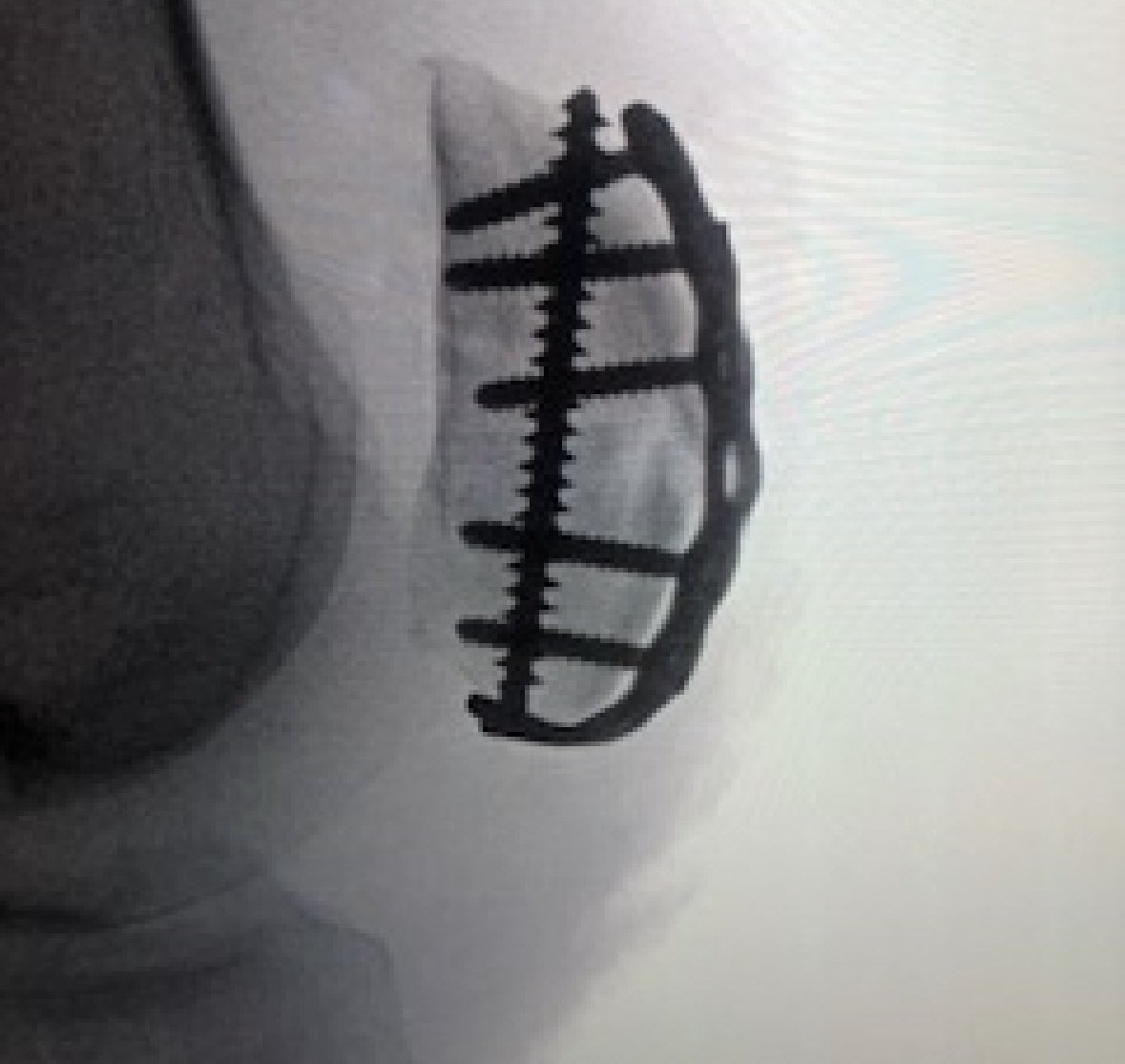
Many things in our field are gray area. But what if you see something online that isn’t one of them? Instead it is a clearly mismanaged fracture that looks horrible and will do horrible unless revised ASAP. The patient posted their own x-rays and has no idea. What do you do?
It’s not unusual for a patella clamp to be perfect on one side and gap articular side. For that reason I often use 2 clamps, one superficial & one deeper (with poke through tendon), then fiddle around until it’s perfect (left pic wasn’t final reduction, but wanted to show clamps)