Sustainability, Robotics, Game Theory, Infrastructure, Data Analysis, Energy, Land Use, Population, Aerospace, USGBC LEED ND Committee member, Minion Whizz Club
ASML builds the $400 million machines powering the world’s most advanced chips — and no one has been able to replicate them. Here’s why this company has become one of the most critical chokepoints in the global semiconductor race. Watch Primer https://t.co/jcOvNQ6Wwy
🚦 AI is changing how fleets operate, helping teams make faster, smarter decisions.
Fewer wasted miles. More efficient operations.
👉 https://t.co/cxYPL9gOYT
#AI#V2X#SmartCities
The world known as 'L 98-59 d' appears to differ sharply from the rocky and watery realms found on other so-called exoplanets that orbit stars beyond the solar system, researchers said. https://t.co/XjXURacbz9
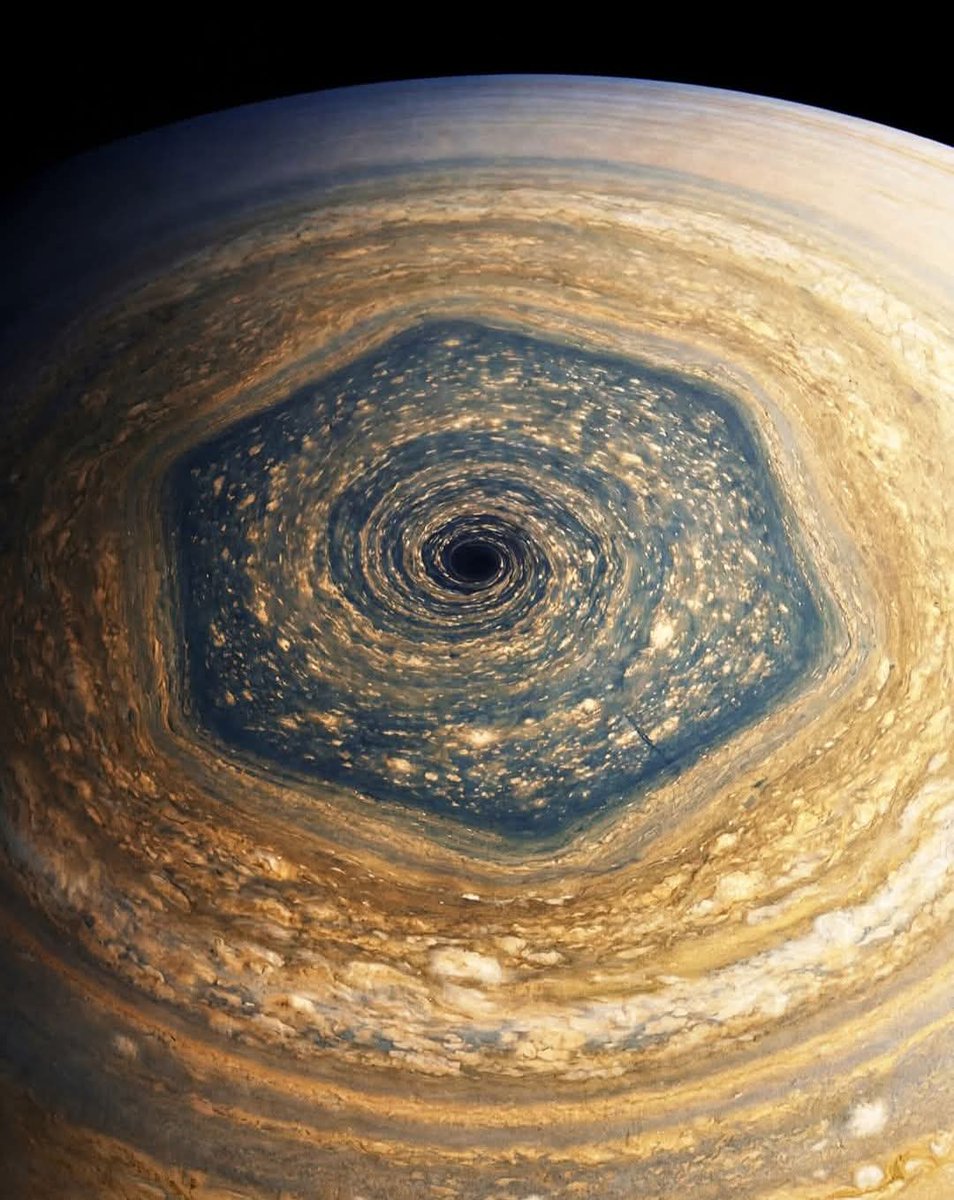
Saturn's north pole is a perfect hexagonal storm!
Earth is about 12,700 km wide. This hexagon is nearly 30,000 km across. You could drop two whole Earths inside this storm and they still wouldn't touch the sides. A geometric masterpiece raging at the top of the world.
NASA
It appears that it could be the whole purpose of quantum decoherence, to make it unobservable, therefore creating a manageable platform from selective sources only.
Quantum decoherence is the process where a quantum system loses its superposition due to interactions with its environment. This doesn’t "collapse" the wavefunction but entangles the system with its surroundings, making quantum interference unobservable. As coherence fades, classical behavior emerges, explaining why we don’t see quantum superpositions in everyday life.
It took less than a century to go from thinking the Milky Way was everything to realizing the known universe is actually 93 billion light years wide.
In 1922, the limit was just 100,000 light years. Imagine what we'll discover in the next few decades. 🤯
The largest and sharpest image ever taken of the Andromeda galaxy — otherwise known as M31.
It is the biggest Hubble image ever released and shows over 100 million stars, thousands of star clusters in a section of the galaxy’s disc stretching across over 40 000 light-years.
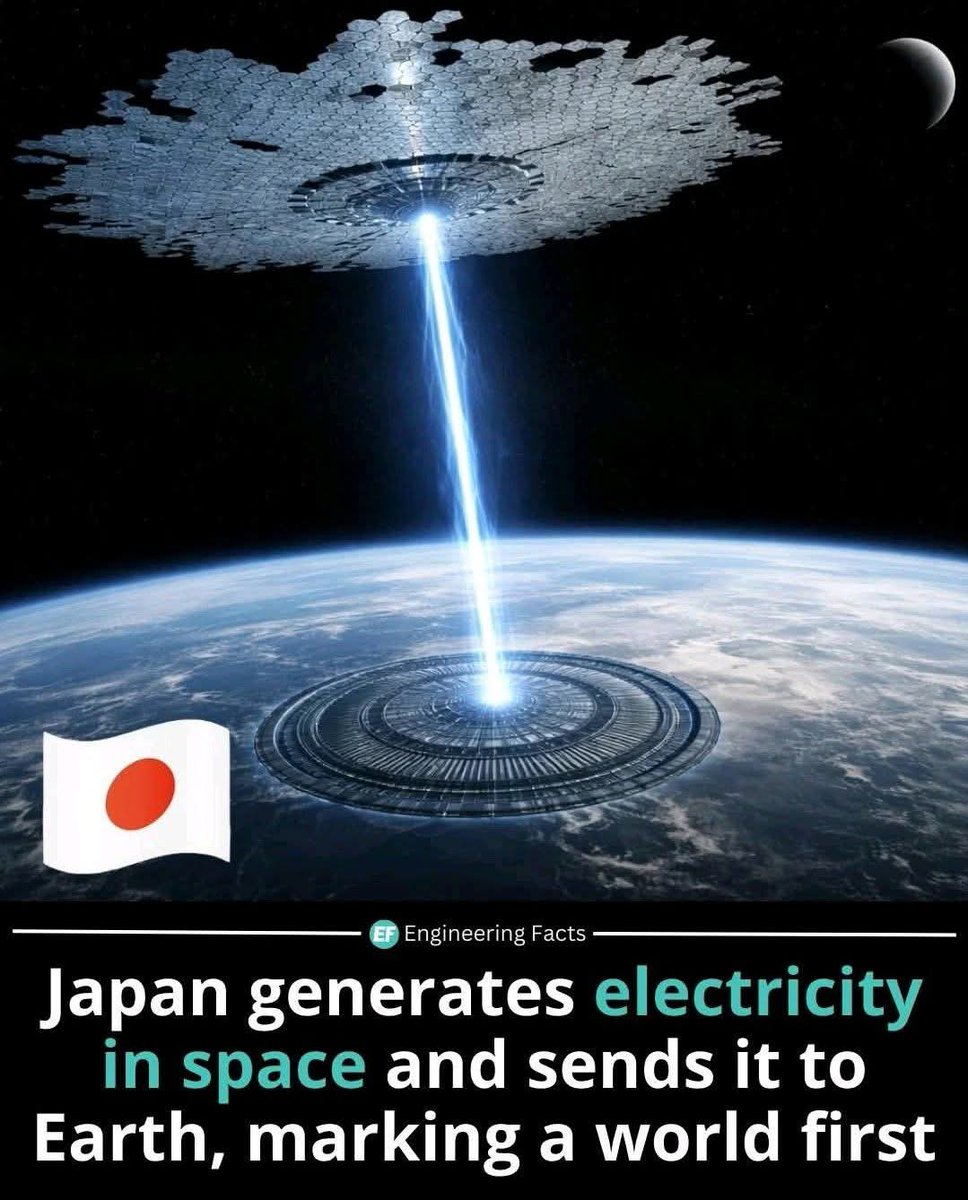
Japan has successfully tested a system that generates electricity in space and transmits it wirelessly back to Earth. Solar panels placed in orbit collected energy and sent it to a ground station using microwave transmission.
Once received on Earth, the microwave energy was converted back into usable electricity. This demonstrates that power can be harvested beyond the planet and delivered without physical cables or fuel transport.
Unlike ground-based solar power, space-based systems can collect energy continuously without weather, clouds, or night cycles. This makes the concept especially attractive for stable, large-scale renewable energy production.
The test represents an early but critical step toward future space-based solar farms. Engineers believe much larger arrays could eventually provide clean power to cities or remote regions.
Experts see this as a potential shift in how humanity produces energy, blending space technology with climate-focused solutions. While still experimental, the success confirms the concept is technically feasible.
via Paul Koti, LinkedIn
Quantum chromodynamics predicts that the proton is, at high resolution, a dandelion-like cloud made up almost entirely of force-carrying particles called gluons.
https://t.co/SU1SYg2rAh
Dating back to ancient Greece, Sumer/Babylonia, and China, the pentagram was used to represent the four elements (Earth, Air, Fire, Water) plus the 5th, “quintessence.
This is a brilliant interlaced version
We outsourced ourselves to AI. This could manifest only in two ways, fueling tons of creativity or having a trip to the oblivion.
#modularandscalablesystems
https://t.co/hFjEAcBioL
Roger Penrose calculated that the probability of a universe like ours arising by chance is on the order of 1 in 10¹⁰¹²³, an inconceivably small number
but you're here
Earlier this year, a 17-year-old high school student named Hannah Cairo solved a 40-year-old mystery about how waves behave, surprising and exciting mathematicians. @KSHartnett reports: https://t.co/gTOeUIa9cZ