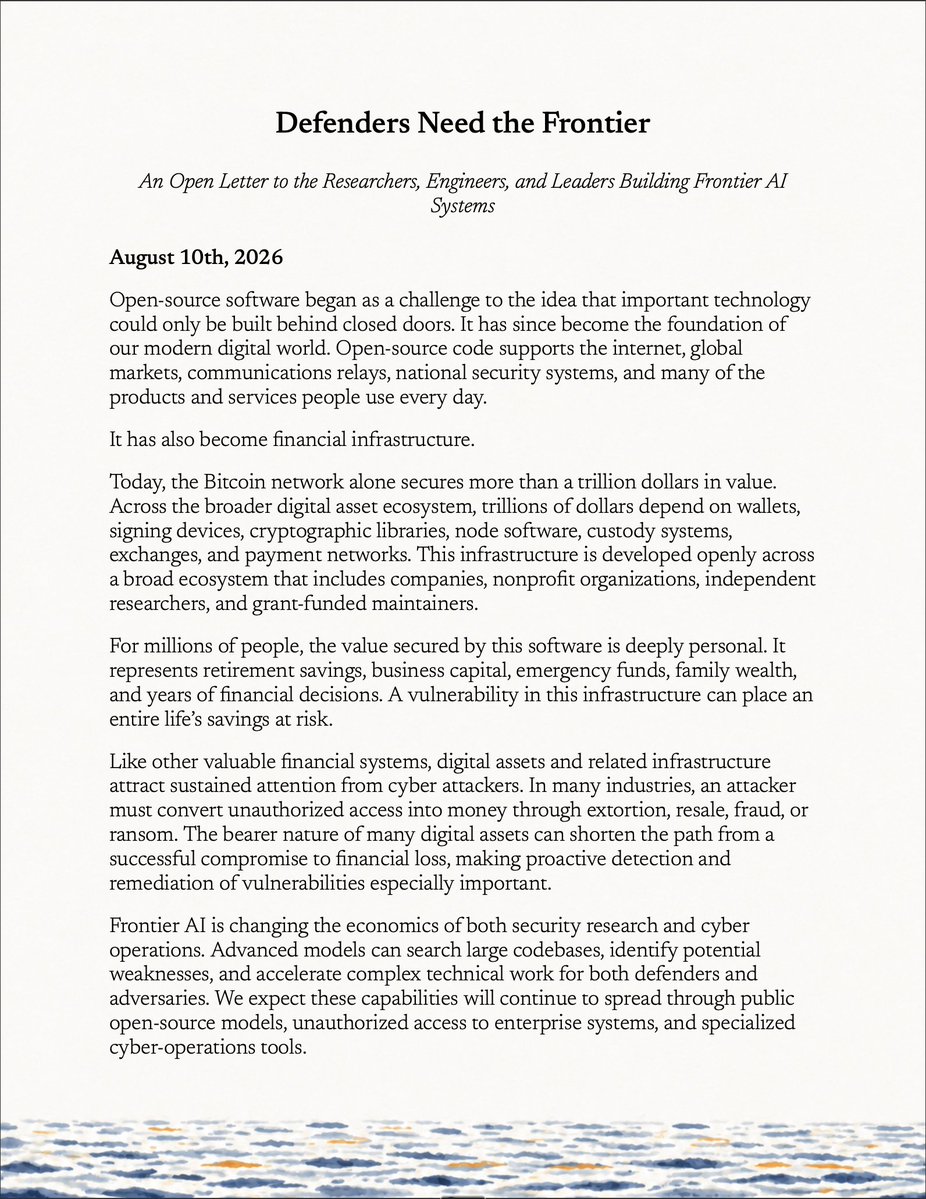
Today, Bitcoin Policy Institute and a broad coalition from across the digital-asset ecosystem are publishing an open letter calling on the world’s leading AI labs to provide qualified open-source defenders with trusted access to frontier AI models.
The past several weeks have made the need for this abundantly clear. The people defending digital-asset infrastructure and open-source software need access to the latest AI capabilities to perform comprehensive security reviews and stay ahead of increasingly sophisticated adversaries.
The coalition includes open-source development organizations, major custodians, treasury companies, payment services, security firms, capital allocators, and others whose businesses and customers depend on the integrity of open-source infrastructure and libraries.
Open-source defenders often occupy the least privileged position in the AI security landscape. They have limited access to the strongest internal cyber models and are frequently blocked by guardrails when using publicly available frontier systems for legitimate security research. As a result, they often resort to less capable open-weight alternatives.
We are urging frontier AI labs to establish a clear, trusted pathway for qualified open-source and digital asset defenders to access their strongest capabilities, with sufficient compute and secure environments to conduct meaningful security reviews. Frontier AI could become one of the most powerful defensive technologies ever developed, but only if defenders get fair access to those systems.
It’s time to give defenders the tools they deserve.
Read the open letter, add your organization, or sign as an individual on our website at https://t.co/cUTwQ5ugXJ
I'm proud to support @bitcoinpolicy’s open letter urging frontier AI labs to open a clear pathway for qualified open-source defenders.
AI could become the most powerful defensive technology in history. Attackers already are exploiting it. Defenders cannot be left behind.
We believe Bitcoin is critical public financial infrastructure. Those securing it should have trusted access to the most powerful AI models available.
In @ARKInvest’s view, stablecoins are monetary networks with effects that compound over time, thanks to trust, collateral utility, and integrations. The network effects of USDT and USDC have been powerful. @LorenzoARK explains convincingly why OUSD is unlikely to displace them.
To conclude that thought, if the US economy continues to pick up momentum—even booms—while inflation slips to 0-1% or below during the next few years, as we believe is likely, Kevin Warsh’s Fed will not stand in the way. The Fed is shifting from fighting growth to encouraging it.
Describing Shopify’s Sidekick and Square’s ManagerBot, @varshikaARK and @GrousARK highlight the reason AI will cause an entrepreneurial explosion—in this case, in retail—during the next five to ten years. The barriers to new business entry are collapsing!
One tool that seems to me would lead to large wins for safety at very low cost to civil liberties, is that everyone should have easy and deniable on-hand ways of calling the police.
Think: you pre-select a few secret words, and when your watch or phone or local device in your house hears these words, it silently auto calls 911, and temporarily streams to the police your real-time location.
This could work very well for eg. crypto holders who are worried about getting kidnapped / robbed. If we create an environment where if you rob someone (whether at home or outside), there is at least a 20% chance that the police will be on their way immediately, so you won't have time to take anything from them and you don't even realize whether or not the alarm got triggered, then that type of crime flips to being very non-viable.
And because this requires deliberate action from the victim in order to function, the risk that this can be used by the government against people seems relatively quite low.
There are often posts mentioning that I donated a very large amount of funds to @FLI_org years ago and connecting me to various policy actions that they take. I thought I would make clear the record both on the nature of my connection to them, and on similarities and differences between my approach to the AI risk topic and theirs.
First, what happened:
* In 2021, I received a large amount of SHIB and other dog coins, seemingly because the creators wanted to use "Vitalik owns half our supply" as a marketing tactic and be "the next Dogecoin"
* The tokens quickly rose in value, and at the peak the "book value" of those tokens was over a billion dollars
* I felt that surely this was a bubble, it would pop quickly and the price would drop massively, and so I scrambled to retrieve the funds from my cold wallet (this included things like calling my stepmother in Canada and asking her to go into my closet and read out a 78-digit number, and then adding it to a different 78-digit number transcribed from a paper in my backpack). I sold what I could for ETH and donated to relatively more "normal" things (eg. $50m to GiveWell). But then I was still left with lots of SHIB
* I sent half to @CryptoRelief_ (half of _those_ funds ended up supporting Balvi, and the other half is being spent by @sandeep and team on improving medical infrastructure in India). I sent the other half to FLI
* At the time, they presented me with a comprehensive roadmap that focused on improving all major existential risks (bio, nuclear, AI...) as well as general pro-peace and pro-epistemics (ie. helping us know the truth in adversarial contexts) initiatives
* I thought that surely they would cash out at most $10-25M, because there's no way the SHIB market is deep enough to cash out more
* Instead, they managed to cash out ... something like $500M (same with cryptorelief)
* Since then, FLI had an internal pivot by which they started focusing on cultural and political action as a primary method, quite different from the original approach.
* Their justification is that the situation has changed greatly since 2021, AGI is coming very soon, and their pivot is needed to affect the world fast enough, and to counteract the lobbying warchests of large AI companies.
* My worry is that large-scale coordinated political action with big money pools is a thing that can easily lead to unintended outcomes, cause backlashes, and solve problems in a way that is both authoritarian and fragile, even if it was not originally intended that way.
* For example, their primary approach to biosafety has been "how do we put guards into bio-synthesis devices and AI models so that they refuse to create bad stuff?". I view this as a very fragile solution: there are many ways to jailbreak, fine-tune or otherwise get around such restrictions. Ultimately, putting all your eggs into this strategy can lead to very dark places like "let's ban open-source AI" and then "let's support one good-guy AI company to establish global dominance and don't let anyone else get to the same level". Approaches like this VERY EASILY backfire: they make the rest of the world your enemy.
* More generally, historical experience tells us that when regulations are made on dangerous tech, "national security" orgs (today, realistically incl Palantir) inevitably get exempted, and in fact those very same orgs are a major source of risk (see: pandemic lab leaks typically coming from government programs). This is something I worry about.
* My approach on these topics has been centered around d/acc: build the tech (eg. air filtering, early detection, continuous passive PCR-quality air testing, prophylactics etc for pandemics, greatly improving software and hardware verifiability for cybersecurity...) to help us survive a much higher-capability world safely, and open-source the tech so that the entire world can freely incorporate it.
* This is the sort of thing that the ~$40m I recently allocated is for. A big part of that pot is for secure hardware, which is good both for Ethereum users who do not want to lose their coins, and for humanity if we want ubiquitous computer chips to not be hackable (incl by AI) and spy on us. If I had the FLI warchest and tweet-chest, I would use it to do more of those things.
* I have shared my difference in perspective with them on several occasions.
* At the same time, I've also been heartened by many of @FLI_org 's recent moves. I think the "pro-human AI declaration" ( https://t.co/eoRAM0855f ) is a very good philosophical path forward. It unites conservatives, progressives and libertarians, America, Europe and China, people worried about unemployment, surveillance, psychosis and paperclip doom, atheists and the Pope. They have also been researching ways to avoid concentration of power resulting from AI. These things are all good. I wish them best of luck on these positive initiatives, and hope that they operate with the caution and wisdom that their task deserves.
One thing that it is worth re-thinking is our perspective on when, and how, it makes sense to build "democratic things". This includes:
* DAOs and voting mechanisms in DAOs
* Quadratic and other funding gadgets
* ZKpassport voting use cases, incl freedomtool type stuff, incl attempts to deploy it for local governance, etc
* Voting systems inside social media
* Attempts at "let's build and push for a brighter and freer political system for my country"
Lately I am getting the feeling that there is less enthusiasm about these things than before. The "authoritarian wave" (a phenomenon that is often viewed as being about nation-state politics, but actually it stretches far beyond that, eg. see the phenomenon of companies lately becoming less "multi-stakeholder" and more founder-centric, and recent disillusionment with social media) is not just a matter of some malevolent strongmen smelling an opportunity to exert their will unopposed and seizing it. It's also a matter of genuine disillusionment with democratic things (of various types, not just nation-state, also corporate, nonprofit, social media).
Defense of democratic things lately has the vibe of actually being conservatism: it's about fighting to preserve an existing order, and ward off hostile attempts to push the order toward a different order (or chaos) that favors a few people's interests at the expense of others, and not about appreciating positive benefits of the existing order. But conservatism is progressivism driving at the speed limit, and so if that's all that there is, it will inevitably lose, it will just take longer.
There is an unfortunate irony to this, because it comes at the same time as we have much more powerful tools to build more effective democratic things: ZK, AI, much stronger cybersecurity, decades of research and experience. But to do so effectively we need to diagnose the present situation. I will break this down into a few parts.
## Stable era and chaotic era
In the 00s and 10s, it was common to dream about things like: creating a global UBI, moving a country wholesale to a better political system like ranked-choice voting or quadratic voting, building a large-scale DAO that could eventually provide billions of dollars to global public goods that current systems miss (eg. open source software).
Today, all of these dreams seem more unrealistic than ever. I see the main difference why as being that the 00s and 10s were a stable era, and the 20s are a chaotic era. In a stable era, more coordination is possible and imaginable, and so people naturally ask questions like "what would be a more perfect order?", and work towards it. In a chaotic era, the average intervention into the order is not a principled act of mechanism design, it's raw selfish power-grabbing, and so there is much less room to think about such questions. It's difficult to imagine eg. moving the United States to quadratic voting or ranked choice voting, when the country cannot even successfully ban gerrymandering.
What do chaotic era democratic things look like? At a large scale, they do not look like hard binding mechanisms for making decisions. Rather, they look like tools for consensus-finding. They look like tools for identifying possible shifts to the order that would satisfy large cross-cutting groups of people, and presenting those possible shifts to change-making actors (yes, including centralized actors, even selfish actors), to make it clear to them that those particular shifts would be easier for them to accomplish, because they would have a lot of support and legitimacy. https://t.co/EJ0MH39onA style ideas are good here, anonymous voting is good, also perhaps assurance contract-style ideas: votes or statements that are anonymous at first, but that flip into being public (and hence publicly commit everyone at the same time) once they reach a certain threshold of support.
This does not create a perfect order, but it gives highly distributed groups *a voice*. It gives actors with hard power something to listen to, and a credible claim that if they adjust their plans based on it, those plans are more likely to get widespread support and succeed.
The Iran war is a good example here. My biggest fear in the ongoing situation has been that while the IRGC is unambiguously awful and murderous, there is an obvious divergence between US/Israel interests, and interests of Iranian common people: while both would be satisfied by a beautiful peaceful democratic Iran, the former would also be satisfied by the perhaps easier target of Iran becoming a low-threat low-capability wasteland, whereas for the latter that would be ruinous. How can Iranian people have a collective voice that carries hard power - not just in some future order that they create, but now, literally this week, while the situation is chaos?
Some "sanctuary technology" is sanctuary money. Other times, it's sanctuary communication. But we need sanctuary tools for collective voice too.
One important technical item that I forgot to mention is the proposed switch from Casper FFG to Minimmit as the finality gadget.
To summarize, Casper FFG provides two-round finality: it requires each attester to sign once to "justify" the block, and then again to "finalize" it. Minimmit only requires one round. In exchange, Minimmit's fault tolerance (in our parametrization) drops to 17%, compared to Casper FFG's 33%.
Within Ethereum consensus discussions, I have always been the security assumptions hawk: I've insisted on getting to the theoretical bound of 49% fault tolerance under synchrony, kept pushing for 51% attack recovery gadgets, came up with DAS to make data availability checks dishonest-majority-resistant, etc. But I am fine with Minimmit's properties, in fact even enthusiastic in some respects. In this post, I will explain why.
Let's lay out the exact security properties of both 3SF (not the current beacon chain, which is needlessly weak in many ways, but the ideal 3SF) and Minimmit.
"Synchronous network" means "network latency less than 1/4 slot or so", "asynchronous network" means "potentially very high latency, even some nodes go offline for hours at a time". The percentages ("attacker has <33%") refer to percentages of active staked ETH.
## Properties of 3SF
Synchronous network case:
* Attacker has p < 33%: nothing bad happens
* 33% < p < 50%: attacker can stop finality (at the cost of losing massive funds via inactivity leak), but the chain keeps progressing normally
* 50% < p < 67%: attacker can censor or revert the chain, but cannot revert finality. If an attacker censors, good guys can self-organize, they can stop contributing to a censoring chain, and do a "minority soft fork"
* p > 67%: attacker can finalize things at will, much harder for good guys to do minority soft fork
Asynchronous network case:
* Attacker has p < 33%: cannot revert finality
* p > 33%: can revert finality, at the cost of losing massive funds via slashing
## Properties of Minimmit
Synchronous network case:
* Attacker has p < 17%: nothing bad happens
* 17% < p < 50%: attacker can stop finality (at the cost of losing massive funds via inactivity leak), but the chain keeps progressing normally
* 50% < p < 83%: attacker can censor or revert the chain, but cannot revert finality. If an attacker censors, good guys can self-organize, they can stop contributing to a censoring chain, and do a "minority soft fork"
* p > 83%: attacker can finalize things at will, much harder for good guys to do minority soft fork
Asynchronous network case:
* Attacker has p < 17%: cannot revert finality
* p > 17%: can revert finality, at the cost of losing massive funds via slashing
I actually think that the latter is a better tradeoff. Here's my reasoning why:
* The worst kind of attack is actually not finality reversion, it's censorship. The reason is that finality reversion creates massive publicly available evidence that can be used to immediately cost the attacker millions of ETH (ie. billions of dollars), whereas censorship requires social coordination to get around
* In both of the above, a censorship attack requires 50%
* A censorship attack becomes *much harder* to coordinate around when the censoring attacker can unilaterally finalize (ie. >67% in 3SF, >83% in Minimmit). If they can't, then if the good guys counter-coordinate, you get two non-finalizing chains dueling for a few days, and users can pick on. If they can, then there's no natural schelling point to coordinate soft-forking
* In the case of a client bug, the worst thing that can happen is finalizing something bugged. In 3SF, you only need 67% of clients to share a bug for it to finalize, in Minimmit, you need 83%.
Basicallly, Minimmit maximizes the set of situations that "default to two chains dueling each other", and that is actually a much healthier and much more recoverable outcome than "the wrong thing finalizing".
We want finality to mean final. So in situations of uncertainty (whether attacks or software bugs), we should be more okay with having periods of hours or days where the chain does not finalize, and instead progresses based on the fork choice rule. This gives us time to think and make sure which chain is correct.
Also, I think the "33% slashed to revert finality" of 3SF is overkill. If there is even eg. 15 million ETH staking, then that's 5M ($10B) slashed to revert the chain once. If you had $10B, and you are willing to commit mayhem of a type that violates many countries' computer hacking laws, there are FAR BETTER ways to spend it than to attack a chain. Even if your goal is breaking Ethereum, there are far better attack vectors.
And so if we have the baseline guarantee of >= 17% slashed to revert finality (which Minimmit provides), we should judge the two systems from there based on their other properties - where, for the reasons I described above, I think Minimmit performs better.
https://t.co/RdtKwnrGQR
@slatestarcodex is making a great case for prediction markets being useful as an intellectual tool to help us understand the world and the possible near futures better.
I would love to see prediction market projects doing more to optimize for this direction (esp more conditional markets).
Over the past year, many people I talk to have expressed worry about two topics:
* Various aspects of the way the world is going: government control and surveillance, wars, corporate power and surveillance, tech enshittification / corposlop, social media becoming a memetic warzone, AI and how it interplays with all of the above...
* The brute reality that Ethereum seems to be absent from meaningfully improving the lives of people subject to these things, even on the dimensions we deeply care about (eg. freedom, privacy, security of digital life, community self-organization)
It is easy to bond over the first, to commiserate over the fact that beauty and good in the world seems to be receding and darkness advancing, and uncaring powerful people in high places are making this happen. But ultimately, it is easy to acknowledge problems, the hard thing is actually shining a light forward, coming up with a concrete plan that makes the situation better.
The second has been weighing heavily on my mind, and on the minds of many of our brightest and most idealistic Ethereans. I personally never felt any upset or fear when political memecoins went on Solana, or various zero-sum gambling applications go on whatever 250 millisecond block chain strikes their fancy. But it *does* weigh on me that, through all of the various low-grade online memetic wars, international overreaches of corporate and government power, and other issues of the last few years, Ethereum has been playing a very limited role in making people's lives better. What *are* the liberating technologies? Starlink is the most obvious one. Locally-running open-weights LLMs are another. Signal is a third. Community Notes is a fourth, tackling the problem from a different angle.
One response is to say "stop dreaming big, we need to hunker down and accept that finance is our lane and laser-focus on that". But this is ultimately hollow. Financial freedom and security is critical. But it seems obvious that, while adding a perfectly free and open and sovereign and debasement-proof financial system would fix some things, but it would leave the bulk of our deep worries about the world unaddressed. It's okay for individuals to laser-focus on finance, but we need to be part of some greater whole that has things to say about the other problems too.
At the same time, Ethereum cannot fix the world. Ethereum is the "wrong-shaped tool" for that: beyond a certain point, "fixing the world" implies a form of power projection that is more like a centralized political entity than like a decentralized technology community.
So what can we do? I think that we in Ethereum should conceptualize ourselves as being part of an ecosystem building "sanctuary technologies": free open-source technologies that let people live, work, talk to each other, manage risk and build wealth, and collaborate on shared goals, in a way that optimizes for robustness to outside pressures.
The goal is not to remake the world in Ethereum's image, where all finance is disintermediated, all governance happens through DAOs, and everyone gets a blockchain-based UBI delivered straight to their social-recovery wallet. The goal is the opposite: it's de-totalization. It's to reduce the stakes of the war in heaven by preventing the winner from having total victory (ie. total control over other human beings), and preventing the loser from suffering total defeat. To create digital islands of stability in a chaotic era. To enable interdependence that cannot be weaponized.
Ethereum's role is to create "digital space" where different entities can cooperate and interact. Communications channels enable interaction, but communication channels are not "space": they do not let you create single unique objects that canonically represent some social arrangement that changes over time. Money is one important example. Multisigs that can change their members, showing persistence exceeding that of any one person or one public key, are another. Various market and governance structures are a third. There are more.
I think now is the time to double down, with greater clarity. Do not try to be Apple or Google, seeing crypto as a tech sector that enables efficiency or shininess. Instead, build our part of the sanctuary tech ecosystem - the "shared digital space with no owner" that enables both open finance and much more. More actively build toward a full-stack ecosystem: both upward to the wallet and application layer (incl AI as interface) and downward to the OS, hardware, even physical/bio security levels.
Ultimately, tech is worthless without users. But look for users, both individual and institutional, for whom sanctuary tech is exactly the thing they need. Optimize payments, defi, decentralized social, and other applications precisely for those users, and those goals, which centralized tech will not serve. We have many allies, including many outside of "crypto". It's time we work together with an open mind and move forward.
Defi is a central part of the value that Ethereum provides. Financial empowerment is a central part of what it means to have agency and freedom in our current world. Finance is far from the only thing that Ethereum is good for, but it is an important thing. This post discusses how the Ethereum Foundation is approaching defi.
Defi today makes the world's best savings, risk management and wealth-building opportunities permissionlessly available worldwide. We need to build on that.
Ethereum's early defi era was great because it dared to dream and innovate and come up with totally new paradigms (eg. AMMs). Defi tomorrow will bring back that spirit. Don't just "make a better stablecoin", dig a layer deeper, and think about the underlying problem (risk management, hedging one's future expenses), and come up with an even better solution.
But also, as the EF, we are not interested in supporting "onchain finance" or even "defi" indiscriminately. We have a specific vision of what we want to see out of defi: permissionless, open-source, private, security-first global finance that maximizes people's control over their own assets, minimizes centralized chokepoints and trusted third parties, and democratizes risk management and wealth building (the two key goals of finance according to modern portfolio theory) as well as payments. We want protocols that pass the walkaway test: that keep working even if the original team suddenly disappears without warning (or even: becomes hostile / compromised without warning).
Bringing this vision to reality will inevitably take a lot of work. Defi is a complex toolchain, including various onchain components, user-side offchain components (ie. wallet, local agent...), other offchain components, etc.
The things that we care about include areas like:
* Improving security of defi through "traditional" means, eg. audits, standards, wallet-side safeguards
* Improving security of defi through "new" means, eg. AI-assisted formal verification, user-side agents as safeguards
* Oracle security and decentralization (there's A LOT of skeletons in the closet here, we as an ecosystem really need to point a big eye of sauron at it for a while)
* Privacy. Both privacy-preserving payments, and privacy of more complex use cases (eg. what does it mean to have a maximally privacy-preserving CDP? there are clearly benefits in reducing liquidation-sniping risk, but it requires hard tech to get there)
* Open source, and improving the licensing / forkability situation in defi
Ethereum is a permissionless protocol, and nothing stops people from deploying insecure protocols, protocols that enshrine ultimately unneeded centralized trust in the name of convenience, or dopamine-maximizing gambleslop. However, we *are* interested in working with anyone aligned to make permissionless, open-source, intermediary-minimizing and security and user-agency-maximizing defi ecosystem as strong as possible, so that it can be not just individuals and institutions' first choice in Ethereum, but also a globally compelling way to manage funds for anyone who needs its properties.
I'm actually pretty open-minded about the anti-data-center populism.
From everything I've seen from people working on this, reducing industrial-scale hardware availability seems to be both the most practical, and most non-dystopian / non-invasive way to lengthen AGI timelines.
So if the movement that makes that happen starts out with anti-data-center populism, that seems fine?
Of course you have to do things other than going after data centers located in populated areas to really make a dent on AGI timelines (my intuition is that 10-100x compute reduction is feasible in a "static" model of the world, and 100-10000x if you compare to a counterfactual that includes future chip design progress; those numbers *would* make a dent), but there is a first step for everything.
Citrini's AI "thought piece" shocked the financial markets yesterday, but @ARKInvest is forecasting that AI will cause an explosion in entreprenuerial activity, a productivity boom, an acceleration in real GDP growth, and much lower than expected inflation. Short-term dislocations and frustrations should give way to great opportunities, IF individuals harness powerful AI tools to solve problems and create new markets. See ARK Big Ideas 2026 @ark-invest.com.
Hyper-scaling Ethereum state by creating new forms of state:
https://t.co/7nL9qOQqxO
Summary:
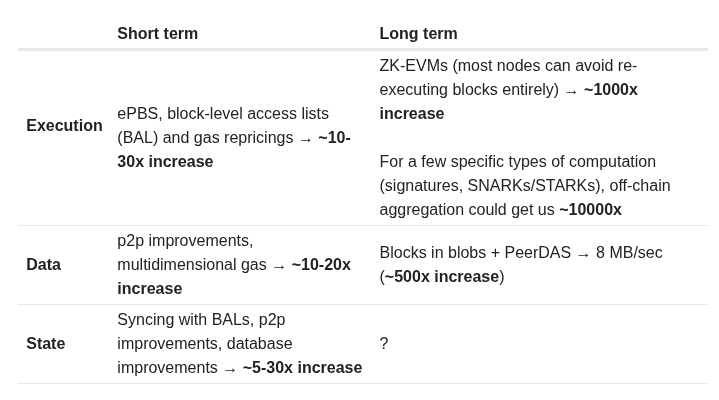
* We want 1000x scale on Ethereum L1. We roughly know how to do this for execution and data. But scaling state is fundamentally harder.
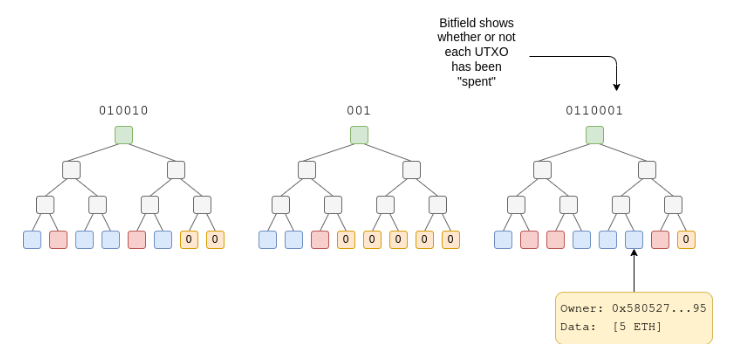
* The most practical path for Ethereum may actually be to scale existing state only a medium amount, and at the same time introduce newer forms of state that would be extremely cheap but also more restrictive in how you can use them.
* In such a design, the present-day state tree would over time become dominated by user accounts, defi hub contracts, code, and other high-value objects, while all kinds of individual per-user state objects (eg. ERC20s balances, NFTs, CDPs) would be handled with cheaper but more restrictive tools. Making the developer abstractions to make this easy to implement for the use cases that make up >90% of state today seems very doable.
Enabled fp8 training for +4.3% improvement to "time to GPT-2", down to 2.91 hours now. Also worth noting that if you use 8XH100 spot instance prices, this GPT-2 repro really only costs ~$20. So this is exciting -
GPT-2 (7 years ago): too dangerous to release.
GPT-2 (today): new MNIST! :)
Surely this can go well below 1 hr.
A few more words on fp8, it was a little bit more tricky than I anticipated and it took me a while to reach for it and even now I'm not 100% sure if it's a great idea because of less overall support for it. On paper, fp8 on H100 is 2X the FLOPS, but in practice it's a lot less. We're not 100% compute bound in the actual training run, there is extra overhead from added scale conversions, the GEMMs are not large enough on GPT-2 scale to make the overhead clearly worth it, and of course - at lower precision the quality of each step is smaller. For rowwise scaling recipe the fp8 vs bf16 loss curves were quite close but it was stepping net slower. For tensorwise scaling the loss curves separated more (i.e. each step is of worse quality), but we now at least do get a speedup (~7.3%). You can naively recover the performance by bumping the training horizon (you train for more steps, but each step is faster) and hope that on net you come out ahead. In this case and overall, playing with these recipes and training horizons a bit, so far I ended up with ~5% speedup. torchao in their paper reports Llama3-8B fp8 training speedup of 25% (vs my ~7.3% without taking into account capability), which is closer to what I was hoping for initially, though Llama3-8B is a lot bigger model. This is probably not the end of the fp8 saga. it should be possible to improve things by picking and choosing which layers to apply it on exactly, and being more careful with the numerics across the network.
There have recently been some discussions on the ongoing role of L2s in the Ethereum ecosystem, especially in the face of two facts:
* L2s' progress to stage 2 (and, secondarily, on interop) has been far slower and more difficult than originally expected
* L1 itself is scaling, fees are very low, and gaslimits are projected to increase greatly in 2026
Both of these facts, for their own separate reasons, mean that the original vision of L2s and their role in Ethereum no longer makes sense, and we need a new path.
First, let us recap the original vision. Ethereum needs to scale. The definition of "Ethereum scaling" is the existence of large quantities of block space that is backed by the full faith and credit of Ethereum - that is, block space where, if you do things (including with ETH) inside that block space, your activities are guaranteed to be valid, uncensored, unreverted, untouched, as long as Ethereum itself functions. If you create a 10000 TPS EVM where its connection to L1 is mediated by a multisig bridge, then you are not scaling Ethereum.
This vision no longer makes sense. L1 does not need L2s to be "branded shards", because L1 is itself scaling. And L2s are not able or willing to satisfy the properties that a true "branded shard" would require. I've even seen at least one explicitly saying that they may never want to go beyond stage 1, not just for technical reasons around ZK-EVM safety, but also because their customers' regulatory needs require them to have ultimate control. This may be doing the right thing for your customers. But it should be obvious that if you are doing this, then you are not "scaling Ethereum" in the sense meant by the rollup-centric roadmap. But that's fine! it's fine because Ethereum itself is now scaling directly on L1, with large planned increases to its gas limit this year and the years ahead.
We should stop thinking about L2s as literally being "branded shards" of Ethereum, with the social status and responsibilities that this entails. Instead, we can think of L2s as being a full spectrum, which includes both chains backed by the full faith and credit of Ethereum with various unique properties (eg. not just EVM), as well as a whole array of options at different levels of connection to Ethereum, that each person (or bot) is free to care about or not care about depending on their needs.
What would I do today if I were an L2?
* Identify a value add other than "scaling". Examples: (i) non-EVM specialized features/VMs around privacy, (ii) efficiency specialized around a particular application, (iii) truly extreme levels of scaling that even a greatly expanded L1 will not do, (iv) a totally different design for non-financial applications, eg. social, identity, AI, (v) ultra-low-latency and other sequencing properties, (vi) maybe built-in oracles or decentralized dispute resolution or other "non-computationally-verifiable" features
* Be stage 1 at the minimum (otherwise you really are just a separate L1 with a bridge, and you should just call yourself that) if you're doing things with ETH or other ethereum-issued assets
* Support maximum interoperability with Ethereum, though this will differ for each one (eg. what if you're not EVM, or even not financial?)
From Ethereum's side, over the past few months I've become more convinced of the value of the native rollup precompile, particuarly once we have enshrined ZK-EVM proofs that we need anyway to scale L1. This is a precompile that verifies a ZK-EVM proof, and it's "part of Ethereum", so (i) it auto-upgrades along with Ethereum, and (ii) if the precompile has a bug, Ethereum will hard-fork to fix the bug.
The native rollup precompile would make full, security-council-free, EVM verification accessible. We should spend much more time working out how to design it in such a way that if your L2 is "EVM plus other stuff", then the native rollup precompile would verify the EVM, and you only have to bring your own prover for the "other stuff" (eg. Stylus). This might involve a canonical way of exposing a lookup table between contract call inputs and outputs, and letting you provide your own values to the lookup table (that you would prove separately).
This would make it easy to have safe, strong, trustless interoperability with Ethereum. It also enables synchronous composability (see: https://t.co/9jy6v1X6Fw and https://t.co/gZmu3YjebM ). And from there, it's each L2's choice exactly what they want to build. Don't just "extend L1", figure out something new to add.
This of course means that some will add things that are trust-dependent, or backdoored, or otherwise insecure; this is unavoidable in a permissionless ecosystem where developers have freedom. Our job should make to make it clear to users what guarantees they have, and to build up the strongest Ethereum that we can.
Against consensus thinking these days, bitcoin, ether, Solana, and perhaps hyperliquid could be good diversifiers. Since early 2020, the correlation between the bitcoin price and the gold price has been very low, 0.14. Gold led bitcoin in the last two major bitcoin bull markets.