Spain just blocked Archive Today.
Try to visit the web archive and many Spanish ISPs now redirect you to a government page warning:
“YOU ARE TRYING TO ACCESS AN ILLEGAL WEBSITE.”
It even tells users they’re “contributing to an illegal and criminal activity” simply by trying to access it.
A tool used by journalists and researchers to preserve the web is now treated like contraband.
The block reportedly followed a complaint from an unnamed rights holder and was imposed by Spain’s Intellectual Property Commission, not through a court ruling.
That's an entire web-archiving service blocked over copyright and the complainant isn’t even public.
Look, picking between nano or vim isn't just an editor preference. I have a theory that it tells me what kind of person you are.
nano users:
- get promoted at work for being "easy to work with"
- spend a considerable amount of time working on improving their LinkedIn headline
- write documentation
- likely have a plant on their desk
- cook from a recipe
- have a partner that knows what they do for a living
- have more IRL friends than online
- write dates like Sept 16, 2026
- have hobbies
vim users:
- have job stability because no one else knows how to keep the legacy servers running
- spend a considerable amount of time working on improving their terminal settings (zsh ftw btw)
- don't read documentation
- likely have a mechanical keyboard on their desk
- cook from memory or feel
- have a partner that just thinks you "do computers" for a living
- have more online friends than IRL
- only uses ISO 8601 date format
- have a hobby
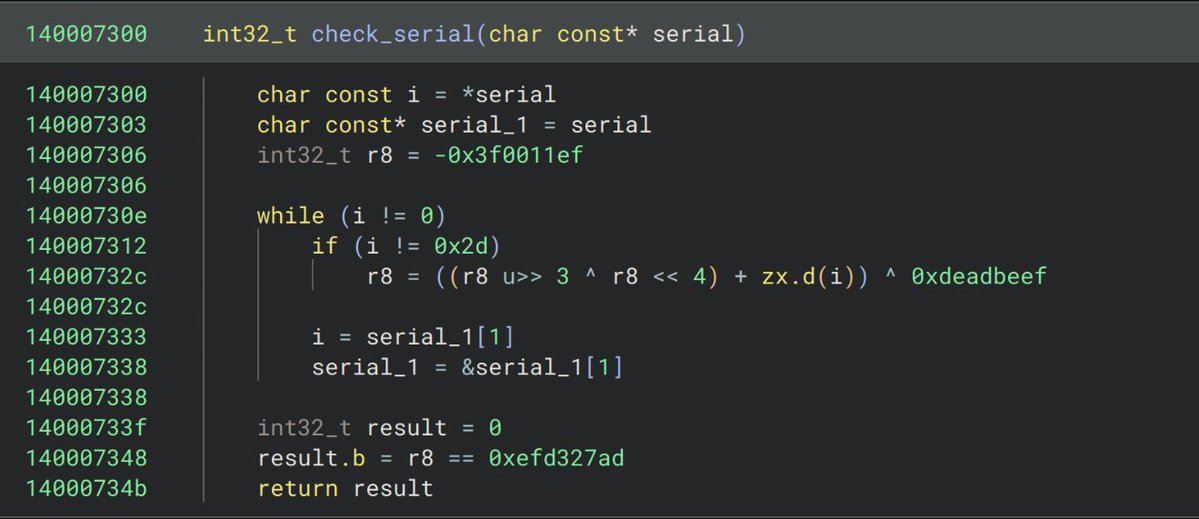
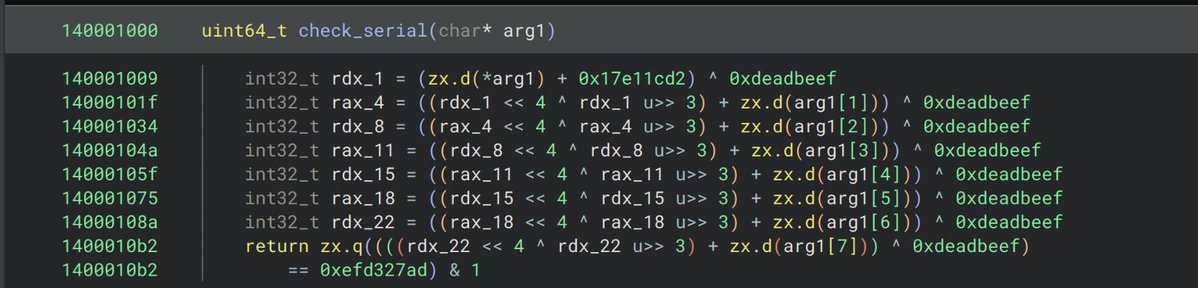
As promised, here is a thread about the research I've done in VMProtect!
First, the decompiled version with Binja (@vector35) from the original binary, the vm_entry of VMProtect and finally a lifted version after the analysis! A total of 256 handlers analyzed
Follow here!🧵
New exploit: “xor dword [0xf80c2094], 1<<22”
Unlocks CPU microcode, the platform security processor, system management mode, and every internal processor register, all at once, on 100 million AMD CPUs. As far as I can tell can’t be fixed.
https://t.co/sgAfneFSsf
Great list. Here’s mine, with more focus on investigations, TH, DE and DFIR.
These are the training providers I can stand behind, and most won’t break the bank:
https://t.co/INXc1PhZNE - Endpoint forensics and the works 💙
https://t.co/LqRdZDI59V - Investigation skills across the board
https://t.co/DZRz1Kzwlm - Great blue team courses. Check out Constructing Defence 👀
https://t.co/SRghNKtZ4K - DFIR training
https://t.co/0XfimL82FQ - Cloud incident response, free
https://t.co/VtIxHoQNOo - Solid beginner courses
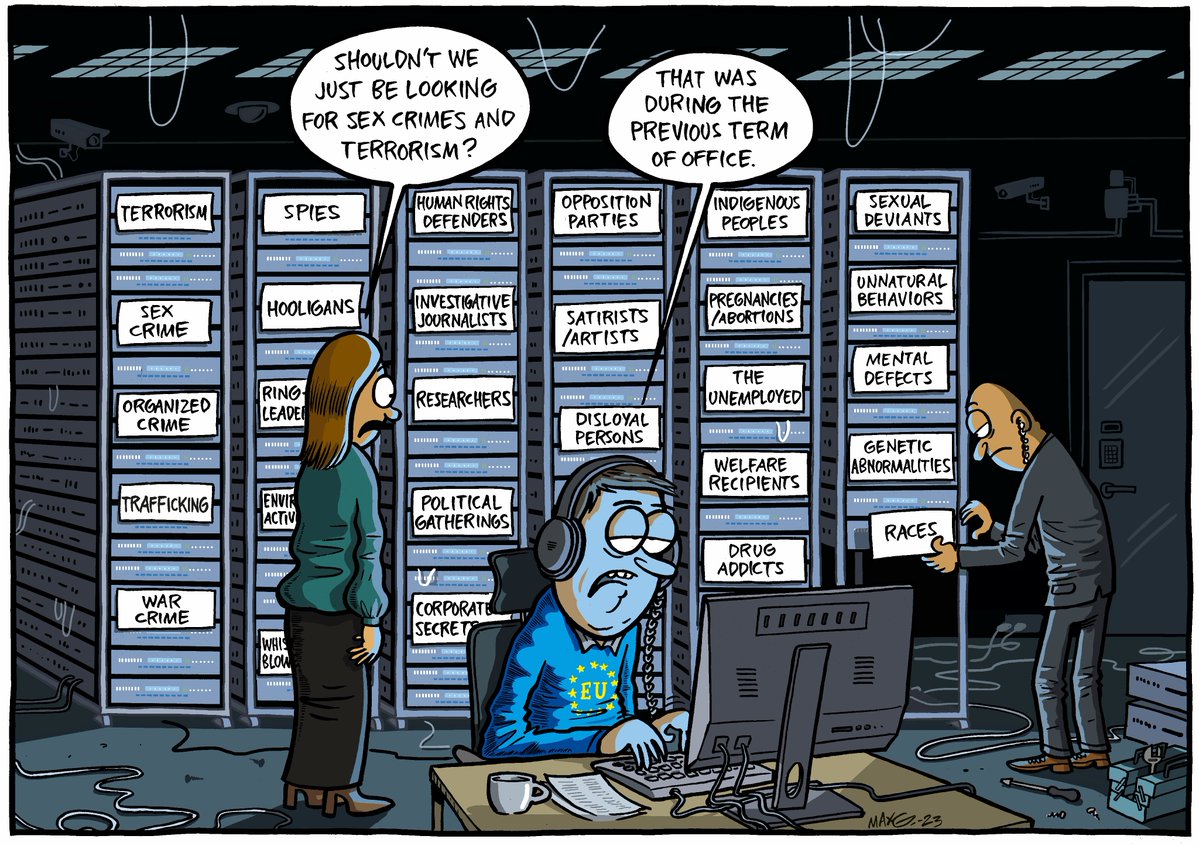
Chat Control 1 is back. Despite the European Parliament voting down the legislation twice this year, the Council of the European Union and parts of the Parliament today managed – through an urgent procedure – to extend it for another two years. The law was originally introduced as temporary legislation, so that its effectiveness could be evaluated. At the end of 2025, the European Commission itself concluded that it was not possible to determine whether the law had any measurable effect. Even so, it has now been pushed through.
Some of today's amendments could have stopped the law. And a majority of the voting MEPs wanted to do so. By a margin of 314-276, the Parliament voted to reject the proposal through these amendments. However, since it was an urgent procedure, 361 votes were required. As a result, the majority lost today and Chat Control 1 was passed. The urgent procedure was a dirty play by the Council and parts of the Parliament – it’s a procedure not meant to be used on legislation already rejected by the Parliament.
For now, Chat Control 1 will remain in effect. This means that tech companies may continue scanning communications without a warrant or suspicion.
However, the real battle is Chat Control 2. Unlike Chat Control 1, it would require all providers to scan communications, and to do so far more extensively than Chat Control 1 ever has.
‼️🇪🇺 A black day for freedom and civil rights in Europe.
The European Parliament has voted in favour of "chat control." The lapsed derogation that lets platforms scan private messages for child sexual abuse material (CSAM) is back into force until 2028.
Parliament killed this same text 311 to 228 in March. Today it passed.
How it passed also matters, it was a democracy undermining move from The European People's Party (EPP), the largest group in Parliament, who revived the Council's text as a second-reading position, meaning it stood unless an absolute majority of all MEPs, at least 361, voted to reject or amend it.
Bad news, The European Parliament has approved the extension of the EU’s temporary ChatControl 1.0 rules until April 2028, but the way it passed sparked backlash.
In today’s vote, MEPs voted on a proposal to reject the Council’s position on the extension:
> 314 MEPs voted to reject it.
> 276 MEPs voted against rejecting it, meaning they supported the extension.
>17 MEPs abstained.
Even though more MEPs voted to reject the extension than to support it, the motion still failed.
This happened because the vote followed the EU’s second-reading procedure, which requires an absolute majority of all Members of the European Parliament(at least 361 votes) to reject the Council’s position.
A simple majority of the votes cast was not enough.
As a result, the Council’s position was automatically approved, and the ChatControl 1.0 extension was adopted.
The extension keeps the temporary rules that let online platforms voluntarily detect and report child sexual abuse material (CSAM) while the EU continues working on the permanent ChatControl 2.0 proposal.