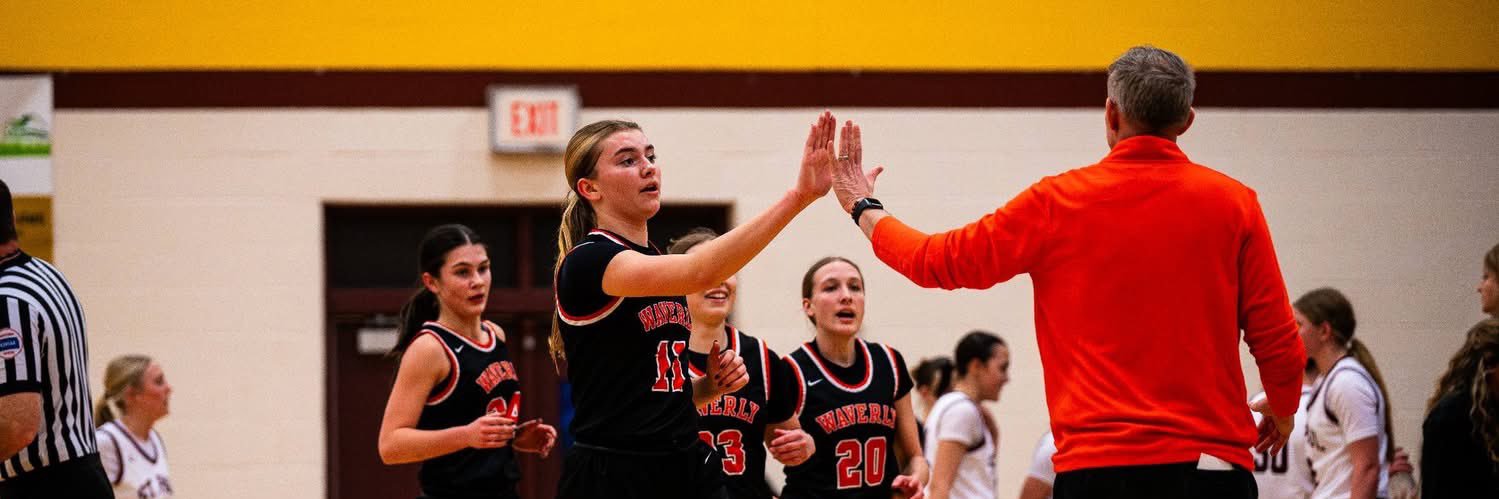
Just because the coach doesn’t play your child doesn’t mean they dislike them. A coach can care deeply about your child, both as a player and person, without agreeing with your assessment of their talent.
Good morning.
Updated practice schedules for this coming week:
JH Football: 6:30-8:15pm
HS Football: 6:30-8:30pm
JH Volleyball: Normal Time, Old Gym
HS Volleyball: 6:30-8:00pm
If you thought --> this player can never help us, then 🛑 right there. Instead of thinking what can I get from them, flip your mindset to what can I do for them. Coaching is not about you, it's about them. Not the starting 5, ALL of them. Reach them & teach them. Go be great!
A coach who stops growing is a coach who reduces their ability to grow those that they are called to lead
When we continue to grow ourselves through clinics, books, podcasts, mentorship, we put ourselves in a better position to increase our influence and impact on others
We can choose comfort
We can choose growth
We can’t choose both
When people ask me what one of the biggest predictors of a competitive kid is, my answer is usually the mom. Over 25 years of coaching, I’ve noticed that when Mom is competitive—a true dog—more often than not, her kids are too. Dads absolutely play a major role as well, but if I had to pick one trait that consistently shows up in competitive kids, it’s having a mom with that same fire.
@CoachDanCasey@chlkapp 8-Man, here!
Under: Slot Right, Tight Left - Slot Motion Left - 3 Quick Verts with Back Flare Left
Gun: Slot Right, Back Right - Trap Read
You don’t have to draw on Visio anymore 🚀
We're giving 3 coaches a free year of Chlk for iPad.
That’s a full season of plays that don't look like they were drawn in 2009 on an outdated PC architecture app.
You know the drill:
→ Follow @chlkapp
→ Retweet to Enter the Giveaway
→ Drop your favorite play to double your chances!
Winners announced on Sunday!
Due to TREMENDOUS attendance during the first week, and limited gym space, there will be a small schedule change to Youth Basketball Skills. K-2nd Grade will be from 9:00-9:45am. 3rd-5th Grade will be from 9:45-10:30am.
One of the reasons youth sports has become so complicated is because everyone involved is often chasing a different definition of success.
One parent wants college recruiting to be the primary focus. Another wants their child to enjoy the experience and make friends. Another wants championships. Another wants equal playing time. Another believes development matters more than wins. Another believes if you’re paying thousands of dollars, your child should be on the field or court.
None of those perspectives are necessarily or inherently wrong. They’re just different.
The challenge is that one coach, one team, and one season cannot satisfy all of them at the same time.
Parents are also navigating an increasingly confusing landscape. Travel teams, private trainers, recruiting services, showcases, camps, social media influencers, former players, college coaches, and other parents all offer advice. Often that advice directly contradicts itself.
One person says play multiple sports. Another says specialize early.
One person says development matters most. Another says exposure matters most.
One person says find the best coach. Another says find the team that will give your child the most playing time.
One person says your child needs more reps. Another says your child needs more rest.
One person says the child should attend prom and not miss life events. Another says team commitments should come before all else.
For families investing significant amounts of time and money, it can become incredibly difficult to know who to trust.
The coaching side is just as complicated.
Most coaches are not showing up every day trying to hold players back, target families, or play favorites. Most genuinely care about their athletes and want them to succeed. But coaches are often forced to make decisions where there are no perfect answers.
Should they prioritize winning or development?
Should they play the senior who has earned it or the younger player with a higher ceiling?
Should they focus on the best interests of one athlete or the best interests of the team?
Should they reward effort, production, leadership, potential, experience, or loyalty?
Every decision creates a winner and a loser in someone’s eyes.
A coach sees the entire roster. A parent sees their child.
Neither perspective is inherently wrong, but they naturally create conflict.
The reality is that parents often judge a season through the lens of their child’s experience, while coaches are forced to evaluate it through the lens of the entire team. Those viewpoints frequently collide.
Add in the emotional investment, financial commitment, social media comparisons, recruiting pressure, and the fact that every child develops at a different pace, and it becomes easy to see why frustration exists.
Youth sports isn’t difficult because people don’t care.
It’s difficult because everyone cares deeply.
Parents care about their children.
Coaches care about their teams.
Athletes care about their opportunities.
And when passionate people are pursuing different goals, disagreements are inevitable.
The best environments aren’t the ones where everyone always agrees. They’re the ones where expectations are clear, communication is honest, trust is built over time, and everyone remembers that there are many different paths to success in sports and in life.