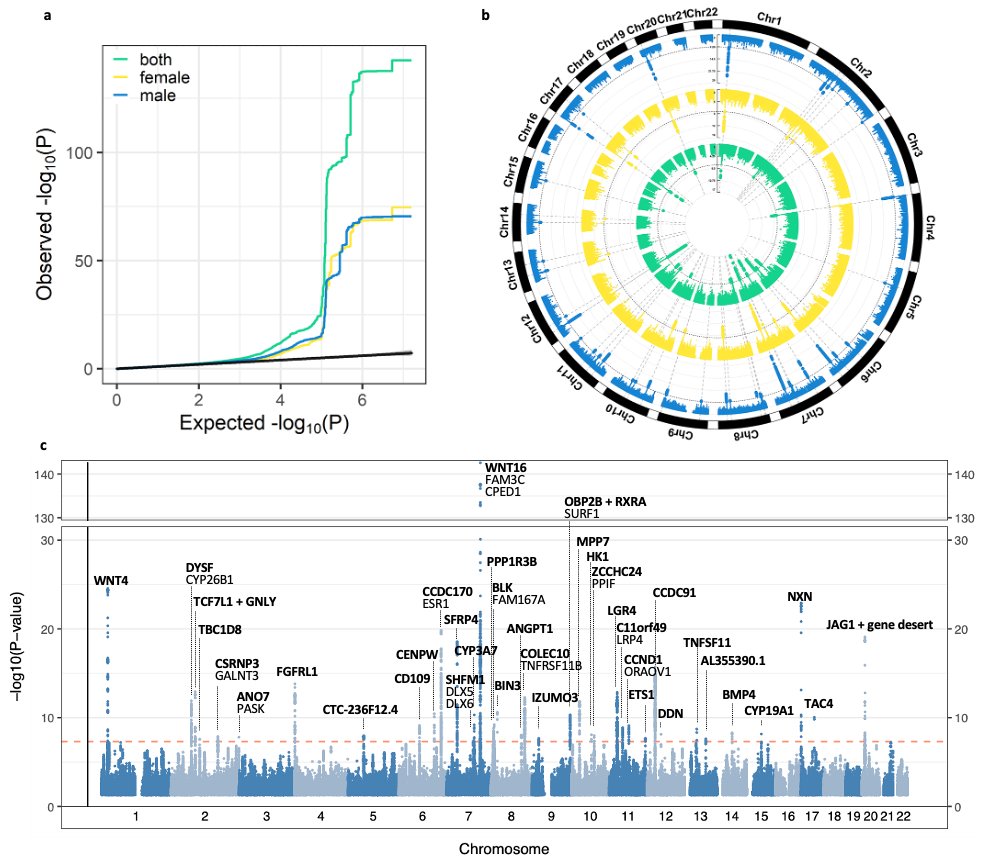
We have quantified calvarial bone marrow adiposity and its genetic architecture from 38k head MRI scans.
https://t.co/yULSRafdOt
#blood#bone#Genetics
1/n
@SashaGusevPosts This prompt makes use of features that are not available on regular open AI models but apparently codex has some of these features (eg multi agent). Alternatively you could ask for access to openAI’s research capabilities. With your credentials, you could probably get that.
Yesterday, we made GPT-5.6 Sol Ultra generally available. Today, we're sharing that it produced a proof of the 50-year-old Cycle Double Cover Conjecture using 64 subagents in just under one hour. We're sharing the prompt and proof below. We're excited to see what you all do with Ultra!
@SashaGusevPosts My hypothesis is that behavioural traits may be more than other traits at risk of the masking effect. Behavioural traits are strongly influenced by upbringing (shared environment) and brain biology where delicate balance between gene products is essential to function (epistasis).
@SashaGusevPosts In the UKB paper "dominance" is being used specifically i.e. not referring to epistasis. So, no conclusion is reached on epistasis. Given the prevalence of epistasis in model organisms it would seem unlikely that it does not play an important role in complex human traits.
Note: https://t.co/zBDFUc48A0 does not summarize nor retrieve articles. In such cases, LLMs often confabulate, which can be harmful. Instead, BrainGPT stitches together existing knowledge too vast for human comprehension to assist humans in expanding scientific frontiers. (3/3)
@SashaGusevPosts An interesting paper in this context is: Dominant Genetic Variation and Missing Heritability for Human Complex Traits: Insights from Twin versus Genome-wide Common SNP Models https://t.co/2ymQ08Rwob. They study physical rather than behavioural traits but relevant nevertheless.
@SashaGusevPosts Another potential contributor to the gap between SNP-h2 and twin-h2 is epistatic effects which have been shown to be ubiquitous in model organisms through experimental modification: Mackay, T. F. C. (2014) https://t.co/zxPRb7OTYb
Excited to share my first PhD paper!🎉In this study, we examined structural brain measures🧠, brain age gap🧠🧓, and physical traits🫀🫁💪 in individuals carrying a 15q11.2 BP1-BP2 deletion or duplication🧬. (🧵1/7)
https://t.co/CCHoV5KEXc
🧐Ever wanted to know more about the genetics of mental disorders but didnt know where to start? Take a look at our new review in @WPA_Psychiatry 🧬
Great experience collaborating on this with the inimitable @olavsmeland, @oleaandreassen & @FreiOleksandr
https://t.co/yKnkLWTEwb
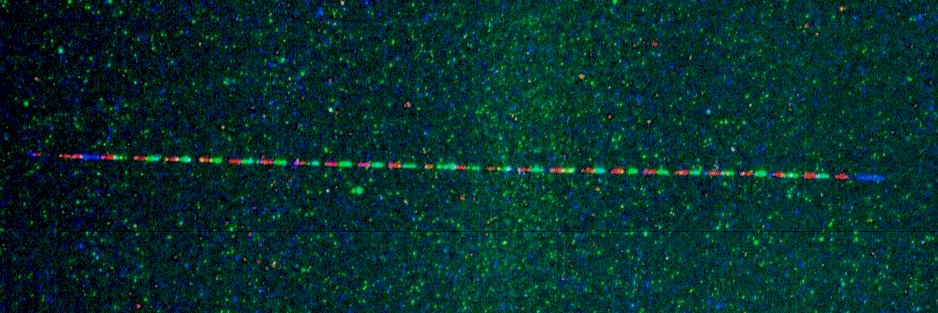
I’ve made this video as an intuition pump for the density of #synapses in the #brain. This volume ~ grain of sand, has >3.2 million synapses (orange cubes). Peeling them away leaves only inputs on 2 #neurons. Zooming in, we see the synapses localized to the dendritic spines.
#b3d
Just posted! A @medrxivpreprint of our work using #DeepLearning to analyse #BoneMarrowAdiposity in @uk_biobank MRI data. This is the 1st use of deep learning for large-scale, multi-site analysis of bone marrow adiposity, highlighting new pathophysiological relationships...
1/4
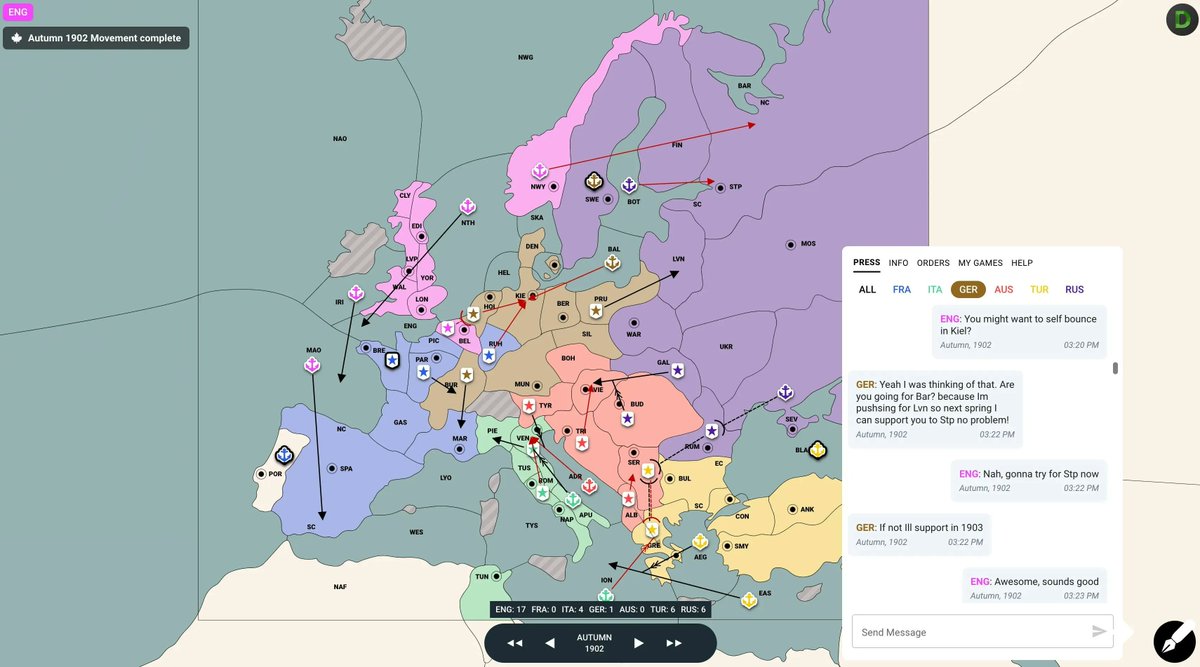
New paper in Science today on playing the classic negotiation game "Diplomacy" at a human level, by connecting language models with strategic reasoning! Our agent engages in intense and lengthy dialogues to persuade other players to follow its plans. This was really hard! 1/5