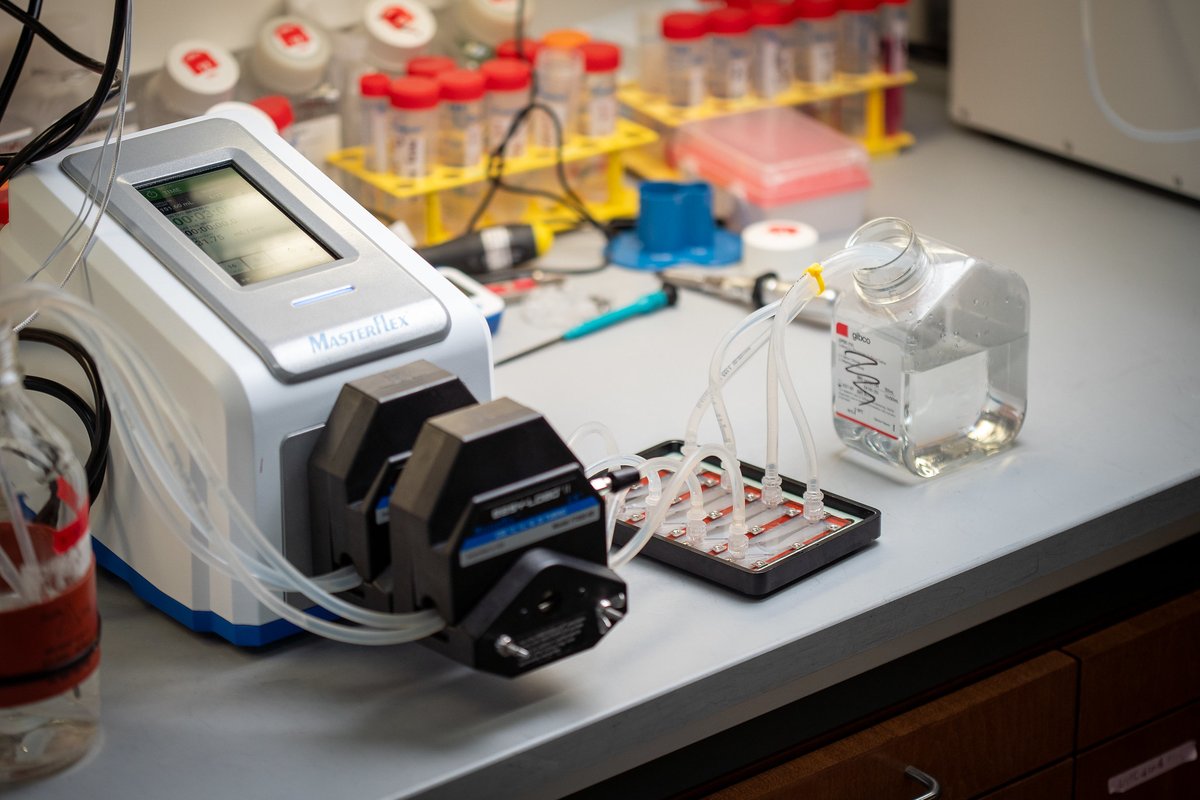
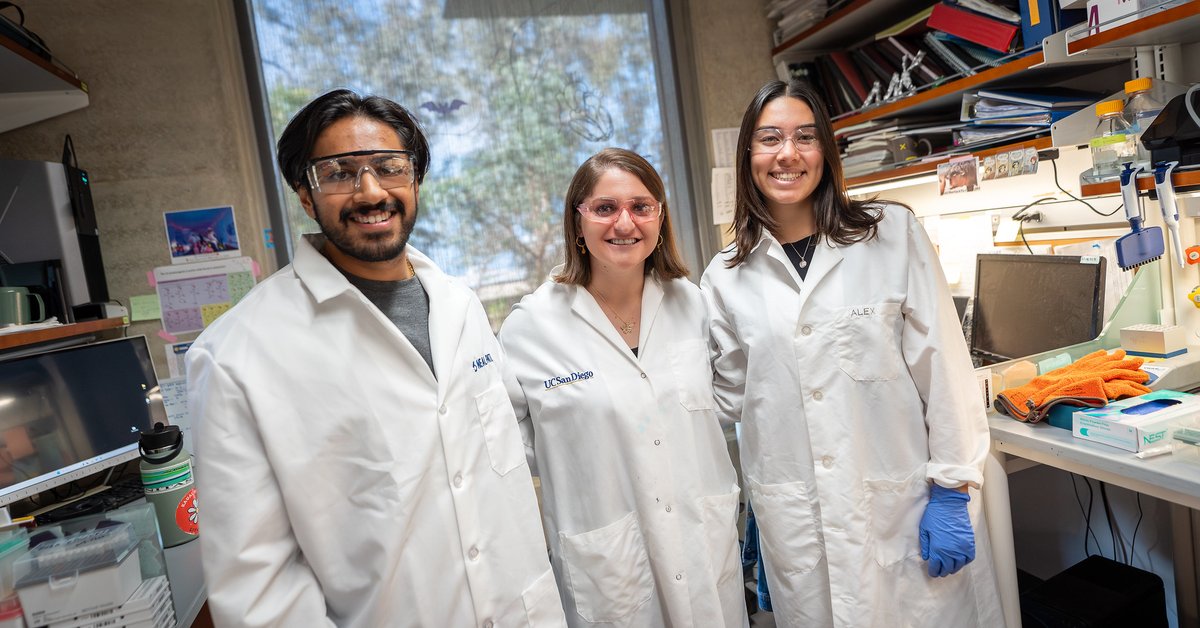
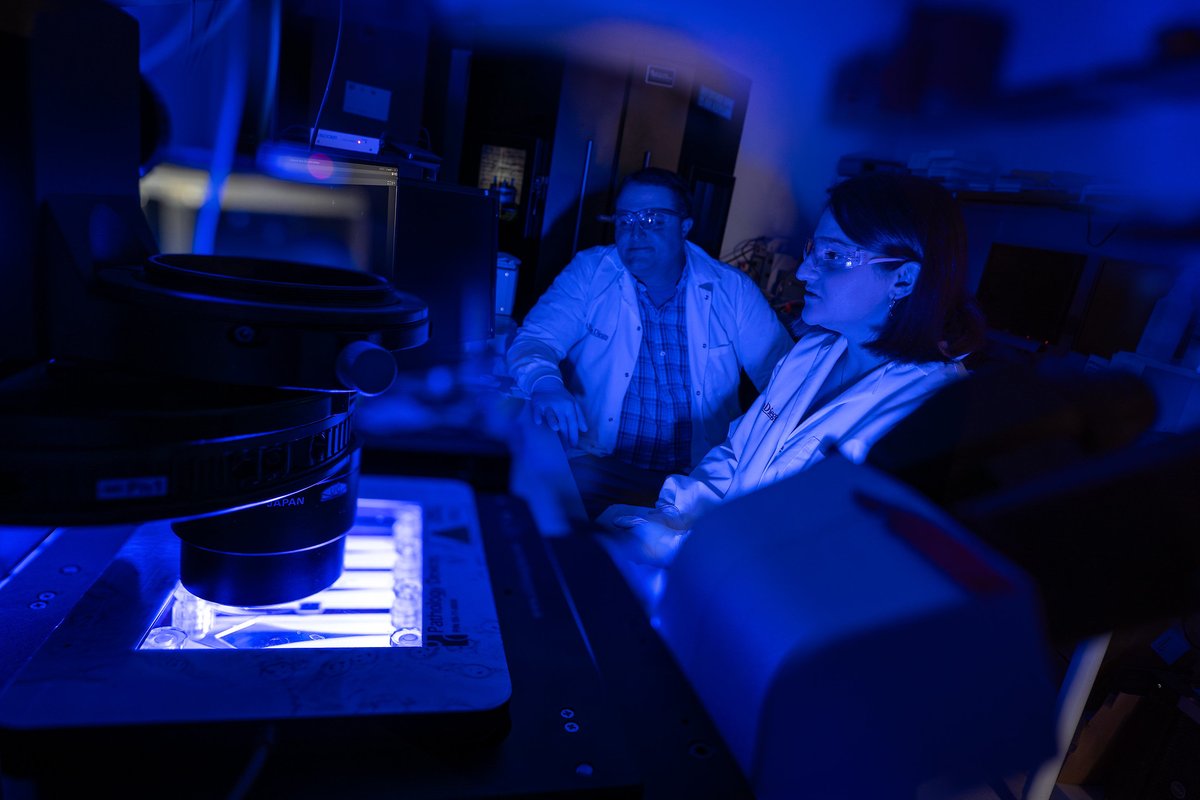
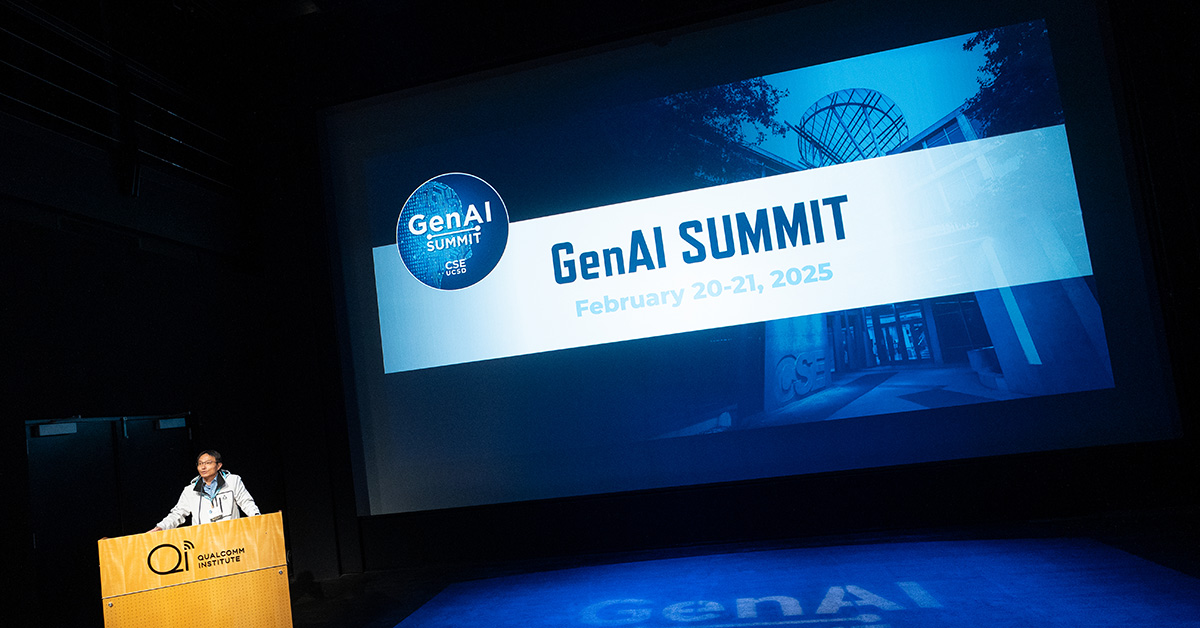
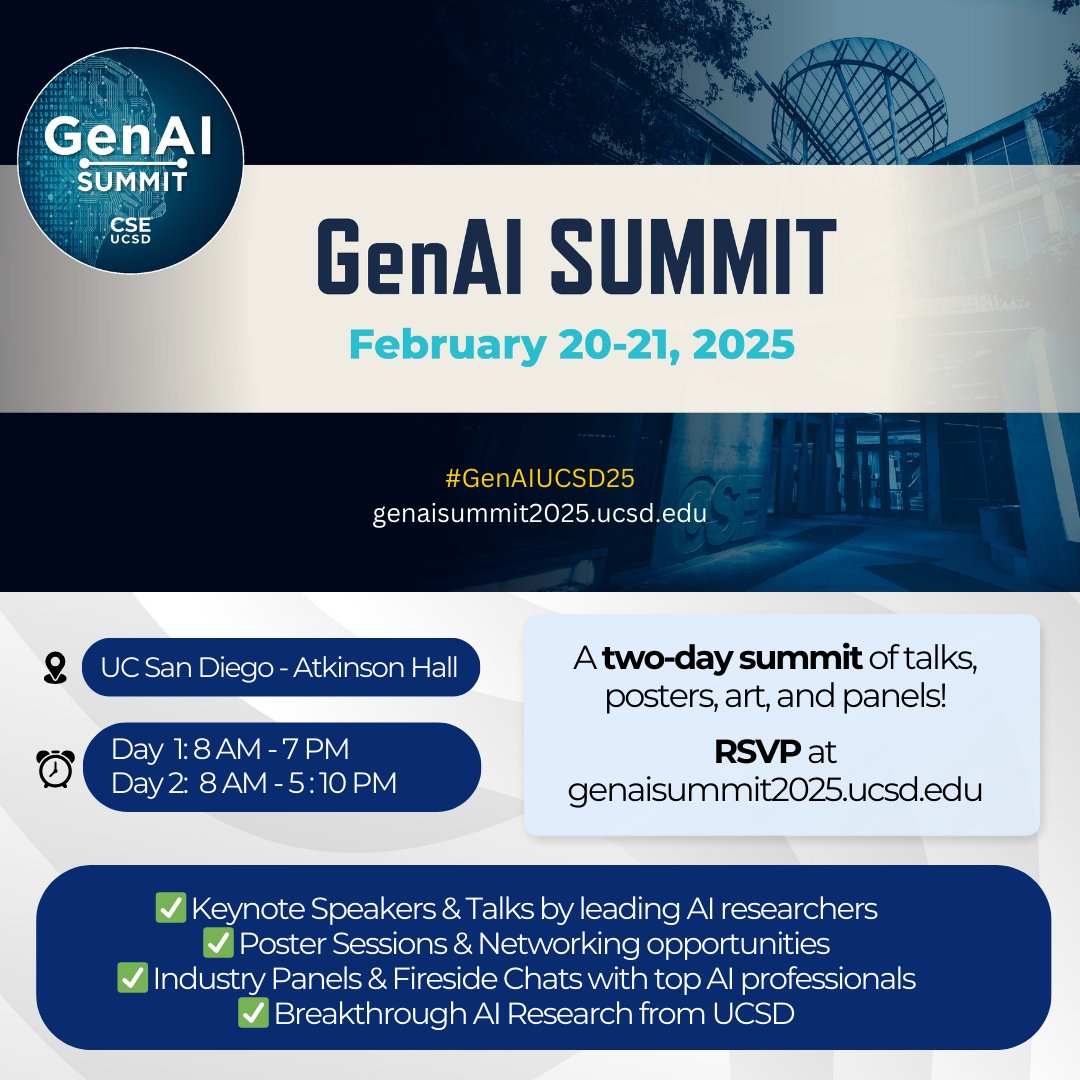
This #AI tutor developed and tested by @UCSanDiego researchers will be deployed more broadly in San Diego County. It’s trained on course-specific materials and to never just to give answers to course assignments.
https://t.co/j8edQI6hLG
@ucsd_cse@QI_UCSD@SDSU@palomarcomets
Our engineers are doing critical work to keep buildings and infrastructure safe during earthquakes at the world's only outdoor earthquake simulator, one the three biggest such facilities in the world!
#earthquake#seismicsafety
🚨 Earthquakes rocked San Diego County this week!
Good news: @UCSanDiego's world-famous shake table is helping make buildings, bridges & other structures safer when the ground shakes. 💪🌍
Thanks to support from @NSF!
Watch on @CBS8 ⤵️
https://t.co/cDnNsUMtuZ
We’re Top 10, Yet Again🔱The @UCSanDiego Jacobs School of Engineering ranked #10 best in the nation in the influential @usnews rankings, up from #11 last year. Among public engineering schools, the Jacobs School ranks #6. More details: https://t.co/tMF08gSPXq @UofCalifornia
🎉 Congratulations to Professor Meyers! 🎖️
Marc A. Meyers, a Distinguished Professor in Mechanical and Aerospace Engineering & Chemical and NanoEngineering, has been awarded the Acta Materialia Gold Medal for his contributions to materials science!👏
@UCSanDiego@UCSDJacobs
By assessing how “sticky” tumor cells are, researchers have found a potential way to predict whether a patient’s early-stage breast cancer is likely to spread. The discovery could help doctors identify high-risk patients and tailor their treatments. https://t.co/7OV8fOvbYC
Research breakthroughs—from lifesaving treatments to cutting-edge technology—are made possible with federal funding. But today, that funding is at risk. Without it, progress stalls. Help us protect research funding: https://t.co/jxGzKCN5xR
#BehindEveryBreakthrough#SaveResearch
📹 🔥 The @ALERTCalifornia public safety program is harnessing #AI throughout its 1,150+ camera network to revolutionize wildfire detection and response. @jimcarltonsf of @WSJ shares more on how this innovative system helps protect communities. ⬇️
https://t.co/gjhuJvJuMJ
Using the microscopic structures on the wings of the Morpho butterfly, @UCSanDiego researchers developed a simple, inexpensive way to analyze biopsy samples that could make cancer diagnosis faster, more accurate & more accessible worldwide. @LPoulikakos https://t.co/w9aElHg74X
Congratulations to @xiaolonw on being named one of @UCSanDiego's 2025 Sloan Research Fellows! Funding from the fellowship will support Wang's work to develop robots with finer motor skills and dexterity. https://t.co/tLKdPj6NHY
The #microdrone#batterylife may get a major upgrade, thanks to a new circuit design by @UCSanDiego & @CEA_Leti researchers. It features mini solid-state batteries in a “flying battery” configuration. Presented at 2025 ISSCC. https://t.co/Uo0VffvXws
For decades, @NIH funding has fueled breakthroughs in cancer, heart disease and more. But a new policy puts progress at risk. We’re asking Congress to oppose this abrupt change. Email your lawmakers!
🔗 Learn more: https://t.co/YpFPAxYxuQ
Thanks to @CAL_FIRE for sharing this video about our partnership and collaboration. Our @UCSanDiego scientists work hard to provide the data emergency managers need make informed decisions efficiently.
In the news! Sweat monitoring tech from the lab of @JWangnano was featured on the latest episode of @CNN's Vital Signs with Dr. Sanjay Gupta. The touch-based device measures levels of Parkinson's medication directly from a patient's fingertip sweat. https://t.co/Zcc9WSA7wC
We are thrilled to have six @UCSanDiego engineering professors named 2025 IEEE Fellows! Learn more about their outstanding contributions here: https://t.co/ChNskDmsuK
@XugroupUCSD @CNE_Nano@ucsd_cse
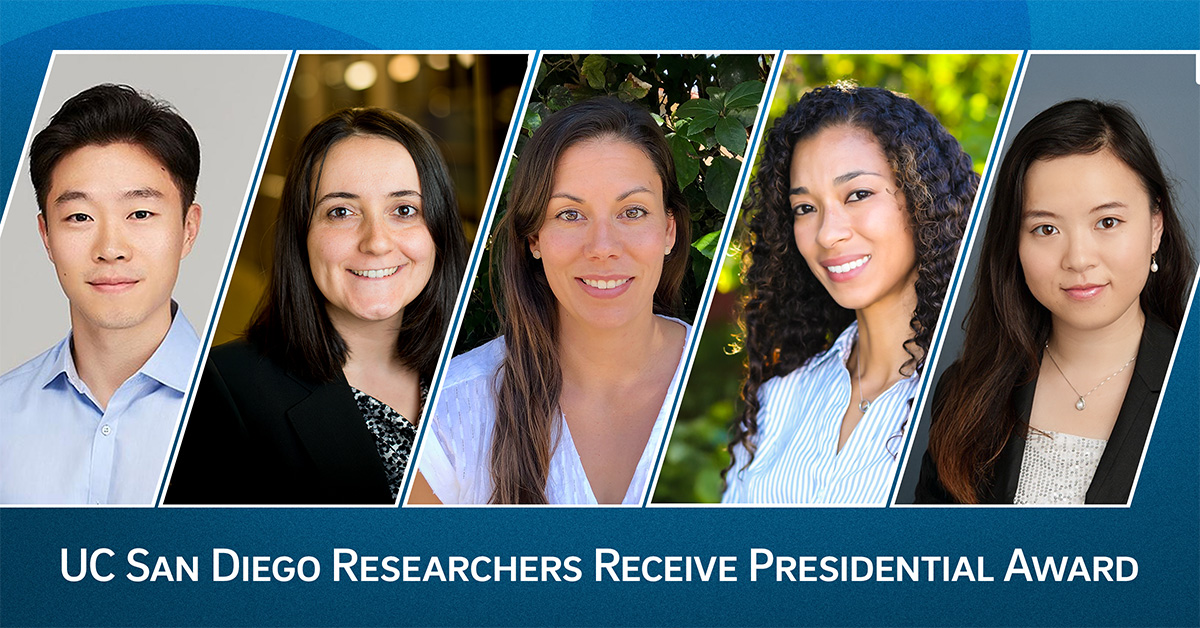
Five @UCSanDiego researchers received the Presidential Early Career Award for Scientists and Engineers from the White House!
In our school: associate profs John Hwang, Duygu Kuzum & Rose Yu.
@Scripps_Ocean's Sophia Merrified
@ucsdbiosciences' Sonya Neal
https://t.co/wtJMxw4wr0
What happens when you let a little #AI into your heart? Researchers co-led by @Zjahed developed an AI-driven method to noninvasively monitor electrical activity inside heart muscle cells—from the outside. @CNE_Nano@NatureComms@UCSanDiego https://t.co/Wup1FgNaAF