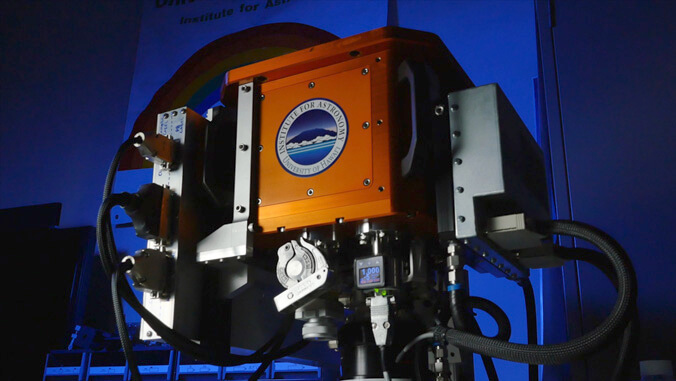
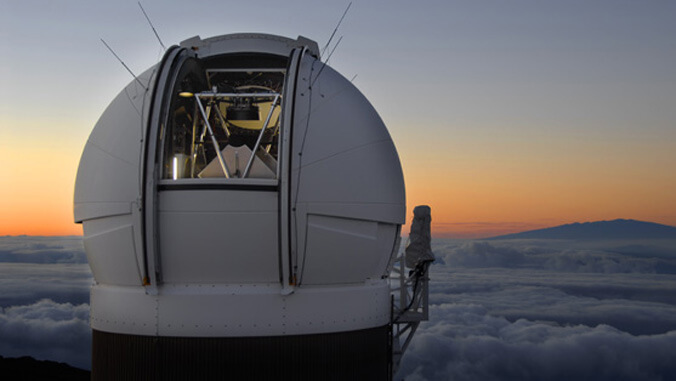
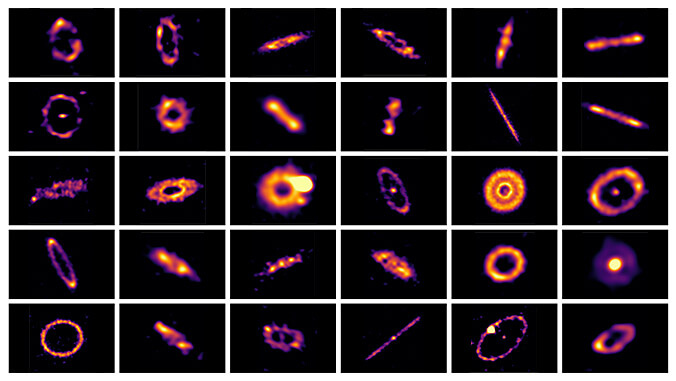
Using Maunakea's Submillimeter Array, a @UHIfA astronomer captured images of exocomet belts, revealing icy and rocky objects around 74 stars—advancing our understanding of planetary system formation ➡️ https://t.co/20K87Fx2CC
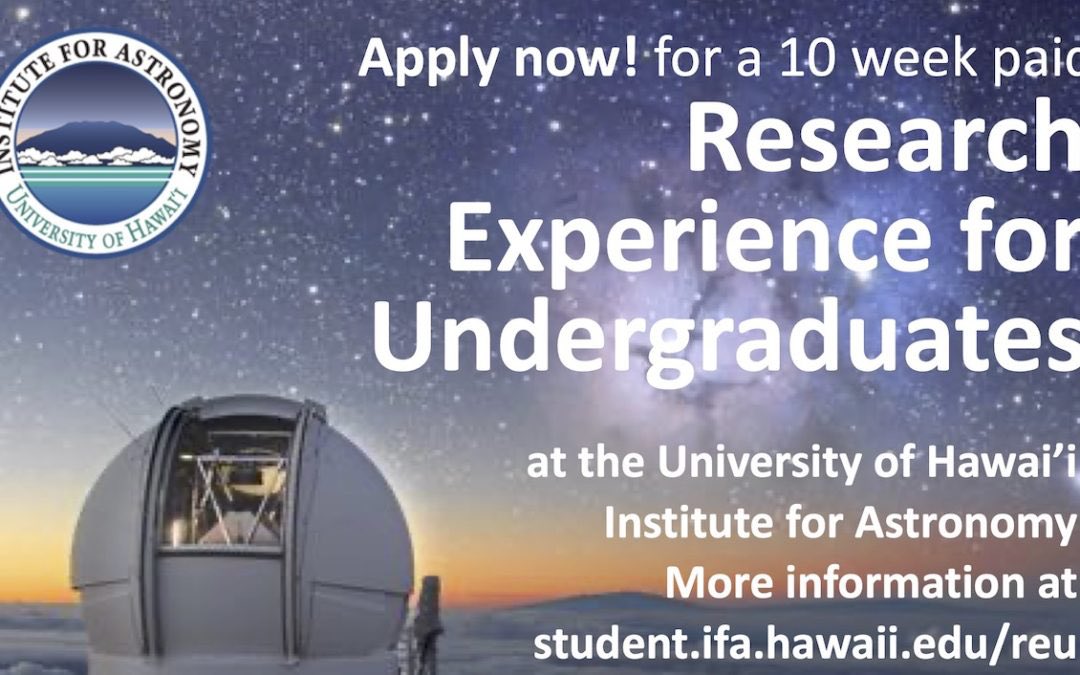
Y'all have until Wed to apply to the UHawaii @UHIfA astronomy research experience for undergrad (REU). https://t.co/kBemHsrRbc
Please encourage well-qualified, motivated, excited undergrads to apply!
Your #UHohana is in the initial stages of establishing a space engineering and instrument development center at @UHIfA’s facilities on the @UHHilo campus, thanks to general fund support from the Hawaiʻi State Legislature and @GovJoshGreenMD ➡️ https://t.co/62LchIFDUw
Here’s some good advice for students at any level (high school, undergrad, graduate) who are reaching out to faculty with questions or looking for opportunities.
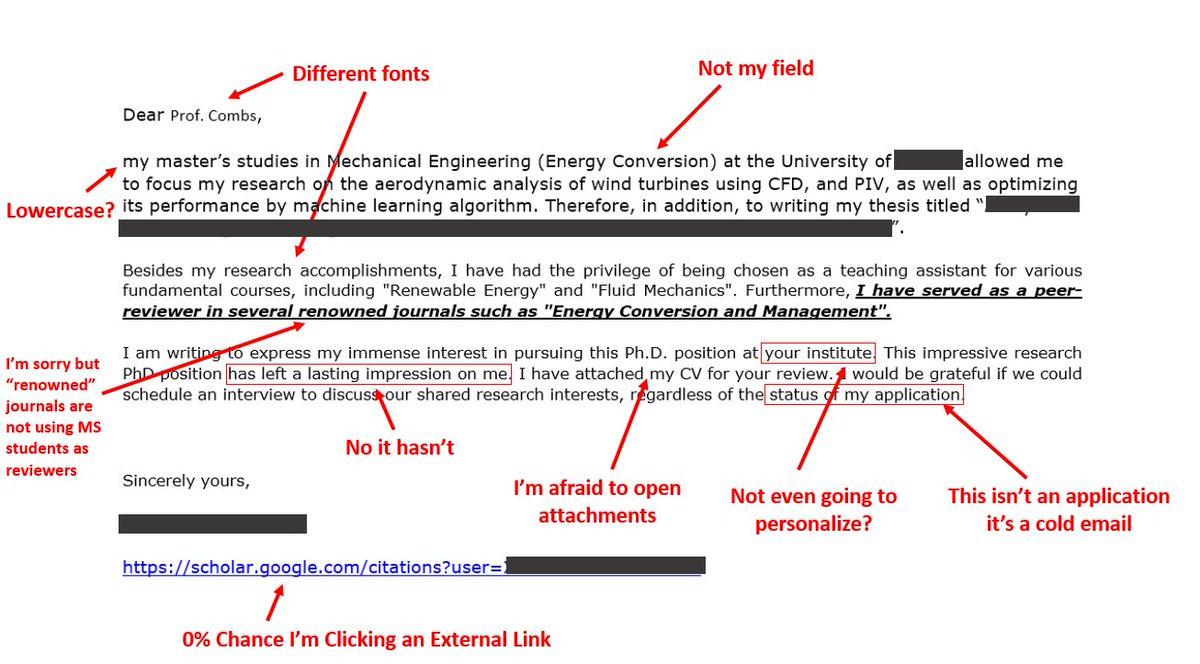
It's grad school application season and I see a lot of students wondering why faculty don't respond to their emails. I get emails like the one below every day and I delete almost all of them. Why? Let me discuss and help you learn how to write an email that WILL elicit a response...
For starters, when I see a clear form/copy-paste email with different fonts in the greeting it is 1) sloppy; 2) clearly someone fishing. Auto-delete. When you're writing these emails the format and grammar MATTER. PIs want students that write well because they will need to publish. Extensive formatting/grammar edits in manuscripts means significantly more work for us. Plus, it exhibits poor attention to detail and I don't want someone sloppy working in my lab.
Students should also try and target faculty working in their field. Notice that some of the first several key words are energy, wind energy, CFD, and machine learning. That's not me. But if this student had taken time to connect their strengths to my research by focusing on fluid dynamics, aerodynamics, PIV/diagnostics, this would have come across much stronger.
They should have said: "I know I have not worked in hypersonics but I have experience working in an experimental lab performing aerodynamic analysis using diagnostics like PIV. I would love the opportunity to apply this expertise in your hypersonic wind tunnel while completing my PhD". THAT is compelling.
Notice how the word "hypersonics" isn't in the original email once? They haven't mentioned the name of my university? Or mentioned any of our research areas? I also haven't had an active job posting in several weeks. It is all entirely generic.
You need to make an attempt to connect to this faculty member. Talk about how your experience would benefit their lab specifically. Which projects do they have that you find interesting? What was a specific finding in one of their papers that opened your eyes? Have you met them at a conference or been to one of their talks? Watched a recording online, heard them on a podcast, read an op-ed they wrote? Do you follow them on Twitter? (That last one might sound silly but it's a "connection" and can get a response)
Also note that we are probably wary of clicking external links or downloading attachments. Those might as well not be there. Highlight your high GPA, test scores, and maybe relevant coursework/papers in the body of the email. You don't want to make it too long but you need to sell yourself in the body not with attachments.
One point that is perhaps unfortunate but true: you need to have a certain degree of awareness of geopolitical events if you are applying to a school outside your home country. Are you applying somewhere that has a strained relationship with your home government? Will there be visa/travel/data access restrictions? This is especially true if the researcher is getting funding from defense agencies. Kids in the US probably shouldn't bother applying for grad school in Russia right now, for example. I wish the whole world was kumbaya all the time but unfortunately we all know that's just not how it is.
Can you get a current faculty mentor to reach out to someone on your behalf with a recommendation? That's also an introduction that is much more likely to get a response.
It also really helps if you send these emails *after* you have applied to the school. It shows you are serious. We're more likely to respond to an email from someone that we think we might run into on campus (or have in class) next year.
You might be saying "that's a lot of work to personalize those emails" and "that's a lot of money on application fees". Yes and yes. Regarding the former, if you aren't targeted in these emails and putting a lot of work into them, you aren't going to get responses. So consider the workload you can handle, do your research, and go after a select group of schools and faculty that seem like a good match. If you're sending 100s of these you're doing it wrong. Same comments go for application fee cost. There is a certain upfront investment in the application process (I'm not endorsing the system it's just a fact) but I would recommend applying to maybe 5 schools tops. Know your credentials and GPA. Talk to others to get a feel for where you will be admitted. You might email department/graduate school staff to inquire on general admissions requirements/guidelines. If your GPA + scores are so low you aren't confident you'll get in anywhere? You need to be asking yourself why you're going to grad school in the first place. Is it the right time? It's not like the classes are about to get easier.
Now, disclaimer, even if you do all that you're still not going to be getting responses from everyone. Plenty of faculty I work with don't even respond to my emails. Even faculty that are interested might not have funding at the right time, so there's a bit of timing luck involved as well. This is where targeting faculty that have specific ads posted (on personal websites or on job boards) makes a difference. But you'll at least have a good shot of not ending up in the auto-delete pile.
Hopefully this was constructive--please try to take this for what it is intended to be (helpful). This isn't a personal take-down, I'm sharing because I think this is information most students just don't have. Good luck out there!
PS: what to do when you don't get a response? Mostly, just try to not worry about it. Like I said, many will not respond even to a good email. Hopefully you get enough responses to have some options though. If you write good emails and your credentials are excellent (this is grad school, so they should be), it won't be a problem. If you feel the need to follow up, give people at least 5-10 business days before checking in. Also beware of local holidays (religious or otherwise). I've gotten emails from students on Dec. 25 and then follow-ups on Jan. 1 asking why I haven't responded. Don't be that person.
🪐 @UHIfA was awarded $4 million from @NASA to aid their exoplanet research - The grant will help develop new sensors needed to observe Earth-like planets and determine if they possess atmospheres suitable for life ➡️ https://t.co/AmTdYsj2uC
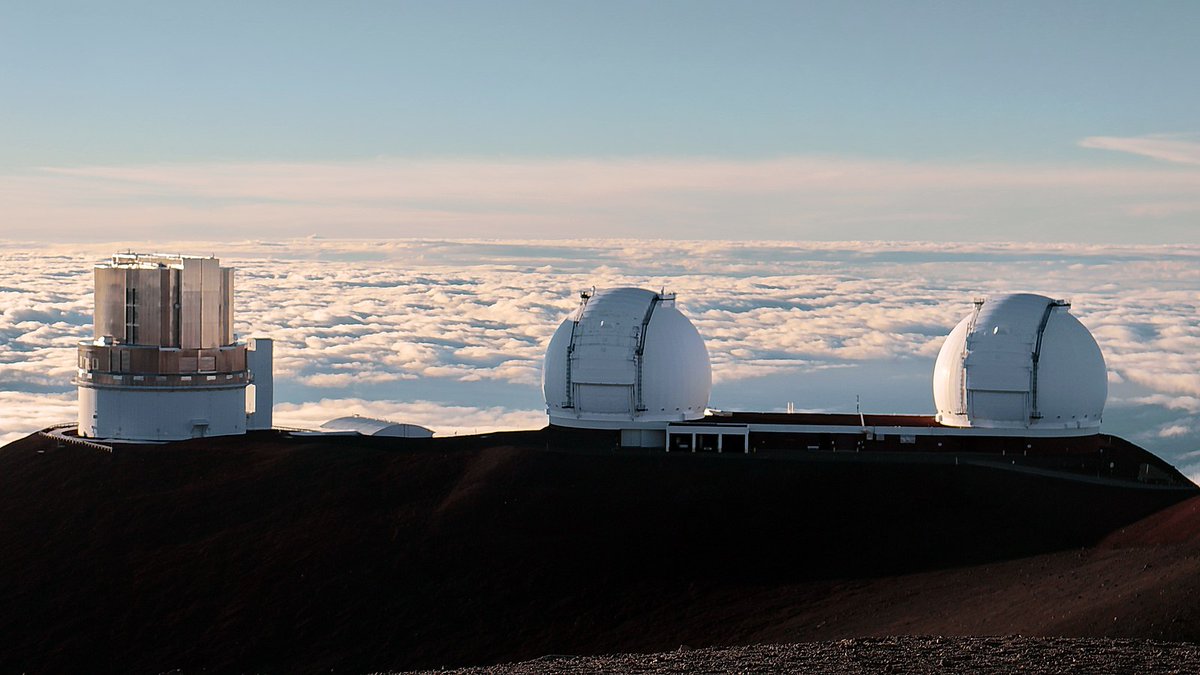
(1 of 3) Surviving an apocalypse: A @uhifa-led team using two @maunakeaobs, @keckobservatory & @cfhtelescope, has found an exoplanet named Halla that somehow escaped death when its sun Baekdu expanded into a red giant star. This, despite being just .5 AU from Baekdu! Details: https://t.co/xb7HaSz1C7
Congrats to Marc Hon, a @NASA Hubble Fellow at @uhifa & his team! 📸: @keckobservatory/@AdamGDog
The entire original goal of ASAS-SN was to produce a minimally-biased SN survey to compute rates. It has been a crazy decade, but @UHIfA grad student @dhvanil12299 has finally done it:
https://t.co/zTSe5UKSU2
Check it out if you want to see the best nearby SNe Ia rate to date.
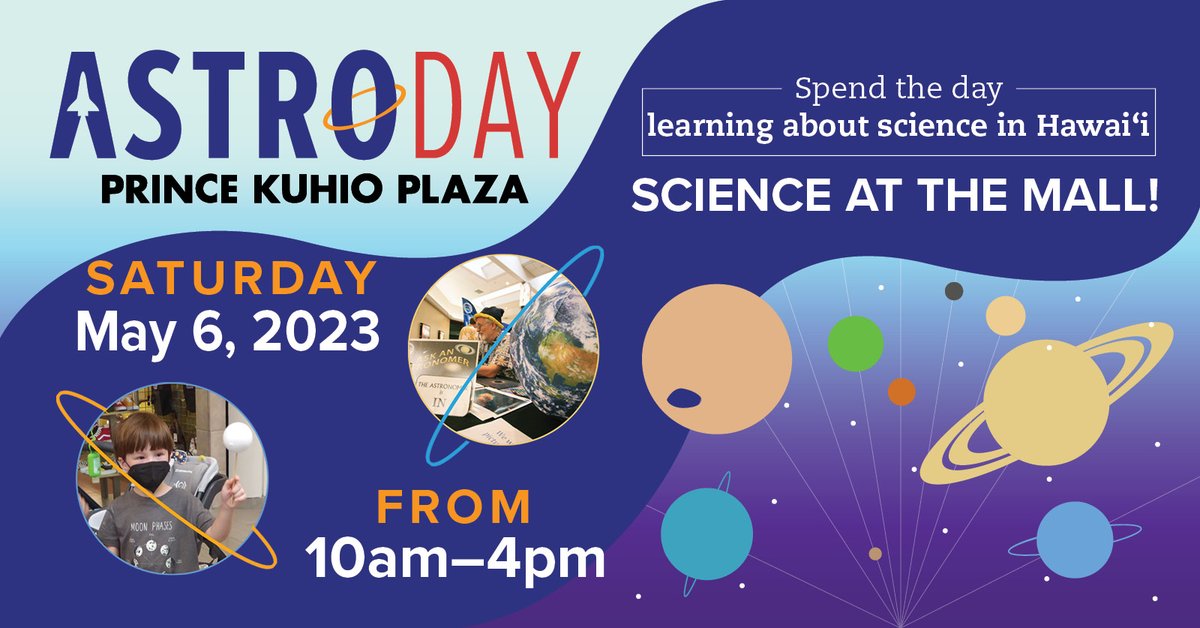
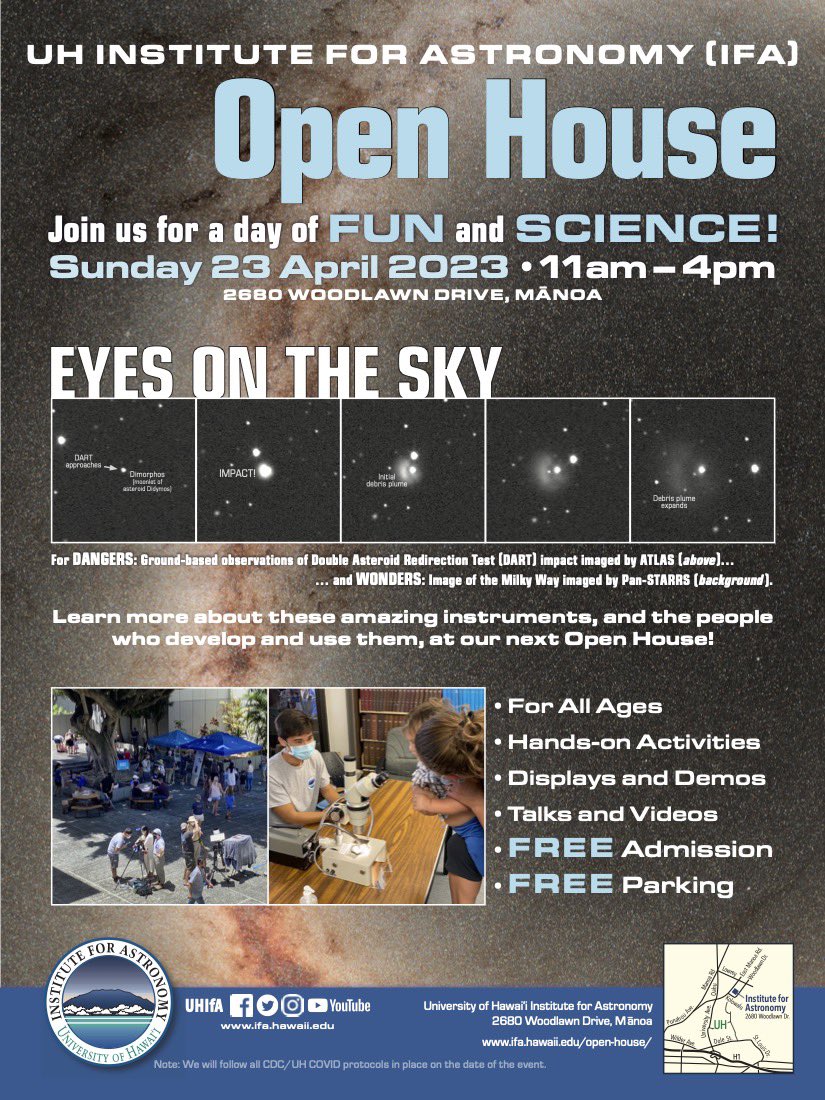
Hilo happenings! Come to the Prince Kuhio Plaza for some cool science fun while shopping and dining at the mall. Meet volunteers from the science and technology communities and have a great time with friends and family. #PriceKuhioPLZ#astronomy#sciencefun
Join us for back to back sessions on March 29th and 30th! An international team of astronomers will use the @SubaruTel_Eng and the @keckobservatory
simultaneously to observe 🔭 some of the biggest structures in the #universe as they are forming🌌
Register below🤩
Free #stargazing event March 25th on #Lanai at the @lanaicatsanctuary, with @uh_ifa , @ohanakilohoku, @stargazersofhawaii and more! https://t.co/llOaSEHIBB
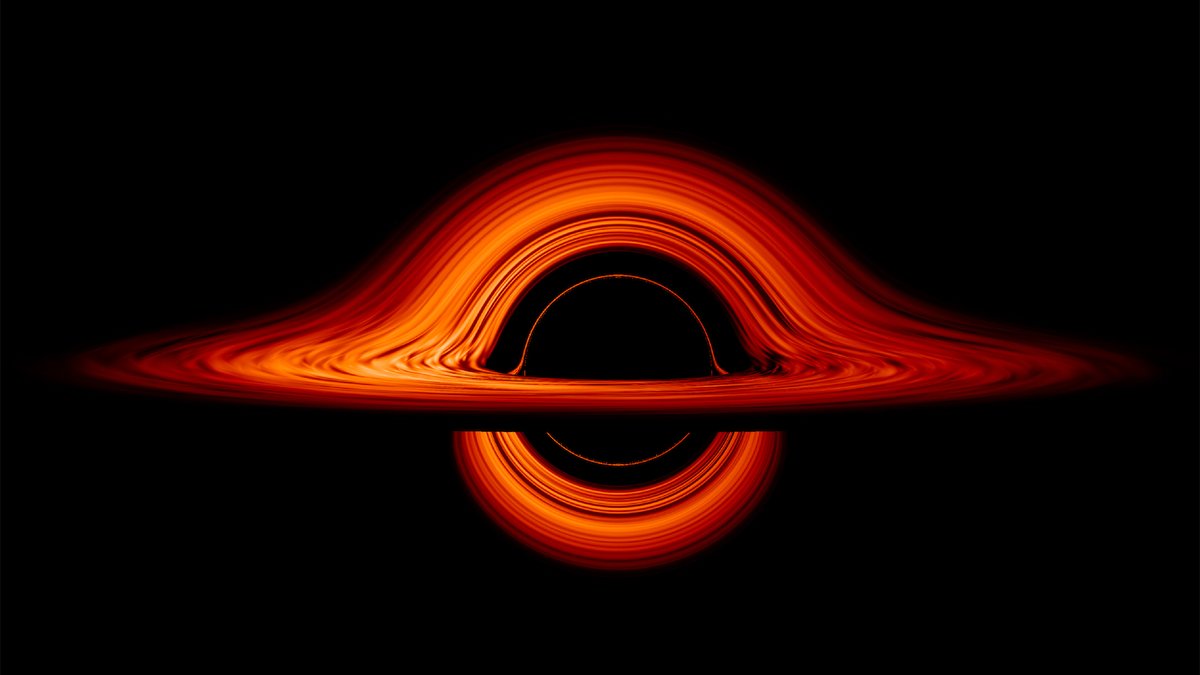
Black Holes as the Source of Dark Energy
New research suggests that as our universe expands, black holes gain mass, and this connection between black holes and the universe's expansion is the source of dark energy. https://t.co/JicAA6AfOP @UHIfA@UChicagoNews@UmichPhysics
The American Astronomical Society (@AAS_Office) and the American Institute of Physics (@aip_hq) presented @UHIfA's Karen Meech with a coveted honor commending her trailblazing contributions in the astrophysics field ➡️ https://t.co/hj63b9rnE9