Tech writer. 433sx33 was my first PC. Currently upskilling in cloud & app dev.
Life phase = Rebuild.
(It's okay. One day at a time. One week at a time)
@GamersNexus I immediately thought it's the Asus lessons learnt and adjustments made after your work - shifted the risk balance between loss of reputational damage vs cost of RMA' s & income loss due to delays
@JamesIvings@Kerumen netdata is great for finer details, for remote access it's via their site or a sign in via nginx for example. cockpit is simpler and has login built in, with ssh keys. plus you can manage users and disks etc (default for rhel)
I don't get what everyone's complaining about.
It's easy to be an overnight success, you just work your ass off for years in silence and then boom.
Simple.
Get Unrealistic
There is a process that I have used, and still use, to reignite life...👇
Create two timelines—6 months and 12 months—and list up to five things you dream of having (including, but not limited to, material wants: house, car, clothing, etc.), being (be a great cook, be fluent in Chinese, etc.), and doing (visiting Thailand, tracing your roots overseas, racing ostriches, etc.) in that order.
If you have difficulty identifying what you want in some categories, as most will, consider what you hate or fear in each and write down the opposite.
Do not limit yourself, and do not concern yourself with how these things will be accomplished. For now, it’s unimportant. This is an exercise in reversing repression.
Be sure not to judge or fool yourself. If you really want a Ferrari, don’t put down solving world hunger out of guilt. For some, the dream will be fame, for others fortune or prestige. All people have their vices and insecurities. If something will improve your feeling of self-worth, put it down.
Drawing a blank? In that case, consider these questions:
What would you do, day to day, if you had $100 million in the bank?
What would make you most excited to wake up in the morning to another day?
Don’t rush—think about it for a few minutes.
If still blocked, fill in the five “doing” spots with the following:
one place to visit
one thing to do before you die (a memory of a lifetime) one thing to do daily
one thing to do weekly
one thing you’ve always wanted to learn
What does “being” entail doing?
Convert each “being” into a “doing” to make it actionable. Identify an action that would characterize this state of being or a task that would mean you had achieved it. People find it easier to brainstorm “being” first, but this column is just a temporary holding spot for “doing” actions.
Here are a few examples:
1) Great cook —> make Christmas dinner without help
2) Fluent in Chinese —> have a five-minute conversation with a Chinese co-worker
Determine three steps for each of the dreams in just the 6-month timeline and take the first step now.
Define three steps for each dream that will get you closer to its actualization. Set actions—simple, well-defined actions—for now, tomorrow (complete before 11 A.M.) and the day after (again completed before 11 A.M.). Once you have three steps for each of the four goals, complete the three actions in the “now” column.
Do it now. Each should be simple enough to do in five minutes or less. If not, rachet it down. If it’s the middle of the night and you can’t call someone, do something else now, such as send an e-mail, and set the call for first thing tomorrow.
If the next stage is some form of research, get in touch with someone who knows the answer instead of spending too much time in books or online, which can turn into paralysis by analysis.
The best first step, the one I recommend, is finding someone who’s done it and ask for advice on how to do the same.
One podcast I always find myself going back to has always been the @tferriss show.
Every episode leaves you with a number of lessons. His latest with Seth Godin hit home.
If you're starting your career, prioritize mastering effective communication.
Your next lesson: harnessing communication to build trust.
Combine these skills with a product or service, and you possess the ability to excel in sales.
@DurvidImel Best to secure or disable it. There are many forms of identity theft techniques around, at the very least it's just to get personal data and move across to more vulnerable accounts
Think about what type of case it is and what principles apply to that type of case. By doing this and helping others to do this you'll get better at handling situations as they repeat over and over again through time. #principleoftheday
1/ Sharing some semiconductor-related content now that semis are back (they never left)
First, a simple visual that explains the industry's structure. People who already know the industry might find this basic, but I struggled to find something similar when doing my research
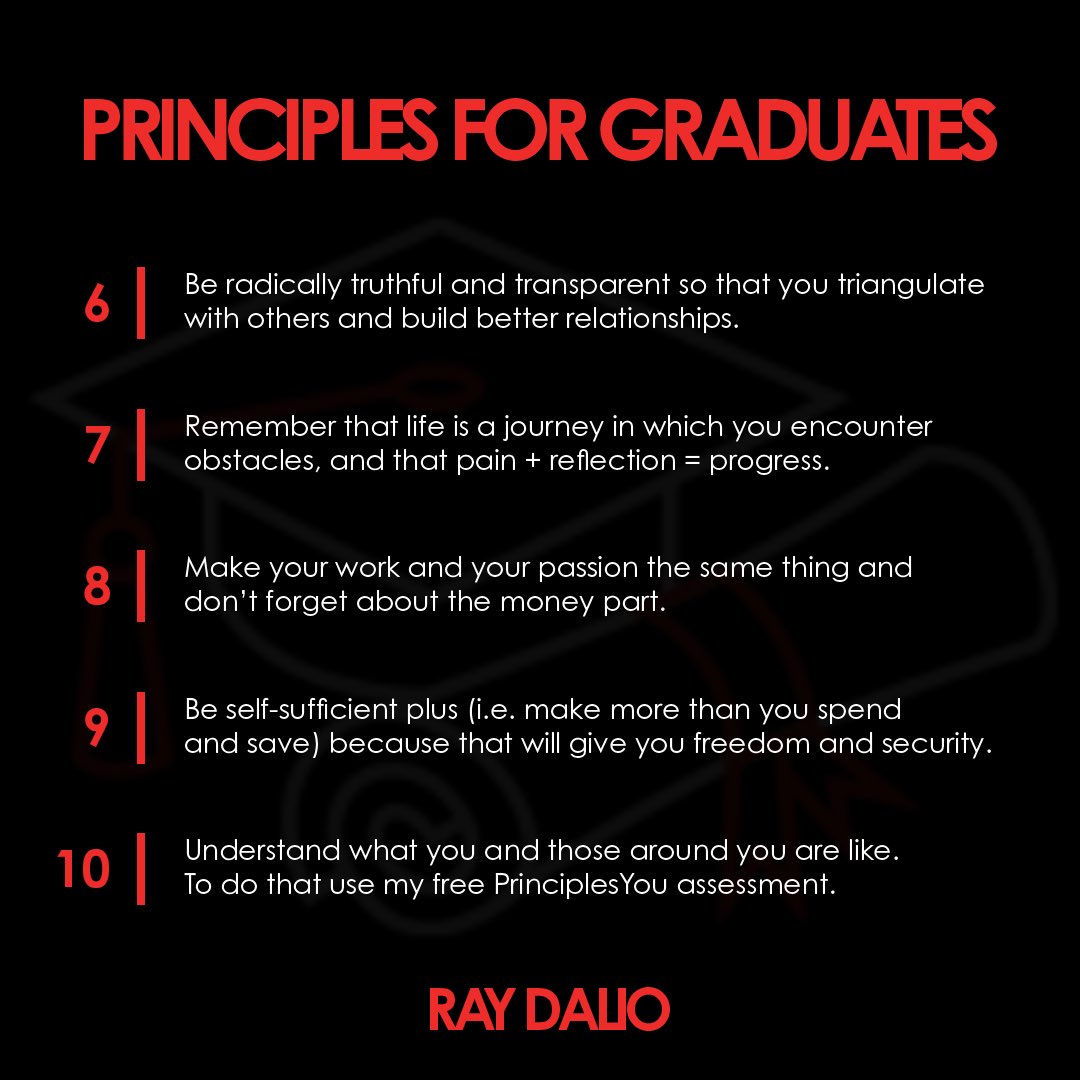
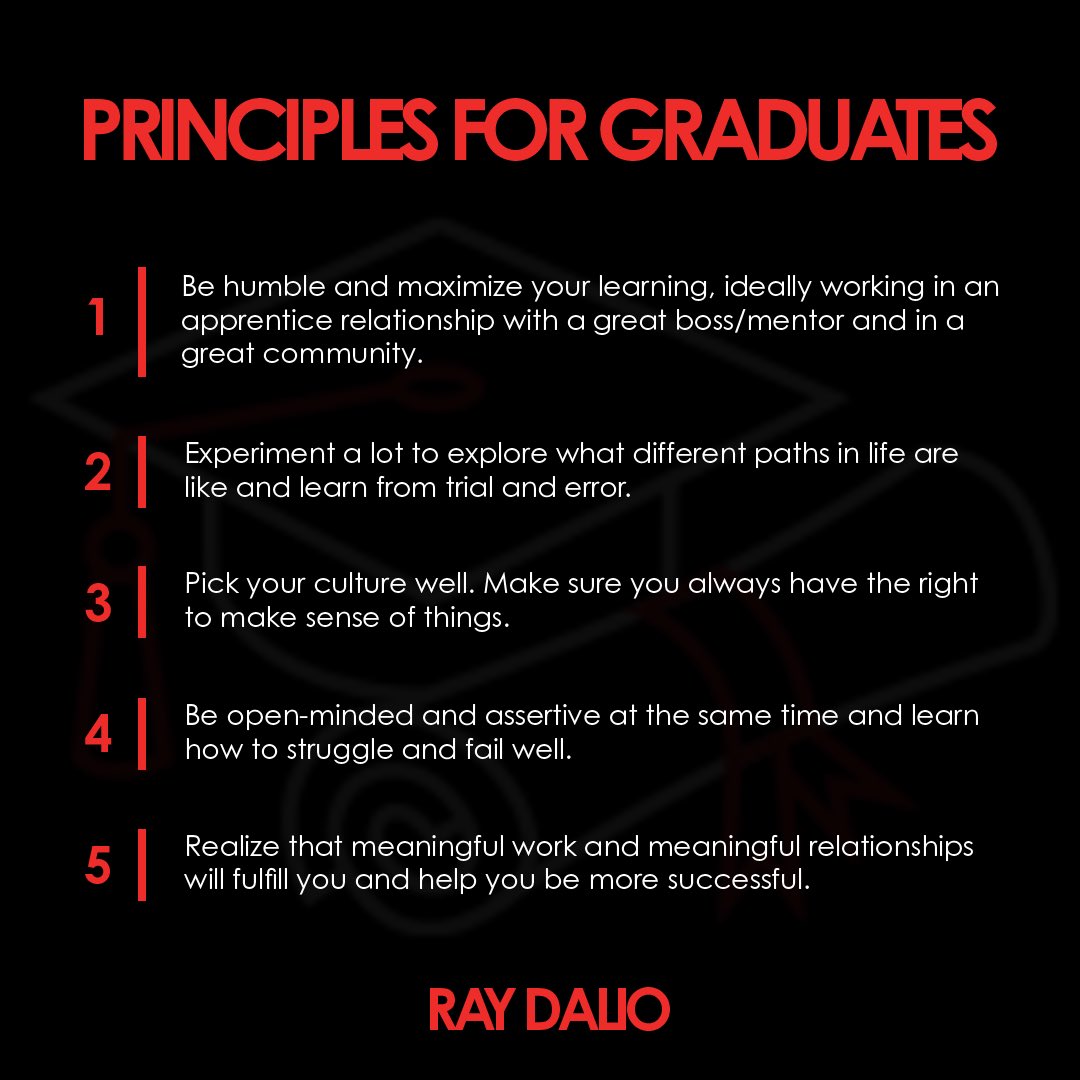
Here is some of my advice for those who are graduating and entering “the real world.”
You’re about to enter the beginning of the second phase of your life which is totally different from the first. Realize that you know virtually nothing about what it’s like so you need to learn what it’s like and how to be great at it.
To be young and have all that adventure ahead of you is wonderful. Make the most of it! Here are some principles that might help you.
#graduation #principles
@wesbos If coming to the UK and traveling outside London just get Lebara if you need to make calls, they use Vodafone as a mvno. The other guys mentioned use O2 for their data (sketchy around Oxfordshire)
I’m at a stage in my life where my goal is to pass what I’ve learned along to others, and I often get asked for my advice for young people in particular.
You’re at a stage in your life that you are just starting out on the phase in life that I’m ending. I learned some stuff that helped me that I believe can help you.
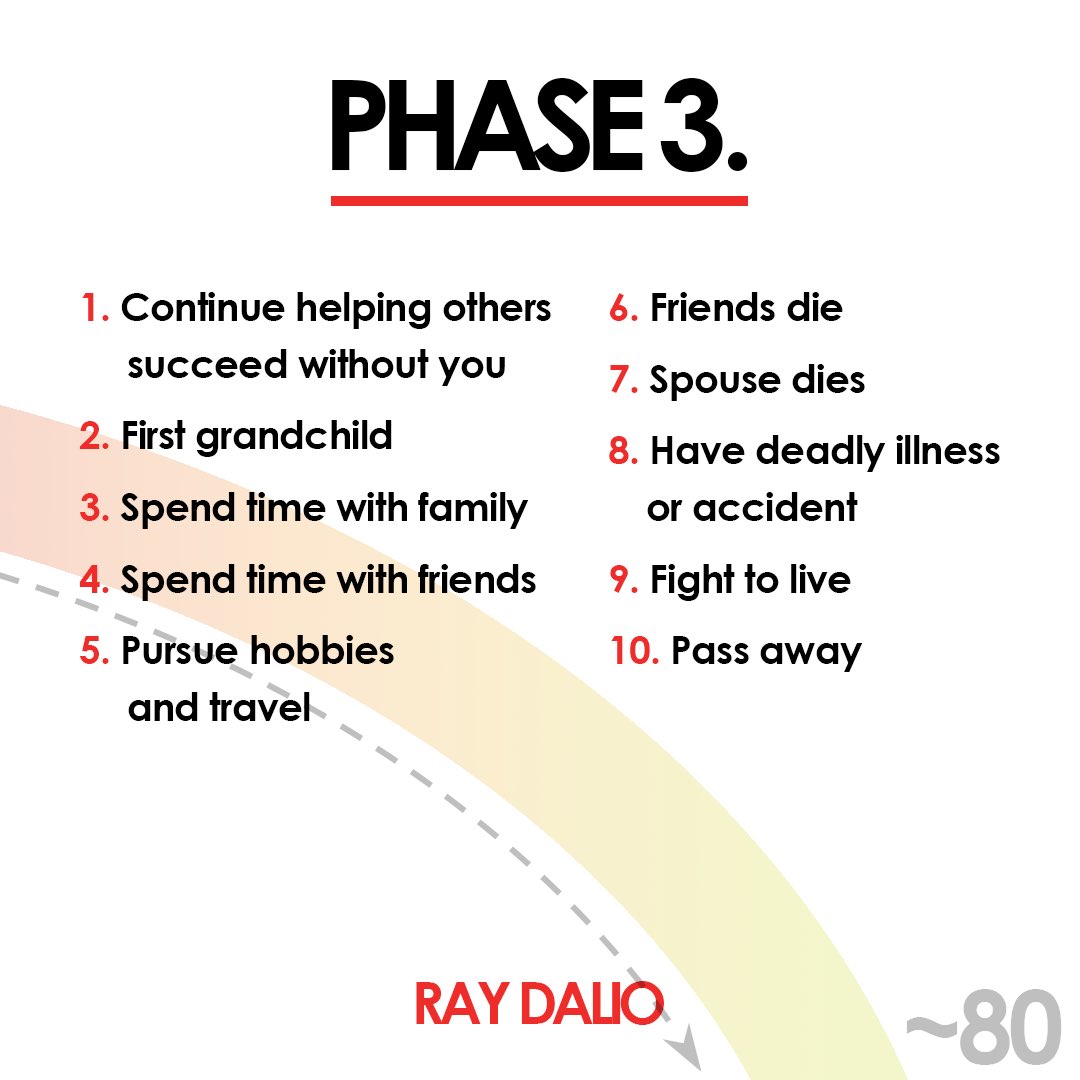
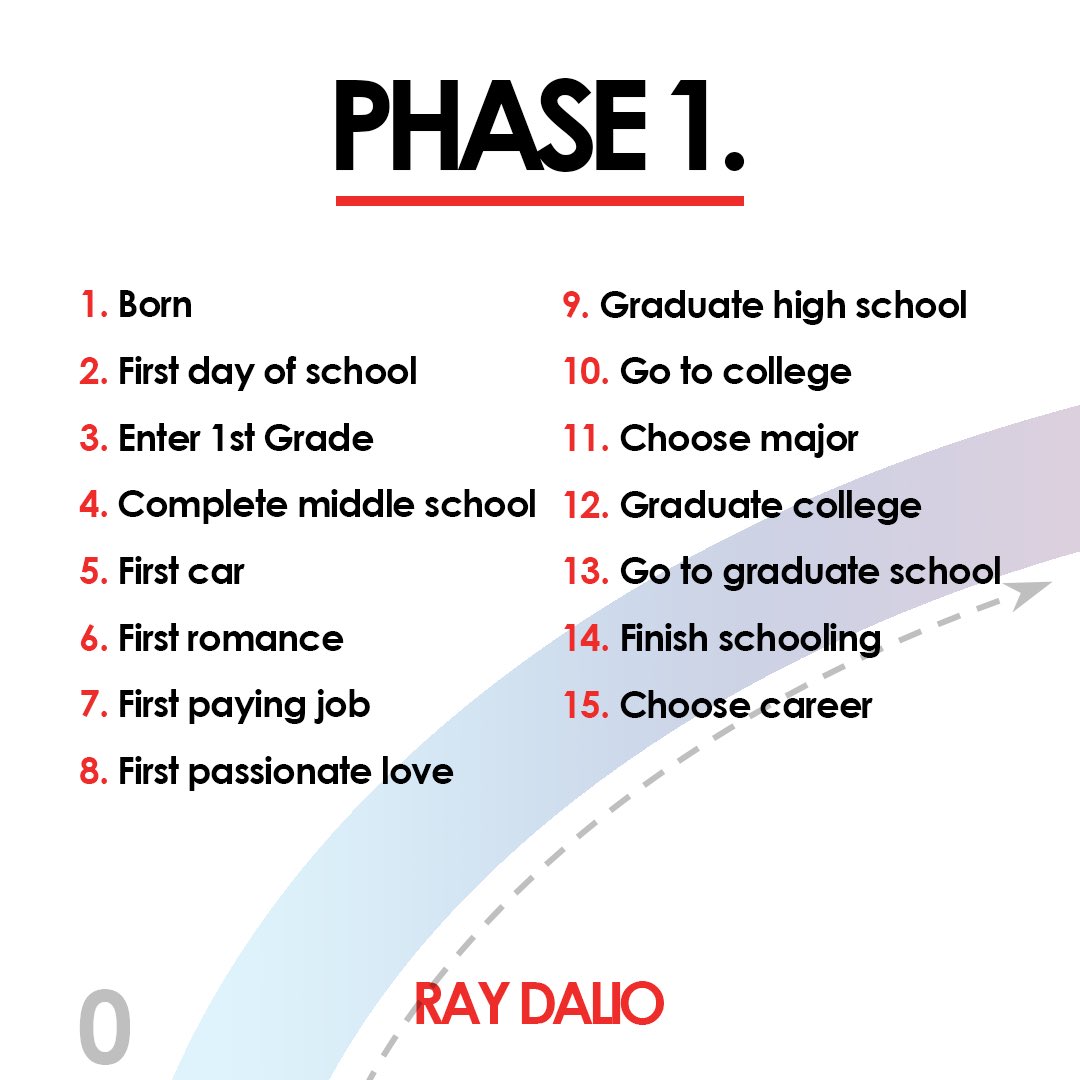
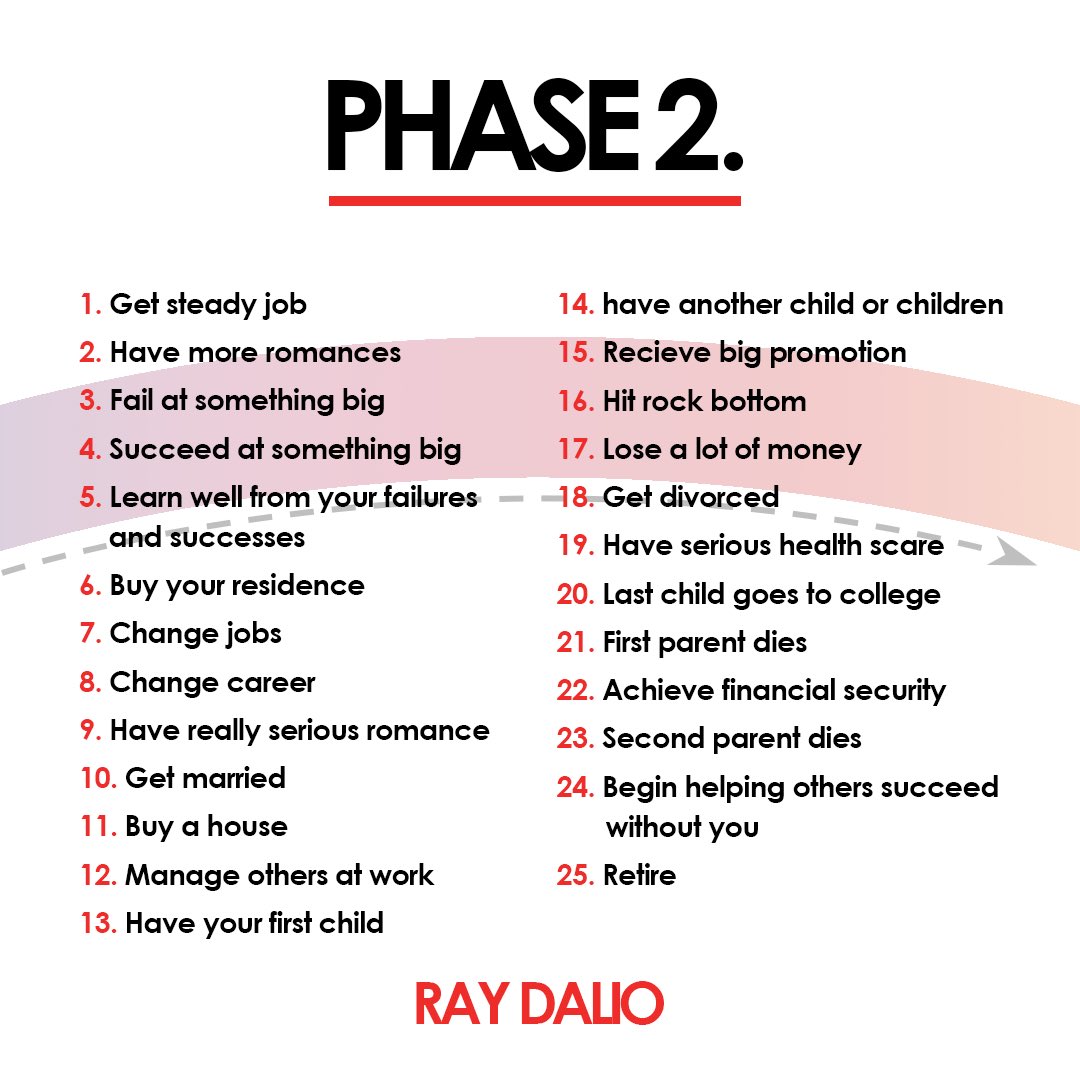
As you know, I have found that most everything happens over and over again for pretty much the same reasons, so in order to understanding anything, it pays to understand how a typical case unfolds and observe the cause-effect relationships that make it unfold that way. In this exercise, I am going to ask you to look at both the typical life arc and your own life arc and reflect on them, This exercise will help you imagine what probably will come at you, plan for it, and deal with it when it comes.
Not all life arcs are the same, and no arc is better in any way than another—they’re each their own unique journey, reflecting the circumstances faced by and decisions of the person traveling the arc—but the archetypical life lasts about 80 years and evolve in three very different phases. Even if your life arc bears little resemblance to the typical one, my hope is that you’ll find value in reflecting on your journey.
I suggest that you get a few pieces of paper and a pen, copy the basic arc, and put a tick where you are with “me” next to it. Looking through these phases, now how the descriptions of what’s happening to the typical person match up with your own experiences, especially at the critical junctures. The choices you make at these junctures have big implications on the life that you will have. As you will see, the paths we take along the way affect the type of journey we have.
This perspective has helped me and many people I have shared it with, and I hope it will help you too. If you’d like to experience an interactive version of the exercise, you can in the free Principles in Action app here: https://t.co/VsYkrX8NaT
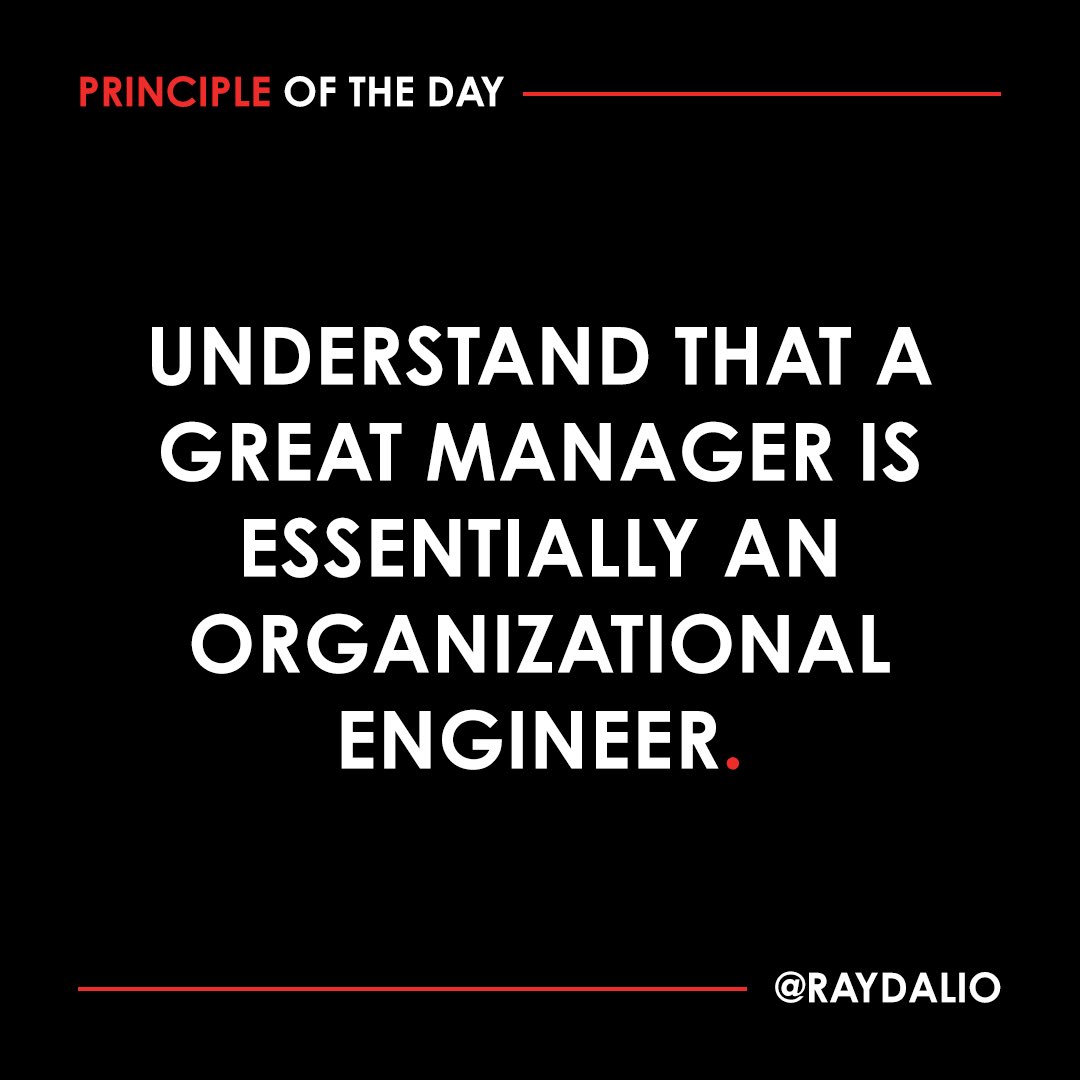
Great managers are not philosophers, entertainers, doers, or artists. They are engineers. They see their organizations as machines and work assiduously to maintain and improve them. They create process- flow diagrams to show how the machine works and to evaluate its design. They build metrics to light up how well each of the individual parts of the machine (most importantly, the people) and the machine as a whole are working. And they tinker constantly with its designs and its people to make both better.
They don't do this randomly. They do it systematically, always keeping the cause-and-effect relationships in mind. And while they care deeply about the people involved, they cannot allow their feelings for them or their desire to spare them discomfort to stand in the way of the machine's constant improvement. To do otherwise wouldn't be good for either the individuals on the team or the team that the individuals are a part of.
Of course, the higher up you are in an organization, the more important vision and creativity become, but you still must have the skills required to manage/orchestrate well. Some young entrepreneurs start with the vision and creativity and then develop their management skills as they scale their companies; others start with management skills and develop vision as they climb the ladder. But like great musicians, all great managers have both creativity and technical skills. And no manager at any level can expect to succeed without the skill set of an organizational engineer. #principleoftheday