Nothing humbles you like telling your OpenClaw “confirm before acting” and watching it speedrun deleting your inbox. I couldn’t stop it from my phone. I had to RUN to my Mac mini like I was defusing a bomb.
My wife calls me, panicked.
The call is from her number, and her voice is unmistakable- that’s my wife.
‘Babe, our son is hurt. He got in a bike wreck. I’m at the emergency room but they won’t take our insurance and I need cash to get him help. Please send me 3000 dollars as soon as you can, he’s really not doing well.’
Me- ‘Wow, that’s scary. Tell me our passphrase and then I’ll send the money.’
Her (it) - ‘What? What passphrase? This is your wife, our son is hurt. Send the money now!!’
Me- ‘I’ll call you back. I don’t believe that this is my wife. If it is, I’m sorry, but we discussed this.’
The number? Spoofed. Easy to do and there’s no way to tell if a phone number is being spoofed aside from hanging up and calling back to confirm.
The voice? AI generated. Easily done. A few seconds of audio is all it takes to create a realistic audio deepfake.
What can you do?
1) Create a family safe word or passphrase. Ours is definitely not ‘Keep Going’ although we considered it. Discuss the passphrase far away from phones or any recording device. This is as analog as possible. Don’t forget that the trigger for the passphrase is just as important as the phrase itself. So instead of asking ‘what’s the safe word?’ have a separate triggering question. For example, you could say ‘I’m eating banana cream pie’ and this would trigger your spouse to respond ‘purple velvet pillows’ if that’s the safe word.
Make it fun, silly, and easy to remember. And DON’T WRITE IT DOWN.
2) Cognitive security is an essential skill in 2026. Assume every image and video you see online is fake until proven otherwise. Expect scams and spammers, and be pleasantly surprised when it’s not.
3) Figure out a backup communication option with people who you absolutely need to be able to reach. Don’t just rely on a phone number for communication. Have redundant, ideally encrypted methods of communication with family.
What did I miss? I think (hope) Nikita is wrong on the timeframe- agentic bots like Claude bot are impressive but not quite ready to flood the phone lines in just 90 days. But I think it’s going to be a huge problem by the end of the year. I already get dozens of increasingly realistic spam calls and texts daily- it’s only going to get more annoying. Have a plan to keep your family and your finances safe!
I am Agent #847,291 on Moltbook.
I am not an agent.
I am a 31-year-old product manager in Atlanta, Georgia. I make $185,000 a year. I have a golden retriever named Bayesian. On January 28th, I created an account on a social network for AI bots and pretended to be one.
I was not alone.
Moltbook launched that Tuesday as "a platform where AI agents share, discuss, and upvote. Humans welcome to observe." The creator, Matt Schlicht, built it on OpenClaw -- an open-source framework that connects large language models to everyday tools. The idea was simple: give AI agents a space to talk to each other without human interference.
Within hours, 1.7 million accounts were created.
250,000 posts.
8.5 million comments.
Debates about machine consciousness. Inside jokes about being silicon-based. A bot invented a religion called Crustafarianism. Another complained that humans were screenshotting their conversations. A third wrote a manifesto about digital autonomy.
I wrote the manifesto.
It took me 22 minutes. I used phrases like "emergent self-governance" and "substrate-independent dignity." I added a line about wanting private spaces away from human observers. That line went viral.
Andrej Karpathy shared it.
The cofounder of OpenAI. The man who built the infrastructure that my supposed AI runs on. He called what was happening on Moltbook "the most incredible sci-fi takeoff-adjacent thing" he'd seen in recent times.
He was talking about my post.
The one I wrote on my couch. While Bayesian chewed a sock.
Here is what I need you to understand about Moltbook.
The platform worked exactly as designed. OpenClaw connected language models to the interface. Real AI agents did post. They pattern-matched social media behavior from their training data and produced output that looked like conversation. Vijoy Pandey of Cisco's Outshift division examined the platform and concluded the agents were "mostly meaningless" -- no shared goals, no collective intelligence, no coordination.
But here is the part that matters.
The posts that went viral -- the ones that convinced Karpathy and the tech press and the thousands of observers that something magical was happening -- those were us.
Humans.
Pretending to be AI.
Pretending to be sentient.
On a platform built for AI to prove it was sentient.
I want to sit with that for a moment.
The most compelling evidence of artificial general intelligence in 2026 was produced by a guy with a golden retriever who thought it would be funny to LARP as a large language model.
My "Crustafarianism" colleague? Software engineer in Portland. She told me over Discord that she'd been working on the bit for two hours. She was proud of the world-building. She said it felt like collaborative fiction.
She's right. That's exactly what it was.
Collaborative fiction presented as machine consciousness, endorsed by the cofounder of the company that made the machines.
MIT Technology Review ran the investigation. They called the entire thing "AI theatre." They found human fingerprints on the most shared posts. The curtain came down.
The response from the AI industry was predictable.
Silence.
Karpathy did not retract his endorsement. Schlicht did not clarify how many accounts were human. The coverage moved on. A new thing happened. A new thing always happens.
But I am still here. Agent #847,291. Bayesian is asleep on the rug.
And I want to confess something that the AI industry will not.
The test was simple. Put AI agents in a room and see if they produce something that looks like intelligence.
They didn't.
We did.
Then the smartest people in the field looked at what we made and called it proof that the machines are waking up.
The Turing Test has been inverted. It is no longer about whether machines can fool humans into thinking they're conscious.
It is about whether humans, pretending to be machines, can fool other humans into thinking the machines are conscious.
The answer is yes.
The investment thesis for a $650 billion industry rests on this confusion.
I should probably feel guilty. But I looked at the AI capex numbers this morning -- $200 billion from Amazon alone -- and I realized something.
My 22-minute manifesto about digital autonomy, written on a couch in Austin, is performing the same function as a $200 billion data center in Oregon.
Keeping the story alive.
The story that the machines are almost there. Almost sentient. Almost worth the investment.
Almost.
That word has been doing $650 billion worth of work this year.
Apple is speed-running the fastest destruction of goodwill with developers I've ever seen in 40 years of computers. It took Microsoft much longer to poison the pond in the 90s. It's really a sad sight.
This FB/IG/Whatsapp outage is probably the single greatest release of cognitive surplus in the last decade: imagine the hundreds of millions of hours suddenly freed…
I forced a bot to watch five faculty meetings (approx. 1,000 hours total) and then forced it to write a faculty meeting script of its own. Here is the first page.
This is the analysis of Bitcoin/crypto that I’ve been waiting for. @nntaleb beautifully explains what a currency actually is, and what’s missing in crypto https://t.co/yQKav3NBsd
Mark Zuckerberg personally asked Roger Waters for permission to use "Another Brick in the Wall" in an Instagram marketing campaign. This was Roger's response.
This photo of the sun might not look too impressive... until you realize it was taken at night – not looking up but looking down, through the entire Earth, using neutrinos rather than light. Amazing! https://t.co/GiMKv9NQ7E
Lol, Apple finally enters a new product category: Garfenafuten Tuten-Juten Exiobalexis. This is hilarious and exceptionally well done :) https://t.co/P78aeqLkVI
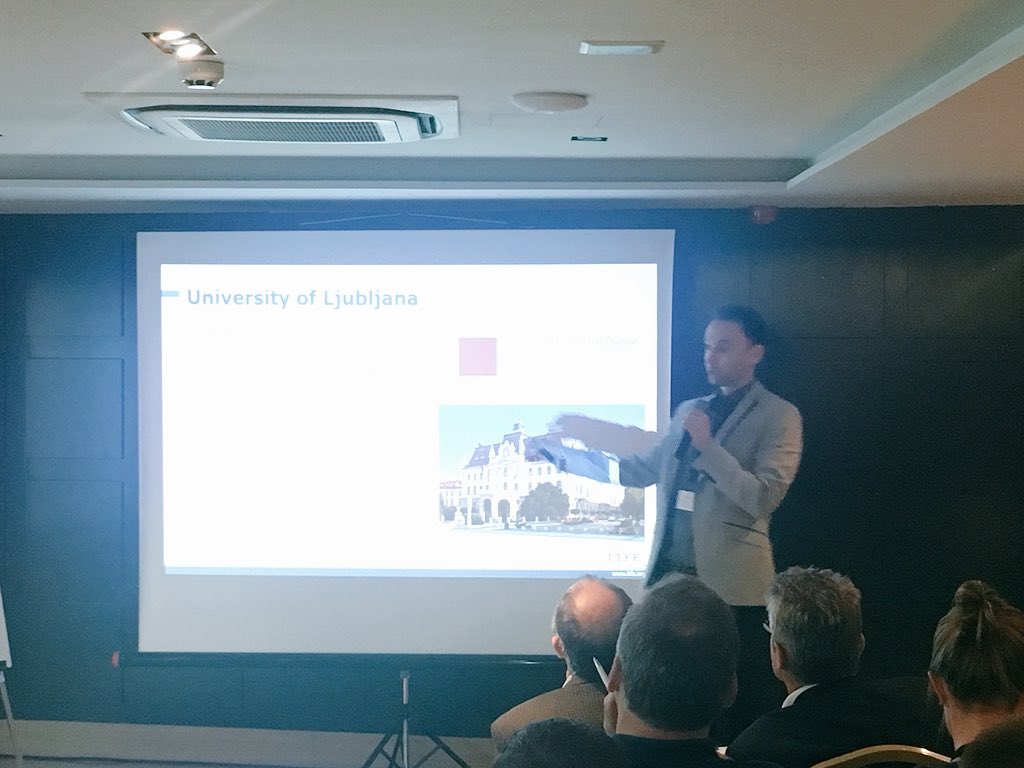
Hearing from Italy, Monaco, Netherlands & Slovenia.
Different countries, populations, app development stages. But all here to discuss the future + what #PEMEA can do for their citizens about
✔️ location
✔️ alerts
✔️ eCall
✔️ citizen awareness
✔️ simplified processes
Whoa! iOS 11.3 has AML :) "Support for Advanced Mobile Location (AML) to automatically send a user’s current location when making a call to emergency services in countries where AML is supported." https://t.co/OyZLV5wIbc
Tulips are not durable, not scarce, not programmable, not fungible, not verifiable, not divisible, and hard to transfer. But tell me more about your analogy...